



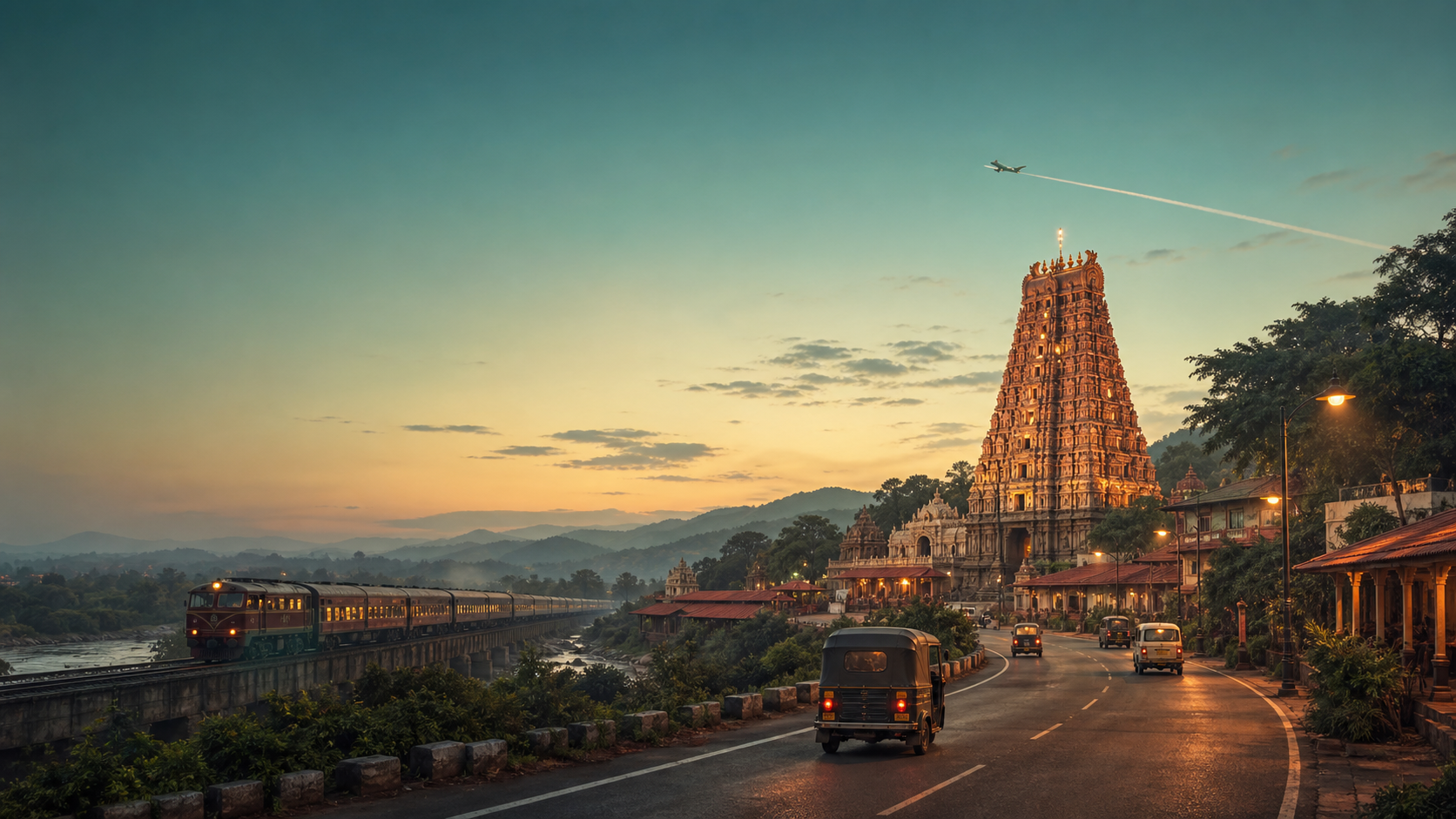
A complete pilgrim record drawn from the existing published article data.
Tracing the Centuries: The Rich History of Sree Soepramaniem Nagarattar Temple
The Sree Soepramaniem Nagarattar Temple boasts a history stretching back to 1892, making it one of Medan's oldest Hindu temples. Established by the Tamil Chettiar diaspora during the Dutch East Indies era, it quickly became a spiritual and cultural anchor, reflecting the community's dedication to their Tamil Saiva traditions. This enduring legacy is profoundly visible in its annual Thaipusam celebrations, which feature an iconic century-old wooden chariot, symbolizing continuous devotion through generations. The temple's narrative is a testament to the resilience of its founders.
Origins in the Dutch East Indies
The temple's construction in 1892 by the Natukotai Chettiar community marked the establishment of a vital spiritual center for the Tamil diaspora. It provided a link to their homeland and traditions during a period of significant migration.
The Iconic Wooden Chariot
Since the early 20th century, the temple has utilized its historic wooden chariot, known as the 'Radhoo', for religious processions. This revered artifact plays a central role in the annual Thaipusam festival, carrying the deity to Sri Mariamman Temple.
A Symbol of Tamil Identity
Recognized as one of the oldest Hindu temples in Medan, the Sree Soepramaniem Nagarattar Temple has evolved into a significant symbol of Tamil Indonesian identity, anchoring the community's cultural and religious life.
Architectural Grandeur: A Glimpse into the Temple's Design
The Sree Soepramaniem Nagarattar Temple exemplifies the distinctive Dravidian architectural style, a hallmark of traditional South Indian temple construction. This architectural choice reflects the cultural roots of its Natukotai Chettiar builders from Tamil Nadu. While specific material details are not fully documented, the temple's design showcases intricate craftsmanship typical of this style, featuring multi-tiered gopurams (towers) and elaborate sculptures that narrate Hindu mythological tales. It stands as a vibrant example of Tamil Hindu temple design transported and preserved in Southeast Asia.
Dravidian Style Influence
The temple's architecture is firmly rooted in the Dravidian style, characterized by its pyramidal towers, intricately carved pillars, and vibrant sculptural details. This style is native to Tamil Nadu, the ancestral home of the temple's founders.
Craftsmanship and Iconography
The design incorporates traditional Hindu iconography and mythological narratives through its sculptures and carvings. These artistic elements serve not only as decoration but also as visual representations of religious stories and deities, fostering spiritual connection.
Lord Murugan: The Warrior Deity and Heart of Devotion
At the spiritual core of the Sree Soepramaniem Nagarattar Temple is Lord Murugan, also revered as Subramaniam, one of the principal deities among the Tamil people. As the warrior deity, Murugan symbolizes courage, wisdom, and victory over evil. The temple's dedication to him reflects the strong Shaiva tradition of its founders, where Murugan is often worshipped alongside his parents, Shiva and Parvati, and his brother Ganesha. His worship is central to the community's spiritual life, culminating in vibrant traditions and festivals like Thaipusam, which showcase profound devotion.
Murugan's Significance in Tamil Culture
Lord Murugan holds immense cultural and religious importance for the Tamil community. He is often depicted as a youthful, valiant warrior, embodying divine wisdom and martial prowess, and is a beloved son of Shiva.
Shaiva Traditions and Worship
The temple adheres to the Shaiva tradition, focusing on the worship of Lord Shiva and his family. Murugan's worship here is particularly prominent, signifying the specific devotional practices brought by the Nagarathar community from their homeland.
Thaipusam: A Festival of Devotion
The annual Thaipusam festival is a powerful expression of devotion to Lord Murugan. Pilgrims undertake acts of penance and participate in a grand procession, demonstrating their deep faith and gratitude to the deity.
Sree Soepramaniem Nagarattar Temple: A Spiritual Beacon in Medan
The Sree Soepramaniem Nagarattar Temple, established in 1892 by the Natukotai Chettiar (Nagarathar) community, stands as a significant spiritual and cultural landmark in Medan, Indonesia. Dedicated to Lord Murugan, also known as Subramaniam, this temple is one of the oldest and most revered Dravidian-style Murugan temples outside of India. It serves as a vital anchor for the Tamil diaspora, preserving their rich heritage and traditions amidst a new land. The temple reflects the enduring faith and cultural resilience of its founders, embodying a deep connection to their ancestral roots.
Founding by the Nagarathar Community
Built in 1892, the temple was a pivotal initiative of the Natukotai Chettiar (Nagarathar) community. This diaspora group established the temple to maintain their religious and cultural identity in Medan during the Dutch East Indies era, ensuring a place of worship for Lord Murugan.
A Hub for Tamil Culture
Beyond its religious function, the temple has historically served as a central socio-cultural institution for Indian Indonesians, particularly within Medan's 'Little India' or Kampung Keling. It is a symbol of Tamil Indonesian identity and cultural preservation.
Visiting Sree Soepramaniem Nagarattar Temple: A Guide for Pilgrims and Tourists
For those planning a visit to the Sree Soepramaniem Nagarattar Temple, understanding key information ensures a respectful and enriching experience. While specific timings, entry protocols, and dress codes are best confirmed by contacting the temple office directly, visitors are generally encouraged to dress modestly. The best time to visit is during the dry season, from June to September. However, for a truly immersive cultural experience, witnessing the annual Thaipusam festival, typically held between January and February, is highly recommended. Allow 1–2 hours for your visit.
Best Time to Visit
The temple can be visited year-round, but the dry season (June–September) offers comfortable weather. For a unique cultural insight, plan your visit during the Thaipusam festival in January or February, though it can be very crowded.
Getting There
The temple is located approximately 2 km from Medan Railway Station. Kualanamu International Airport is about 25 km away. For detailed public transport routes or parking information, visitors should contact the temple office.
Visitor Etiquette
As a place of worship, respectful behavior is paramount. Visitors are advised to dress modestly. It is customary to remove footwear before entering the main prayer areas. For specific guidelines, inquire at the temple office.
| Deity | Murugan |
|---|---|
| Form | Lord Murugan is revered in his form as Subramaniam, a youthful and powerful warrior deity. This form is particularly significant among Tamil people. |
| Consort | Unknown |
| Sampradaya | Shaiva (Murugan-centric, with Shiva and Ganesha) |
| Significance | As a principal deity for Tamil people, Murugan symbolizes courage, wisdom, and victory over evil. For the diaspora, he serves as a spiritual anchor and a living link to their ancestral traditions. |
The Chettiar's Enduring Legacy
Deep in the heart of Medan, a testament to unwavering faith and cultural resilience stands tall: the Sree Soepramaniem Nagarattar Temple. This sacred abode was meticulously established by the pioneering Tamil Chettiar diaspora during the Dutch East Indies era, not merely as a place of worship, but as a vibrant spiritual and cultural anchor. Far from their ancestral lands in Tamil Nadu, these devout souls sought to preserve their cherished Tamil Saiva traditions, creating a living link to their heritage. The temple thus became a beacon, embodying their enduring connection to their roots and a testament to their identity, flourishing amidst a new land. It reflects their dedication to Lord Murugan and their community's enduring spirit.
A beacon of faith and heritage, preserving Tamil traditions far from home in the heart of Medan.
This temple stands as a vibrant link to ancestral roots and the enduring spirit of the Tamil diaspora in Indonesia.
Related temples: Aakkoor Thanthondreeswarar Temple | Abhaya Varadeeswarar Temple, Adirampattinam
Restoration & Conservation
Over centuries, the Sree Soepramaniem Nagarattar Temple, like many ancient sacred sites in Tamil Nadu, has faced the natural ravages of time, weather, and environmental factors. Its intricate granite carvings, vibrant stucco sculptures, and elaborate fresco paintings require continuous care and periodic restoration to maintain their structural integrity and aesthetic beauty. Major renovation cycles, often culminating in a grand *Kumbhabhishekam* (consecration ceremony), are crucial events that see the temple undergo extensive repairs and rejuvenation. These efforts blend traditional *silpa shastra* (art and architectural treatises) principles with contemporary conservation techniques, ensuring that the temple's historical and artistic essence is preserved for future generations while safeguarding its structural stability against modern challenges. This commitment reflects the community's profound reverence for its heritage.
Recent decades have witnessed several significant restoration projects at the Sree Soepramaniem Nagarattar Temple, meticulously undertaken by dedicated *sthapathis* (traditional temple architects and sculptors) and skilled artisans from the region. These projects often involve the careful cleaning of ancient stone, repair of damaged stucco figures, repainting of faded murals, and strengthening of the temple's foundational elements. Funding for these extensive endeavors typically comes from the devout Nagarattar community itself, along with contributions from devotees worldwide and, occasionally, government grants for heritage preservation. Such collective efforts not only ensure the physical longevity of the temple but also reinforce the community's spiritual bond with this sacred space, maintaining its vibrancy as a living heritage site and a beacon of cultural continuity.
🗺 How to Reach
Hover a card to animate the journey on the map
Route to Madurai South
Common Questions
Where is Sree Soepramaniem Nagarattar Temple: Medan's Ancient Murugan located?
Sree Soepramaniem Nagarattar Temple: Medan's Ancient Murugan is documented at Medan, Indonesia.
Which deity is associated with Sree Soepramaniem Nagarattar Temple: Medan's Ancient Murugan?
Sree Soepramaniem Nagarattar Temple: Medan's Ancient Murugan is associated with Murugan.
Related Temples


A Living Covenant