



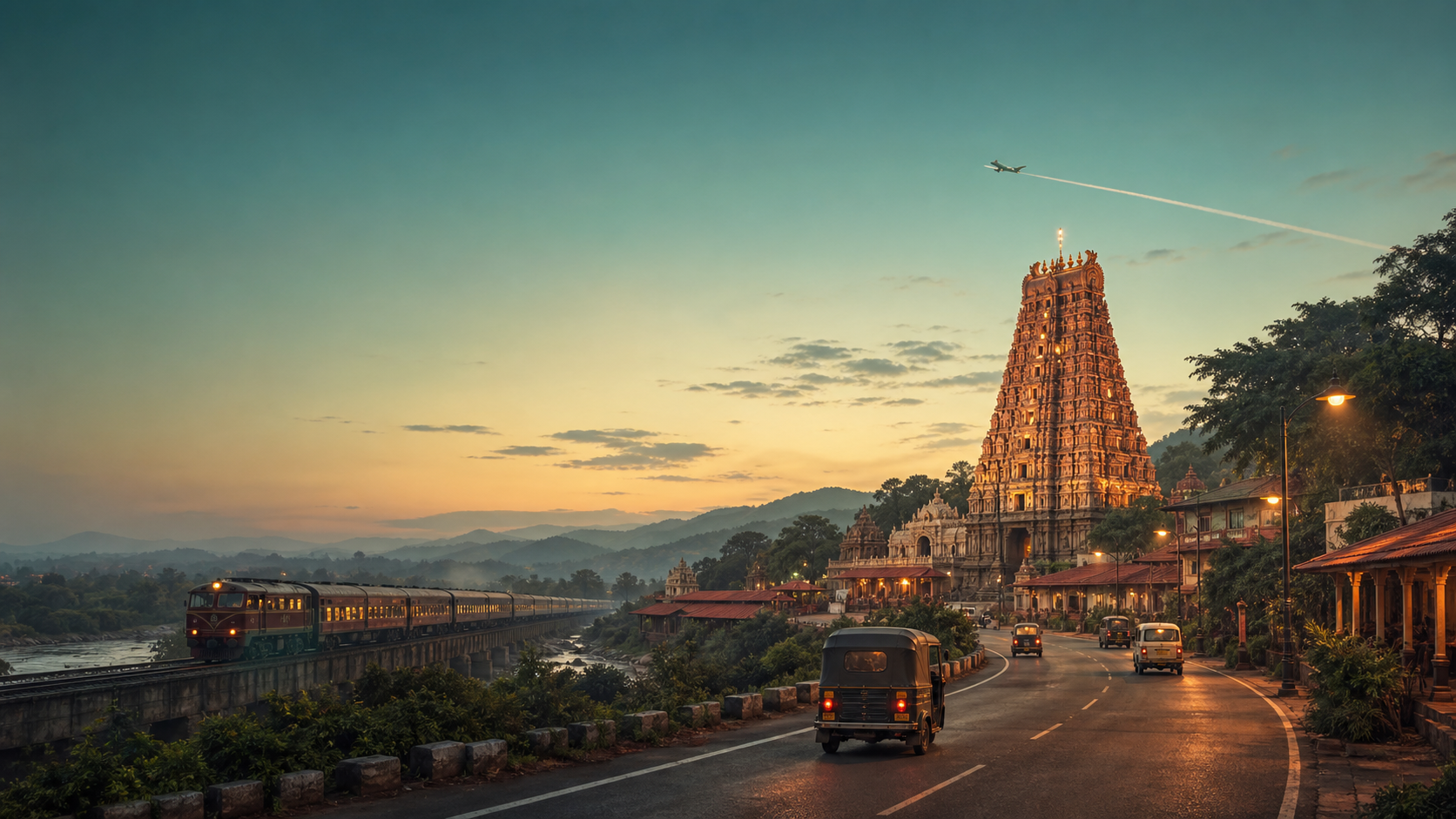
A complete pilgrim record drawn from the existing published article data.
The Stellate Marvel: Hoysala Architecture at its Peak
Somanathapura's Chennakesava Temple is celebrated for its distinctive stellate plan, a hallmark of mature Hoysala architecture. Its intricate _trikuta_ design features three shrines, each with a _vimana_ (tower). The unparalleled sculptural friezes adorning its walls narrate episodes from the _Ramayana_ and _Mahabharata_, alongside depictions of daily life, celestial beings, and animals, all carved with exquisite detail from chloritic schist. This architectural style, developed in the 13th century, represents the pinnacle of Hoysala craftsmanship, demonstrating advanced engineering and artistic skill in its execution and ornamentation.
Stellate Plan
The temple's star-shaped platform, or _jagati_, and the corresponding layout of its walls are characteristic of the sophisticated Hoysala architectural style.
Trikuta Design
It features three shrines, each dedicated to a different form of Vishnu and topped with its own tower, a prominent and complex architectural arrangement.
Narrative Friezes
Extensive sculptural panels vividly depict epic tales like the _Ramayana_ and _Mahabharata_, alongside scenes of court life and mythology, all etched into stone.
Experiencing Somanathapura: A Visitor's Guide
To fully appreciate the intricate artistry and serene ambiance of Somanathapura, visitors should plan their trip between October and March, considered the best time. Modest dress is required, and footwear must be removed before entering sacred areas. Allow 2–3 hours to explore the detailed carvings and architectural nuances. While specific transport details should be confirmed with the temple office, Mysuru offers the nearest train station (35 km) and airport (40 km), facilitating access to this sacred UNESCO site.
Best Time to Visit
The months from October to March offer pleasant weather conditions, making it ideal for exploring the temple complex comfortably.
Visitor Conduct
Modest attire is expected, and visitors are required to remove their footwear as a mark of respect within the sacred premises.
Travel Logistics
Mysuru serves as a key hub for train and air travel, with Mysuru Junction (35 km) and Mysuru Airport (40 km) providing convenient access to Somanathapura.
| Deity | Kesava |
|---|---|
| Form | Kesava is a form of Vishnu, depicted in his divine, four-armed manifestation. He is often shown holding a conch, discus, mace, and lotus. |
| Consort | Lakshmi |
| Sampradaya | Vaishnava |
| Significance | As Vishnu, he represents the preserver aspect of the Hindu trinity, maintaining cosmic order and righteousness. His worship ensures protection and prosperity. |
The Commander's Devotion: Soma's Legacy
Journey back to the 13th century, when the valiant Hoysala commander, Soma, embarked on a profound act of devotion. This sacred temple, a testament to his unwavering faith, was meticulously crafted as a royal offering. More than just a structure of stone, it was envisioned as a cosmic blueprint, harmonizing divine grace with the authority of the king. Every intricate carving and architectural flourish at Somanathapura embodies this grand Hoysala ideal, inviting all who behold it to experience a world where spiritual reverence and earthly power intertwine in perfect, artistic unity.
Every intricate carving and architectural flourish at Somanathapura embodies a grand Hoysala ideal, where spiritual reverence and earthly power intertwine in perfect, artistic unity.
The temple walls and pillars serve as a grand canvas, meticulously carved with extensive sculptural panels narrating episodes from the revered Ramayana and Mahabharata.
Related temples: Abeyadana Temple | Adi Kesava Perumal temple
Somanathapura: A Jewel of Hoysala Artistry
The Chennakesava Temple at Somanathapura, built in 1268 CE during the Hoysala dynasty, stands as a prime illustration of Hoysala architectural brilliance. Commissioned by Soma under King Narasimha III, its intricate chloritic schist and soapstone carvings are a testament to India's rich cultural heritage. This Vaishnava tradition site, dedicated to Kesava, was recognized in 2023 as a UNESCO World Heritage Site, part of the 'Sacred Ensembles of the Hoysalas', affirming its global significance. It exemplifies peak 13th-century artistic and engineering skills.
UNESCO Recognition
In 2023, Somanathapura was inscribed as a UNESCO World Heritage Site, acknowledging its outstanding universal value as part of the 'Sacred Ensembles of the Hoysalas'.
Hoysala Masterpiece
The temple showcases the mature Hoysala architectural style, known for its intricate detailing, sculptural richness, and innovative design elements.
Material and Craftsmanship
Constructed from chloritic schist, also known as soapstone, the temple's material allowed for the exceptionally fine and detailed carvings seen throughout the structure.
Built by the Hoysalas: A Legacy in Stone
The Chennakesava Temple was commissioned in 1268 CE by Soma, a Dandanayaka (commander) under the Hoysala King Narasimha III. This act of patronage reflects the zenith of Hoysala artistic and political power in the 13th century. Soma's devotion led to the creation of a monument that not only honored Vishnu but also solidified the dynasty's cultural legacy. An inscription from 1268 CE records the completion of its construction, detailing both its builder and royal patron, marking a significant event in Hoysala history.
Royal Patronage
King Narasimha III's reign saw the commissioning of this significant temple, reflecting the widespread influence and cultural ambitions of the Hoysala royal family.
Soma's Commission
Dandanayaka Soma, a key figure in the Hoysala administration, was directly responsible for the temple's construction in 1268 CE, driven by personal devotion.
Historical Inscriptions
An inscription dated 1268 CE provides crucial historical details about the temple's origins, including the names of its patron and the reigning monarch.
Vishnu's Abode: Divine Forms and Mythological Tales
Dedicated to Lord Vishnu, the Chennakesava Temple at Somanathapura houses three principal shrines, each featuring a different form of the deity: Kesava, Janardhana, and Venugopala. This reflects the strong Vaishnava traditions prevalent during the Hoysala era. The temple's walls are a canvas for mythological tales, including Krishna lifting Govardhana hill and Rama's coronation, bringing to life the _Ramayana_ and _Mahabharata_. These narratives in stone served as visual scriptures, reinforcing the spiritual beliefs and cultural values of the time.
Vaishnava Tradition
The temple is a significant site for the worship of Vishnu, aligning with the Vaishnava tradition that flourished under the Hoysala dynasty.
Three Deities
It enshrines three distinct manifestations of Vishnu: Kesava (the main deity), Janardhana, and Venugopala, each in its own shrine.
Epic Narratives
The temple's sculptures vividly depict stories from the _Ramayana_ and _Mahabharata_, serving as an illustrated religious text for devotees.
Restoration & Conservation
Somanathapura's Keshava Temple, like many ancient monuments, has faced the ravages of time, weather, and historical conflicts, necessitating extensive restoration efforts over the centuries. Its intricate Hoysala architecture, carved from relatively soft soapstone, is particularly vulnerable to erosion, structural degradation, and the impact of environmental factors. Early conservation work, often initiated during the British colonial period and continued by the Archaeological Survey of India (ASI), focused primarily on structural stability and preventing further decay. These initial interventions involved careful documentation of the temple's condition, re-setting dislodged stones, and reinforcing weakened foundations. The challenge lies in preserving the temple's original aesthetic and structural integrity while employing modern conservation techniques, ensuring that repairs are reversible and distinguishable from the original fabric. This ongoing process is vital to safeguard the temple's artistic and historical value for future generations. Contemporary conservation practices at Somanathapura emphasize a multidisciplinary approach, combining traditional craftsmanship with scientific analysis. Experts meticulously study the temple's construction materials, environmental factors contributing to decay, and the impact of human activity, including tourism. Advanced techniques, such as laser cleaning for surface grime, chemical consolidation for stone preservation, and precision re-carving of severely damaged sections by skilled artisans, are employed with utmost care and respect for the original design. A significant challenge remains the balance between ensuring accessibility for tourists and pilgrims and the protection of delicate sculptures and architectural elements. The ASI continuously monitors the temple's condition, implementing preventative measures and undertaking periodic maintenance, underscoring a global commitment to heritage preservation.🗺 How to Reach
Hover a card to animate the journey on the map
Route to Somanathapura
Common Questions
Where is Somanathapura: Karnataka's Temple Town Overview located?
Somanathapura: Karnataka's Temple Town Overview is documented at Somanathapura, Karnataka.
Which deity is associated with Somanathapura: Karnataka's Temple Town Overview?
Somanathapura: Karnataka's Temple Town Overview is associated with Vishnu.
Related Temples


A Living Covenant