



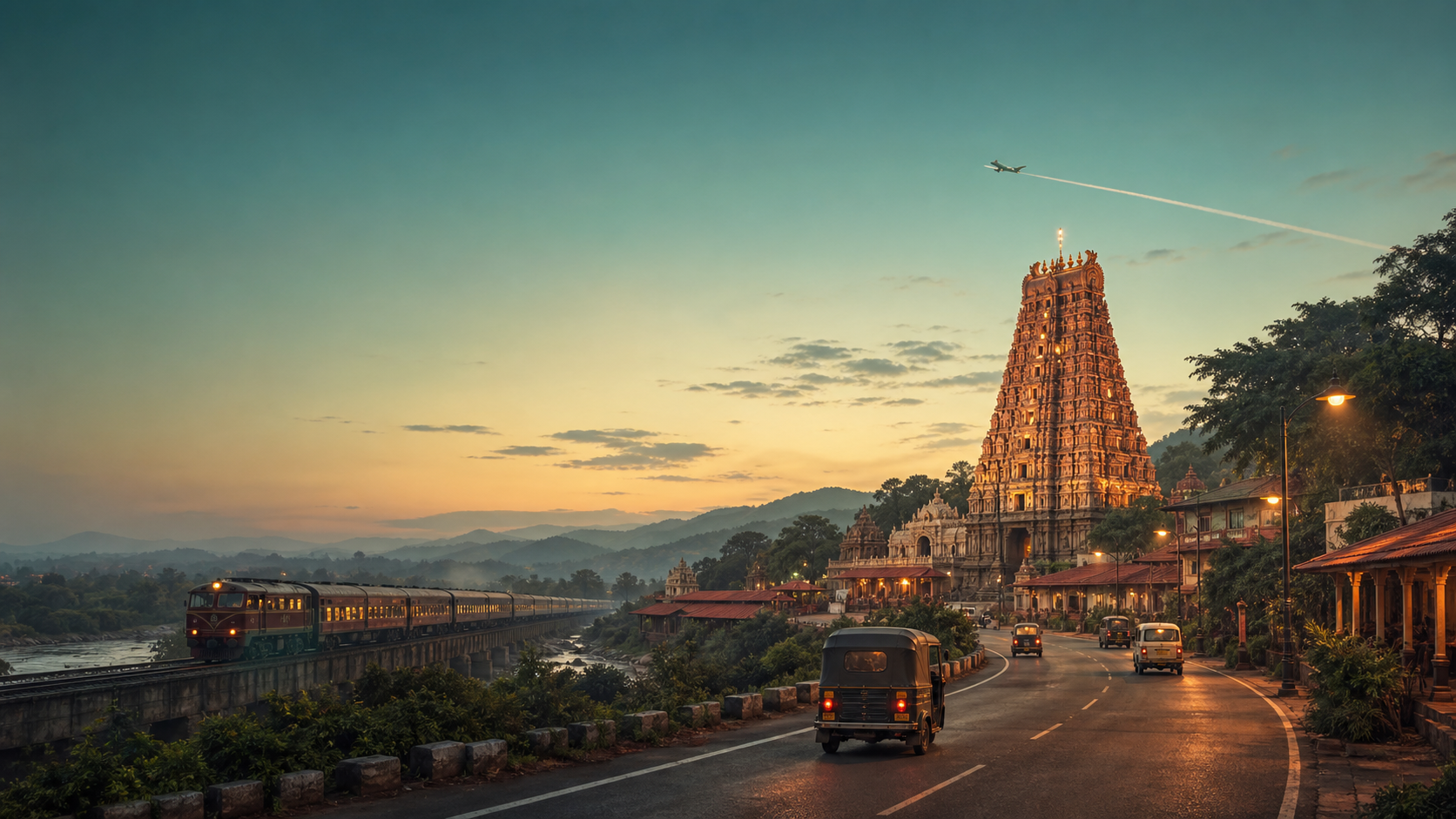
A complete pilgrim record drawn from the existing published article data.
Tracing the Ancient History of Sivagurunathaswamy Temple
The Sivagurunathaswamy Temple's history dates back to the 7th century CE with its original construction under the Chola dynasty. It is celebrated as one of the 275 Paadal Petra Sthalams, having been praised in the Tevaram by saints Appar, Sundarar, and Sambandar. The present masonry structure was largely rebuilt during the 16th century under the patronage of Thanjavur Nayak rulers, showcasing a blend of historical architectural influences. A significant Later Chola period Nataraja bronze was recovered in 1951, with repairs performed in 1953.
Chola Origins
Originally built in the 7th century CE by Chola rulers, the temple's ancient roots are well-documented.
Nayaka Reconstruction
The current masonry structure was reconstructed in the 16th century under the Thanjavur Nayak rulers.
Literary Mentions and Discoveries
The temple is mentioned in the Tevaram by revered saints, and a Chola Nataraja bronze was recovered in the 20th century.
Architectural Marvels of Sivagurunathaswamy Temple
The Sivagurunathaswamy Temple exemplifies the classic Dravidian style of architecture, a testament to the artistic prowess of its builders. Originally constructed by the Cholas, the present masonry structure, rebuilt in the 16th century by the Nayaks, primarily utilizes granite. This architectural blend showcases intricate carvings and a layout meticulously designed for spiritual contemplation. The temple's design elements are characteristic of South Indian temple architecture, creating a sacred space that inspires devotion and reverence.
Dravidian Style
The temple proudly displays the classic Dravidian architectural style, a hallmark of South Indian temple construction.
Material and Craftsmanship
Constructed primarily from granite, the temple features intricate carvings that reflect skilled craftsmanship from various periods.
Chola and Nayak Influence
While originally a Chola creation, the 16th-century Nayak reconstruction significantly shaped its current architectural form.
The Divine Presence: Lord Shiva and Unique Rituals
Dedicated to Lord Shiva, the Sivagurunathaswamy Temple is a significant center for Shaiva tradition. The temple's spiritual narrative includes the legend of "The Creator's Penance," where Lord Brahma regained his creative powers after worshipping Shiva here. Another story, "Varaha's Humble Offering," describes Lord Vishnu in his Varaha avatar paying homage, with a unique sculpted image of Varaha Vishnu revered within the main shrine. Major festivals like Aippassi Annabhishekam, Masi Maham, and Maha Shivaratri are celebrated annually.
Principal Deity and Legends
Lord Shiva is the main deity, central to legends like Brahma's penance and Varaha's worship at this sacred site.
Varaha's Unique Presence
A sculpted image of Varaha Vishnu within the Shiva shrine highlights a rare testament to his profound devotion.
Annual Festivals
Prominent festivals such as Aippassi Annabhishekam, Masi Maham, and Maha Shivaratri are observed with great devotion.
Planning Your Visit to Sivagurunathaswamy Temple
For those planning a visit to the Sivagurunathaswamy Temple, practical information ensures a smooth and enriching spiritual journey. The temple is approximately 5 km from Kumbakonam, which serves as a key hub for bus and train travel. The nearest airport is Tiruchirappalli International Airport (TRZ), about 75 km away. The best times to visit are October–November, February–March, and April. Entry is free, but traditional attire and modest dress are preferred, and footwear must be removed. Allow 2–3 hours for a complete visit.
Getting There
The temple is accessible via Kumbakonam for road and rail, and Tiruchirappalli for air travel, approximately 75 km distant.
Best Time to Visit
Optimal visiting periods include October–November, February–March, and April, offering pleasant weather for pilgrims and tourists.
Visitor Etiquette
Entry is free, with traditional and modest dress encouraged, and footwear removal required before entering the temple premises.
| Deity | Sivagurunathaswamy |
|---|---|
| Form | Lingam (aniconic manifestation of Shiva) |
| Consort | Prabhavalli (Parvati) |
| Sampradaya | Shaiva |
| Significance | As Sivagurunathaswamy, Shiva is revered as the guru, granting creative power to Brahma and receiving worship from deities like Vishnu, Surya, and Chandra. The temple is also significant for Sambandar's unique Angapradakshanam ritual. |
The Creator's Penance
Long ago, Lord Brahma, the cosmic architect, lost his divine power of creation. In despair, he journeyed to this sacred land, performing rigorous penance and devout worship at this very spot. Pleased by Brahma's unwavering devotion, Lord Shiva manifested and restored his lost creative prowess. Thus, this temple became known as a sanctuary where even the greatest deities seek and find renewal, reminding all that humility and devotion can overcome any obstacle, even for the creator himself.
Here, Shiva, the ultimate Guru, rekindled Brahma's creative flame, a testament to the power of devotion.
Experience the rare Angapradakshanam, a unique devotional practice permitted in few Shiva temples like this sacred site.
Related temples: Aakkoor Thanthondreeswarar Temple | Abhaya Varadeeswarar Temple, Adirampattinam
Sivagurunathaswamy Temple: A Sacred Abode in Karuvilacheri
The Sivagurunathaswamy Temple, located in Aduthurai (historically known as Karuvilacheri), Tamil Nadu, is a revered Shaiva shrine dedicated to Lord Shiva. It holds profound spiritual and historical significance, recognized as a Paadal Petra Sthalam. This ancient temple offers devotees a tranquil space for worship and reflection, embodying the rich spiritual heritage of the region. Its administration by the HR&CE department ensures its preservation as a vital center of Hindu faith and culture.
Location and Dedication
Situated in Aduthurai, this temple is dedicated to Lord Shiva, serving as a prominent Shaiva spiritual center in Tamil Nadu.
Spiritual Significance
The temple is revered as a Paadal Petra Sthalam, signifying its profound spiritual importance and mention in ancient Tamil hymns.
Managed Heritage
Administered by the HR&CE department, the temple's rich heritage and daily rituals are carefully maintained for future generations.
Restoration & Conservation
The Sivagurunathaswamy Temple, with its ancient origins and continuous worship spanning centuries, demands relentless restoration and conservation efforts to safeguard its structural integrity and artistic grandeur. Over time, the temple complex has endured the harsh realities of weather, natural calamities, and the inevitable wear and tear of age, necessitating numerous phases of renovation. Significant restoration projects have frequently been spearheaded by the Hindu Religious and Charitable Endowments (HR&CE) Department of Tamil Nadu, often collaborating with local trusts and philanthropic organizations dedicated to heritage preservation. These initiatives meticulously focus on repairing damaged gopurams, mandapams, and prakarams, with extensive documentation preceding any physical intervention. The challenges are formidable, involving the careful handling of ancient stone carvings, delicate frescoes, and intricate stucco figures, all while ensuring that modern interventions respectfully align with the original architectural style and material composition.
Contemporary conservation practices at Sivagurunathaswamy Temple skillfully integrate traditional craftsmanship with advanced scientific techniques. Experts meticulously employ methods such as chemical cleaning to gently remove accumulated grime without compromising the ancient stone, structural reinforcement to stabilize weakened foundations, and the precise replacement of eroded sculptural elements by highly skilled artisans. The paramount emphasis during these processes is always on maintaining the temple's historical authenticity, spiritual ambiance, and aesthetic integrity. Community involvement remains a crucial pillar of these efforts, with local devotees and heritage enthusiasts frequently contributing financial resources and volunteering their time for ongoing upkeep. These continuous and dedicated endeavors are vital not only for preserving a significant architectural marvel but also for safeguarding a living tradition and ensuring that future generations can continue to experience the profound cultural and religious heritage embodied by this sacred site.
🗺 How to Reach
Hover a card to animate the journey on the map
Route to Karuvilacheri
Common Questions
Where is Sivagurunathaswamy Temple: 7th-Century Chola Marvel located?
Sivagurunathaswamy Temple: 7th-Century Chola Marvel is documented at Karuvilacheri, Tamil Nadu.
Which deity is associated with Sivagurunathaswamy Temple: 7th-Century Chola Marvel?
Sivagurunathaswamy Temple: 7th-Century Chola Marvel is associated with Shiva.
Related Temples


A Living Covenant