
A complete pilgrim record drawn from the existing published article data.
Historical Foundation
The Pallava-Vassal Nexus: Inscriptional Evidence & Stylistic Attribution
Fortification Layers: From Spiritual Enclosure to Colonial Battleground
Colonial Echoes & National Memory
Architecture & Craftsmanship
Hybrid Innovation: Rock-Cut Cavern Meets Structural Grandeur
Granite Mastery: Engineering the Divine Form
Iconographic Precision: Flaming Adishesha & Cosmic Wall Sculptures
The Presiding Deity
Sathyamurthi Perumal & Azhagiya Neyyar: Dual Manifestations of Truth
Name: Sathyamurthi Perumal (‘Form of Truth’) / Azhagiya Neyyar (‘The Enchanter’)
Form: Standing (Sathyamurthi) and Reclining (Azhagiya Neyyar / Anantasayi)
Consort: Ujeevana Thayar (‘Source of Vitality’), an aspect of Lakshmi
Iconography: Sathyamurthi holds shankha, chakra, gada, and padma; stands on rock with consorts; Azhagiya Neyyar reclines on Adishesha amidst cosmic waters, eyes open in ari thuyil (conscious, all-knowing sleep)
Unique Feature: Only temple where reclining Vishnu is explicitly named ‘Azhagiya Neyyar’ and claimed larger than Srirangam’s Ranganatha
Ujeevana Thayar: The Consort Who Bestows Life
Secondary Deities: Hayagriva, Vamana & the Cosmic Serpent
Festivals & Living Traditions
Vaikasi Car Festival: The Triumph of Divine Mobility
Krishna Jayanti & Adi Puram: Celebrating Divine Play and Primordial Power
Daily Rituals & Musical Legacy
Plan Your Visit
Logistics & Accessibility
Dress Code & Etiquette
Temple Map & Nearby Circuit
Related temples: Aakkoor Thanthondreeswarar Temple | Abeyadana Temple
Sacred Stories & Mythology
The Sage, the King, and the Boar: The Origin of Meyyam Hill
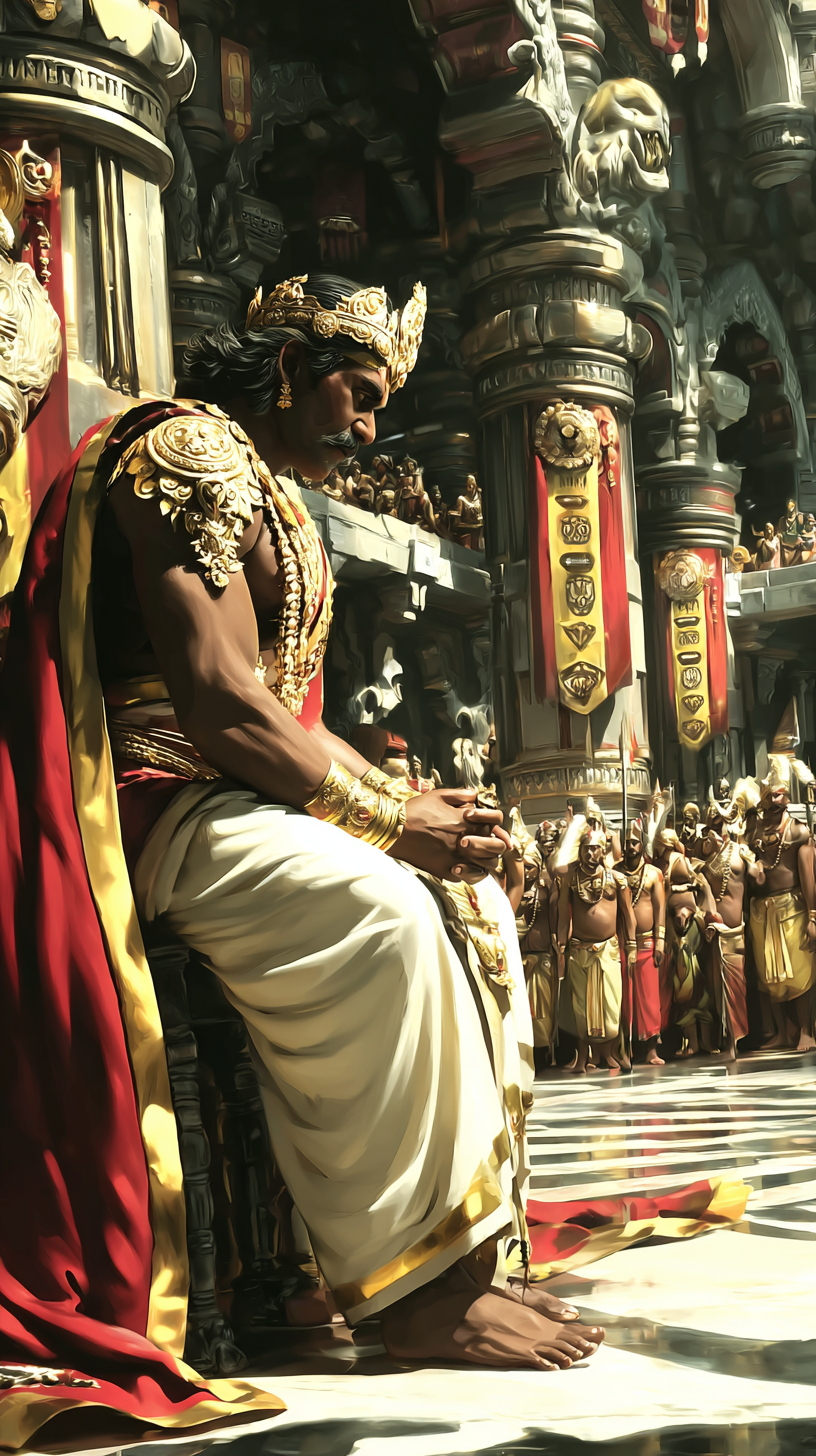
According to the Brahmanda Purana, the land of Thirumayam was once the hermitage of the sage Satya, whose unwavering penance by the banks of a river pleased Vishnu. As a boon, Vishnu promised to appear whenever Satya called upon him. To allow the sage to remain in perpetual proximity, Vishnu performed three transformations: the river became the temple’s sacred pushkarani; the banyan tree became the eternal Asvatta (peepal); and the rocky hillock became Meyyam (‘the true abode’). Later, King Pururava of the lunar dynasty disturbed the peace of the region. Vishnu, in compassion for Satya’s tapas, assumed the form of a wild boar (Varaha avatar) and caused havoc in Pururava’s kingdom. When the furious king pursued the boar to the hermitage, Vishnu revealed his true form to both sage and sovereign, instructing Pururava to build the temple to commemorate their joint salvation. Thus, Thirumayam is not just a place of worship—it is a geographic record of divine intervention, royal humility, and the sanctification of landscape through devotion.
Adishesha’s Transformation: From Tamasic Serpent to Satvik Guardian
A second foundational narrative, also sourced from the Brahmanda Purana, tells of Adishesha, the primordial serpent upon whom Vishnu reclines. Though devoted, Adishesha was burdened by tamasic qualities—laziness, inertia, ignorance. Seeking purification, he undertook severe penance at Thirumayam, meditating for millennia beneath the banyan tree. Impressed by his sincerity, Vishnu appeared as Hayagriva, the divine teacher, and bestowed upon Adishesha the knowledge to transcend tamas. As a final blessing, Vishnu granted him the power to emit protective flames from his hoods—a capability later invoked when asuras attacked the sanctum. This legend explains the unique iconography: Adishesha is not merely a couch, but an awakened, enlightened being whose fiery aura safeguards the truth embodied by Sathyamurthi. Devotees lighting lamps before Adishesha’s shrine pray not just for protection, but for the inner fire to burn away ignorance.
Chandra’s Redemption: The Moon God’s Darshan as Vamana
The third pillar of Thirumayam’s mythology involves Chandra, the moon god, cursed by Daksha for favouring one wife over others. Reduced to near-invisibility, Chandra performed intense penance at Thirumayam. Moved by his devotion, Vishnu appeared before him not as the cosmic recliner, but as Vamana, the dwarf who measured the three worlds. Through this encounter, Chandra regained his lustre and his rightful place in the celestial order. This episode establishes Thirumayam as a site of cosmic restoration—where divine avatars intervene not only to destroy evil, but to heal imbalance, restore dignity, and re-establish harmony in both heaven and earth.
Saints, Poets & Devotees
Thirumangai Alvar: The Divine Chronicler
Later Literary Echoes: From Brahmanda Purana to Divya Kavi
Modern Devotional Continuity
Records, Marvels & Heritage
Engineering Marvels: Cavern Sanctum & Fort Integration
UNESCO-Level Uniqueness: The Dual-Shrine Paradigm
Conservation & Contemporary Significance
🗺 How to Reach
Hover a card to animate the journey on the map
Route to Tirumayam
Common Questions
Where is Sathyamurthi Perumal Temple, Thirumayam: Tamil Nadu’s Divya located?
Sathyamurthi Perumal Temple, Thirumayam: Tamil Nadu’s Divya is documented at Tamil Nadu.
Which deity is associated with Sathyamurthi Perumal Temple, Thirumayam: Tamil Nadu’s Divya?
Sathyamurthi Perumal Temple, Thirumayam: Tamil Nadu’s Divya is associated with Vishnu.
Related Temples


A Living Covenant