A complete pilgrim record drawn from the existing published article data.
A Glimpse into Sampathgiri's Ancient Origins
The Sampathgiri temple boasts a rich history, with its origins tracing back to ancient times. While specific foundation dates are often shrouded in antiquity, the temple's development and patronage are strongly linked to the powerful Vijayanagara Kings. Their architectural and spiritual contributions significantly shaped the temple's structure and prominence. These historical connections highlight a continuous tradition of worship and royal support for this sacred site over centuries.
Historical Roots
The temple's construction dates back to ancient times, suggesting a long-standing history of religious reverence and development in the region.
Vijayanagara Patronage
The Vijayanagara Kings played a crucial role in the temple's expansion and renovation, leaving an indelible mark on its architectural style and cultural heritage.
Architectural Heritage of Sampathgiri: A Vijayanagara Marvel
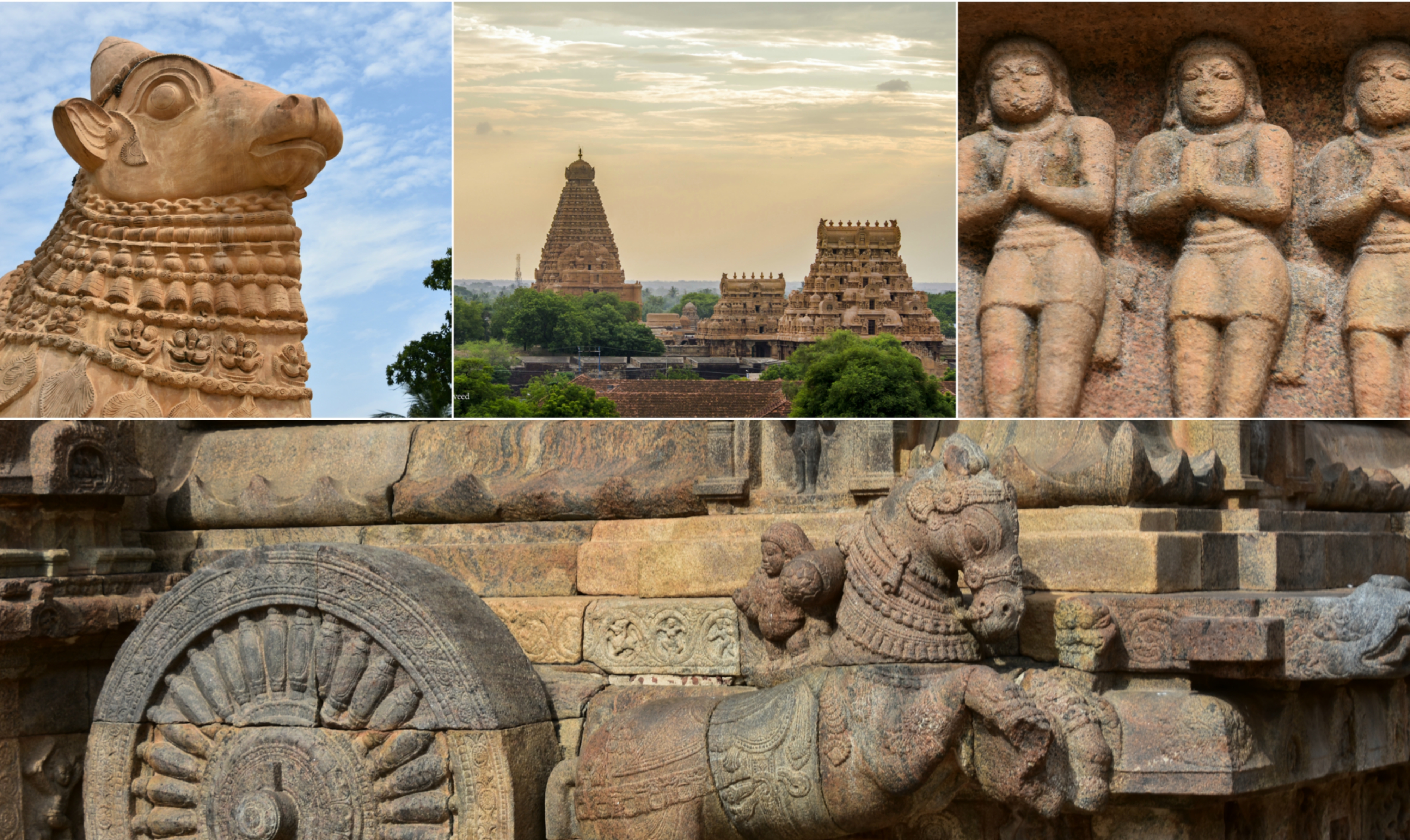
The Sampathgiri temple showcases the distinctive Vijayanagara architectural style, characterized by intricate carvings, grand mandapams, and robust stone structures. This style reflects the artistic and engineering prowess of the Vijayanagara period. The temple's design harmoniously integrates with its hill setting in Polur, utilizing the natural contours to enhance its spiritual ambiance and defensive aspects. Its elevated position also offers panoramic views, adding to the temple's unique charm and architectural appeal.
Distinctive Vijayanagara Style
The temple exhibits classic Vijayanagara architectural elements, including elaborate sculptures, ornate pillars, and a layout typical of the period's grand temple complexes.
Hilltop Integration
Its construction on a hill is a key feature, blending the temple's design with the natural landscape and offering a unique pilgrimage experience.
Planning Your Pilgrimage to Sampathgiri
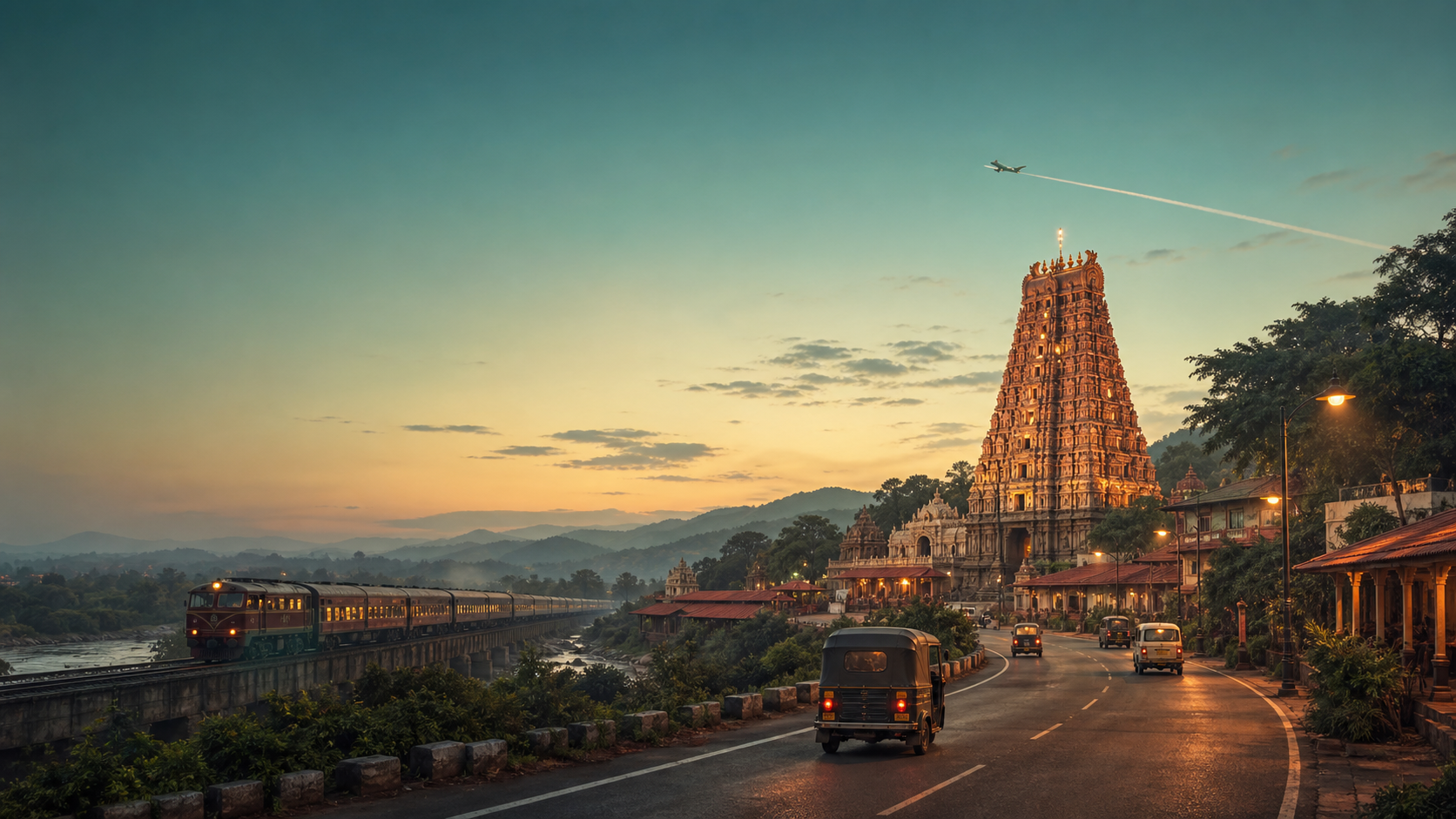
Visiting Sampathgiri offers a spiritual retreat to Lord Narasimha's hill shrine in Polur, Tamil Nadu. The temple is accessible via various transport options, making it convenient for devotees and tourists. For those traveling by bus, Chennai is approximately 182 km away, with routes taking around 4 hours. Train travelers can alight at Katpadi Junction (KPD), about 52 km from the temple. Puducherry Airport (PNY) is the nearest airport, about 97 km away, requiring further travel by road. Planning your journey ensures a smooth and fulfilling visit.
Getting There
Sampathgiri is accessible by road from Chennai (~182 km by bus). The nearest train station is Katpadi Junction (KPD), approximately 52 km away. Puducherry Airport (PNY) is about 97 km from the temple.
Visitor Guidelines
Visitors should plan for a drive of approximately 4.5 hours if traveling by car. Further details on timings, entry, and dress code should be verified prior to arrival.
| Deity | Lord Narasimha |
|---|---|
| Form | Lord Narasimha is the fourth incarnation of Vishnu, depicted as a half-man, half-lion deity, symbolizing divine protection and the destruction of evil. |
| Consort | null |
| Sampradaya | Vaishnavite |
| Significance | The Sampathgiri temple holds immense importance in the Vaishnavite tradition, revered as an Abhimana Kshetram dedicated to Lord Narasimha, symbolizing divine protection. |
The Unsung Legends of Sampathgiri
While many temples are rich with specific mythological tales, the provided information does not detail a unique legend associated with the Sampathgiri Lord Narasimha Temple. However, the very presence of Lord Narasimha evokes stories of divine protection and the triumph of good over evil, echoing the universal narratives of Vaishnavite tradition and His fierce devotion to His bhaktas.
In times of dire need, Lord Narasimha manifests to protect His devotees and uphold righteousness.
The roar of Narasimha dispels all fear, bringing solace and victory to those who seek His refuge.
Welcome to Sampathgiri: Lord Narasimha's Hill Shrine
The Sampathgiri Lakshmi Narasimha Swamy Perumal Temple stands as a prominent Vaishnavite sacred site nestled in Polur, Tamil Nadu. Dedicated to Lord Narasimha, an incarnation of Vishnu, this ancient hill shrine attracts devotees seeking blessings and spiritual solace. Its serene location and historical depth make it a significant pilgrimage destination. The temple's presence in the region underscores its enduring importance to the local community and the broader Vaishnavite tradition.
Location and Significance
Situated in Polur, Tamil Nadu, Sampathgiri is renowned as a hill shrine. It serves as a vital center for Vaishnavite worship, drawing pilgrims from various regions.
The Presiding Deity
The temple is consecrated to Lord Narasimha, the man-lion avatar of Vishnu. His worship here emphasizes his role as a benevolent protector and giver of boons.
Lord Narasimha: The Divine Protector of Sampathgiri
Lord Narasimha, the main deity of Sampathgiri, holds immense spiritual significance within the Vaishnavite tradition. Revered as the fourth incarnation of Lord Vishnu, he embodies divine protection and the triumph of good over evil. His unique form, half-man and half-lion, symbolizes fierce strength combined with compassionate grace, specifically invoked for safeguarding devotees from adversity. Pilgrims visit Sampathgiri to seek his powerful blessings for courage, protection, and liberation.
The Man-Lion Incarnation
Lord Narasimha's form, a fusion of human and lion, represents the ultimate protector who emerges to restore dharma and protect his devotees.
Vaishnavite Devotion
As a central figure in Vaishnavism, Lord Narasimha is worshipped for his fierce protection and benevolent nature, offering solace and strength to his followers.
🗺 How to Reach
Hover a card to animate the journey on the map
Verified routes to Sampathgiri
Common Questions
Where is Sampathgiri: Ancient Hill Abode of Narasimha located?
Sampathgiri: Ancient Hill Abode of Narasimha is documented at Polur, Tamil Nadu.
Which deity is associated with Sampathgiri: Ancient Hill Abode of Narasimha?
Sampathgiri: Ancient Hill Abode of Narasimha is associated with Lord Narasimha.