



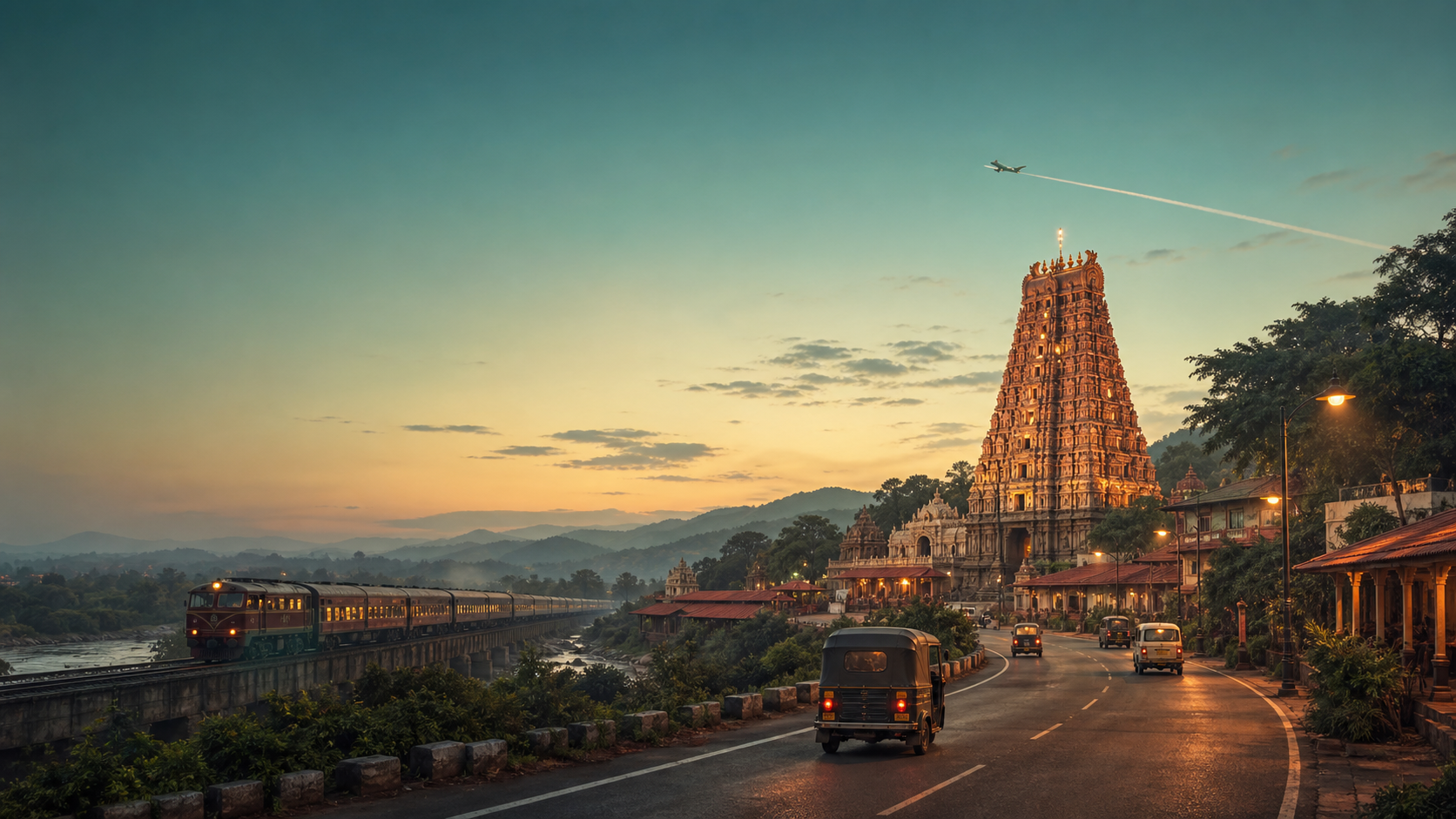
A complete pilgrim record drawn from the existing published article data.
A Journey Through Time: The History of Pojeeswarar Temple
The historical origins of the Samayapuram Pojeeswarar Temple remain largely unrecorded, with the builder and dynasty responsible for its initial construction lost to time. Despite this lack of specific historical documentation, the temple's enduring presence suggests a deep-rooted antiquity and continuous worship spanning many centuries. It stands as a timeless monument, reflecting the persistent spiritual devotion of generations, rather than the specific patronage of a known dynasty or builder. Its granite construction speaks to a durable legacy.
Ancient Origins
The precise period of the temple's construction and its original patron dynasty are unknown, hinting at an ancient foundation that predates recorded history.
Enduring Legacy
Despite the absence of specific historical records, the temple has maintained its spiritual significance and continues to be a site of active worship, showcasing its enduring legacy.
Architectural Grandeur of Samayapuram Pojeeswarar
The Samayapuram Pojeeswarar Temple exemplifies the classic Dravidian architectural style, a hallmark of South Indian temple construction. Built predominantly from granite, the temple features robust structures and intricate carvings that are characteristic of this tradition. While specific details on its gopurams and mandapams are not extensively documented, the overall layout and design adhere to the aesthetic principles of Dravidian architecture, showcasing skilled craftsmanship and a deep understanding of sacred geometry in its construction.
Dravidian Style Elements
The temple's architecture follows the traditional Dravidian style, known for its towering gopurams, pillared mandapams, and detailed sculptures, reflecting a rich artistic heritage.
Material and Craftsmanship
Constructed from durable granite, the temple showcases the intricate craftsmanship of ancient artisans. The material ensures longevity and allows for fine sculptural details.
Lord Shiva: The Presiding Deity and Temple Mythology
Lord Shiva is revered as the presiding deity of the Samayapuram Pojeeswarar Temple. A significant aspect of the temple's mythology revolves around Shiva's form as Mrityunjay, the 'Conqueror of Death.' This powerful manifestation is particularly prominent near the temple's entrance, imbuing the site with profound spiritual meaning. Devotees believe that seeking the blessings of Mrityunjay Shiva here offers liberation from the fear of mortality and the cycle of death, emphasizing Shiva's supreme dominion over life and death.
Lord Shiva as Pojeeswarar
The primary deity worshipped in the temple is Lord Shiva, affectionately known as Pojeeswarar, embodying the divine protector and bestower of blessings.
The Mrityunjay Form
A key mythological narrative centers on Shiva as Mrityunjay, the 'Conqueror of Death.' This form is believed to grant devotees spiritual strength and protection from the fear of mortality.
Planning Your Pilgrimage to Samayapuram Pojeeswarar Temple
For those planning a visit to the Samayapuram Pojeeswarar Temple, essential information ensures a smooth and respectful pilgrimage. While specific timings should be confirmed with the temple office, entry is generally free. The months of Margazhi (December–January) and the period of Maha Shivaratri are considered the best times to visit for a vibrant spiritual experience. A modest dress code is required, with traditional attire often preferred. Visitors can typically expect to spend 1–2 hours exploring the temple.
Visitor Information
Temple timings can be confirmed by contacting the temple office. Entry is free. The best times to visit are during Margazhi (December–January) and Maha Shivaratri. A modest dress code is required.
Reaching the Temple
The temple is easily accessible. Samayapuram Bus Stand is within the town, with regular buses from Trichy Central Bus Stand (~15 km). Tiruchirappalli Junction Railway Station (TPJ) is ~12 km away, and Tiruchirappalli International Airport (TRZ) is ~15 km away. Parking is available near the temple.
| Deity | Shiva |
|---|---|
| Form | Pojeeswarar (Lingam form). Pojeeswarar is a manifestation of Shiva, primarily worshipped in the aniconic Lingam form. |
| Consort | Anandavalli |
| Sampradaya | Shaiva |
| Significance | As Mrityunjay, Shiva is revered as the conqueror of death, offering liberation from mortality to devotees. |
The Lord Who Conquers Death
Though a grand origin story remains veiled in time, the very presence of Lord Shiva as Mrityunjay near the temple's entrance speaks volumes. This powerful form of Shiva, the 'Conqueror of Death,' imbues Samayapuram Pojeeswarar Temple with a profound spiritual significance. Devotees believe that seeking refuge here, under the gaze of Mrityunjay, can lead to liberation from the cycle of mortality and the fear of death itself. It is a place where the eternal truth of Shiva's dominion over life and death is deeply felt, offering solace and spiritual strength to those who come seeking transcendence and protection from the ultimate end.
Seeking refuge under Lord Mrityunjay can lead to liberation from the cycle of mortality and the fear of death itself.
Experience the eternal truth of Shiva's dominion over life and death, finding solace and spiritual strength.
Related temples: Aakkoor Thanthondreeswarar Temple | Abhaya Varadeeswarar Temple, Adirampattinam
Discovering Samayapuram Pojeeswarar Temple
The Samayapuram Pojeeswarar Temple is a significant Hindu pilgrimage site nestled in the spiritual landscape of Tamil Nadu. Located in Trichy, this revered temple is dedicated primarily to Lord Shiva, known here as Pojeeswarar. It stands as a testament to Shaiva tradition, drawing devotees seeking spiritual solace and blessings. The temple's presence in Samayapuram, a region renowned for its sacred sites, underscores its importance within the religious fabric of the state, offering a tranquil space for worship and reflection.
Location and Significance
Situated in Samayapuram, Trichy, the temple is easily accessible and holds a prominent place among the region's sacred destinations. Its location contributes to its role as a spiritual hub for pilgrims.
Primary Deity
Lord Shiva is the presiding deity of the temple, worshipped as Pojeeswarar. This manifestation of Shiva is central to the temple's spiritual identity and the focus of devotees' prayers.
Cultural Impact
The Samayapuram Pojeeswarar Temple transcends its role as a mere place of worship, serving as a vibrant epicenter for the cultural life of Samayapuram and its surrounding villages. Throughout the year, the temple's calendar dictates the rhythm of local festivals, drawing communities together for elaborate processions, traditional music performances, and classical dance recitals, particularly during annual Brahmotsavam and Shivaratri celebrations. These events not only reinforce spiritual devotion but also provide a crucial platform for the preservation and promotion of indigenous art forms, including Nadaswaram and Thavil ensembles, Bharatanatyam, and various folk arts. Local artisans often find inspiration and patronage through the temple, crafting devotional items, intricate floral decorations, and traditional attire, ensuring that ancient skills and aesthetic sensibilities continue to thrive within the community, deeply interwoven with the temple's spiritual narrative. Beyond its direct influence on arts and festivals, the Pojeeswarar Temple significantly contributes to the social fabric and collective identity of the region. It acts as a powerful unifying force, fostering a strong sense of community among devotees who participate in its rituals, voluntary services, and communal feasts. The temple's ancient narratives and miracles are deeply embedded in local folklore and oral traditions, passed down through generations, shaping moral values and societal norms. Furthermore, the temple often engages in various charitable activities, supporting local education, healthcare, and welfare initiatives, thereby extending its benevolent reach beyond spiritual guidance. Its architectural grandeur and historical significance also attract scholars and tourists, indirectly boosting the local economy and promoting cultural exchange, solidifying its status as a pivotal landmark in Tamil Nadu's rich heritage.🗺 How to Reach
Hover a card to animate the journey on the map
Route to Trichy
Common Questions
Where is Samayapuram Pojeeswarar Temple: Shiva's Sacred Abode located?
Samayapuram Pojeeswarar Temple: Shiva's Sacred Abode is documented at Trichy, Tamil Nadu.
Which deity is associated with Samayapuram Pojeeswarar Temple: Shiva's Sacred Abode?
Samayapuram Pojeeswarar Temple: Shiva's Sacred Abode is associated with Shiva.
Related Temples


A Living Covenant