



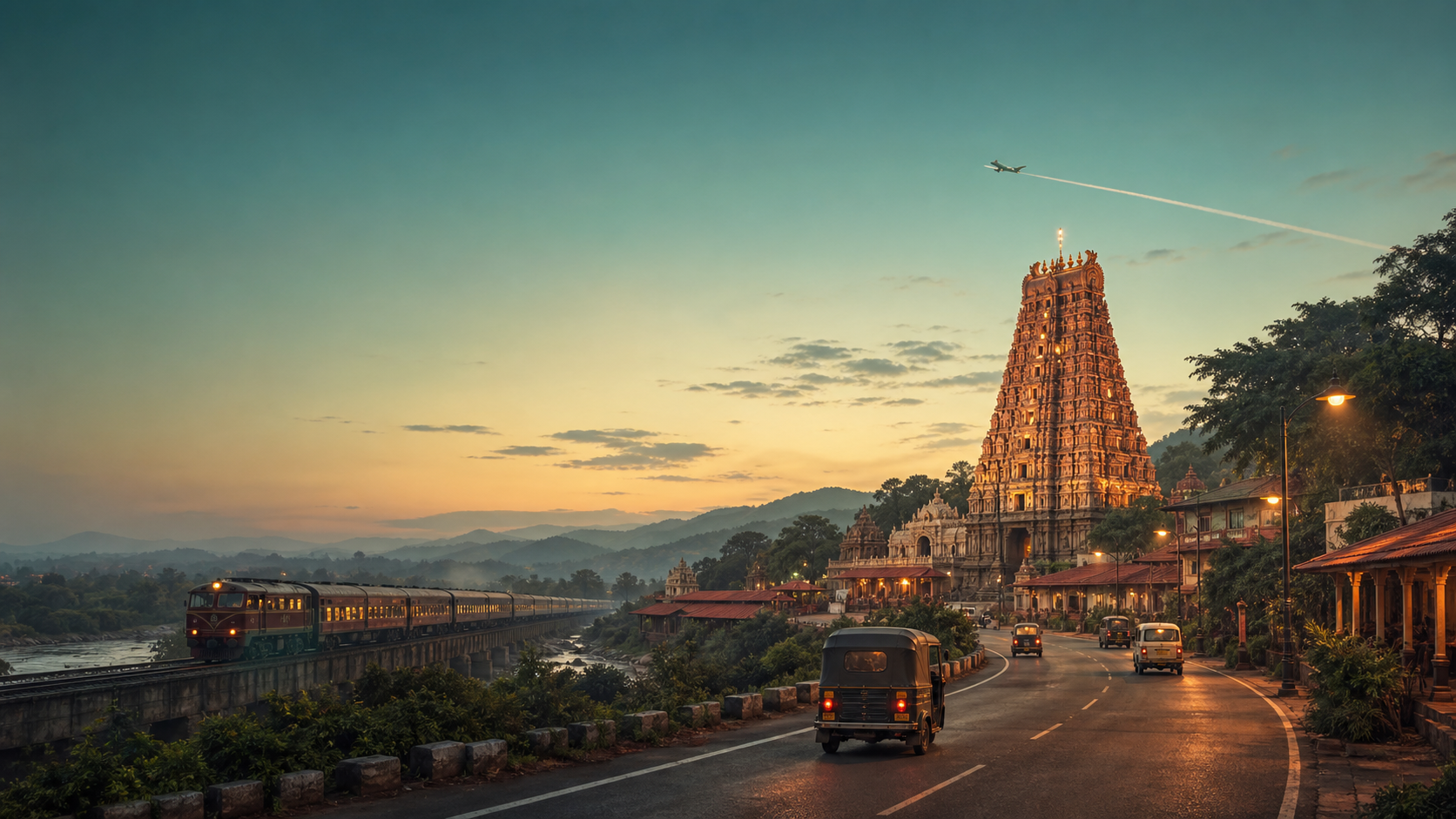
A complete pilgrim record drawn from the existing published article data.
Historical Foundation
Early Pallava Roots and Rock-Cut Legacy
Chola and Later Dynastic Patronage
"The inscriptions at Thiruvellarai are vital chronicles, painting a vivid picture of royal patronage that spanned centuries, from the formative Pallava rock-cut phase to the expansive Chola endowments and beyond."
What is a Divya Desam?
A Divya Desam is one of the 108 Vishnu temples that are mentioned in the works of the Alvars, the Tamil poet-saints of the 6th to 9th centuries CE. These temples are considered the most sacred abodes of Vishnu and are highly revered in the Sri Vaishnava tradition.
Architecture & Craftsmanship

An artistic rendering of the Pundarikakshan Perumal Temple's traditional Dravidian gopuram.
Dravidian Grandeur and Structural Elements
- Sanctum sits on a 15 m (50 ft) tall artificial hill.
- Unfinished Rajagopuram estimated at 22 m (72 ft).
- Temple complex covers 2.62 ha (6.5 acres).
The Swastika Tank and Dual Seasonal Gateways

The unique swastika-shaped temple tank, a historical engineering marvel from 800 CE.
Sculptural and Mural Riches
"The Pundarikakshan Perumal Temple's art is a chronological tapestry, from the raw power of Pallava rock-cut Narasimha reliefs to the delicate devotional narratives of Vijayanagara and Nayak murals."
The Presiding Deity
Lord Pundarikakshan
Main Deity Form: Pundarikakshan (standing posture, facing east)
Other Names: Sengamalakannan (Lotus-Eyed Krishna), Thamarai Kannan, Maayavan (during Dakshinayanam), Thai Maatha Naayagan (during Uttarayanam)
Consort: Pankajavalli Thayar (also Shenbagavalli, Peri Pirattiyaar Lakshmi Devi)
Unique Iconography: Dual seasonal names tied to ritual gateway access; belief that a single visit equals pilgrimage to all 108 Divya Desams.
Mythological Significance: Appeared to Sibi Chakravarthy, Markandeya, Lakshmi, Shiva, Garuda, Bhoomadevi, Brahma, Indra, Chandra.
Lord Pundarikakshan and His Manifestations
Pankajavalli Thayar, the Divine Consort
Secondary Deities and Worshippers
Festivals & Living Traditions
Annual Grandeur: The Chariot Festival
What is Annadhanam?
Annadhanam is a sacred Hindu practice of offering free food to devotees, guests, and the needy. It is considered a highly meritorious act, believed to bring immense blessings and spiritual merit.
Seasonal Gateway Ceremonies
Daily Rituals and Offerings
The temple observes a strict schedule of six daily pujas (worship services), known as Kala Pujas, performed from morning until night. These include:
- Ushathkalam: 7 a.m.
- Kalasanthi: 8 a.m.
- Uchikalam: 12 p.m.
- Sayarakshai: 6 p.m.
- Irandamkalam: 7 p.m.
- Ardha Jamam: 10 p.m.
Plan Your Visit
Location and Accessibility
The temple is conveniently located near the major city of Tiruchirappalli, also known as Trichy, making it easily accessible for travelers.
- Nearest City: Tiruchirappalli (~27 km)
- Nearest Airport: Tiruchirappalli International Airport (TRZ), approximately 27 km away.
- Nearest Railway: Tiruchirappalli Junction Railway Station, also about 27 km from the temple.
From Tiruchirappalli, taxis, auto-rickshaws, and local buses are readily available to reach Thiruvellarai village.
Best Time to Visit and Suggested Duration
The ideal time to visit depends on your interests:
- March–April: Experience the grandeur of the annual Chariot Festival. Be prepared for crowds and warmer weather.
- January 15 – June 14 (Uttarayanam): Access the special Utharayana Vaasal. This period generally offers pleasant weather.
- July 15 – January 14 (Dakshinayanam): Access the Dhakshanayana Vaasal.
- October–February: Generally cooler and drier months, comfortable for exploring.
Nearby Temple Circuit
Thiruvellarai can be easily integrated into a wider temple tour of the Tiruchirappalli region, which is rich in ancient shrines:
- Sri Ranganathaswamy Temple, Srirangam: One of the largest functioning Hindu temples in the world, dedicated to Vishnu.
- Rockfort Temple (Ucchi Pillayar Temple): A historic temple complex built on a massive rock outcrop in Tiruchirappalli city.
- Jambukeswarar Temple, Thiruvanaikaval: A renowned Pancha Bhoota Stalam dedicated to Shiva, representing the element of water.
- Samayapuram Mariamman Temple: A popular Goddess temple revered for its healing powers.
Cultural Experience: Consider visiting during a festival to witness the vibrant living traditions and participate in the community's centuries-old customs.
Related temples: Aakkoor Thanthondreeswarar Temple | Abeyadana Temple
Sacred Stories & Mythology
The Legend of Sibi Chakravarthy and Markandeya
The White Boar and Vishnu's Emergence
King Sibi Chakravarthy, pursuing a white boar, witnessed its disappearance into a sacred hole where Sage Markandeya meditated. Guided by the sage, Sibi filled the hole with milk, leading to the miraculous manifestation of Lord Vishnu as Pundarikakshan. This event marks the divine origin of the temple and its central deity.
Other Divine Manifestations and Epical Connections
Saints, Poets & Devotees
Alvar Contributions to Divine Literature
"The hymns of Periyalvar and Thirumangai Alvar elevate Thiruvellarai, not merely as a temple, but as a vibrant narrative woven into the very fabric of Vaishnava devotion and Tamil literary tradition."
Acharyas and a Center for Scholarly Pursuits
A Legacy of Devotion and Community
Records, Marvels & Heritage
The Pundarikakshan Perumal Temple stands as a repository of historical records, architectural marvels, and unique distinctions that underscore its profound heritage and enduring significance.
Unique Distinctions and Historical Records
Engineering and Acoustic Marvels

Intricate Pallava rock-cut sculptures depict various deities and mythological scenes, a testament to ancient craftsmanship.
Heritage Status and Conservation
🗺 How to Reach
Hover a card to animate the journey on the map
Route to Thiruvellarai
Common Questions
Where is Pundarikakshan Perumal Temple, Thiruvellarai located?
Pundarikakshan Perumal Temple, Thiruvellarai is documented at Thiruvellarai, Tamil Nadu.
Which deity is associated with Pundarikakshan Perumal Temple, Thiruvellarai?
Pundarikakshan Perumal Temple, Thiruvellarai is associated with Vishnu.
Related Temples


A Living Covenant