
A complete pilgrim record drawn from the existing published article data.
Historical Foundation
The Chera Dream & the Dawn of Devotion
Epigraphical Evidence: Stones That Speak in Chola & Pandya Tongues
Layered Patronage: From Chera Vision to Nayak Grandeur
Architecture & Craftsmanship
Dravidian Grammar in Granite and Gold
The Pandyan Ambulatory: A Covered Cosmos
Gold, Vimana, and the Alchemy of Light
The Presiding Deity
Dhandapani: The Staff-Bearing Sage
Form: Youthful, shorn-headed, bare-chested, wearing only a simple loincloth (kaupina). Seated in padmasana on a lotus pedestal, right hand holding a dhandam (staff), left hand resting on knee in chinmudra. No crown, no weapons, no peacock mount — pure, unadorned consciousness.
Theology: Represents Murugan’s conscious withdrawal from worldly hierarchy after the gnana-palam contest. His staff symbolises tapas (austerity) as the ultimate instrument of liberation — not a weapon of war, but a support for unwavering focus. His shorn head signifies severance from egoic identity; his loincloth, radical simplicity.
Iconographic Uniqueness: Palani is the only Murugan abode where the primary deity is worshipped exclusively in this ascetic form. Swamimalai shows him as teacher, Tiruttani as victor, Pazhamudircholai as lover — but Palani reveals him as the parama yogi, beyond roles, beyond forms.
Navapashanam: The Self-Renewing Alchemical Idol
Uthsavamoorthy: The Golden Chariot & Living Presence
Festivals & Living Traditions
Thaipusam: The Ascent of Sacrifice
Panguni Uthiram & Surasamharam: Cosmic Marriage and Divine Victory
Daily Rhythms: Four Pujas and the Paḷḷi-Arai Lullaby
Plan Your Visit
Getting There: Foothills to Summit
What to Do: Beyond the Sanctum
When to Go & What to Know

Golden vimana gleaming at dawn — the visual signature of Palani’s divine sovereignty.

The self-renewing Navapashanam idol — a 1,600-year-old alchemical marvel.

Thaipusam ascent: devotion made visible, burdens made sacred.

Bhogar’s shrine — the earthly threshold to the Siddhar’s eternal cave.
Internal Links: Swamimalai Murugan Temple — The Guru Form | Tiruttani Murugan Temple — The Victorious Warrior
Related temples: Aakkoor Thanthondreeswarar Temple | Abhaya Varadeeswarar Temple, Adirampattinam
Sacred Stories & Mythology
The Hill That Would Not Move: Idumban and the Cosmic Balance
Before Murugan came to Palani, the hill itself was a divine agent. According to the Skanda Purana and local sthala purana, the great sage Agastya commanded the asura Idumban to carry two hills — Sivagiri and Sakthigiri — from the Himalayas to South India to balance the earth, which had tilted under the weight of gods gathering at Kailasha. Exhausted, Idumban rested at present-day Palani. Instantly, Murugan manifested atop the hill and declared it would remain there forever — not as a burden, but as a sthala (sacred site) for eternal contemplation. When Idumban tried to lift it, he could not. Thus, Palani was not chosen; it was claimed — a piece of Kailasha made permanent on Tamil soil. This myth encodes deep ecological wisdom: the hill is not inert geography, but sentient, anchored by divine will.
The Fruit of Knowledge and the Birth of Renunciation
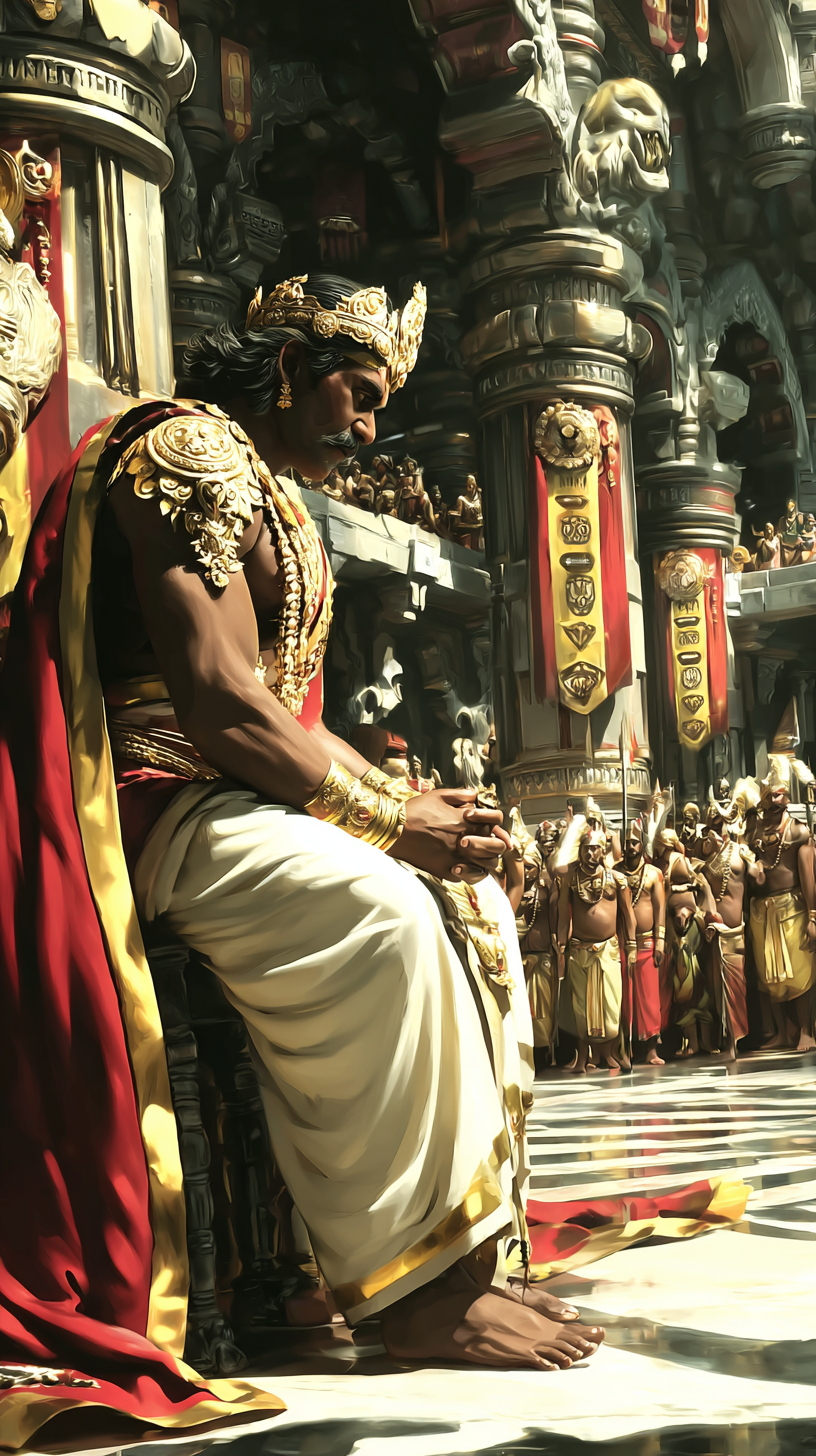
The defining moment in Murugan’s Palani narrative is the gnana-palam (fruit of knowledge) contest. When sage Narada presented Shiva with this singular fruit, Shiva decreed it would go to whichever son first circumambulated the world. Murugan, astride his peacock, soared forth. Ganesha, understanding that the universe is contained within his parents — Shiva and Parvati — simply walked around them thrice. Declared winner, he received the fruit. Murugan, returning exhausted, felt profound disillusionment — not with his brother, but with the very framework of cosmic competition. His fury was not rage, but the burning clarity of awakening: true knowledge lies not in circumambulating the world, but in dissolving the illusion of separation that makes a world worth circling. He renounced his princely status, severed his hair, and retreated to Palani — not in defeat, but in sovereign choice. Here, he became Dhandapani: the staff-bearer who needs no throne.
The Five Nectars: How Ganesha Soothed the Sage
Even in renunciation, Murugan’s sorrow resonated. To ease his anguish, Ganesha prepared Panchamritam — a blend of five sacred substances: milk, curd, honey, jaggery, and ghee. Offered with love, this nectar soothed Murugan’s fiery tapas and restored equilibrium. This act birthed Palani’s most beloved prasadam — now Geographically Indicated, meaning its authentic preparation (using local Palani Hills water, specific sugarcane jaggery, and traditional copper vessels) is legally protected. Panchamritam is thus more than food: it is myth made edible, reconciliation made tangible, and the divine sibling bond preserved in every spoonful.
Saints, Poets & Devotees
Arunagirinathar and the Thirupugazh Revolution
The Siddhar Lineage: Bhogar’s Eternal Vigil
Modern Devotees: From Cinema Stars to Common Pilgrims
Records, Marvels & Heritage
Engineering Wonders: Rope Cars, Railways, and Ancient Tunnels
Geographical Indication & Culinary Sanctity
Conservation & Controversy: The Navapashanam Debates
🗺 How to Reach
Hover a card to animate the journey on the map
Route to Palani
Common Questions
Where is Palani Murugan Temple: The Sacred Dhandapani Abode of Tamil located?
Palani Murugan Temple: The Sacred Dhandapani Abode of Tamil is documented at Tamil Nadu.
Which deity is associated with Palani Murugan Temple: The Sacred Dhandapani Abode of Tamil?
Palani Murugan Temple: The Sacred Dhandapani Abode of Tamil is associated with Murugan.
Related Temples


A Living Covenant