



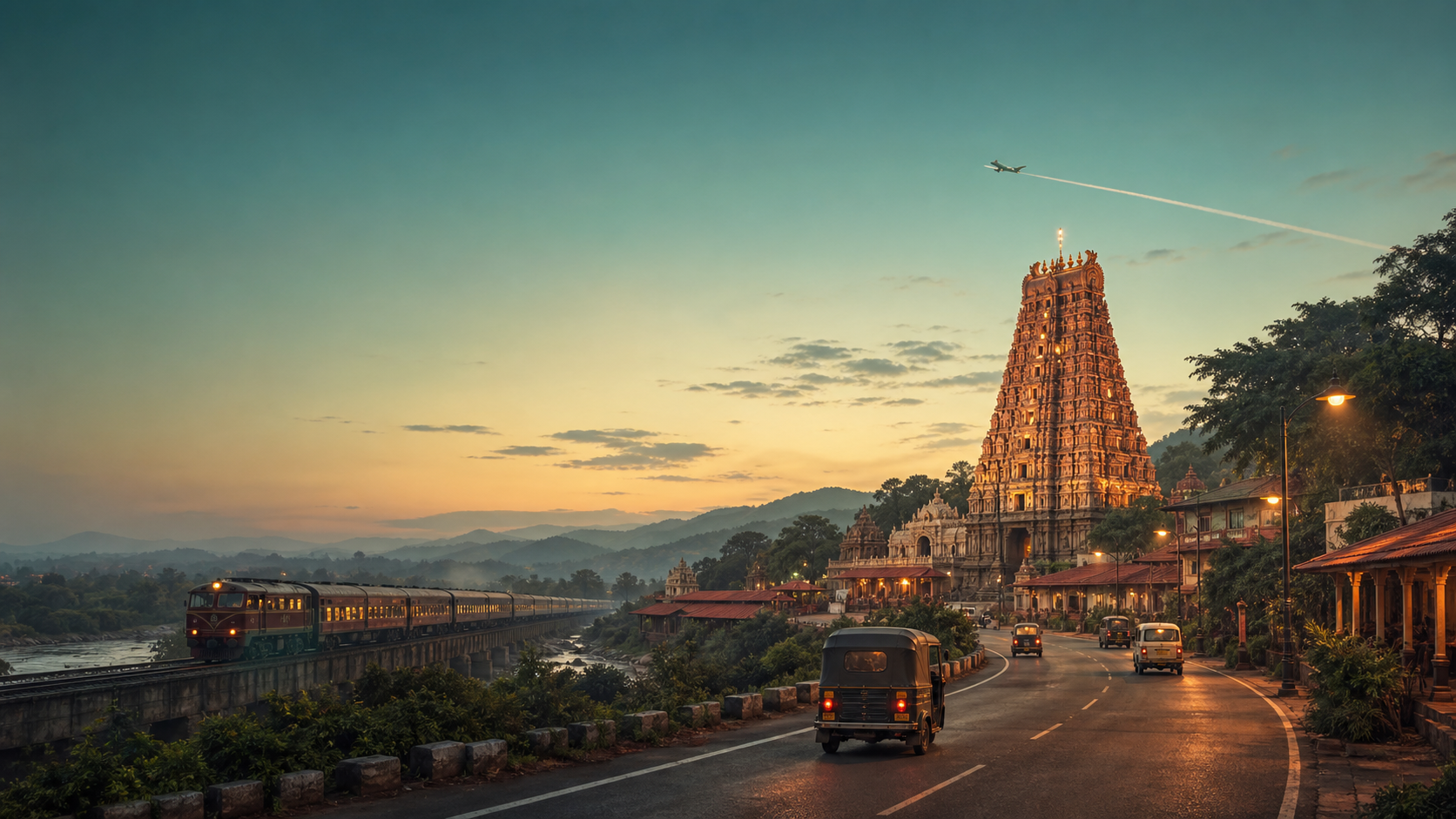
A complete pilgrim record drawn from the existing published article data.
Tracing the Ancient Roots of Marudhamalai
The Marudhamalai Subramanya Swami Temple's history is steeped in antiquity, with its origins tracing back to a legendary period. While the exact builder remains unknown, the temple's construction is believed to have commenced around the 12th century CE. Inscriptions found at the Thirumuruganatha Swami Temple, referenced in the Perur Puranam, provide crucial evidence confirming the temple's existence and historical significance during that era. This long-standing presence establishes Marudhamalai as a continuous and vital center of Murugan worship, evolving through various periods of patronage and renovation, connecting the present to a rich mythological past.
Legendary Origins
According to ancient legends, Lord Murugan rested and meditated on the Marudhamalai hills after vanquishing the demon Surapadma during the 3rd Century BCE - 3rd Century CE, sanctifying the site for future worship.
Historical Construction
The physical construction of the Marudhamalai Subramanya Swami Temple is widely believed to have begun in the 12th Century CE, marking a significant period in its development and formal establishment.
Epigraphic Evidence
Further historical corroboration for the temple's antiquity comes from inscriptions at the Thirumuruganatha Swami Temple, cited in the Perur Puranam, which confirm its origin and importance during the 12th Century CE.
Dravidian Splendor: The Architecture of Marudhamalai
Showcasing classic Dravidian architectural elements, the Marudhamalai Subramanya Swami Temple complex is a testament to centuries of South Indian craftsmanship. Constructed primarily from granite and stone, it features intricate carvings that adorn its various structures, including the towering gopurams. The temple's layout harmonizes skillfully with its natural hill environment, integrating the sacred spaces with the rugged landscape. This blend of robust material, detailed artistry, and thoughtful placement reflects the enduring architectural traditions of the Dravidian style, offering a visual spectacle that complements its spiritual essence.
Architectural Style
The temple is a prime example of Dravidian architecture, characterized by its pyramidal gopurams, mandapams, and intricate sculptural details, reflecting the artistic traditions of South India.
Key Features
Prominent features include the use of granite and stone for construction, elaborate carvings depicting deities and mythological scenes, and well-defined temple structures that are typical of the Dravidian style.
Integration with Nature
The temple's design skillfully integrates with the natural contours of the Marudhamalai hill, creating a harmonious environment where architecture and the surrounding landscape coexist, enhancing the pilgrimage experience.
Lord Murugan: The Presiding Deity and Local Lore
Dedicated to Lord Murugan, also revered as Subramanya, the Marudhamalai temple is deeply embedded in mythological narratives and the Shaiva tradition, where Murugan is celebrated as the son of Shiva. The temple's lore includes the tale of Murugan's divine retreat to Marudhamalai after his victory over the demon Surapadma, where he meditated and sanctified the hill. The very name 'Marudhamalai' is said to originate from the abundance of ancient Marutha trees, revered for their medicinal properties and sacred connection to this divine event. This rich tapestry of stories enhances the spiritual significance of the shrine.
The Deity Murugan
Lord Murugan, also known as Subramanya, is the primary deity of the temple. He is revered within the Shaiva tradition as the son of Shiva and a prominent figure in Tamil Shaiva Siddhanta.
Legend of the Divine Retreat
A significant narrative states that after defeating the demon Surapadma, Lord Murugan chose Marudhamalai for rest and meditation, thereby imbuing the hill with immense spiritual energy, as referenced in the Skanda Puranam.
Sacred Medicinal Flora
The name 'Marudhamalai' is associated with the Marutha (Terminalia arjuna) trees, known for their medicinal properties. These trees are believed to have been abundant on the hill during Lord Murugan's divine presence.
Pilgrim's Guide: Experiencing Marudhamalai Temple
For pilgrims planning a visit to the Marudhamalai Subramanya Swami Temple, practical information ensures a fulfilling spiritual journey. The temple is easily accessible, with regular local bus services from Coimbatore city, and major rail and flight connections to Coimbatore Junction and Coimbatore International Airport. While entry is free, visitors should contact the temple office for precise timings. The best time to visit is between October and March, especially during festivals like Panguni Uthiram and Thaipusam. Traditional attire is preferred, and footwear must be removed. A typical visit, including the trek and darshan, usually takes 3–4 hours.
Getting There
The temple is well-connected by local bus services from Coimbatore city. Coimbatore Junction (CBE) is approximately 20 km away, and Coimbatore International Airport (CJB) is about 25 km, offering various transport options.
Visitor Information
Entry to the temple is free, though specific timings should be confirmed with the temple office. The ideal visiting period is from October to March. Devotees are encouraged to wear traditional attire and remove footwear before entering.
Annual Festivals
Key festivals include Panguni Uthiram (March–April), celebrating Murugan's marriage; Thaipusam (January–February), marked by Kavadi processions; and Skanda Sashti (October–November), a six-day festival commemorating Murugan's victory over Surapadma.
| Deity | Murugan |
|---|---|
| Form | Murugan is enshrined here as Subramanya Swami, depicted in a standing form, typically holding his divine spear (vel) and accompanied by his peacock mount. |
| Consort | Valli, Devasena |
| Sampradaya | Shaiva (Murugan as son of Shiva; part of Tamil Shaiva Siddhanta tradition) |
| Significance | As the son of Shiva, Lord Murugan is revered as the vanquisher of the demon Surapadma and a central deity in Tamil Shaiva Siddhanta tradition. He embodies divine wisdom, valor, and protection. |
The Divine Retreat of Marudhamalai
After a fierce battle, Lord Murugan, the valiant commander of the celestial armies, emerged victorious over the formidable demon Surapadma. Weary yet triumphant, the Lord sought a serene sanctuary for rest and profound meditation. His divine gaze fell upon the Marudhamalai hills, a place already sanctified by countless sages who had performed rigorous austerities there for ages. Choosing this sacred abode, Murugan's presence further imbued the hills with unparalleled spiritual energy. It is said that the very name 'Marudhamalai' originates from the abundance of ancient Marutha (Terminalia arjuna) trees, revered for their medicinal properties and sacred connection to this divine event. The temple was later consecrated on this hallowed ground, commemorating the Lord's post-victory retreat and meditation, a tale explicitly referenced in the ancient Skanda Puranam.
On Marudhamalai, Lord Murugan found serene sanctuary, imbuing the hills with unparalleled spiritual energy after his divine victory.
As the seventh sacred abode, Marudhamalai stands as a testament to Murugan's valor, wisdom, and protective grace.
Related temples: Aakkoor Thanthondreeswarar Temple | Abhaya Varadeeswarar Temple, Adirampattinam
Marudhamalai Subramanya Swami Temple: A Sacred Hilltop Shrine
Perched majestically atop a picturesque hill in Coimbatore, Tamil Nadu, the Marudhamalai Subramanya Swami Temple is a revered pilgrimage site dedicated to Lord Murugan. This ancient Dravidian-style shrine, primarily built of granite and stone, is considered the Seventh Abode of Murugan, offering spiritual solace to devotees. Its strategic elevation provides breathtaking panoramic views of the surrounding landscape, making the spiritual journey both physically and aesthetically rewarding. The temple serves as a beacon of faith, drawing countless visitors seeking blessings and tranquility in its sacred precincts, embodying the rich spiritual heritage of the region.
Location and Significance
The temple is situated in Coimbatore, Tamil Nadu, and holds significant religious importance as one of the Arupadaiveedu (six abodes) of Lord Murugan, specifically referred to as the Seventh Abode. Its hilltop location adds to its sanctity and allure.
Architectural Style and Material
Built in the traditional Dravidian style, the temple complex primarily utilizes robust granite and other local stone, showcasing intricate craftsmanship. This construction material contributes to its enduring strength and classic aesthetic.
Spiritual Ambiance
The serene environment atop the Marudhamalai hills, coupled with the sacred presence of Lord Murugan, creates a profound spiritual ambiance. Devotees often describe a sense of peace and divine connection during their visit.
Restoration & Conservation Efforts
The Marudhamalai Subramanya Swami Temple, a venerable edifice perched atop a hill, has been the subject of continuous restoration and conservation efforts to safeguard its ancient structure and intricate artistry. Exposed to the elements over centuries, the temple's granite and stucco components face natural weathering from rain, wind, and temperature variations. These preservation initiatives are crucial for maintaining the structural integrity of the various shrines, gopurams, and mandapams. Special attention is often given to the vibrant sudhai sculptures that adorn the temple towers, which require skilled artisans to repair and re-colour using traditional methods and materials. Such efforts ensure that the temple's architectural grandeur and sacred ambiance are preserved for future generations of devotees and visitors.
Overseen primarily by the Hindu Religious and Charitable Endowments (HR&CE) Department of the Tamil Nadu government, these conservation projects often involve a blend of traditional craftsmanship and modern engineering insights. Funding is typically sourced from temple endowments, government grants, and generous contributions from the devout community. A significant challenge lies in the meticulous process of identifying and training artisans proficient in ancient temple building techniques, ensuring that repairs are authentic and durable. Balancing the need to preserve historical authenticity with the demands of increasing pilgrim footfall, including the provision of modern facilities, is also a delicate task. These ongoing efforts reflect a deep commitment to protecting Marudhamalai's rich cultural and spiritual heritage.
🗺 How to Reach
Hover a card to animate the journey on the map
Route to Temple
Common Questions
Where is Marudhamalai Subramanya Swami Temple: Murugan's Hill Abode located?
Marudhamalai Subramanya Swami Temple: Murugan's Hill Abode is documented at Coimbatore, Tamil Nadu.
Which deity is associated with Marudhamalai Subramanya Swami Temple: Murugan's Hill Abode?
Marudhamalai Subramanya Swami Temple: Murugan's Hill Abode is associated with Murugan.
Related Temples


A Living Covenant