



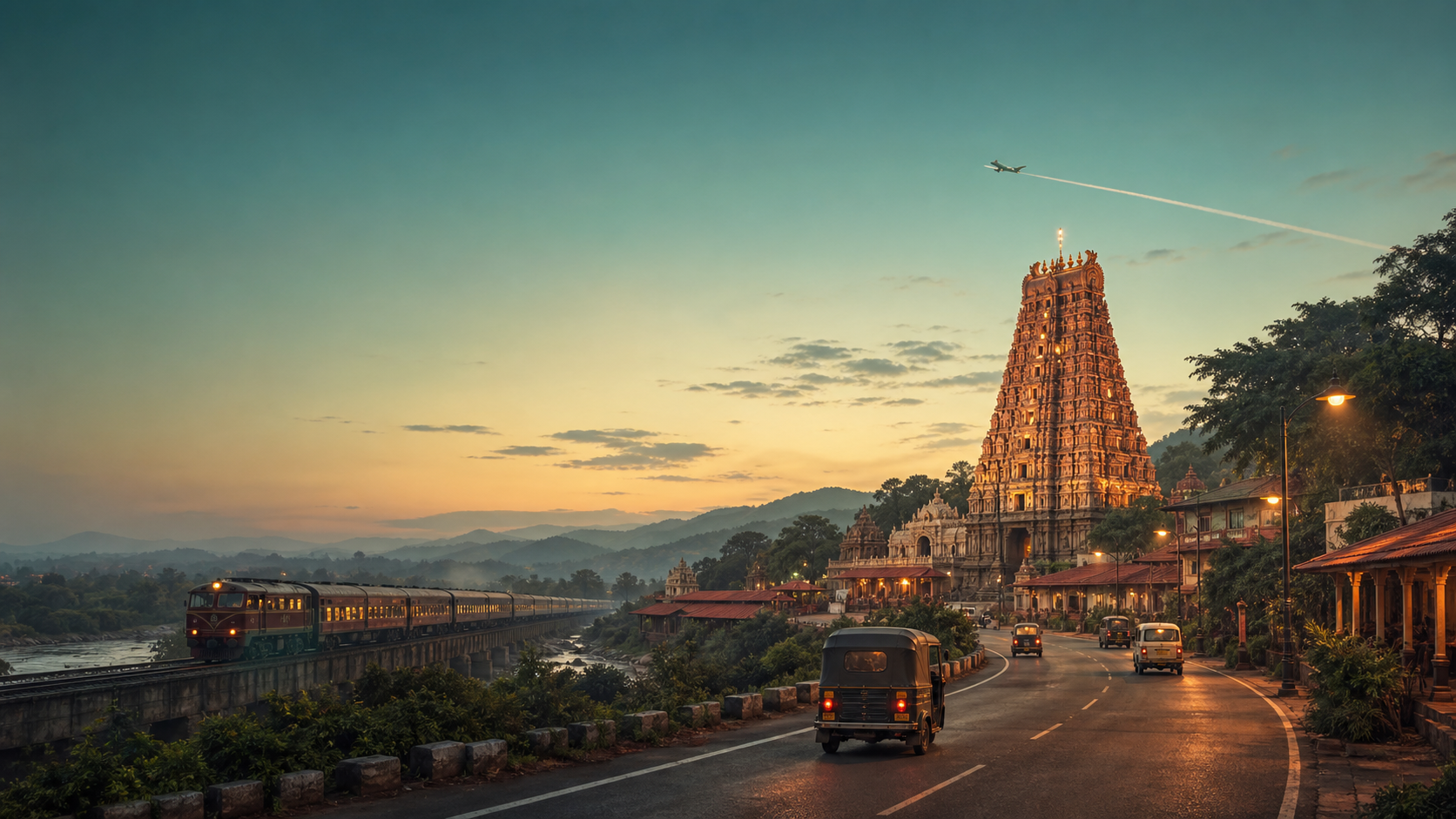
A complete pilgrim record drawn from the existing published article data.
Tracing the Roots: History of Maniambalanathar Temple
The precise historical origins of Maniambalanathar Temple, including its builder and founding dynasty, remain largely unknown. Despite this lack of specific documentation, the temple is recognized as an ancient site, suggesting centuries of continuous worship and spiritual importance. Its enduring presence within Tamil Nadu's spiritual landscape underscores a legacy passed down through generations, maintaining its sacred status.
Ancient Origins
While specific details regarding its establishment are not documented, the temple is believed to have ancient roots, indicative of its long-standing religious significance.
Enduring Legacy
Over an unspecified period, the temple has maintained its spiritual vitality, serving as a beacon of faith and devotion for countless worshippers.
Stones that Speak: Architecture of Maniambalanathar Temple
The architectural style of Maniambalanathar Temple, while specific details are not documented, generally reflects traditional Dravidian temple architecture prevalent in Tamil Nadu. This style is characterized by its towering gopurams, intricate stone carvings, and a layout typically including a sanctum and mandapas. The use of durable materials, likely granite, ensures the longevity and structural integrity of this sacred edifice, contributing to its aesthetic and spiritual grandeur.
Dravidian Influence
The temple's design adheres to the Dravidian architectural style, featuring elements common to temples across Tamil Nadu.
Intricate Craftsmanship
Expect to find detailed carvings and sculptures adorning the temple walls and pillars, showcasing skilled artisanry.
Maniambalanathar: The Presiding Deity and Sacred Lore
Maniambalanathar, the primary deity, is a form of Lord Shiva, central to the Shaiva tradition. Sacred legends recount that Lord Brahma, the creator, along with Airavata, Lord Indra's majestic white elephant, offered fervent prayers at this site. This celestial worship imbues the temple with extraordinary sanctity, marking it as a place where even divine beings sought blessings, highlighting its unique spiritual power and grace.
Lord Shiva as Maniambalanathar
The temple is dedicated to Lord Shiva, revered in the specific manifestation known as Maniambalanathar, holding deep significance for Shaivites.
Celestial Worship
The legend of Brahma and Airavata worshipping here emphasizes the temple's profound spiritual importance, elevating its status among sacred sites.
Maniambalanathar Temple: A Spiritual Beacon in Madurai
The Maniambalanathar Temple, located in Thiruthuraipoondi, Tamil Nadu, is a significant Hindu pilgrimage site. Dedicated to Lord Shiva, revered as Maniambalanathar, it is a prominent center of the Shaiva tradition. This ancient temple draws devotees seeking spiritual solace, embodying a rich cultural and religious heritage within the vibrant landscape of Madurai South.
Location and Significance
Situated in Thiruthuraipoondi, the temple is easily accessible and serves as a spiritual anchor for the local community and pilgrims alike.
Deity and Tradition
The primary deity, Maniambalanathar, is a manifestation of Lord Shiva, worshipped devoutly according to the tenets of the Shaiva tradition.
Experiencing Devotion: A Guide to Visiting Maniambalanathar Temple
Visiting Maniambalanathar Temple offers a meaningful spiritual experience. The best time to visit is from October to March, when the weather is most pleasant. Entry to the temple is free for all devotees. Visitors are encouraged to wear traditional attire and must remove footwear before entering the premises. A typical visit lasts one to two hours, allowing ample time for darshan and contemplation.
Visitor Guidelines
Adhere to the dress code of traditional attire and remove footwear before entering. Entry is free for all.
Optimal Visit Time
The period from October to March is recommended for a comfortable and enjoyable visit due to pleasant weather.
Access and Duration
The temple is easily accessible via local transport, and a visit typically lasts between one to two hours for a complete experience.
| Deity | Maniambalanathar |
|---|---|
| Form | Maniambalanathar is worshipped in the form of a Lingam. |
| Consort | Maniambalanayaki |
| Sampradaya | Shaiva |
| Significance | The deity holds spiritual significance as a site where celestial beings like Brahma and Airavata offered worship, highlighting its divine sanctity. |
The Celestial Worship of Brahma and Airavata
Deep within the sacred legends of Maniambalanathar Temple lies a profound narrative that elevates its spiritual stature. It is recounted that this hallowed site was once graced by the divine presence of Lord Brahma, the revered creator of the universe. With utmost humility and devotion, Brahma himself undertook a pilgrimage to this very spot, offering his fervent prayers and heartfelt veneration to the presiding deity, Maniambalanathar. He was not alone in this celestial act of reverence; accompanying him was Airavata, the majestic white elephant and mount of Lord Indra. Together, they worshipped the deity, their combined devotion imbuing the temple with an extraordinary sanctity. This ancient event underscores Maniambalanathar Temple's significance as a place where even celestial beings sought divine blessings, forever marking it as a beacon of spiritual power and grace.
Even celestial beings sought divine blessings at this sacred site, highlighting its profound spiritual power.
Maniambalanathar Temple stands as a testament to ancient devotion, where Brahma and Airavata once offered their reverence.
Related temples: Aakkoor Thanthondreeswarar Temple | Abhaya Varadeeswarar Temple, Adirampattinam
Modern Pilgrimage and Accessibility
Maniambalanathar Temple continues to be a vibrant center for devotees, drawing pilgrims not only from Tamil Nadu but also from various parts of India and the Tamil diaspora worldwide. The temple experiences heightened activity during major Hindu festivals such as Maha Shivaratri, Karthigai Deepam, and the annual Brahmotsavam, when special pujas and processions are conducted, attracting thousands. Modern pilgrims often visit seeking blessings for health, prosperity, and spiritual solace, performing traditional rituals like abhishekams, archanais, and circumambulations (pradakshina). The temple also serves as a focal point for community gatherings, fostering a sense of shared cultural identity and continuity among its visitors, many of whom have ancestral ties to the region, reinforcing its enduring spiritual significance. In recent decades, significant efforts have been made to enhance the accessibility and facilities for modern pilgrims visiting Maniambalanathar Temple. The temple is well-connected by road, with regular bus services from nearby towns and cities, and ample parking space has been developed to accommodate private vehicles. Inside the temple complex, amenities such as clean drinking water, restroom facilities, and designated areas for footwear storage have been improved to ensure a comfortable experience for visitors. Information boards, often in multiple languages, guide pilgrims through the various shrines and rituals. These modern conveniences, while preserving the temple's ancient sanctity, reflect a conscious adaptation to the needs of contemporary devotees, making the spiritual journey more manageable for all ages and physical abilities.🗺 How to Reach
Hover a card to animate the journey on the map
Route to Temple
Common Questions
Where is Maniambalanathar Temple: Ancient Shrine of Divine Grace located?
Maniambalanathar Temple: Ancient Shrine of Divine Grace is documented at Thiruthuraipoondi.
Which deity is associated with Maniambalanathar Temple: Ancient Shrine of Divine Grace?
Maniambalanathar Temple: Ancient Shrine of Divine Grace is associated with Shiva.
Related Temples


A Living Covenant