



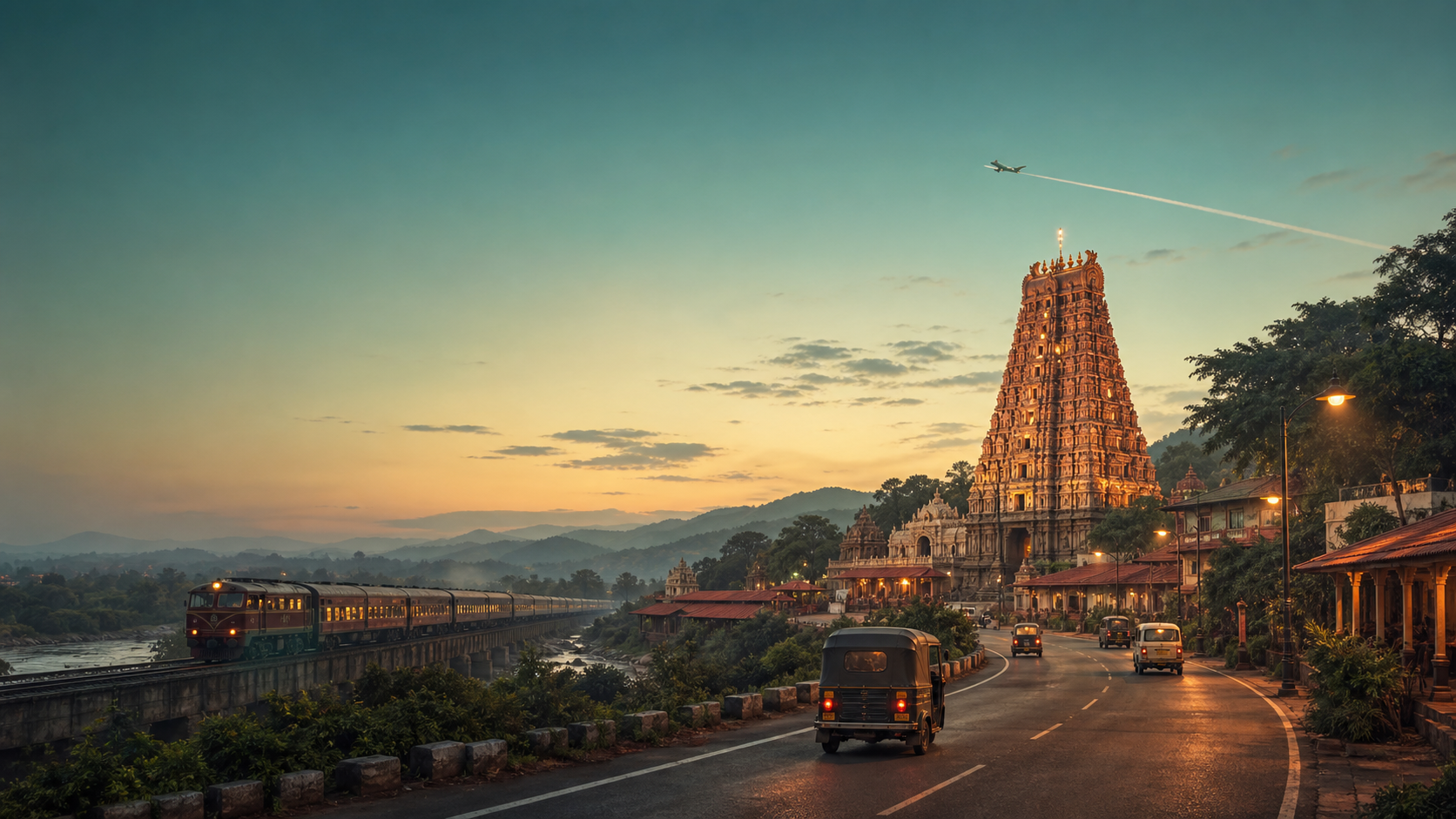
A complete pilgrim record drawn from the existing published article data.
Tracing the Origins: Maha Kali Amman Temple's Dutch Period Legacy
The Maha Kali Amman Temple holds a profound historical significance, with its origins traced back to the Dutch Period in Sri Lanka, specifically between the 17th and 18th centuries A.D. This establishment during a period of colonial influence speaks to the resilience and continuity of Hindu traditions in the region. The temple's existence for such an extended duration highlights its role as a steadfast spiritual anchor for the community through various historical epochs. Its enduring presence is a testament to the deep-rooted faith and cultural heritage preserved within its sacred precincts, connecting modern devotees with a rich past.
Foundations in the Dutch Era
The temple's establishment during the 17th-18th century A.D., coinciding with the Dutch colonial period, marks it as a historically significant site in Sri Lanka.
Centuries of Worship
Its long-standing existence across several centuries demonstrates the temple's continuous role as a pivotal center for Hindu devotion and cultural preservation in Mutwal.
Enduring Cultural Heritage
The temple serves as a living legacy, reflecting the enduring spiritual and cultural heritage of the Hindu community in Sri Lanka, adapting through various historical changes.
Maha Kali Amman Temple: A Glimpse into Mutwal's Spiritual Heart
Nestled in Mutwal, Colombo, Sri Lanka, the Maha Kali Amman Temple stands as a significant spiritual landmark dedicated to the powerful deity Mahakali. This ancient Hindu temple is believed to have been in existence since the Dutch Period, spanning the 17th and 18th centuries A.D., marking it as a site of long-standing devotion. It serves as a vibrant center for the Hindu tradition, drawing devotees from across the region to experience its unique spiritual atmosphere and historical depth. The temple's presence in Mutwal underscores its enduring role in the community's religious life.
Location and Significance
The temple is situated in Mutwal, a historic area within Colombo, Sri Lanka. Its location reflects its deep roots within the local community and its importance as a place of worship for generations of devotees.
The Presiding Deity
At the heart of the temple's worship is Mahakali, a revered form of the Divine Mother in the Hindu tradition. She is central to the temple's identity and its spiritual practices.
Historical Roots
Dating back to the Dutch Period (17th-18th centuries A.D.), the temple carries a rich history, symbolizing centuries of continuous worship and cultural heritage in Sri Lanka.
Celebrating Mahakali: The Annual Festival in January
A highlight of the Maha Kali Amman Temple's annual calendar is its main festival, which takes place every January. This significant event is a period of intense devotion and celebration, drawing a large number of devotees from various communities. The festival serves as an important occasion for collective worship, communal gatherings, and the reaffirmation of faith in Mahakali. During this time, special rituals, prayers, and cultural performances are typically conducted, creating a vibrant and spiritually charged atmosphere. The annual January festival reinforces the temple's role as a vital center of religious and cultural life in Mutwal.
Annual Observance
The temple's main festival is an annual event, consistently held in January, marking a significant period of religious observance for the community.
Devotional Gatherings
This festival draws numerous devotees, fostering a strong sense of community and shared spiritual purpose through collective prayers and rituals dedicated to Mahakali.
Significance of the Festival
The January festival is crucial for reaffirming faith, celebrating cultural heritage, and honoring Mahakali, serving as a spiritual cornerstone for the temple's year.
Mahakali: The Fierce Protector of Mutwal
The Maha Kali Amman Temple is dedicated to Mahakali, a prominent and powerful deity within the Hindu pantheon. As a fierce manifestation of the Divine Mother, Mahakali is revered as a protector and a destroyer of evil forces. Her worship is deeply rooted in the Hindu tradition, emphasizing her role in maintaining cosmic order and safeguarding her devotees. Iconographically, she is often depicted with a dark complexion, multiple arms, and symbols of power, representing her formidable strength and divine authority. Devotees seek her blessings for protection, courage, and the removal of obstacles, finding solace and strength in her presence.
The Manifestation of Mahakali
Mahakali is a revered form of the Divine Mother, embodying immense power and fierce compassion within the Hindu tradition. She is the principal deity of the temple.
Symbolism and Power
Often depicted with intense iconography, Mahakali symbolizes the ultimate power of creation and destruction, representing the triumph of good over evil and the protection of her devotees.
Devotion and Protection
Worship of Mahakali is central to the temple's practices, with devotees seeking her blessings for strength, protection from adversity, and spiritual liberation.
Visiting Maha Kali Amman Temple: Essential Information
For those planning to visit the Maha Kali Amman Temple in Mutwal, it is advisable to gather current information to ensure a smooth and respectful experience. Specific details regarding daily timings, entry procedures, and the best times to visit are not readily available in general records. Similarly, information on a specific dress code or the typical duration of a visit is not provided. Visitors are encouraged to contact the temple administration directly or consult local sources for the most up-to-date and accurate details before their arrival, ensuring adherence to any temple guidelines and local customs.
Planning Your Visit
Visitors should confirm current operational details directly with the temple or local authorities before planning their trip, as specific information is not universally published.
Entry and Timings
Specific timings and any potential entry requirements are not provided in available records. It is recommended to verify these details beforehand to plan your visit effectively.
Respecting Temple Customs
While a specific dress code is not detailed, visitors are generally advised to dress modestly and respectfully when visiting any place of worship to honor local customs and traditions.
| Deity | Mahakali |
|---|---|
| Form | The Hindu goddess of destruction and doomsday. |
| Sampradaya | Hindu |
| Significance | Dedicated to Mahakali, the temple is a significant site for devotees seeking blessings from the powerful goddess. |
The Fierce Mother, Mahakali
Mahakali, the presiding deity of this temple, is a formidable manifestation of the Divine Mother, Parvati. Born from the brow of Durga during a fierce battle with the demon Raktabija, she emerged with a terrifying form: dark skin, a garland of skulls, and a tongue lolling out. Her purpose was to annihilate evil and protect the righteous. As Raktabija's spilled blood created new demons, Mahakali drank it, ensuring his destruction. Her fierce compassion and unwavering power make her a revered figure, invoked by devotees for protection, liberation, and the removal of obstacles, embodying the ultimate triumph of good over evil.
Mahakali, the dark mother, embodies time and change, a fierce protector who destroys ignorance and grants liberation.
In her terrifying form, Mahakali offers ultimate solace, cutting through illusions to reveal the truth of existence.
🗺 How to Reach
Hover a card to animate the journey on the map
Verified routes to Maha Kali Amman Temple, Mutwal
Common Questions
Where is Maha Kali Amman Temple, Mutwal: Goddess of Destruction's Abode located?
Maha Kali Amman Temple, Mutwal: Goddess of Destruction's Abode is documented at Mutwal, Western.
Which deity is associated with Maha Kali Amman Temple, Mutwal: Goddess of Destruction's Abode?
Maha Kali Amman Temple, Mutwal: Goddess of Destruction's Abode is associated with Kali.


