



A complete pilgrim record drawn from the existing published article data.
Historical Foundation
Ancient Origins and Community Endeavors
The Boatman's Encounter with Devi
A few days after the chieftains' return, a local boatman of the Karippuzha rivulet encountered an old woman seeking passage across. He ferried her across, and on their journey to Chettikulangara, they rested. The boatman, a Christian, fell asleep after arranging food, only to awaken and find the old woman vanished. Simultaneously, at a Brahmin illam adjacent to the temple site, an old woman joined workers for lunch and then disappeared in a bright glow, causing the Antharjanam (Brahmin lady) of the house to faint. These mystical events were interpreted as the divine arrival of the Devi at Chettikulangara, leading to the consecration of the temple on the Uthrittathi star of Makara month in 823 CE.
Royal Patronage and Scholarly Debates
Key Takeaway: The Enduring Legacy
The Chettikulangara Devi Temple, while subject to historical debates regarding its exact founding date, unequivocally represents a profound continuity of faith and community action. Its origins, steeped in local lore and communal resolve, underscore its role as a spiritual bedrock for the Onattukara region and beyond.
Architecture & Craftsmanship
Kerala Style and Unique Structural Elements

The traditional Kerala-style Sreekovil of Chettikulangara Devi Temple, reflecting centuries of craftsmanship.
Artistic Expressions: Kettukazhcha and Iconography
"The Chettikulangara temple architecture is a magnificent fusion of traditional Kerala design principles with ritualistic elements, especially evident in the grandeur of the Kettukazhcha effigies and the intricate Jeevatha palanquin."
The Presiding Deity
Sree Bhadrakali: The Benevolent Destroyer
- Name: Sree Bhadrakali
- Manifestation: An incarnation of Shakthi Devi, born from the third eye of Lord Shiva.
- Mythological Origin: Emerged to slay the formidable demon Daruka, symbolizing the triumph of good over evil.
- Role: Worshipped as the Creator, Protector, Destroyer, the essence of Nature, ultimate Power, and Kundalini Shakti.
- Tradition (Sampradaya): Shakta, emphasizing the worship of the Divine Mother as the supreme being.
- Iconographic Uniqueness: In the sthala purana, Devi manifests as an old woman, a unique portrayal of her divine arrival.
- Associated Deities: Accompanied by various upadevatas, including a Yakshini controlled by the tantric saint Kadmattath Kathanaar.
Sree Bhadrakali: The Benevolent Destroyer
The Pantheon of Upadevatas

An artistic depiction symbolizing Sree Bhadrakali, the fierce yet protective Mother Goddess.
Festivals & Living Traditions
Kumbha Bharani: The Grand Spectacle
- Kettukazhcha: This is a breathtaking procession of colossal, elaborately decorated effigies. These structures, known as 'Kuthira' (horse-like forms) and 'Theru' (chariots), are crafted by each of the 13 Karas. Made from towering bamboo frameworks, adorned with intricate artwork, and pulled by hundreds of devotees, they symbolize the collective devotion and competitive spirit of the local communities. The Kettukazhcha has received GI (Geographical Indication) tags, affirming its unique cultural identity.
- Kuthiyottam: A unique ritualistic dance offering performed by young boys (usually below 13 years of age) who are symbolically 'adopted' by devotees for the ritual. These children undergo special training in the 'Kuthiyota chuvadukal' (steps) and perform before Bhadrakali as a symbolic offering, dressed in special attire. This ritual is a rare, vibrant living tradition that sets Chettikulangara apart.

A magnificent Kettukazhcha effigy being pulled by devotees during the annual Kumbha Bharani festival.
Parayeduppu and Daily Rituals
Impressive Revenue Generation
The Chanthattam offering alone generated ₹1.7 crore in 2009, highlighting the significant financial contributions from devotees and the temple's economic prowess within the Travancore Devaswom Board.
Pro-Tip: Experience the Festivals
To truly immerse yourself in the unique cultural and spiritual essence of Chettikulangara Devi Temple, plan your visit during February-March for Kumbha Bharani or January-March for the Parayeduppu season. These periods offer unparalleled insights into the temple's living traditions and vibrant community spirit.
Plan Your Visit
Getting There and Best Time
- Nearest City: Mavelikkara (approx. 4 km away)
- Nearest Airport: Cochin International Airport (COK), approximately 110 km away.
- Nearest Railway Station: Kayamkulam Railway Station (KYJ), located just 7 km from the temple.
- Road Access: The temple is conveniently situated on SH6 (Kayamkulam - Thiruvalla Highway).
- Best Season to Visit: The ideal time is during the cool, dry months from January to March. This period coincides with the vibrant Parayeduppu festival (mid-January to mid-March) and the grand Kumbha Bharani festival (February-March), offering the most immersive cultural experience.
Visitor Guidelines and Nearby Attractions
- Dress Code: Adhere to traditional Kerala temple norms, which typically require modest attire. Men often wear a mundu or dhoti (without shirts inside the nalambalam), and women wear saris or traditional dresses. Leather items are generally not permitted inside the inner precincts.
- Photography: While general photography might be allowed in outer areas, restrictions are highly likely during ritualistic events like Kuthiyottam and Kettukazhcha due to their sanctity and to ensure the privacy of devotees. It's best to inquire locally.
- Elephant Prohibition: Remember the unique local rule: elephants are strictly forbidden on the western side of the nalambalam.
- Suggested Duration: A minimum of one full day is recommended to explore the temple and its immediate surroundings. To fully experience the grandeur of Parayeduppu or Kumbha Bharani, allow at least 3 days.
- Nearby Temple Circuit: Consider extending your spiritual tour to include nearby significant temples such as Koypallikarazhma Bhagavathi Temple (historically linked to Chettikulangara's origin), Kandiyoor Mahadeva Temple, Mavelikara Krishna Swamy Temple, and the spiritually significant Panayanarkavu (Parumala), and various temples in Thevalakara.

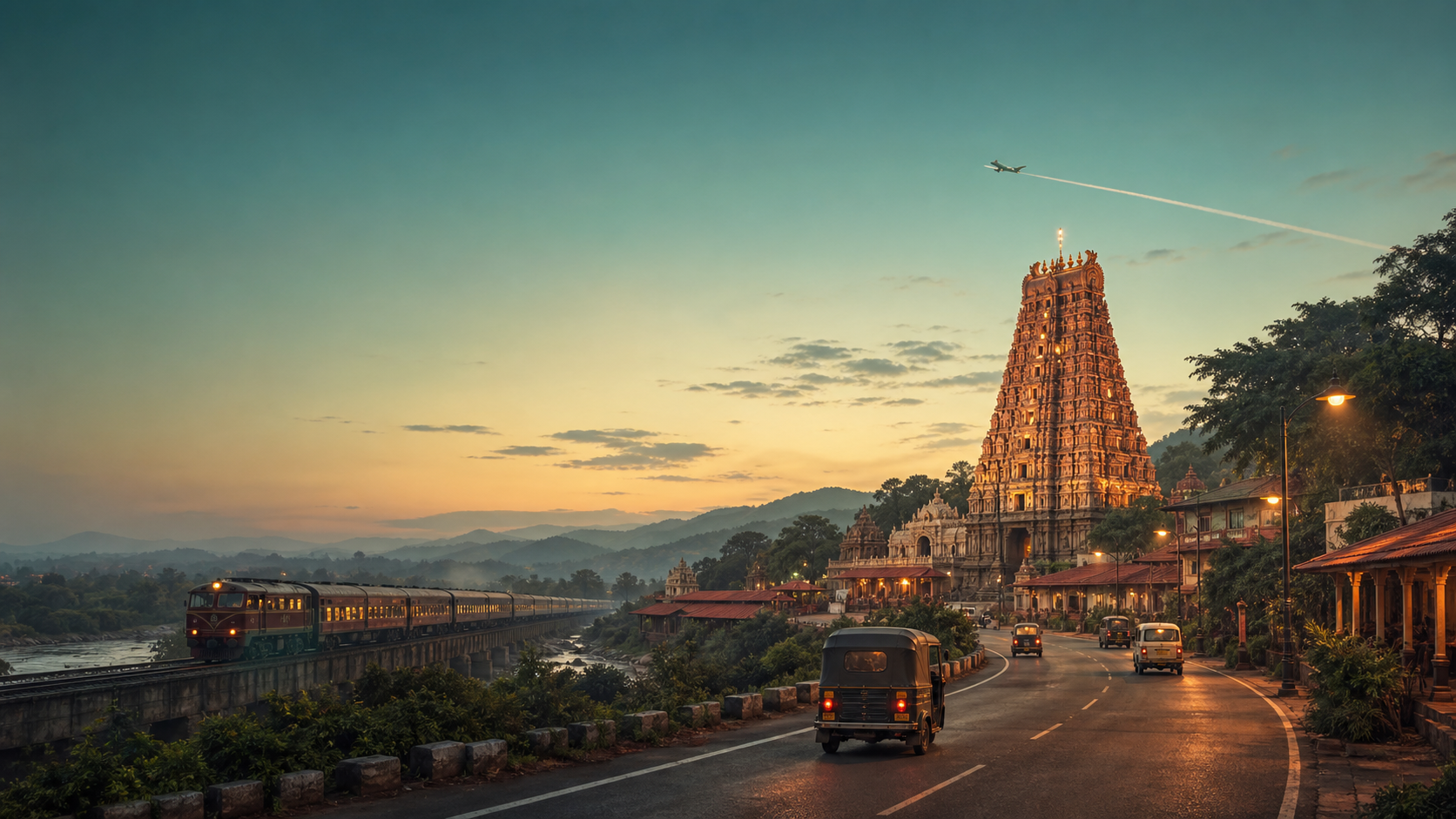
The peaceful surroundings of Chettikulangara, preparing for a festive season.
Related temples: Aakkoor Thanthondreeswarar Temple | Aazhimala Shiva Temple
Sacred Stories & Mythology
The Manifestation of Bhadrakali
Devi's Arrival: The Old Woman and the Boatman
On a late evening, a local boatman from Karippuzha rivulet was asked by an old woman to ferry her across. He, a Christian, dutifully obliged. As they rested on the way, the boatman fell asleep. Upon waking at dawn, the woman had vanished. Simultaneously, at a Brahmin illam near the present temple site, an old woman joined the workers for lunch. After eating, she moved to the western side of the house and disappeared in a blinding glow, causing the Antharjanam to faint. These twin occurrences were perceived as definitive proof of Devi's arrival. This selfless act of the boatman is celebrated even today, with his descendants being granted the hereditary duty of providing ritual fireworks (Vedi) during temple festivals.
Folk Beliefs and Mystical Encounters
Beyond the origin, several other mythological narratives and folk beliefs permeate the temple's aura, emphasizing the potent spiritual energy of the site.
- The Yakshi and Kadmattath Kathanaar: One prominent legend involves the Tantric saint Kadmattath Kathanaar, famous for his supernatural powers. It is believed that he controlled a powerful Yakshi (a female spirit, sometimes benevolent, sometimes malevolent) and installed her within the temple compound, where she is now worshipped as an upadevata. This narrative underscores the temple's connection to ancient Tantric practices and mystical lore.
- The Elephant Taboo: A curious folk belief prohibits elephants from approaching the western side of the nalambalam. It is feared that fairy creatures residing in the ancient Chembakam tree there could harm or even kill the elephants. This tradition showcases the deep reverence for the sacred grove (kavu) ecology and the belief in unseen entities guarding its sanctity.
- Sabarimala Connection: Devotees also hold a unique belief that offerings like 'Nellu' (rice) made at Chettikulangara are spiritually linked to the prasadam distributed at the renowned Sabarimala Ayyappan Temple, highlighting an interconnectedness of spiritual merits across prominent Kerala shrines.
"The stories of Chettikulangara are not just tales of the past; they are living narratives that shape the rituals, beliefs, and even the daily conduct around the temple, asserting the Devi's ever-present, mystical influence."
Saints, Poets & Devotees
Legendary Figures and Their Contributions
Literary Connections and Historical Echoes
Definition: Kara
A 'Kara' refers to a specific administrative and geographical division or village around the Chettikulangara Devi Temple. Uniquely, Chettikulangara is managed by 13 such Karas, which collectively organize the temple's festivals, especially the grand Kettukazhcha and Kuthiyottam, playing a crucial role in its ritualistic and community life.
Records, Marvels & Heritage
Unique Administrative Structure and GI Tags

The Jeevatha palanquin, a registered trademark asset, during the Parayeduppu procession.
UNESCO Documentation and Economic Significance
🗺 How to Reach
Hover a card to animate the journey on the map
Route to Chettikulangara
Common Questions
Where is Chettikulangara Devi Temple: Kerala's Shakta Shakti located?
Chettikulangara Devi Temple: Kerala's Shakta Shakti is documented at Chettikulangara, Kerala.
Which deity is associated with Chettikulangara Devi Temple: Kerala's Shakta Shakti?
Chettikulangara Devi Temple: Kerala's Shakta Shakti is associated with Shiva.
Related Temples


A Living Covenant