



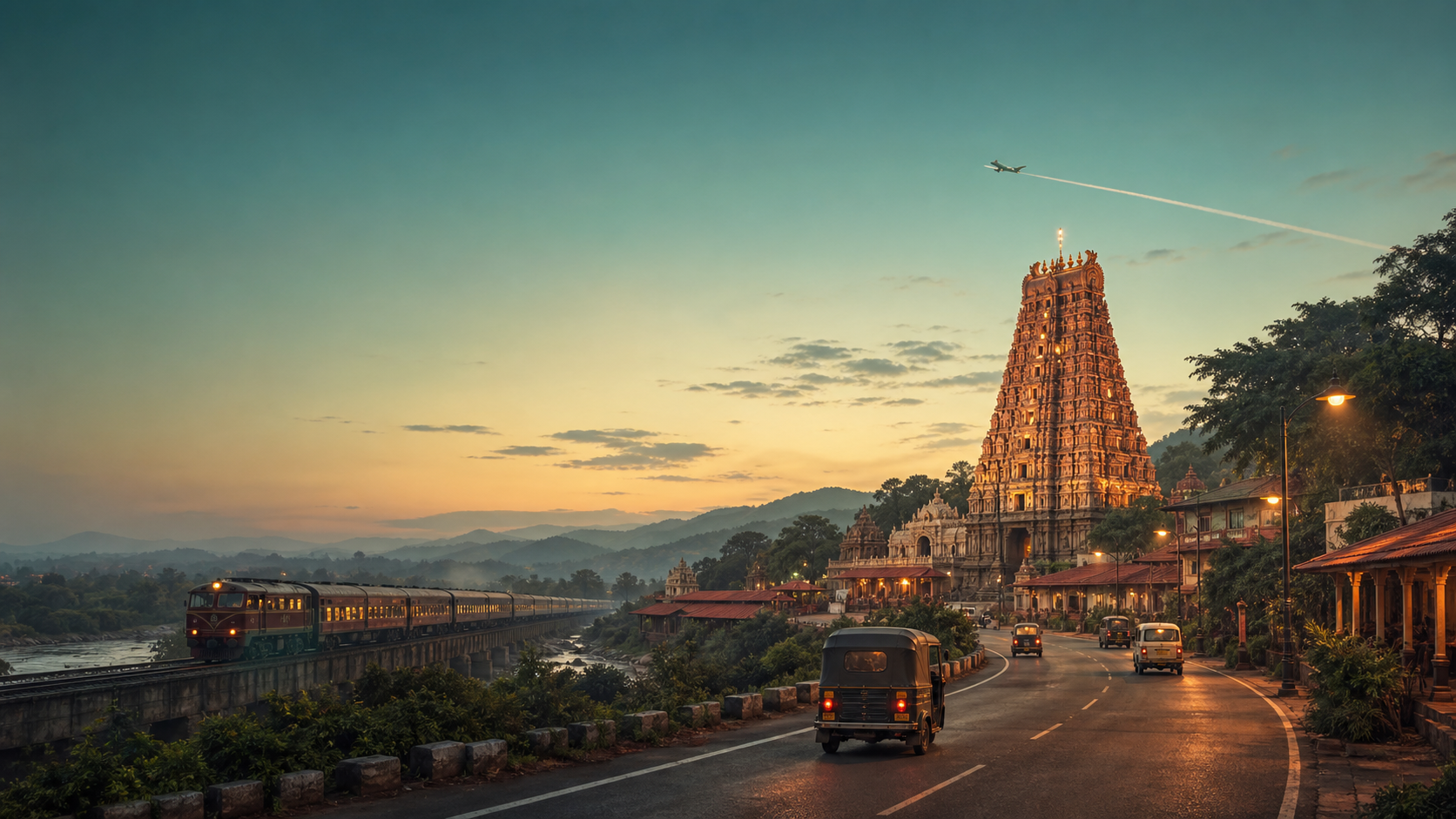
A complete pilgrim record drawn from the existing published article data.
Historical Foundation
Early Pandya Roots
Chola and Nagarathar Patronage

Ancient inscriptions adorn the walls of Karpaka Vinayakar Temple, narrating centuries of its past.
Architecture & Craftsmanship
Rock-Cut Masterpiece
Definition: Dravidian Architecture
A style of Hindu temple architecture prevalent in South India, characterized by its pyramidal shikhara (tower), intricate carvings, columned halls (mandapams), and gateway towers (gopurams). Early Pandya rock-cut caves represent an important formative phase of this style.
Sculptural Riches and Iconographic Uniqueness

The vibrant and towering gopuram, a hallmark of Dravidian architecture, beckons pilgrims to Karpaka Vinayakar Temple.
The Presiding Deity
Karpaka Vinayakar: The Wish-Fulfiller
Karpaka Vinayakar (Ganesha)
Form: Rock-cut bas-relief (6-foot tall), two-armed, north-facing, trunk curving to the right (Valampuri Vinayagar).
Iconographic Details: Holds sweets in his right hand, left tusk broken. This two-armed, right-curving trunk form is exceptionally rare, predating the more common four-armed Ganesha depictions from the Chola period. The 'Valampuri' aspect signifies auspiciousness and quick granting of boons.
Significance: Revered as the "wish-fulfilling Ganesha" (Karpaka translates to 'kalpavriksha' or wish-granting tree). Particularly sought after by devotees, especially Tamil women, for blessings related to fertility, marital harmony, and general prosperity.

The unique 6-foot rock-cut bas-relief of Karpaka Vinayakar, a rare two-armed, north-facing Ganesha.
A Pantheon of Deities
Festivals & Living Traditions
Vibrant Annual Celebrations
The temple's calendar is punctuated by two major annual festivals that showcase the rich devotional culture of the region:
- Vinayaka Chaturthi: This is the most significant festival, celebrated during the Tamil month of Bhadrapada (typically August–September, corresponding to Avani/Ani). It is a 10-day extravaganza culminating in a grand chariot procession. During this time, a processional panchaloga idol of Ganesha, adorned in gold, is carried on a mouse vahana, often accompanied by idols of Nataraja and Sivakami. This festival draws immense crowds, particularly Tamil women seeking blessings for their families and prosperity. The annual Chandana Kaappu ritual, where the main deity is covered with sandalwood paste, is a highlight of this period, believed to offer divine protection and healing.
- Brahmothsavam: Held in the Tamil month of Vaikasi (May–June), the Brahmothsavam is another major annual festival marked by elaborate rituals, devotional performances, and a celebratory chariot procession. This festival further highlights the temple's importance within the Shaiva tradition, honoring the pantheon of deities housed within its sacred precincts.
10 Days of Divine Festivities
The annual Vinayaka Chaturthi festival at Karpaka Vinayakar Temple spans 10 joyous days, culminating in spectacular processions and rituals that unite devotees in fervent worship.
Daily Rites and Artistic Expressions
Plan Your Visit
Essential Travel Information
- Nearest City: Karaikudi (~12 km from Pillayarpatti).
- Nearest Airport: Madurai Airport (IXM), approximately 75 km (47 mi) southeast.
- Nearest Railway Station: Karaikudi Junction Railway Station, ~12 km.
- Best Season to Visit:
- For festivals: Vaikasi (May–June) for Brahmothsavam, and Avani/Bhadrapada (August–September) for Vinayaka Chaturthi.
- For pleasant weather: Cooler months from October to February are ideal for comfortable exploration.
Pro Tip: Explore Chettinad Cuisine
While in the region, don't miss the opportunity to savor the famed Chettinad cuisine, known for its aromatic spices and rich flavors, available in Karaikudi and surrounding areas.
Nearby Explorations
The Karpaka Vinayakar Temple is part of a culturally rich circuit in the Sivaganga district. Consider extending your visit to include:
- Kunnakudi Mandapam: Known for its intricate carvings and architectural beauty.
- Thiruppathur Temple: Another significant historical temple in the region.
- Elayatrankudi Temple: One of the other ancestral temples of the Nagarathars.
- Sivaganga Temples: Explore the various temples within the Sivaganga district for a deeper dive into local religious heritage.
Karpaka Vinayakar Temple — figure 6 Karpaka Vinayakar Temple — figure 7 Karpaka Vinayakar Temple — figure 8 Karpaka Vinayakar Temple — figure 9 Related temples: Aakkoor Thanthondreeswarar Temple | Abhaya Varadeeswarar Temple, Adirampattinam
Sacred Stories & Mythology
Origins in the Rock
The Genesis of Karpaka Vinayakar
The origin legend of Karpaka Vinayakar Temple is intrinsically linked to its geological reality: it is believed to have been excavated within a natural rocky hillock by early Pandya patrons in the 7th century CE. This act of carving divinity from raw stone itself became the primary narrative. The decision to enshrine Karpaka Vinayakar as the central deity transformed a mere geological feature into a powerful sacred space, a 'Karpaka' or wish-granting tree in stone.
Its sacred status was profoundly affirmed and institutionalized in the tradition of the Nattukottai Nagarathars, who adopted it as one of their nine ancestral temples as early as 714 CE (Kali year 3815). This community's enduring patronage and reverence over centuries have woven a deep cultural and spiritual fabric around the temple, making its history inseparable from their own.
Iconographic Narratives and Folk Beliefs
Saints, Poets & Devotees
The Nattukottai Nagarathars: Custodians of Heritage

Devotees, particularly members of the Nattukottai Nagarathar community, gather during a festival at the temple.
Echoes of Devotion and Agamic Guidance
Records, Marvels & Heritage
Historical Distinctions
Key Takeaway: A Glimpse into Early Iconography
The Karpaka Vinayakar Temple offers a rare window into the early, formative stages of South Indian iconography, particularly for Ganesha and syncretic deities, predating later standardized forms.
Architectural Ingenuity & Preservation

The ancient rock-cut cave housing the main deities at Karpaka Vinayakar Temple, a marvel of early Pandya engineering.
🗺 How to Reach
Hover a card to animate the journey on the map
Route to Pillayarpatti
Common Questions
Where is Karpaka Vinayakar Temple: A 7th-Century Rock-Cut Marvel located?
Karpaka Vinayakar Temple: A 7th-Century Rock-Cut Marvel is documented at Pillayarpatti, Tamil Nadu.
Which deity is associated with Karpaka Vinayakar Temple: A 7th-Century Rock-Cut Marvel?
Karpaka Vinayakar Temple: A 7th-Century Rock-Cut Marvel is associated with Ganesha.
Related Temples


A Living Covenant