A complete pilgrim record drawn from the existing published article data.
Historical Foundation
Echoes of the Sangam Era and Pandya Patronage
Definition: Paadal Petra Sthalam
A 'Paadal Petra Sthalam' refers to one of the 275 Shiva temples in Tamil Nadu and Kerala that are revered in the Tevaram hymns, composed by the three prominent Nayanmars: Appar, Sundarar, and Gnanasambandhar, during the 6th-9th centuries CE. These temples are considered exceptionally sacred within Shaivism.
The Maruthu Pandiyars' Fortification and Resistance
"The Maruthu Pandiyars surrendered to the British to protect the temple tower, a testament to their profound devotion and strategic acumen."
Epigraphic and Literary Evidence

Architecture & Craftsmanship
Dravidian Grandeur and Structural Elements
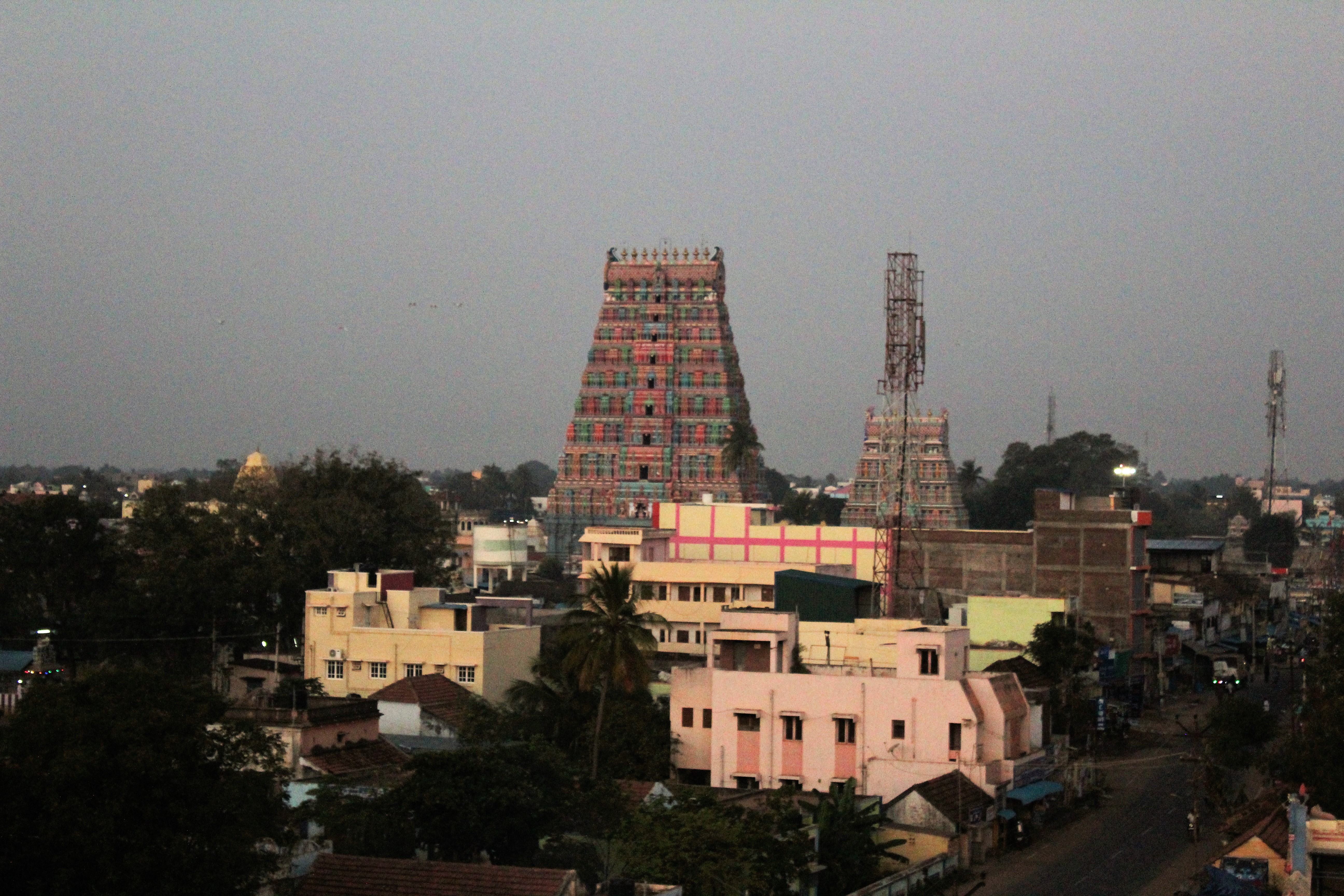
150 Feet: The majestic height of Kalaiyar Kovil's Rajagopuram, a beacon of Dravidian architectural prowess.
Sculptural Riches and Iconic Representations

The Fortified Past and Modern Preservation
Pro-Tip for Visitors
When exploring the complex, pay close attention to the intricate details on the gopuram and mandapa pillars. Many sculptures depict unique mythological scenes and historical figures that are not commonly found in other temples.
The Presiding Deity
The Triadic Shiva: Kaaleeshwarar, Someshwarar, Sundareshwarar
Kalaiyar Kovil is exceptionally unique in hosting three distinct Shivalayams, or sanctums dedicated to Shiva, within a single complex. These are:
- Kaaleeshwarar: The main presiding deity, a swayambu (self-manifested) Lingam. This is a special Thirumeni (form) for Umadevi, embodying a primal energy.
- Someshwarar: A lingam consecrated by King Varaguna Pandyan, associated with the worship of Brahma, Chandra (the Moon God), and Kubera.
- Sundareshwarar: Another significant Shiva form, also credited with consecration by various rulers, completing the sacred triad.
Lord Shiva at Kalaiyar Kovil
- Main Deities: Kaaleeshwarar (Swayambu Lingam), Someshwarar, Sundareshwarar, Kaliswarar
- Consort Deities: Swarnambikai, Soundara Nayaki
- Unique Forms: Varuna Lingam, Kaliswarar (special Swayambu Thirumeni for Umadevi)
- Spiritual Significance: Represents creation, preservation, and completion through three Shivalayams.
- Special Iconography: Triadic representation of Shiva, Amman, Surya, Chandra, Murugan, Sandikeswarar.
Divine Consorts and the Pantheon of Deities
- Saptha Mathargal (Seven Mother Goddesses)
- Surya (Sun God)
- Chandra (Moon God)
- Murugan (Kartikeya)
- Sandikeswarar
- Ganapati (Mahakalar-Srigaruparswami)
- Suvarnavalli (later identified with Kali)

Festivals & Living Traditions
Kalaiyar Kovil pulsates with vibrant energy during its numerous festivals, reflecting centuries of unbroken traditions and fervent devotion that animate this ancient sacred space.
Annual Celebrations and Temple Car Festivals
The temple calendar at Kalaiyar Kovil is replete with grand festivals, each celebrated with immense zeal and devotion. Major annual events include:
- Kaaleesar Festival: Observed in the Tamil month of Thai (mid-January to mid-February) during the Poosam star, this festival culminates in a spectacular car festival (Ther Thiruvizha), where the deities are taken in procession around the temple streets.
- Someswarar Bhrammotsavam: Celebrated during Vaikasi (mid-May to mid-June), this grand annual festival includes a float festival (Teppam) in the Aanai Madu Teppakkulam, a truly enchanting sight.
- Aadiperuvizha: Held in Aadi (mid-July to mid-August), this festival is dedicated to Kalainathar, drawing numerous devotees seeking blessings.
- Navratri-Sangabhishekam: During Ashwin (September–October), the nine-day Navratri festival sees special abhishekam (sacred bathing) ceremonies for the Goddess, invoking her divine power.
- Tiruvadhirai-Thaibhusaperuvizha: Linked to the worship of Nataraja, this festival takes place in Margazhi (December–January).
- Maruthu Pandiyar Gurupoojai: Annually on October 27th, a special commemoration is held to honor the Maruthu brothers, blending spiritual reverence with historical memory.
Daily Rituals and Devotional Practices
Key Takeaway
Kalaiyar Kovil uniquely blends profound Shaiva worship with a strong Shakti tradition, exemplified by the revered Kaaleeshwarar and Goddess Kali, alongside its indelible connection to Tamil Nadu's anti-colonial history through the Maruthu Pandiyars.
Music, Hymns, and Cultural Resonance

Plan Your Visit
Visiting Kalaiyar Kovil offers a unique opportunity to immerse oneself in rich history, stunning architecture, and profound spirituality. Here's how to plan your journey.
Getting There
Kalaiyar Kovil is conveniently located in the Sivaganga district of Tamil Nadu, making it accessible via various modes of transport:
- Nearest City: Sivaganga (18 km)
- By Air: The nearest airport is Madurai Airport (IXM), approximately 63 km away. From Madurai, one can hire a taxi or take a bus to reach the temple.
- By Rail: The closest railway stations are Sivaganga railway station (18 km) and Kallal railway station (16 km). Both offer connectivity to major towns and cities in Tamil Nadu. Taxis and local buses are readily available from these stations.
- By Road: Kalaiyar Kovil is well-connected by road networks. State-run buses and private transport services operate regularly from surrounding cities like Sivaganga, Madurai, and Karaikudi.
Best Time to Visit and Nearby Attractions
- Kollangudi Kali Temple
- Arulmigu Sornakaleeswarar Temple (part of the same complex)
- Temples in the Chettinad region, such as those in Karaikudi
- The iconic Madurai Meenakshi Amman Temple, a must-visit for any devotee or history enthusiast, located roughly an hour and a half drive away.
Related temples: Aakkoor Thanthondreeswarar Temple | Abhaya Varadeeswarar Temple, Adirampattinam
Sacred Stories & Mythology
Kali's Triumph and the Naming of Kalipuram
The Legend of Airavatam and Aanai Madu
The grand Teppakkulam, or temple tank, is known as Aanai Madu, a name that echoes a fascinating mythological event. It is believed that Airavatam, the celestial white elephant mount of Lord Indra, created this tank. Airavatam was once cursed, and it was through the waters of this very tank that the curse was resolved by Niradi, highlighting the tank's sacred and purifying properties. This legend underscores the cosmic connections of Kalaiyar Kovil, linking it to the heavens and divine interventions.
Legends of Saints and Divine Manifestations
"Known as 'Bhoologakailaayam' or the Earthly Kailash, Kalaiyar Kovil offers a celestial experience, drawing devotees to its sacred embrace."
Saints, Poets & Devotees
The Nayanmars' Sacred Footprints
- Sundarar: His devotional verses in the Tevaram sing praises of Kalaiyar Kovil, enriching its spiritual legacy.
- Appar (Tirunavukkarasar): Another prominent Nayanmar, Appar's hymns also consecrate this sacred space.
- Gnanasambandhar: The third of the Shaiva 'Samaya Kuravargal' (spiritual preceptors) who glorified the temple through his compositions.
Royal Patronage and Devoted Warriors

Records, Marvels & Heritage
Kalaiyar Kovil stands as a beacon of heritage, holding several records and unique features that underscore its importance in both religious and historical contexts.
Paadal Petra Sthalam and Unique Iconography
- Three Separate Shrines: It is notable for containing three separate shrines dedicated to Shiva (Kaaleeshwarar, Someshwarar, Sundareshwarar) within the same complex, each with its unique historical and mythological significance.
- Triadic Representation: Kalaiyar Kovil is believed to be the only known temple with a triadic representation of Shiva, Amman, Surya, Chandra, Murugan, and Sandikeswarar in Agama-style parivar sila murthas. This unique feature highlights a holistic approach to cosmic worship.
- Varuna Lingam: The presence of a Lingam anointed by Varuna, the God of waters, adds to its rarity and spiritual depth.
- 'Bhoologakailaayam': The temple is affectionately referred to as 'Bhoologakailaayam' (Earthly Kailash) and 'Dhakshinakalaipuram,' epithets that reflect its profound spiritual aura and beauty, likened to Shiva's celestial abode.
Historical Significance and Archaeological Insights
"The spirit of valor and devotion converge at Kalaiyar Kovil, making it not just a sacred site, but a monument to unwavering resistance."
Heritage Status and Conservation Efforts

🗺 How to Reach
Hover a card to animate the journey on the map
Route to Kalaiyarkovil
Common Questions
Where is Kalaiyar Kovil: A Saga of Divinity, Valor & Heritage located?
Kalaiyar Kovil: A Saga of Divinity, Valor & Heritage is documented at Kalaiyarkovil, Tamil Nadu.
Which deity is associated with Kalaiyar Kovil: A Saga of Divinity, Valor & Heritage?
Kalaiyar Kovil: A Saga of Divinity, Valor & Heritage is associated with Durga.
Related Temples


A Living Covenant