



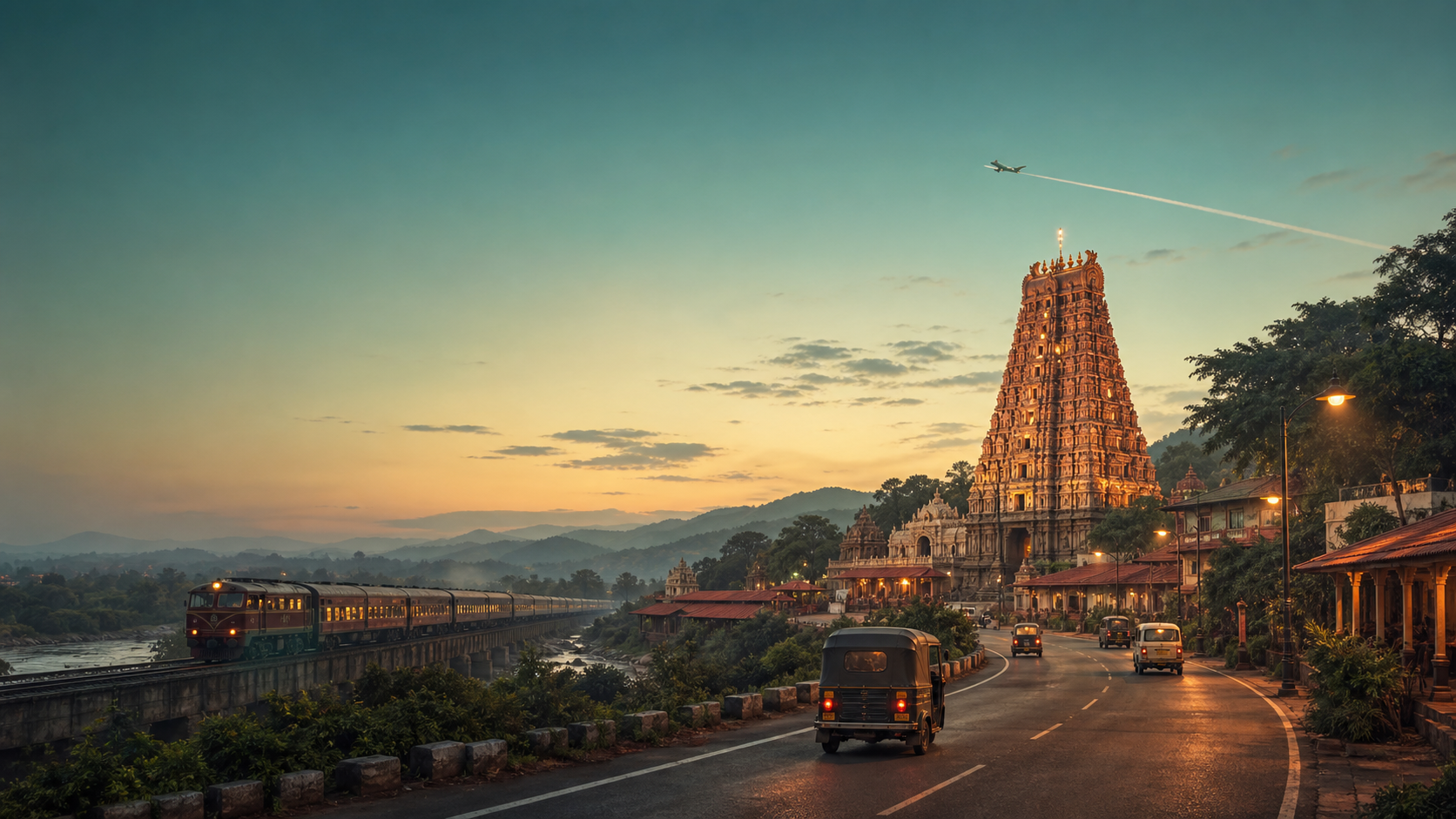
A complete pilgrim record drawn from the existing published article data.
\n
| Built | 10th or 11th century CE (original structure); converted to complete stone structure in 14th century CE |
|---|---|
| Commissioned By | King Kundavarma of the Alupa Dynasty |
| Ruling Dynasty | Alupa Dynasty |
| Architectural Style | Dravidian (Tuluva regional with Buddhist-Vajrayana monastic influence) |
| Primary Materials | Stone, Bronze |
| Main Deity | Manjunatha (Lord Shiva as a linga) |
| Consort Deity | Goddess Parvathi |
| Key Idols | 5-foot Panchaloha Lokeshwara (identified as Brahma), Avalokiteshvara (Narayana), Buddha (Vedavyasa) |
| Tradition | Shaiva (with strong Natha and syncretic Buddhist-Tantric roots) |
| Location | Mangaluru, Karnataka, India |
| Nearest City | Mangaluru |
| Best Time to Visit | January (for Jathra Mahothsava), October-November (for Deepothsava) |
Historical Foundation
Timeline
Chronology of Kadri Manjunath Temple
\n
\n
\n
\n
\n
\n
The Alupa Dynasty's Patronage
\n
\n \n
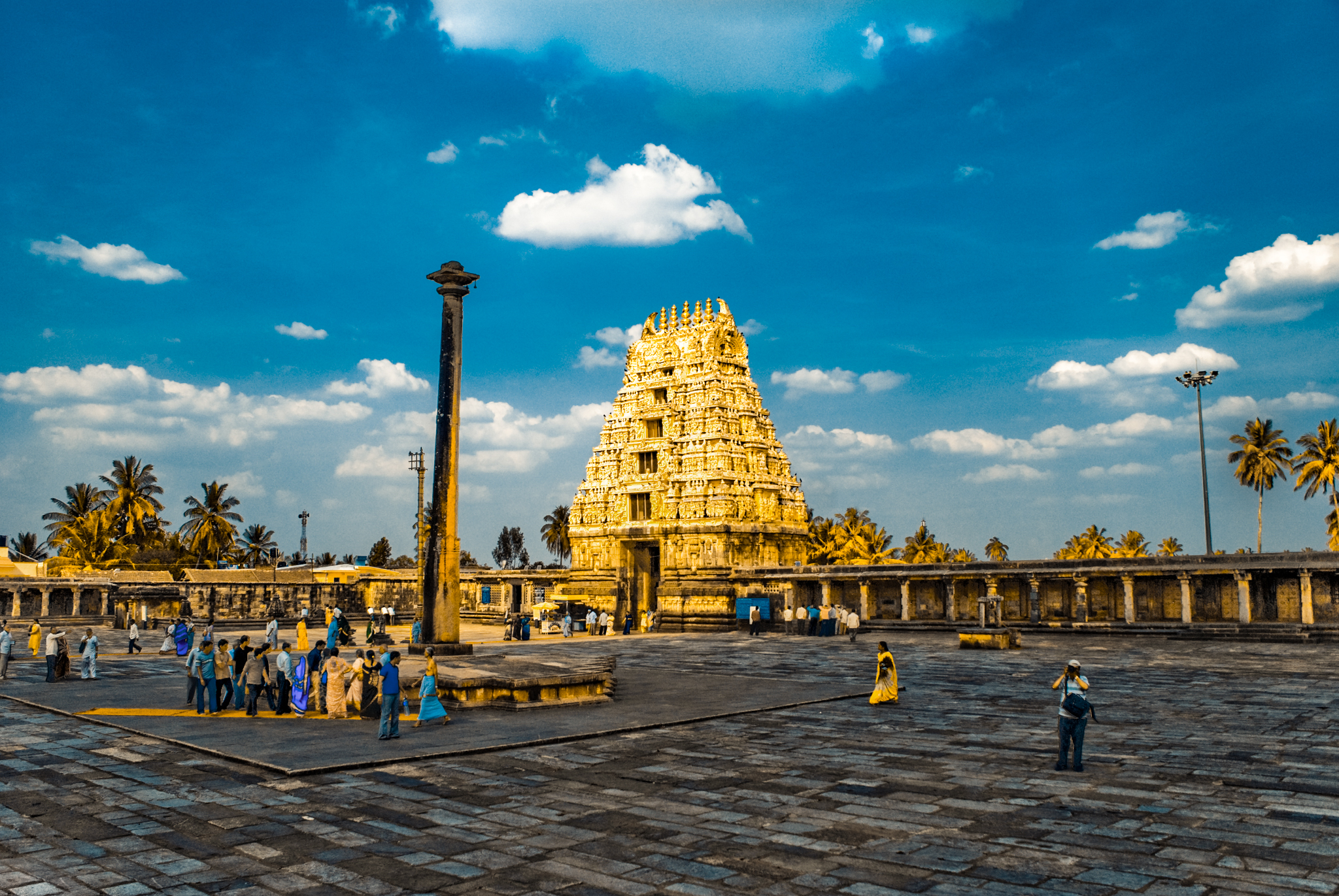
\n The imposing gopuram welcomes devotees to the ancient Kadri Manjunath Temple.
\n\n
\n\nScholarly Interpretations and Legacy
\n
\n\n\nArchitecture & Craftsmanship
\n
\n \n
\n The elevated water ponds, fed by the Gomukha spring, are a serene feature of the temple complex.
\n\n\n
Dravidian Splendour and Structural Elements
\n
\n\n\nSculptural Marvels and Iconographic Uniqueness
\n
\nThe Lokeshwara Idol: A Fusion of Faiths
\n
- \n
- Material: Panchaloha (five metals) bronze \n
- Height: Approximately 5 feet (1.5 meters) \n
- Features: Three-faced, six-armed, holding flowers in two hands. \n
- Unique Crown: Depicts a Dhyani Buddha, symbolizing its Buddhist origins. \n
- Identity: Identified as Lokeshwara (Bodhisattva), often reinterpreted as Brahma, and integrated into Shaiva worship. \n
- Historical Significance: Oldest known South Indian bronze, with an inscription dating to 968 CE (or 1068 CE). \n
\n
This idol represents the pinnacle of syncretic artistry, where Buddhist iconography seamlessly merges with Shaiva worship, reflecting centuries of shared reverence.
\n\n
\n\nEngineering Marvels: The Gomukha Spring
\n
\n \n
\n The sacred Gomukha spring, believed to originate from Kashi, feeds the nine holy ponds.
\n\n
\n\nThe Presiding Deity
Deity Profile
Shiva is the presiding deity worshipped at this temple.
- Main Deity: Shiva
- Form: Shiva linga (enshrined as Manjunatheshwara)
- Consort: Goddess Parvathi
- Tradition: Shaiva (with strong Natha and syncretic Buddhist-Tantric roots)
Profile of Lord Manjunatha at Kadri
\n
- \n
- Main Deity: Manjunatha (Lord Shiva) \n
- Form: Shiva linga (known as Manjunatheshwara) \n
- Consort: Goddess Parvathi \n
- Syncretic Identity: Unique identification with the Buddhist Bodhisattva Manjushri. \n
- Associated Traditions: Shaiva, with strong historical and ritualistic ties to the Natha Sampradaya and Vajrayana Buddhism. \n
- Iconographic Uniqueness: Continuous co-worship of Shiva linga and Bodhisattva icons for centuries. Manjushri is fully identified with Manjunatha in both epigraphic records and ritual practice, a rarity in India. \n
\n
The worship of Manjunatha at Kadri is a living testament to religious fluidity, where the boundaries between deities and traditions beautifully blurred over centuries.
\n\n\n
Manjunatha: Shiva, Bodhisattva, and Natha Guru
\n
\n\n\nThe Pancha Bhoota Sthala and Natha Connection
\n
\n\nFestivals & Living Traditions
\n
\n\nJathra Mahothsava: The Grand Annual Festival
\n
\n- \n
- Theertha Snana: Devotees begin by taking ritual baths in the sacred nine ponds, particularly the waters fed by the Gomukha spring. \n
- Dwajasthambha Arohana: The festival formally begins with the hoisting of the ceremonial flag on the Dwajasthambha (flagpole). \n
- Uthsava Bali: Processional offerings are performed across four specific locations (kattas) around the temple: Bikarnakatte, Mallikatte, Mundana katte, and Konchadi katte. \n
- Maha Anna Samtharpaney: A hallmark of the Jathra is the mass feeding program, where thousands of devotees and visitors are served free meals, embodying community service and devotion. \n
- Belli Rathothsava: The deity is taken out in a magnificent silver chariot procession. \n
- Avabritha Snana: The festival culminates with a ritual bath symbolizing purification. \n
- Thulabhara: Offerings made by devotees, often by weighing themselves against grains or other commodities. \n
- Chandramandalothsava & Malaraya Daiva Nemothsava: Cultural performances and the worship of local folk deities like Malaraya Daiva are integrated, reflecting the temple's deep roots in regional traditions. \n
\n\n
Karthika Deepothsava: Festival of Lights
\n
\n\n\n
Plan Your Visit
\n
\n\nGetting There
\n
- \n
- Nearest City: Mangaluru (Mangalore), a major port city in Karnataka. \n
- Nearest Airport: Mangaluru International Airport (IXE), approximately 13 km away. It is well-connected to major Indian cities. \n
- Nearest Railway: Mangaluru Central Railway Station (MAQ), about 5 km from the temple. Mangaluru Junction (MAJN) is also nearby and well-connected. \n
- By Road: Mangaluru is well-connected by state and national highways. Local transport is readily available. \n
\n\n
Best Time to Visit
\n
The temple is open year-round, but specific periods offer unique experiences:
\n- \n
- January (Makara Sankranthi): Ideal for experiencing the grand Jathra Mahothsava, with its vibrant processions, rituals, and mass feeding. \n
- Karthika Maasa (October-November): Visit during Deepothsava to witness the temple illuminated by thousands of lamps, creating a magical atmosphere. \n
- Winter Months (October to March): Generally pleasant weather, making it comfortable for sightseeing and exploring the temple complex. \n
\n\n
Suggested Duration and Nearby Attractions
\n
\n\n
\nConsider combining your visit with other significant temples in the region:
\n- \n
- Polali Rajarajeshwari Temple: Another ancient temple dedicated to Goddess Rajarajeshwari, known for its grand annual festival and unique clay idols. \n
- Mangaladevi Temple: Located in Mangaluru itself, this temple is dedicated to Goddess Mangaladevi, from whom the city derives its name. \n
\n
The Kadri Manjunath Temple truly offers a journey through time and faith, revealing the enduring spirit of harmony that defines India's spiritual landscape.
\n" }"Every stone here carries the prayers of generations who came before."
"Kadri Manjunath Temple is not just a temple — it is a living chronicle of faith."
Related temples: Aakkoor Thanthondreeswarar Temple | Aazhimala Shiva Temple
Sacred Stories & Mythology
Sthala Purana
Parashurama, after annihilating cruel Kshatriyas in Sahyadri, sought a place to reside and prayed to Lord Shiva at Kadali Kshethra. Shiva assured him that if he performed penance there, He would incarnate as Manjunatha for the world’s welfare. Parashurama threw his axe into the sea to create the land, and Shiva appeared with Parvathi as Manjunatha, establishing the site as sacred. At Manjunatha’s command, the Sapthakoti Manthras manifested as seven theerthas.
\n
\nThe Legend of Parashurama and Manjunatha
\n
\n \n \n\n\n
Puranic Connections and Cosmic Significance
\n
\n\n\n
Saints, Poets & Devotees
\n
\n\nThe Natha Saints and Their Legacy
\n
\n \n
\n The serene interior of Kadri Manjunath Temple, reflecting centuries of devotion.
\n\n
\n\nM. Govinda Pai: The Scholar-Interpreter
\n
\n\n\nRecords, Marvels & Heritage
\n
\n\nUnparalleled Historical Records
\n
- \n
- Oldest Known South Indian Bronze: The 5-foot Panchaloha Lokeshwara idol, with its 968 CE (or 1068 CE) inscription, is widely regarded as the oldest known South Indian bronze idol, an invaluable archaeological and artistic treasure. \n
- Continuous Syncretic Worship: It is one of the very few temples in India with a documented history of continuous syncretic Shiva-Buddha-Natha worship over centuries, evidenced by both inscriptions and ritual practices. \n
- Kadarika Vihara Transformation: The temple offers firm inscriptional evidence for its evolution from a 10th-century Vajrayana Buddhist Vihara into a Shaiva temple, while remarkably retaining and reinterpreting its Bodhisattva icons as Shiva forms. This transformation is a significant case study in religious history. \n
- Manjushri Identified with Manjunatha: Kadri is unique in India where the Buddhist Bodhisattva Manjushri is fully identified with Manjunatha (Shiva) in both epigraphic and ritual traditions. \n
\n
\n\n
Engineering and Natural Marvels
\n
\nSources & Further Reading
\n
- \n
- Wikipedia article on Kadri Manjunath Temple (citing primary inscriptions and Mahatmyam) \n
- M. Govinda Pai’s scholarly works on Kadri and Tulu Nadu history \n
- Epigraphic records related to the Alupa Dynasty
- Kadli Manjunath Mahatmyam (1730 CE) \n
\n
🗺 How to Reach
Hover a card to animate the journey on the map
Route to Mangaluru
Common Questions
Where is Kadri Manjunath Temple: A Syncretic Marvel of Mangaluru located?
Kadri Manjunath Temple: A Syncretic Marvel of Mangaluru is documented at Mangaluru, Karnataka.
Which deity is associated with Kadri Manjunath Temple: A Syncretic Marvel of Mangaluru?
Kadri Manjunath Temple: A Syncretic Marvel of Mangaluru is associated with Shiva.
Related Temples


A Living Covenant