




A complete pilgrim record drawn from the existing published article data.
Centuries of Faith: Patrons and Periods
The magnificent Jain temples of Karnataka are a testament to the unwavering patronage of several powerful dynasties that ruled the region between the 9th and 14th centuries CE. The Western Ganga, Hoysala, and Chalukya empires played crucial roles in fostering Jainism, commissioning grand temple complexes and colossal statues. Their support led to a remarkable flourishing of Jain art and architecture, shaping a unique historical narrative where royal patronage directly contributed to the spiritual and cultural landscape of the state. This era marked a golden age for Jainism in Karnataka.
Western Ganga Dynasty
The Western Gangas, particularly Chamundaraya, were devout patrons. Their reign saw the construction of the iconic Gomateshwara statue at Shravanabelagola around 983 CE, a monumental achievement in Jain art and engineering.
Hoysala and Chalukya Influence
Later, the Hoysala and Chalukya dynasties continued this tradition, contributing to existing complexes and building new temples. Their architectural styles integrated with Jain structures, creating unique aesthetic blends visible across various sites in Karnataka.
Enduring Legacy of Patronage
The sustained support from these dynasties ensured the survival and growth of Jainism, leaving behind a legacy of intricate temples, inscriptions, and literature that continue to inform and inspire.
Stone Speaks: Architectural Styles and Iconic Structures
The Jain architectural landscape of Karnataka is remarkably diverse, showcasing a blend of indigenous styles and profound devotional artistry. From ancient rock-cut cave temples to sophisticated structural edifices and monumental monolithic statues, these sites narrate tales in stone. Predominantly adhering to the Dravidian style, the temples often feature intricate carvings, towering gopurams, and ornate mandapas. The use of durable materials like granite and sandstone ensured their longevity, preserving artistic details and spiritual narratives for centuries. This rich architectural heritage reflects a continuous tradition of craftsmanship and faith.
Dravidian Style Characteristics
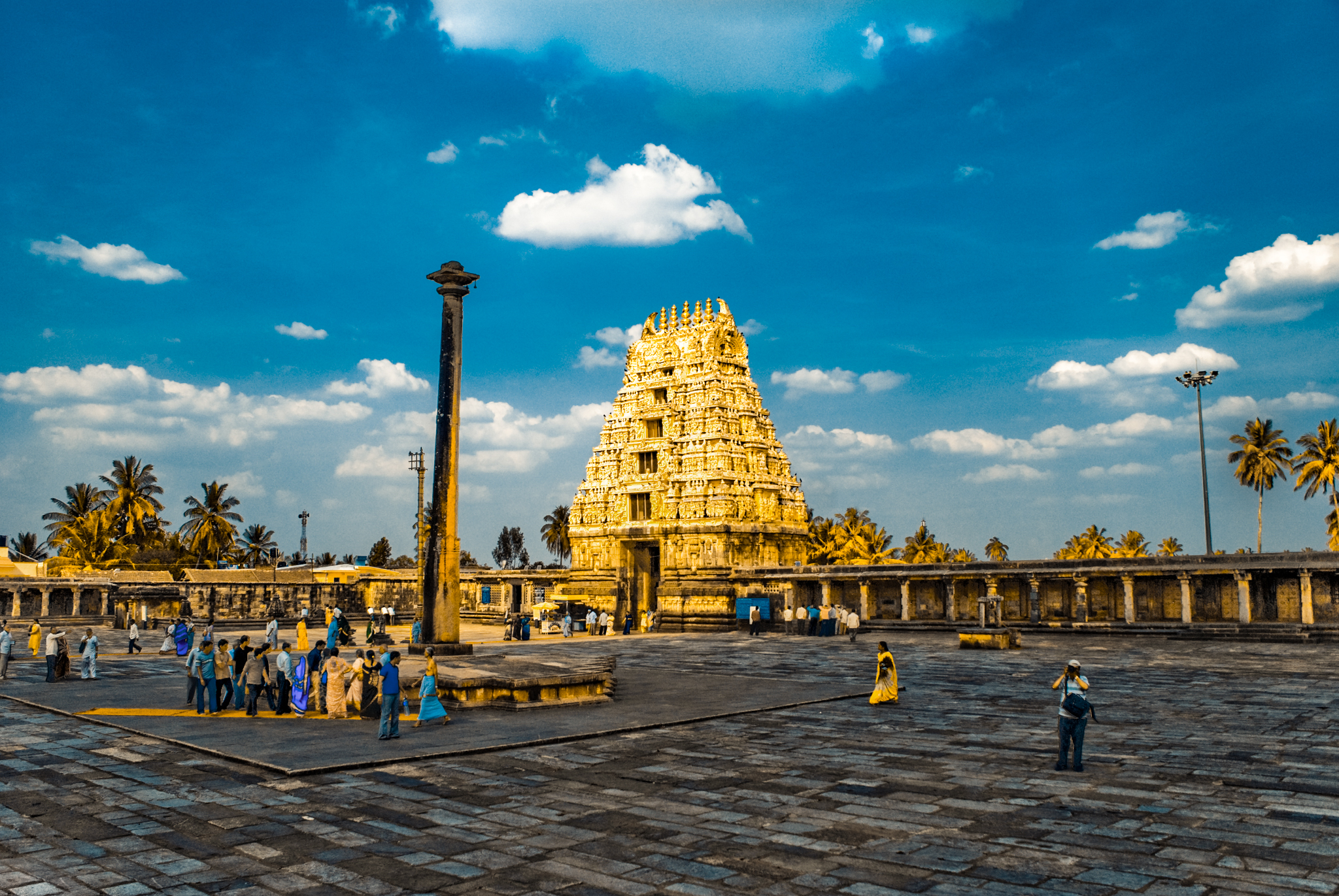
Many Jain temples in Karnataka exhibit classic Dravidian architectural features, including pyramidal vimanas, elaborate pillared halls, and often a circumambulatory path. These structures are typically built from granite or sandstone, known for their durability and amenable nature for intricate carvings.
Monolithic Marvels
The most striking example of Jain artistry is the 18-meter monolithic Gomateshwara (Bahubali) statue at Shravanabelagola, carved from a single rock face. This colossal sculpture exemplifies the Digambara tradition's emphasis on asceticism and detachment.
Cave Temples and Basadis
Beyond monolithic statues, Karnataka also hosts ancient rock-cut cave temples, such as those found on Chandragiri Hill, and numerous structural basadis (Jain temples). These range from simple shrines to elaborate complexes, each contributing to the architectural tapestry.
Mahavira and the Tirthankaras: Spiritual Heart of Jainism
At the spiritual core of Karnataka's Jain temples lies the profound veneration of Mahavira, the 24th and last Tirthankara, and his 23 predecessors. These enlightened beings, who conquered desire and attained omniscience, serve as ultimate role models for liberation. Their teachings on non-violence (ahimsa), truth, non-stealing, celibacy, and non-possession form the bedrock of Jain philosophy. The iconic Gomateshwara statue, representing Bahubali, the son of the first Tirthankara Rishabhanatha, powerfully embodies the ideals of renunciation and asceticism, inspiring millions to follow the path of spiritual purification.
The Role of Tirthankaras
Tirthankaras are revered as spiritual teachers who have attained omniscience and shown the path to liberation from the cycle of rebirth. Their images are central to Jain worship, serving as objects of meditation and sources of inspiration.
Bahubali's Significance
The colossal statue of Bahubali, also known as Gomateshwara, is a prime example of Tirthankara veneration. Though not a Tirthankara himself, Bahubali achieved Kevala Jnana (omniscience) through intense asceticism, making him a revered Siddha and a symbol of ultimate renunciation.
Digambara Tradition
Most Jain temples in Karnataka belong to the Digambara tradition, which emphasizes nudity as a symbol of complete detachment from worldly possessions. The statues of Tirthankaras and Bahubali often reflect this ascetic ideal.
The Enduring Legacy of Jainism in Karnataka
Karnataka holds a pivotal position in the history of Jainism in India, preserving a rich heritage of temples and monuments that span over a millennium. These sites, primarily belonging to the Digambara tradition, reflect centuries of profound devotion, artistic excellence, and architectural prowess. From ancient rock-cut caves to grand structural temples and colossal monolithic statues, the state showcases a unique blend of spiritual fervor and cultural achievement. Its numerous Jain centers continue to be significant pilgrimage destinations, drawing devotees and scholars alike to witness a living legacy of faith and art.
Historical Significance
Jainism flourished in Karnataka from early centuries CE, establishing deep roots. The migration of Acharya Bhadrabahu and Emperor Chandragupta Maurya to Shravanabelagola in the 4th century BCE cemented the region's importance as a major center for Digambara Jainism.
Major Jain Centers
Key Jain sites include Shravanabelagola, Moodabidri, Karkala, and Venur, each housing significant temple complexes and iconic statues. These centers collectively represent the enduring presence and influence of Jainism across various historical periods in Karnataka.
Cultural Impact
The Jain community has significantly contributed to Karnataka's language, literature, philosophy, and art. Numerous Jain poets and scholars enriched Kannada literature, and their architectural endeavors left an indelible mark on the state's cultural landscape.
Journey to Serenity: Visiting Karnataka's Jain Temples
A visit to Karnataka's Jain temples offers a profound cultural and spiritual journey for both pilgrims and tourists. To fully appreciate their historical and religious depth, careful planning is essential. The serene atmosphere, coupled with magnificent architecture and rich history, provides an immersive experience. Visitors are encouraged to observe local customs and dress codes, ensuring respect for these sacred sites. The best time to visit, typically from October to March, allows for comfortable exploration of the expansive complexes and surrounding hills, especially during major festivals.
Best Time to Visit
The period from October to March is ideal for visiting, offering pleasant weather for exploring the temple complexes. This includes the post-monsoon clarity and cooler temperatures, making climbing hills like Vindhyagiri more comfortable.
Dress Code and Etiquette
Visitors must adhere to a strict dress code, typically requiring modest clothing and the removal of footwear before entering temple precincts. Leather items are often prohibited. Respectful behavior is paramount.
Planning Your Trip
Given the spread of significant sites like Shravanabelagola, Moodabidri, and Karkala, planning for at least two days is recommended to cover the major attractions, including the hills, caves, and museums, allowing for a comprehensive experience.
| Deity | Bahubali (Gomateshwara) |
|---|---|
| Form | Bahubali is depicted in a standing meditative posture (kayotsarga), fully nude, with vines climbing his legs. |
| Consort | Unknown |
| Sampradaya | Digambara |
| Significance | This form is emblematic of the Digambara tradition, representing his renunciation of worldly attachments and attainment of omniscience after victory over his brother Bharata. |
Bahubali's Supreme Renunciation
The colossal Gomateshwara statue at Shravanabelagola immortalizes the awe-inspiring saga of Bahubali, a prince who chose spiritual glory over worldly dominion. Son of the first Tirthankara, Rishabhanatha, Bahubali famously defeated his brother Bharata in a fierce battle for supremacy. Yet, victory brought not joy, but profound introspection. Overwhelmed by the futility of worldly power and the strife it caused, Bahubali renounced his kingdom, his clothes, and all attachments, standing in meditative posture for a year, vines growing around his limbs. Under a banyan tree, he attained Kevala Jnana, omniscience, becoming a revered Siddha. The magnificent statue, commissioned by Chamundaraya in 983 CE, stands as a testament to his unparalleled detachment and spiritual triumph, a powerful symbol of inner peace.
Renounce the world, conquer the self, and attain omniscience, for true victory lies within.
A king's ultimate sacrifice, transforming worldly power into spiritual liberation and eternal peace.
Related temples: Akkana Basadi | Amareshwar Temple
Restoration & Conservation
The ancient Jain temples scattered across Karnataka, many dating back over a millennium, face continuous challenges from the ravages of time, weather, and, at times, human neglect. Extensive restoration and conservation efforts are crucial to safeguard these invaluable architectural and spiritual treasures. Government agencies like the Archaeological Survey of India (ASI) and the Karnataka State Department of Archaeology, Museums and Heritage, alongside dedicated Jain trusts and community organizations, actively engage in preserving these sites. Projects often involve meticulous work on structural stabilization, intricate stone carving repair, and the protection of delicate murals and inscriptions. The process frequently blends traditional building techniques, passed down through generations of artisans, with modern scientific conservation methods to ensure authenticity and longevity, particularly evident in sites like Shravanabelagola and Moodbidri.
Despite significant progress, the task of preserving Karnataka's Jain temple heritage is fraught with ongoing challenges. Securing adequate funding remains a persistent hurdle, as does the availability of highly skilled traditional craftspeople specializing in stone masonry, stucco work, and mural restoration. Environmental factors like monsoon rains, humidity, and even air pollution contribute to decay, requiring continuous monitoring and preventative measures. Balancing the need for structural integrity and aesthetic preservation with the demands of increasing pilgrim footfall and tourism also presents a complex dilemma. Future conservation initiatives aim to leverage advanced technologies for documentation and predictive maintenance, while fostering greater community engagement and public awareness to ensure these magnificent temples continue to stand as testaments to a rich cultural and religious legacy.
🗺 How to Reach
Hover a card to animate the journey on the map
Route to Temple
Common Questions
Where is Jain Temples of Karnataka: Ancient Cave Shrines & Royal Patronage located?
Jain Temples of Karnataka: Ancient Cave Shrines & Royal Patronage is documented at Karnataka.
Which deity is associated with Jain Temples of Karnataka: Ancient Cave Shrines & Royal Patronage?
Jain Temples of Karnataka: Ancient Cave Shrines & Royal Patronage is associated with Bahubali (Gomateshwara).
Related Temples


A Living Covenant