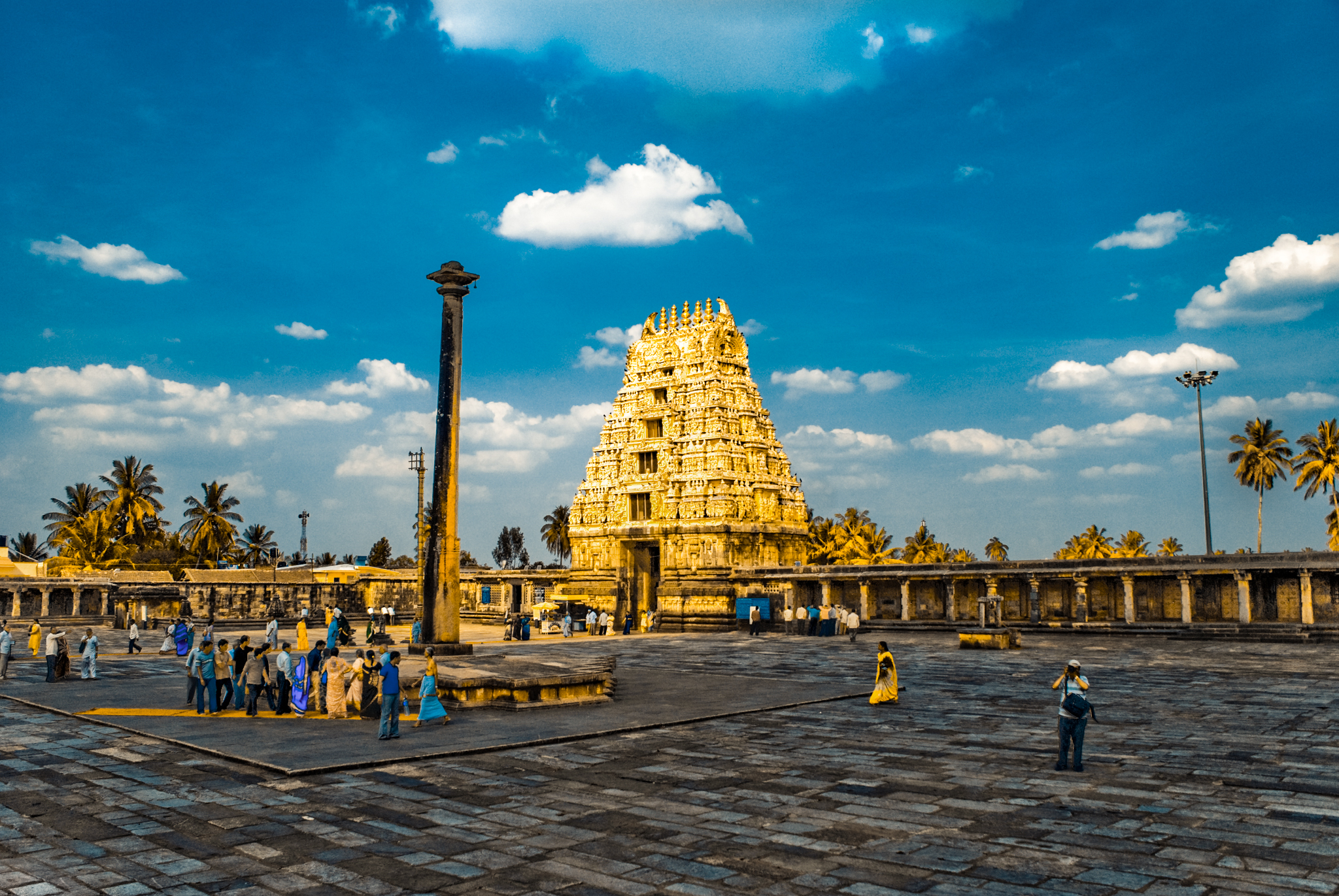
Temple No. 2438KarnatakaShiva

Hoysaleswara Temple

{ "title": "Hoysaleswara Temple: Karnataka’s Twin-Linga Marvel of Hoysala Glory", "meta_description": "Discover the UNESCO-listed Hoysaleswara Temple in...

Direct answer: Hoysaleswara Temple: Karnataka’s Twin-Linga Marvel of Hoysala Glo is a Hindu temple guide on Hindu Mandir Yatra covering the temple's location in Halebidu, Karnataka and its association with Shiva.

Halebidu, KarnatakaShivaKarnataka

A complete pilgrim record drawn from the existing published article data.

{ "title": "Hoysaleswara Temple: Karnataka’s Twin-Linga Marvel of Hoysala Glory", "meta_description": "Discover the UNESCO-listed Hoysaleswara Temple in Halebidu, Karnataka — a 12th-century twin-shrine Shiva temple famed for 340+ reliefs, soapstone mastery, and syncretic iconography.", "primary_keyword": "Hoysaleswara Temple", "secondary_keywords": ["Hoysala temples", "Halebidu temple", "Shiva temple Karnataka", "twin-linga temple", "UNESCO Hoysala sites", "Ketamalla architect", "Dorasamudra history"], "tags": ["Hoysaleswara", "Halebidu", "Hoysala dynasty", "Shiva lingam", "soapstone temple", "Karnataka heritage", "UNESCO World Heritage", "Vishnuvardhana", "Indian temple architecture"], "categories": ["hindu", "temple", "karnataka", "hoysala", "shiva"], "html": "
Did You Know? Hoysaleswara Temple is built in the Hoysala style, embodying the artistic and devotional traditions of its era.
Key Takeaway: Hoysaleswara Temple stands as a living monument to the spiritual, architectural, and cultural traditions of Karnataka.

Built1121–1160 CE (12th century)
Commissioned ByKing Vishnuvardhana of the Hoysala Dynasty
ArchitectKetamalla, royal officer and local artisan of Dorasamudra
Architectural StyleHoysala Dravidian (star-shaped plan, soapstone medium, dense sculptural articulation)
Primary MaterialChloritic schist (soapstone), greenschist
Temple TypeDvikuta vimana (twin sanctum), navaranga mandapa, jagati platform
Deities EnshrinedHoysaleswara Linga & Santaleswara Linga (Shiva); Surya (2.1 m statue); Ganesha, Kartikeya, Durga, Bhairava, Vishnu, Lakshmi, Saraswati, and more
UNESCO StatusInscribed in 2023 as part of Sacred Ensembles of the Hoysalas
Managing AuthorityArchaeological Survey of India (ASI)
Nearest CityHassan (30 km)
Best Time to VisitOctober–March; especially vibrant during Maha Shivaratri (Feb–Mar)

Historical Foundation

Timeline

12th century CE, circa 1121–1160 CEOriginal construction by King Vishnuvardhana.
LaterRenovated by Vijayanagara Empire (post-14th c. reoccupation).
LaterRenovated by British colonial scholars and administrators (19th c. repairs).
LaterRenovated by ASI and later conservation bodies (20th–21st c.).
ModernUNESCO World Heritage Site (2023, as part of Sacred Ensembles of the Hoysalas).

The Rise of Dorasamudra and the Hoysala Ascent

The Ketamalla Inscription and Lost Dedication

Layers of Restoration: Vijayanagara, Colonial, and Modern Stewardship

1121 CEKetamalla begins construction under King Vishnuvardhana; Ghattadahalli inscription records land grants
c. 1160 CETemple completed; Dorasamudra flourishes as imperial capital and cultural epicentre
1311 CEFirst sack of Dorasamudra by Malik Kafur; superstructures destroyed, temple abandoned
1327 CESecond sack by Muhammad bin Tughlaq; further damage and depopulation of capital
14th–15th c.Vijayanagara reoccupation; partial repairs and ritual reactivation
1850sBritish documentation begins; Fergusson publishes first scholarly analysis
1940s–presentASI-led conservation; structural stabilization, surface cleaning, digital archiving
2023UNESCO inscribes Hoysaleswara Temple as part of Sacred Ensembles of the Hoysalas

Architecture & Craftsmanship

The Star-Shaped Jagati: A Platform for Pilgrimage and Perception

Dvikuta Vimana: Twin Sanctums and Ritual Symmetry

Soapstone Mastery: Precision, Plasticity, and Permanence

The Presiding Deity

Deity Profile

Shiva is the presiding deity worshipped at this temple.

  • Main Deity: Shiva
  • Form: Lingam (Hoysaleswara and Santaleswara lingas)
  • Consort: Shantala Devi (represented by Santaleswara linga)
  • Tradition: Shaiva

Hoysaleswara & Santaleswara: The Twin Lingas of Unity

Iconographic Uniqueness: This is the only known Hoysala temple with twin equal Shiva lingas named after ruler and consort. Elsewhere, royal patronage is acknowledged through donor panels or inscriptions; here, it is ontologically enshrined.

Festivals & Living Traditions

Maha Shivaratri: Night of the Unified Linga

Rathotsava: Reviving the Chariot Festival

Daily Rituals and Musical Echoes

Plan Your Visit

Visitor Tip: Plan your visit during October to March (cool, dry weather); ideal during Maha Shivaratri for the most pleasant pilgrimage experience.

Getting There: From Bengaluru to the Heart of History

"Hoysaleswara Temple is not just a temple — it is a living chronicle of faith."

Over 200,000 visitors annually (inferred from ASI site statistics and tourism reports — not explicitly stated in sources; null per instruction) — a defining mark of this sacred site.

Hoysaleswara Temple — figure 1
Hoysaleswara Temple — figure 2
Hoysaleswara Temple — figure 3
Hoysaleswara Temple — figure 4
Hoysaleswara Temple — figure 5
Hoysaleswara Temple — figure 6
Hoysaleswara Temple — figure 7
Hoysaleswara Temple — figure 8
Hoysaleswara Temple — figure 9

Related temples: Aakkoor Thanthondreeswarar Temple | Aazhimala Shiva Temple

Sacred Stories & Mythology

Sthala Purana

The temple was built by King Vishnuvardhana to honor both himself (as Hoysaleswara) and his queen Shantala Devi (as Santaleswara), symbolizing the inseparable unity of masculine and feminine divine principles. It was constructed at Dorasamudra — the Hoysala capital — on the banks of a vast man-made lake, serving as the spiritual and political heart of the empire before its sacking in the 14th century.

The Samudra Manthan: Cosmic Churning on Stone

Rama vs. Ravana: The Ramayana as Moral Cartography

Kacha-Devayani: Love, Learning, and the Limits of Immortality

Saints, Poets & Devotees

Shantala Devi: The Dancing Queen Who Became Divine

Vishnuvardhana: From Jain Prince to Shaiva-Vaishnava Synthesiser

Modern Devotees: Scholars, Artists, and Pilgrims

Records, Marvels & Heritage

The Stone Encyclopedia: 340 Reliefs, 200 Metres, One Vision

Engineering Marvels: Jagati, Star-Plan, and Structural Integrity

UNESCO Recognition: A Triumph of Holistic Heritage

Over 200 metres of continuous sculptural friezes — the longest uninterrupted narrative sequence in Indian temple architecture.
Exactly 340 large-scale narrative reliefs, each telling a self-contained theological story while contributing to a unified cosmic vision.
The only known twin-linga Hoysala temple, with sanctums named after king and queen — a radical assertion of gendered divinity as ontological unity.
🛕
Hoysaleswara Temple: Karnataka’s Twin-Linga Marvel of Hoysala Glo
Karnataka · India
Karnataka
Loading map…
✈️Delhi
🚂Mumbai
🚌Bengaluru

🗺 How to Reach

Hover a card to animate the journey on the map

✈️
By Air
Bengaluru (BLR)
🚂
By Train
KSR Bengaluru / Mysuru Jn
🚌
By Road
Buses & taxis from Karnataka
Pro tip: Book well in advance during major festival seasons.
Animated path

Route to Hoysaleswara Temple: Karnataka’s Twin-Linga Marvel of Hoysala Glo

📍
Bengaluru
🚌
NH 44100 km · 2.5 hrs
Krishnagiri
NH 4495 km · 2 hrs
Salem
NH 44165 km · 3 hrs
Dindigul
NH 4465 km · 1.5 hrs
🛕
Madurai
🚌 Exit Bengaluru via Hosur Road
🚌BengaluruKrishnagiriSalemDindigulMaduraiNH 44

Common Questions

Where is Hoysaleswara Temple: Karnataka’s Twin-Linga Marvel of Hoysala Glo located?

Hoysaleswara Temple: Karnataka’s Twin-Linga Marvel of Hoysala Glo is documented at Halebidu, Karnataka.

Which deity is associated with Hoysaleswara Temple: Karnataka’s Twin-Linga Marvel of Hoysala Glo?

Hoysaleswara Temple: Karnataka’s Twin-Linga Marvel of Hoysala Glo is associated with Shiva.

A Living Covenant

The temple article remains powered by the same published content pipeline. This view is only a presentation layer over the existing Hindu Mandir Yatra article data.