



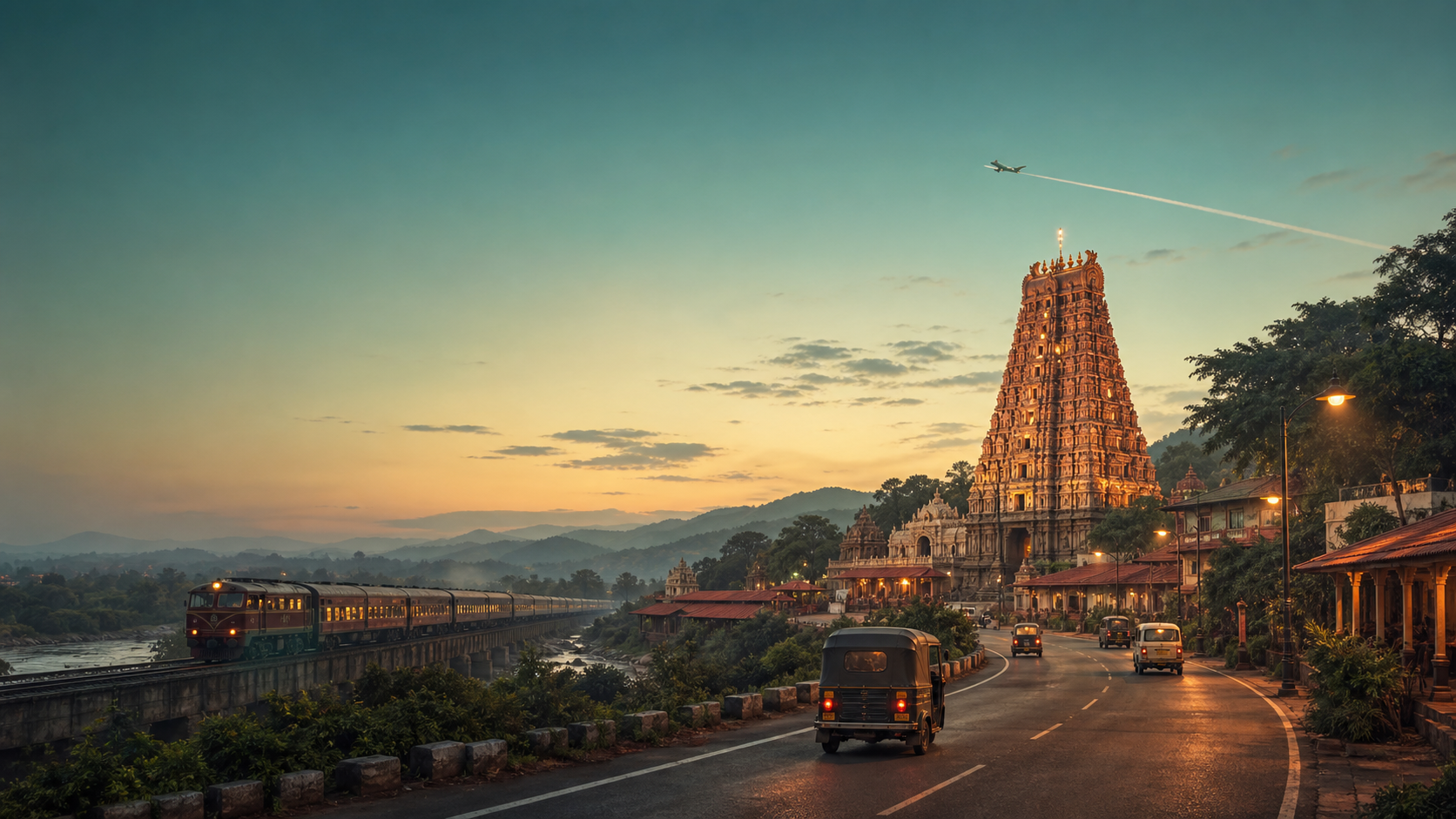
A complete pilgrim record drawn from the existing published article data.
Historical Foundation
Ancient Origins & Early Shrine
The Virupaksha-Pampa sanctuary existed well before the Vijayanagara capital was established at Hampi, showcasing the region's ancient spiritual importance.
Vijayanagara Grandeur & Royal Patronage
"The Virupaksha Temple stands as a living testament to the enduring spirit of Hampi, having witnessed centuries of history and preserving an unbroken tradition of worship."
Architecture & Craftsmanship

Gopurams & Mandapas
Pillars, Sculptures & Murals
Definition: Gopuram
A gopuram is a monumental entrance tower, usually ornate, at the entrance of a Hindu temple complex, especially in Southern India. They often serve as gateways through the walls that surround the temple and are a prominent feature of Dravidian architecture.

The Presiding Deity
Virupaksha: Pampa's Consort
Lord Virupaksha
- Main Deity: Virupaksha (Lord Shiva)
- Deity Form: Lingam (representing Shiva)
- Consort Deity: Pampadevi (local river goddess)
- Iconographic Uniqueness: Depicted as Pampa pathi (consort of Pampadevi), integrating regional river goddess theology into Shaiva iconography.
- Spiritual Classification: Associated with water (Jala Tattva) as a Pancha Bhoota Sthala, linked to the Tungabhadra/Pampa River.
Shaiva Tradition & Pancha Bhoota Sthala
Festivals & Living Traditions
Annual Celebrations & Rituals
Two major festivals punctuate the temple's annual calendar, drawing immense crowds and showcasing the deep-rooted cultural and religious significance of the site:
- Virupaksha-Pampa Wedding Festival (December): This is the most significant event, an annual re-enactment of the divine marriage of Virupaksha and Pampadevi. The elaborate betrothal and wedding festivities draw huge numbers of devotees, celebrating the sacred union that forms the very foundation of the temple's mythology.
- Chariot Festival (February): An annual procession where the deity's chariot is pulled through the temple precincts, allowing devotees to participate directly in the divine journey and receive blessings.
Artistic & Devotional Practices
Pro Tip for Visitors
Plan your visit to coincide with the Virupaksha-Pampa Wedding Festival in December or the Chariot Festival in February to experience the temple's living traditions and vibrant cultural energy firsthand.
Plan Your Visit
Getting There & When to Visit
- Nearest City: Hospet (approximately 13 km).
- Nearest Railway: Hospet Junction Railway Station (approximately 13 km).
- Nearest Airport: Kempegowda International Airport, Bengaluru (approximately 380 km). Vijayawada Airport (approx. 350 km) is another option, though Bengaluru is often more practical for international visitors.
- Best Season to Visit: October to February, when the weather is cool and dry, and major festivals often take place.
The temple attracts over a million visitors annually, a testament to its enduring appeal as a pilgrimage and tourist destination.
Visitor Guidelines & Nearby Attractions

To ensure a respectful and enjoyable visit:
- Dress Code: Modest dress is required.
- Footwear: Must be removed before entering the main temple premises.
- Photography: Permitted everywhere except inside the sanctum sanctorum.
- Prohibitions: No non-vegetarian food or alcohol allowed within the temple premises.
- Suggested Duration: Allocate 2–3 hours to fully explore the outer and inner courts, gopurams, and subsidiary shrines.
Related temples: Aakkoor Thanthondreeswarar Temple | Aazhimala Shiva Temple
Sacred Stories & Mythology
The Divine Union of Pampa & Virupaksha
The Wedding of Pampa and Shiva
The origin legend (Sthala Purana) of the Virupaksha Temple revolves around the divine marriage of Lord Shiva, as Virupaksha, and the local goddess Pampadevi. According to the legend, Pampadevi, an incarnation of Shakti and the personification of the Tungabhadra River (ancient Pampa river), performed intense penance (tapas) on Hemakuta Hill, overlooking the temple site. Her unwavering devotion was aimed at winning Lord Shiva as her husband. Pleased by her austerities, Shiva appeared before her and agreed to marry her. This celestial wedding sanctified the site as Pampa Kshetra, making it a powerful spiritual nucleus long before the Vijayanagara Empire built its capital around it. The annual Virupaksha-Pampa Wedding Festival re-enacts this sacred event, drawing thousands of devotees.

Echoes in Puranic Lore
Saints, Poets & Devotees
Absence in Early Devotional Texts
Enduring Devotion Through Centuries
"Against the backdrop of Hampi's magnificent ruins, the Virupaksha Temple stands as a testament to the unbroken continuity of faith, a beacon for millions of devotees."
Key Takeaway: Unbroken Worship
The Virupaksha Temple is unparalleled in India for its continuous, documented worship on the same site since the 7th century, making it a living monument to spiritual steadfastness.
Records, Marvels & Heritage
The Virupaksha Temple holds a distinguished place in India's heritage, recognized for its unparalleled historical continuity, architectural brilliance, and unique spiritual narrative.
UNESCO Recognition & Unique Status
Architectural Ingenuity & Enduring Legacy

🗺 How to Reach
Hover a card to animate the journey on the map
Route to Hampi
Common Questions
Where is Virupaksha Temple, Hampi: A Living Legacy of Faith located?
Virupaksha Temple, Hampi: A Living Legacy of Faith is documented at Hampi, Andhra Pradesh.
Which deity is associated with Virupaksha Temple, Hampi: A Living Legacy of Faith?
Virupaksha Temple, Hampi: A Living Legacy of Faith is associated with Shiva.
Related Temples

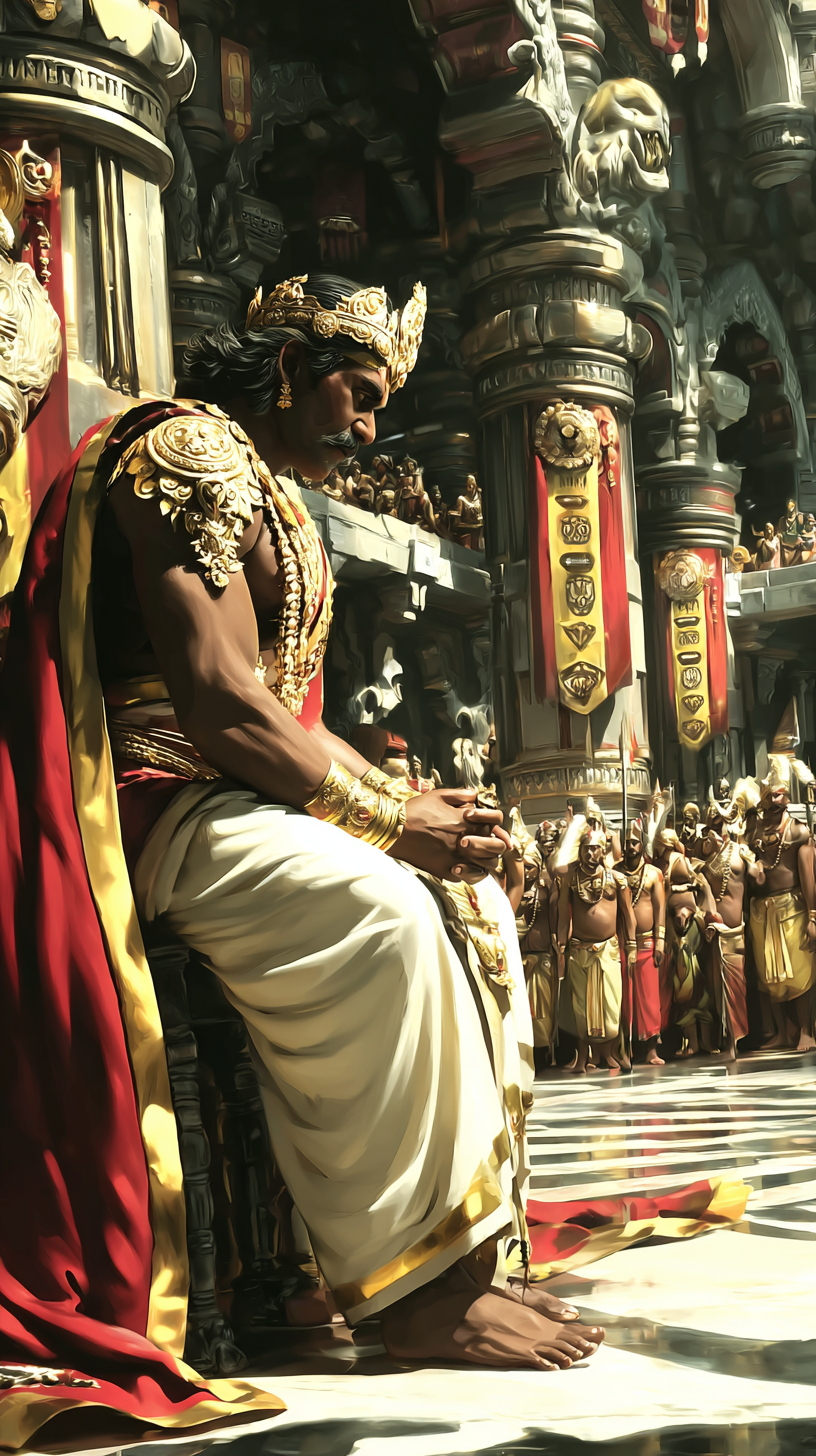
A Living Covenant