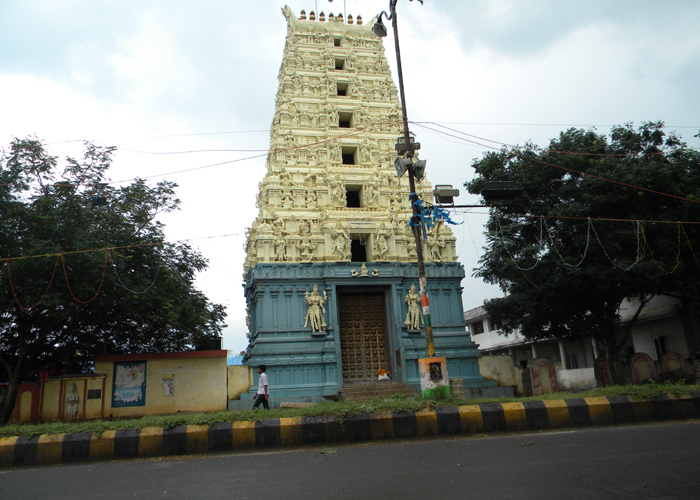
A complete pilgrim record drawn from the existing published article data.
Historical Foundation: Tracing the Temple's Origins
Key Historical Milestones
Origins and the Chola Era
The Sacred Geography of Kalangi River
“The location on the banks of the Kalangi River grounds the divine presence of Chengalamma Parameshwari in the very essence of the earth, connecting humanity to the eternal flow of nature.”
Architectural Splendor and Iconic Depictions
The Eight-Armed Manifestation of Devi
Chengalamma Parameshwari
Chengalamma Parameshwari is revered as a fierce yet benevolent manifestation of Shakti, the divine feminine cosmic energy. Her primary form within the temple is the Trikale Chengali, embodying the combined essence of Parvati (the consort and mother), Saraswati (the goddess of knowledge, arts, and wisdom), and Mahalakshmi (the goddess of wealth, prosperity, and fortune). She is often depicted with eight arms, each holding significant symbols such as a trident, sword, shield, conch, discus, bow, arrow, and a lotus, symbolizing her omnipotence and diverse powers to protect and nurture the universe.
Devotees seek her blessings for courage, wisdom, prosperity, and protection from all adversities, viewing her as the ultimate source of spiritual and material well-being.
This elaborate depiction vividly showcases the artistic genius of the Chola Panditas, renowned for crafting idols of unparalleled aesthetic quality and deep symbolic meaning. Each weapon and posture contributes to the narrative of the Goddess as the supreme protector and bestower of grace.
The Trikale Chengali Philosophy in Stone
The Enduring Chola Legacy in Temple Art
Festivals and Community Engagement
Annual Celebrations and Rituals
The Temple as a Spiritual Hub
Visiting Chengalamma Parameshwari: A Pilgrim's Guide
Planning Your Journey
- Accessibility: Sullurpeta Railway Station is a key access point. From there, local autos or taxis are readily available to reach the temple, which is less than 5 kilometers away. National Highway 16 passes through Sullurpeta, ensuring good road connectivity.
- Best Time to Visit: The cooler months from October to March are ideal for visiting. However, experiencing the temple during major festivals like Navaratri (September/October) offers an unparalleled spiritual immersion, despite larger crowds.
- Accommodation: Sullurpeta offers basic accommodation options. For more extensive choices, pilgrims might consider staying in Nellore or Chennai and planning a day trip.
Etiquette and Experience
Sacred Stories and Divine Lore
Origins from the Sacred River
The Genesis from Kalangi's Embrace
Local lore tells of a time when the tranquil Kalangi River flowed through the region, its waters sustaining life. One auspicious day, from the depths of its sacred currents, a magnificent and radiant form began to emerge. This was no ordinary manifestation, but the Divine Mother herself, Shakti, who chose the Kalangi as her birthplace. She arose in her powerful aspect, initially known as Tenkali, signifying her fierce yet protective nature. Her emergence consecrated the river, forever linking it to her divine presence and establishing the future site of her revered temple.
Devotees believe that bathing in the Kalangi River, especially during auspicious times, can bestow blessings and purify the soul, reaffirming the deep spiritual bond between the Goddess and her watery origins. This origin story highlights the indigenous roots of her worship.
Evolution of the Goddess's Name
“The transformation from Tenkali to Chengalamma is a beautiful metaphor for the spiritual journey—a transition from raw, potent energy to serene, encompassing grace, reflecting the ever-deepening bond between devotee and the Divine Mother.”
🗺 How to Reach
Hover a card to animate the journey on the map
Route to Sullurpeta
Common Questions
Where is Discover Chengalamma Parameshwari Temple: Andhra Pradesh Heritage located?
Discover Chengalamma Parameshwari Temple: Andhra Pradesh Heritage is documented at Chennai, Tamil Nadu.
Which deity is associated with Discover Chengalamma Parameshwari Temple: Andhra Pradesh Heritage?
Discover Chengalamma Parameshwari Temple: Andhra Pradesh Heritage is associated with Durga.
Related Temples


A Living Covenant