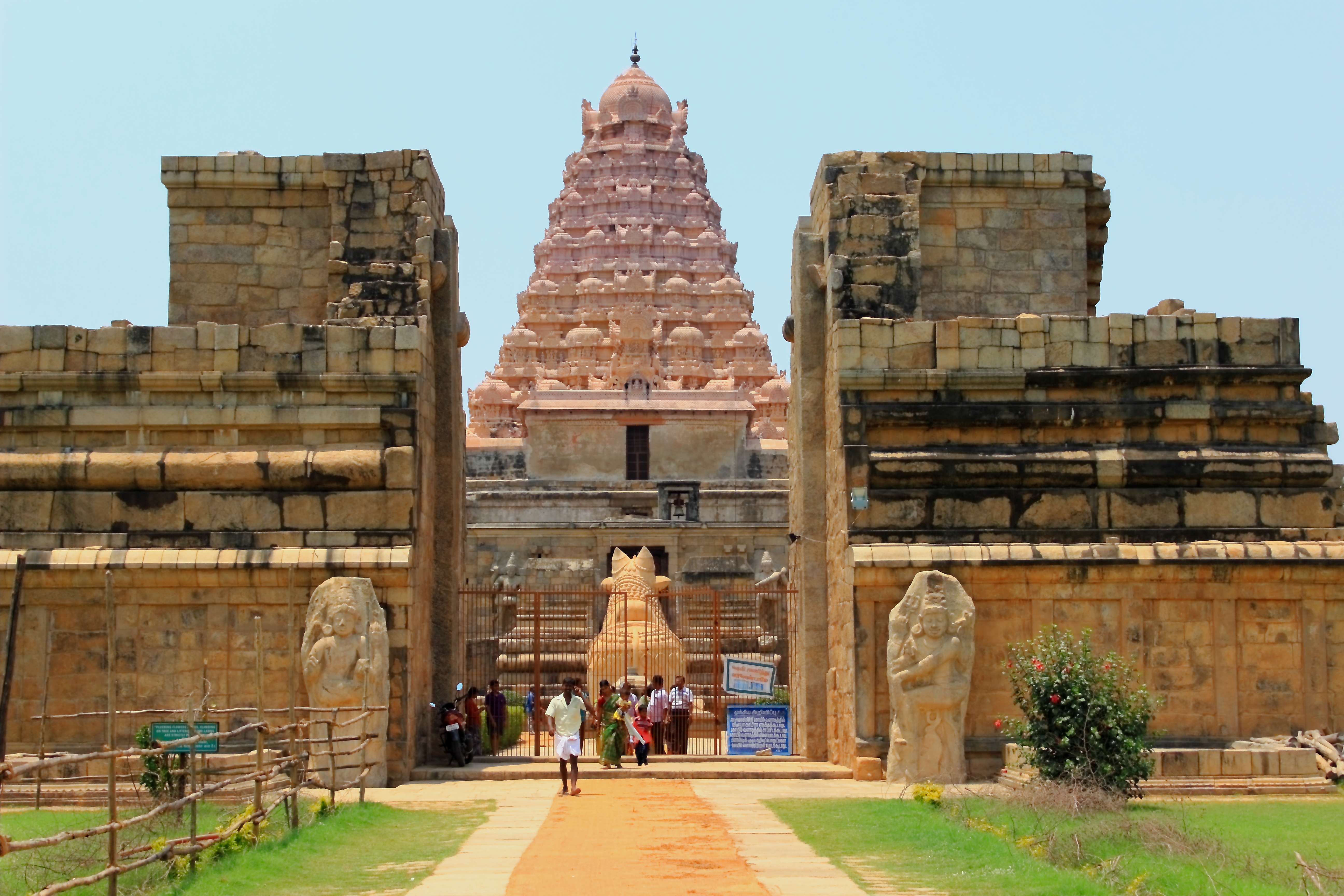
A complete pilgrim record drawn from the existing published article data.
Historical Foundation
The Imperial Genesis: From Campaign to Capital
The Dating Debate: 1020 vs. 1035 CE – Settled by Epigraphy
Capital in Ruins: The Enigma of Gangaikonda Cholapuram’s Decline
“The Ganges flows not in the river alone, but in the well, in the lingam, in the king’s vow, and in the devotee’s tear.” — Anonymous Chola-era inscription fragment
Architecture & Craftsmanship
The Parabolic Vimana: A Triumph of Chola Engineering
Granite Mastery: From Quarry to Cosmic Symbol
Sculptural Symphony: Narrative, Portraiture, and Divine Hierarchy
The Presiding Deity
Brihadeeswarar: The Great Lord of the Conquered Ganges
Form: Jyotirlinga (self-manifested) Shiva Lingam
Height: 4 metres (monolithic granite)
Base Circumference: 18 metres
Consort: Periyanayaki Amman (Parvati), enshrined in a separate shrine south of the main sanctum
Iconographic Distinction: Associated with Jala (Water) — Pancha Bhoota Sthala
Unique Ritual Feature: The Cholagangam well, filled with Ganges water, located within the temple complex and used for daily abhishekam
Brihadeeswarar: The Great Lord of the Conquered Ganges
Periyanayaki Amman: The Divine Consort and Cosmic Balance
Festivals & Living Traditions
Maha Shivaratri: The Night of Cosmic Awakening
Aipassi Pournami: The Full Moon of Divine Union
Thiruvadirai: Celebrating the Cosmic Dancer
Plan Your Visit
Getting There & Practical Information
Experiencing the Dawn Darshan Ritual
Nearby Temple Circuit: The Chola Golden Triangle
Enhance your pilgrimage with the Chola Golden Triangle, visiting these three magnificent UNESCO World Heritage Sites:
- Brihadeeswarar Temple, Thanjavur (70 km SW): The elder sibling, famed for its 13-tala vimana and colossal Nandi.
- Airavatesvara Temple, Darasuram (30 km NE): Rajaraja Chola II’s masterpiece, renowned for its chariot-shaped mandapa and intricate miniature sculptures.
- Brihadisvara Temple, Gangaikonda Cholapuram (centre): The philosophical culmination—refined, symbolic, and deeply devotional.
Key Takeaway: Gangaikonda Cholapuram is not a ‘lesser’ version of Thanjavur; it is its dialectical counterpart. Where Thanjavur proclaims power, Gangaikonda Cholapuram refines it into grace; where Thanjavur asserts scale, Gangaikonda Cholapuram masters proportion. And where Thanjavur commemorates conquest, Gangaikonda Cholapuram consecrates integration. To visit it is to stand at the confluence of history, hydrology, and holiness.
“This temple is not built of stone. It is built of silence, sunlight, and the memory of a thousand prayers.” — Dr. V. Vasanthi, Chola Historian
A network of five ancient Shiva temples in Tamil Nadu, each representing one of the five primordial elements: Prithvi (earth) at Kanchipuram, Agni (fire) at Tiruvannamalai, Vayu (air) at Srikalahasti, Akasha (ether) at Chidambaram (Nataraja), and Jala (water) at Gangaikonda Cholapuram. The Cholagangam well establishes this temple as the definitive water sthala, a powerful symbol of cosmic fluidity.


Sacred Stories & Mythology
The Garland of Victory: Shiva’s Darshan to Rajendra
According to the Sthala Purana, after Rajendra Chola I returned from his northern campaign, he performed intense penance at the site where the temple would stand. Pleased by his devotion and valor, Shiva and Parvati appeared before him in celestial form. Instead of granting boons of wealth or longevity, they offered something far more profound: a fresh, fragrant garland of jasmine and champaka flowers—a symbol of divine acceptance and eternal favor. As the gods placed the garland upon his head, a voice declared: “From this day, you shall be Gangaikonda Cholan, and your capital shall bear this name, for the Ganges flows not only in the North, but in your heart and in your realm.” This moment is immortalized in the iconic relief on the northern prakara wall—not merely as myth, but as historical memory rendered in stone.
The Cholagangam Well: When the Ganges Met the Kaveri
The Cholagangam well is more than a water source; it is a hydrological miracle of faith. Historical accounts describe how emissaries from defeated kingdoms traveled for months, carrying sealed copper pots of Ganges water. Upon arrival, these pots were opened in a grand ceremony attended by priests, ministers, and citizens. As each pot was poured into the well, Vedic mantras resonated, and the water—symbolizing the spiritual authority of North India—merged with the local groundwater, which was already fed by the Kaveri basin.
The resulting blend was declared Ekamrita (one nectar), signifying the unification of Bharatavarsha’s sacred rivers. To this day, priests draw water from this well for the morning abhishekam, chanting the Rudram—a ritual that collapses time, making the 11th-century conquest perpetually present.
The Curse of the Unfinished City
A local legend, recounted by elders in Jayankondam, speaks of a sage who visited the nascent capital and warned Rajendra: “You build a city of stone, but forget the city of spirit. Unless you install Chandeshvara—the Nayanar who guards the threshold of Shiva’s grace—your capital will crumble when pride eclipses piety.” Rajendra, confident in his achievements, delayed the installation. Only after a series of droughts and administrative failures did he commission the Chandeshvara shrine—the only Nayanar enshrined separately in a Chola temple.
The legend suggests that the city’s eventual ruin was not due to external enemies, but to the neglect of foundational dharma—a cautionary tale embedded in oral tradition.
Saints, Poets & Devotees
Chandeshvara: The Guardian Nayanar
The Literary Echo: Muvar Ula and Kalingathuparani
Modern Pilgrims and Cultural Custodians
Records, Marvels & Heritage
UNESCO Recognition & ASI Stewardship
Engineering Marvels: Beyond the Obvious
- Axial Precision: The 200-metre Nandi-to-sanctum axis is aligned within 0.2 degrees of true east–west, an accuracy unmatched in pre-modern engineering.
- Acoustic Design: The dome of the maha mandapa amplifies the resonance of Vedic chants, allowing a single voice to fill the vast space without echo—a feature studied by acousticians from IIT Madras.
- Hydrological System: The temple complex includes a sophisticated network of underground channels feeding the Cholagangam well and surrounding tanks—an 11th-century rainwater harvesting marvel.
The Temple Map: Spatial Theology in Stone
🗺 How to Reach
Hover a card to animate the journey on the map
Route to Gangaikondacholapuram
Common Questions
Where is Brihadisvara Temple, Gangaikonda Cholapuram: Chola’s Divine Capit located?
Brihadisvara Temple, Gangaikonda Cholapuram: Chola’s Divine Capit is documented at Tamil Nadu.
Which deity is associated with Brihadisvara Temple, Gangaikonda Cholapuram: Chola’s Divine Capit?
Brihadisvara Temple, Gangaikonda Cholapuram: Chola’s Divine Capit is associated with Shiva.
Related Temples


A Living Covenant