A complete pilgrim record drawn from the existing published article data.
A Millennium of History: Rajaraja I and the Great Living Chola Temples
Built by the Chola Emperor Rajaraja I in the 11th century, the Brihadeeswara Temple embodies the zenith of Chola power, artistic achievement, and religious devotion. This magnificent edifice, completed around 1010 CE, marked a golden age in South Indian history. It is the first of three Great Living Chola Temples, which together earned UNESCO World Heritage status, recognizing their outstanding universal value. The temple served not only as a place of worship but also as a center for administration, culture, and arts during the Chola reign.
Emperor Rajaraja I's Vision
The temple was commissioned by Rajaraja I, signifying his devotion to Shiva and his empire's prosperity. It was named Rajarajeswaram after him.
UNESCO World Heritage Site
Along with the Gangaikonda Cholapuram Temple and Airavatesvara Temple, it forms part of the UNESCO-listed Great Living Chola Temples.
Engineering Wonders: The Grandeur of Dravidian Architecture
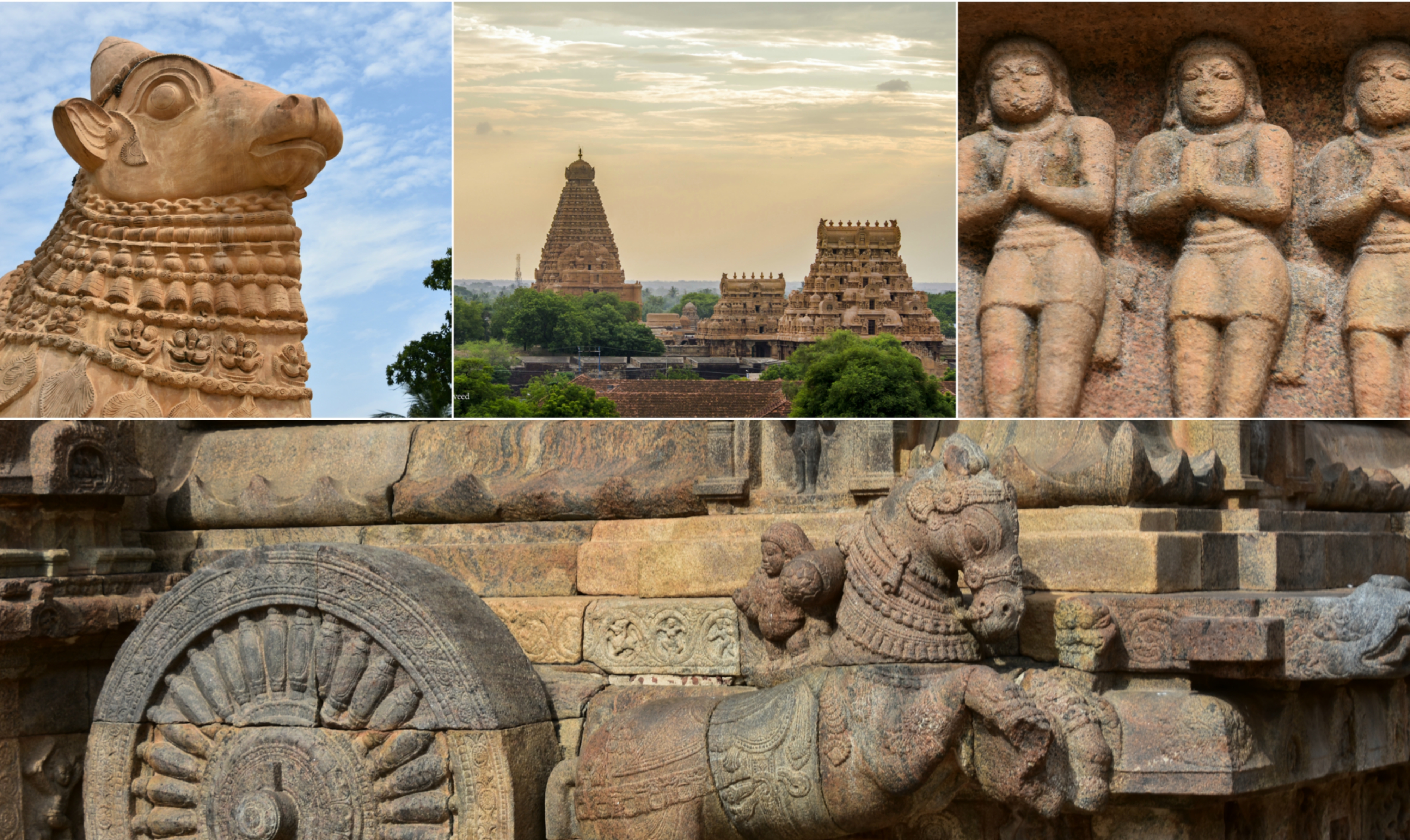
The Brihadeeswara Temple showcases unparalleled Dravidian architectural brilliance and sophisticated construction techniques. Its towering vimana, reaching approximately 60 meters, is among the tallest in South India, crowned by a massive monolithic sikhara. A distinguishing feature is the colossal monolithic Nandi statue, carved from a single rock, guarding the main shrine. The temple's walls are adorned with intricate carvings, sculptures, and inscriptions detailing Chola history and religious narratives, all meticulously crafted from granite without the use of mortar.
The Towering Vimana
The vimana (temple tower) is a masterpiece of engineering, constructed from interlocking granite blocks without mortar, demonstrating advanced building methods.
Monolithic Nandi
The large Nandi sculpture, carved from a single stone, is positioned facing the main shrine, symbolizing devotion to Lord Shiva.
Intricate Carvings and Inscriptions
Every surface of the temple is rich with detailed carvings depicting deities, mythological events, and historical records of the Chola period.
Lord Shiva: The Presiding Deity and Sacred Narratives
Dedicated to Lord Shiva, the Brihadeeswara Temple houses one of the largest lingams in India, known as Peruvudaiyar. This colossal lingam serves as the primary spiritual anchor of the temple, attracting devotees from across the globe. The temple complex is not only a place of worship but also a canvas for rich Hindu mythological tales, with various sculptures and murals depicting stories of Shiva and other deities. The sacred narratives are integral to the temple's spiritual atmosphere and its role in propagating Shaivism.
The Colossal Lingam
The main deity, Peruvudaiyar, is represented by a massive lingam carved from a single stone, symbolizing the cosmic energy of Shiva.
Depictions of Shiva's Leelas
Sculptures and paintings throughout the temple narrate various leelas (divine plays) and forms of Lord Shiva, enriching the spiritual experience.
Planning Your Pilgrimage: A Guide to Brihadeeswara Temple
To ensure a meaningful and enriching experience at the Brihadeeswara Temple, visitors should plan their trip accordingly. The temple is open from 6:00 AM to 12:30 PM and again from 4:00 PM to 9:00 PM, with free entry for all. The best time to visit is between October and March, when the weather is pleasant. Traditional attire is preferred, and footwear must be removed before entering the temple premises. A visit typically lasts 1 to 2 hours, allowing ample time to explore its historical and spiritual grandeur.
Visitor Timings and Entry
The temple is accessible daily from 6:00 AM to 12:30 PM and 4:00 PM to 9:00 PM, with no entry fee required.
Best Time to Visit and Dress Code
The months of October to March offer ideal weather. Visitors are encouraged to wear traditional clothing and remove footwear before entering the sacred areas.
Travel and Accessibility
The temple is approximately 25 km from Perambalur Bus Stand and 65 km from Tiruchirappalli Junction. Parking is available near the temple.
| Deity | Shiva |
|---|---|
| Form | Often depicted as a yogi with a third eye, crescent moon, Ganga river, and a snake around his neck, holding a trident and damaru. He is also worshipped in the aniconic form of a Lingam. |
| Consort | Parvati |
| Sampradaya | Hindu |
| Significance | As part of the Trimurti, Shiva is the Destroyer, responsible for transformation and dissolution. He is also revered as the patron god of yoga, meditation, and arts. |
No Specific Mythological Story Provided
The provided information does not include any specific mythological stories or legends associated with this temple. Therefore, a compelling narrative cannot be generated based on the given facts.
Shiva, the Destroyer, embodies transformation and dissolution, guiding devotees towards spiritual liberation and the profound cycles of existence.
Experience the timeless devotion and architectural grandeur of this sacred space, where ancient traditions resonate with every stone and prayer.
Related temples: Aakkoor Thanthondreeswarar Temple | Aazhimala Shiva Temple
Brihadeeswara Temple: A Chola Masterpiece
The Brihadeeswara Temple, also known as Thanjavur Periya Koil, stands as a monumental tribute to Lord Shiva. It is a pinnacle of Chola architecture, showcasing the dynasty's artistic and engineering prowess. This grand structure, located in Thanjavur, Tamil Nadu, is a testament to ancient Indian craftsmanship and design. Its scale and intricate details reflect a profound understanding of structural integrity and aesthetic balance, making it a globally recognized architectural marvel. The temple's construction techniques remain a subject of admiration and study.
Architectural Grandeur
The temple exemplifies the purest form of Dravidian architecture, characterized by its towering vimana and elaborate sculptures.
Engineering Prowess
Its construction demonstrates advanced engineering principles, particularly in handling massive granite blocks and ensuring structural stability for centuries.
Restoration & Conservation
The Brihadeeswarar Temple, a magnificent testament to Chola architecture and a UNESCO World Heritage site, has been the focus of continuous and meticulous restoration and conservation efforts throughout its long history. The sheer scale of its granite construction and the intricate carvings presented unique challenges to early conservators, who primarily focused on structural stability and preventing further decay from natural elements and human activity. The Archaeological Survey of India (ASI) has been instrumental in these endeavors, meticulously documenting the temple's condition, undertaking essential structural repairs, and preserving its invaluable sculptures and inscriptions. These foundational interventions were crucial in safeguarding the temple's integrity, ensuring that future generations could continue to marvel at this architectural wonder. A guiding principle has always been the use of traditional materials and techniques, wherever feasible, to maintain authenticity.
In more recent times, conservation strategies for the Brihadeeswarar Temple have evolved significantly, incorporating advanced scientific methods and cutting-edge technologies to address contemporary threats. Modern challenges include mitigating the effects of environmental pollution, managing the impact of increasing tourist footfall, and addressing micro-climatic changes that can accelerate the deterioration of ancient stone. Techniques such as laser cleaning, chemical treatments for biological growth, and sophisticated structural monitoring systems are now employed to preserve the temple's delicate surfaces and ensure its long-term stability. Furthermore, community involvement and public awareness campaigns form a crucial part of contemporary conservation efforts, fostering a shared responsibility among the local population and visitors alike in preserving this global heritage treasure for future generations.
🗺 How to Reach
Hover a card to animate the journey on the map
Verified routes to brihadeeswaratempleorthanjaiperiyakoilthanjavurtamilnadu
Common Questions
Where is Brihadeeswara Temple: Chola Grandeur Unveiled located?
Brihadeeswara Temple: Chola Grandeur Unveiled is documented at Tamil Nadu.
Which deity is associated with Brihadeeswara Temple: Chola Grandeur Unveiled?
Brihadeeswara Temple: Chola Grandeur Unveiled is associated with Shiva.