
A complete pilgrim record drawn from the existing published article data.
A Heritage Woven in Time: The Historical Roots
The Reign of the Chozha Dynasty
The very stones of Bapatla whisper tales of royal ambition and divine sanction, marking a crucial chapter in the history of the Chozha kingdom.
Evolution and Enduring Legacy
Architectural Echoes: The Structure of Devotion
While specific in-depth architectural treatises often remain within local lore, the overall form eloquently speaks to the sophisticated craftsmanship available during the Chozha period. The temple’s design principles embody centuries of evolved knowledge in sacred geometry and structural engineering.
Dravidian Design and Chozha Patronage
Material and Craftsmanship
The Divine Presence: Lord Bhavanarayana
Profile of Lord Bhavanarayana
Lord Bhavanarayana
Lord Bhavanarayana represents a revered form of Vishnu, the preserver god in the Hindu trinity. In Vaishnavite tradition, Vishnu is often depicted as the cosmic sustainer, protecting dharma and maintaining universal order. Bhavanarayana likely embodies aspects of grace, protection, and divine energy specific to this temple's spiritual lineage. Devotees worship Him for prosperity, peace, and spiritual guidance.
The iconography typically found in Vishnu temples includes conch (shankha), discus (chakra), mace (gada), and lotus (padma) held in his four hands, symbolizing various divine powers. Though specific details for this temple are preserved locally, the essence of Vishnu worship permeates its sacred atmosphere.
Foundational Narratives and Spiritual Significance
The Royal Vision of Bhavanarayana
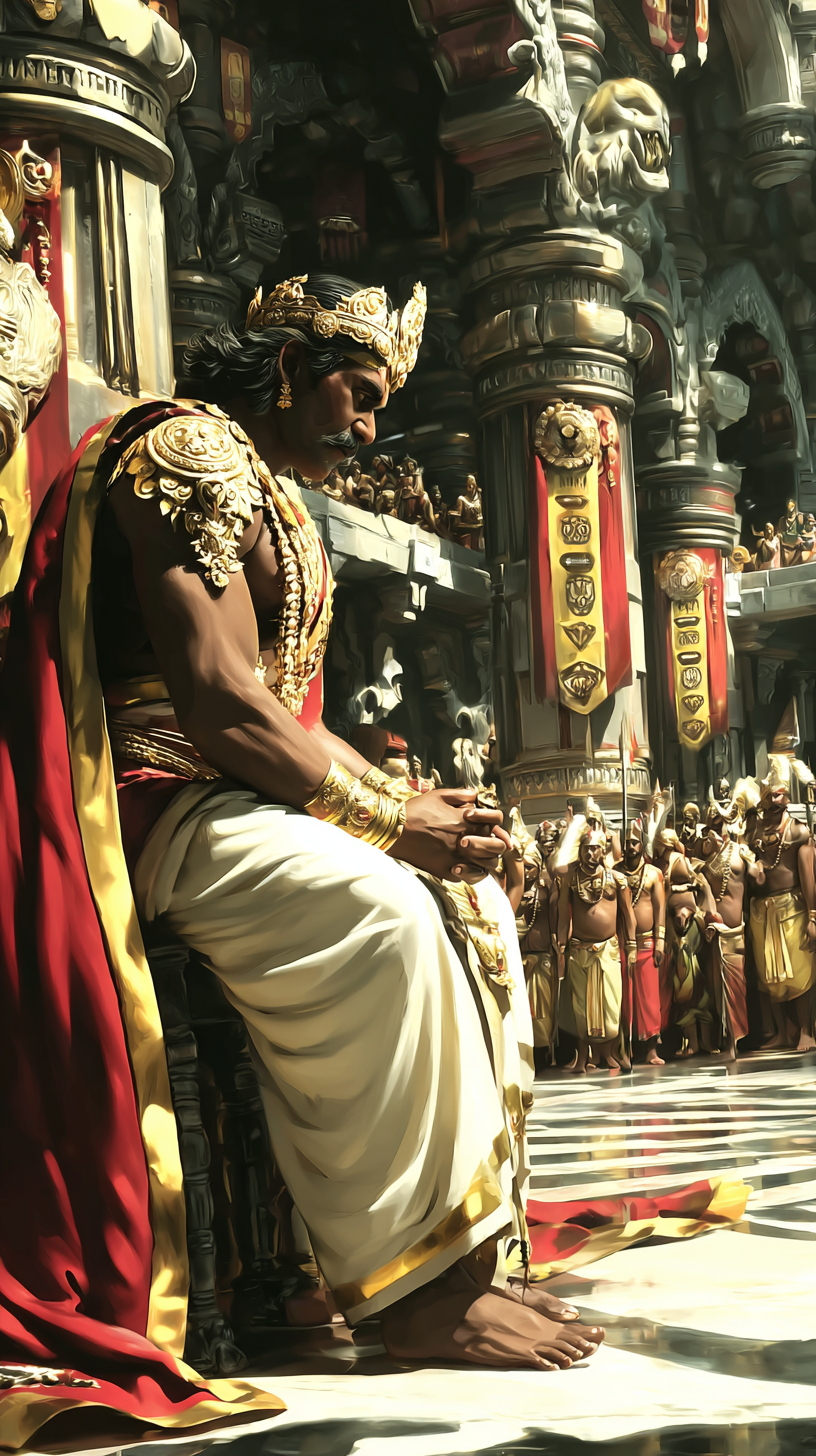
In the 15th century, during a period of expanding influence, the esteemed Chozha king, Krimikantha Chozha, harbored a profound vision. He sought to establish a lasting spiritual beacon that would bring prosperity and divine protection to his flourishing kingdom and its people in Bapatla. Guided by devout inspiration, the king decreed the construction of a magnificent temple dedicated to Lord Bhavanarayana, a benevolent form of Vishnu.
Artisans and scholars converged, working tirelessly to manifest the divine presence in stone. The temple's inception was not merely an architectural feat but a deeply spiritual undertaking, believed to sanctify the land and bestow blessings upon all who worshipped there. This foundational act cemented Bhavanarayana as the eternal protector and spiritual heart of Bapatla.
Lord Bhavanarayana stands not just as an idol carved in stone, but as the living embodiment of Bapatla's soul, guiding its people through centuries of change.
Festivals and Celebrations: The Rhythm of Devotion
Sacred Rhythms and Community Engagement
Annual Observances and Cultural Significance
A Traveler's Guide: Visiting Bapatla
We encourage you to further explore the rich cultural landscape of Andhra Pradesh. Discover related architectural and spiritual treasures by reading our Undavalli Caves article or delving into the history of the Srikalahasti Temple.


Getting There and Essential Information
- Transportation: Reach Bapatla conveniently by road or rail. Local buses frequently connect the district to major hubs like Guntur and Ongole. The nearest major railway station is Bapatla Railway Station itself, with good connectivity.
- Accommodation: Visitors can find a range of options, from comfortable local guest houses to established hotels, ensuring pleasant stays. It is advisable to book accommodations in advance, especially during peak festival seasons.
- Best Time to Visit: The cooler, drier months between October and March offer the most comfortable weather conditions for exploring the temple complex and surrounding areas. Summer months (April-June) can be quite hot.
Respectful Exploration and Local Etiquette
- Dress Code: Please dress modestly, covering shoulders and knees, as is customary in Indian temples.
- Photography: Inquire locally about photography rules, especially within the inner sanctum. Often, photography is restricted in sensitive areas.
- Footwear: Remove your footwear before entering the temple premises. Designated areas for shoe storage are usually available.
- Offerings: Devotees often bring flowers, fruits, or incense as offerings. These are available from vendors outside the temple.
- Guidance: Consider hiring a local guide, who can offer invaluable insights into the temple's history, legends, and architectural nuances, enhancing your understanding of the 500-year-old heritage.
🗺 How to Reach
Hover a card to animate the journey on the map
Route to Bhavanarayana Temple: History and Majesty of Bapatla
Common Questions
Where is Bhavanarayana Temple: History and Majesty of Bapatla located?
Bhavanarayana Temple: History and Majesty of Bapatla is documented at Srivilliputhur, Tamil Nadu.
Which deity is associated with Bhavanarayana Temple: History and Majesty of Bapatla?
Bhavanarayana Temple: History and Majesty of Bapatla is associated with Vishnu.
Related Temples


A Living Covenant