



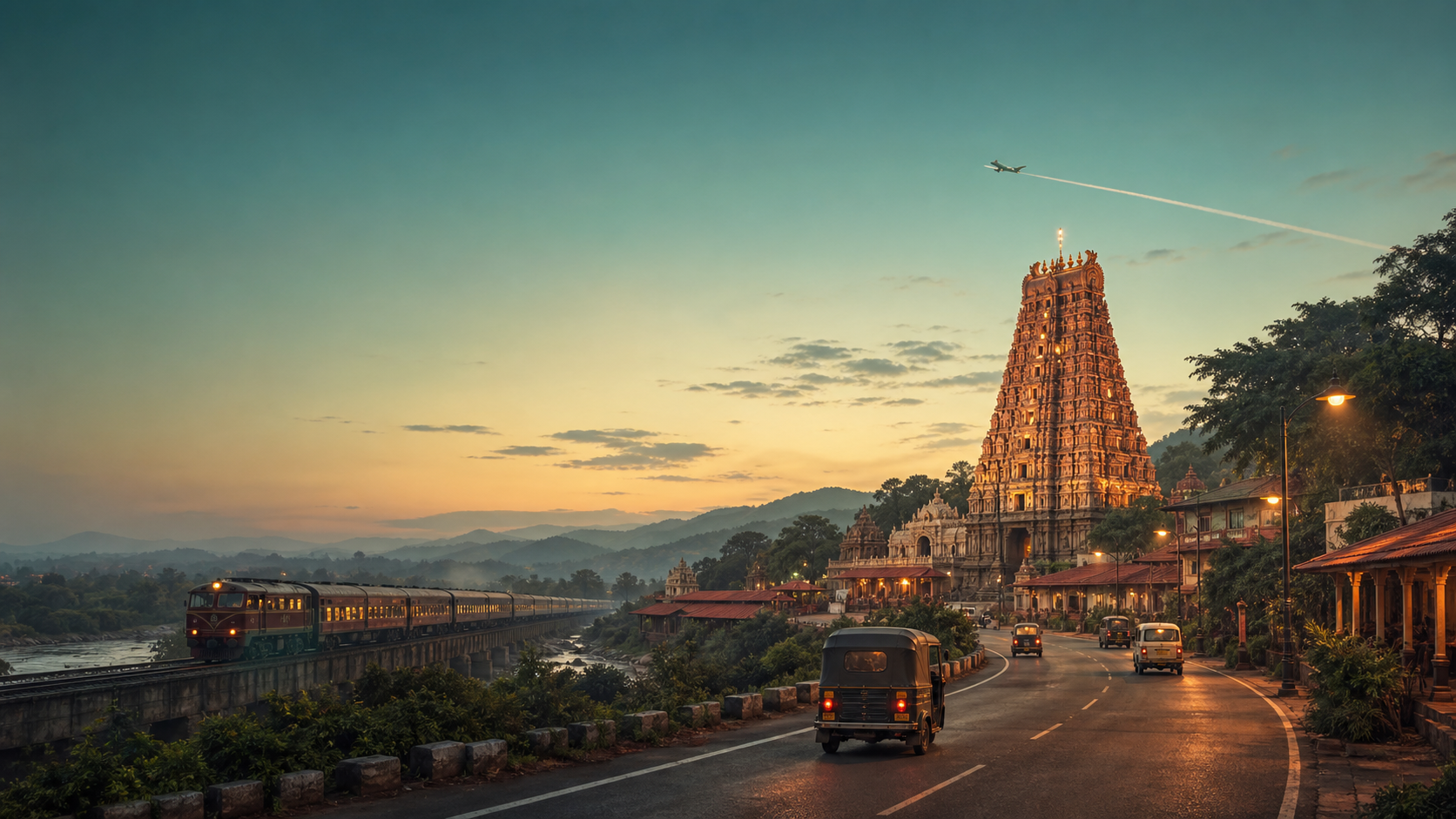
A complete pilgrim record drawn from the existing published article data.
Echoes of the Past: The History of Athmanatheswarar Temple
The Athmanatheswarar Temple's history is deeply rooted in South Indian dynastic periods, primarily shaped by the Pandya kingdom. It exemplifies centuries of evolving architectural and religious traditions.
Pandya Foundation
The temple's foundational structures and initial patronage are credited to the Pandya rulers. Their contributions were crucial in shaping its early Dravidian architectural style and religious importance.
Later Dynastic Influences
Beyond its Pandya origins, the temple likely saw modifications and expansions by subsequent dynasties. Its continuous worship highlights its enduring cultural and spiritual value over epochs.
Beyond Convention: The Architectural Marvels of Athmanatheswarar Temple
The Athmanatheswarar Temple, a testament to Pandya-era Dravidian architecture, stands out for its profound architectural innovations. Unlike most Shiva temples, it strikingly deviates from tradition by not featuring a conventional lingam or a Nandi sculpture, making its design exceptionally unique.
The Unique Sanctum
Instead of a Shiva lingam, the main deity is represented by a padam (footprint), symbolizing the formless nature of Shiva. This unconventional representation is further emphasized by the complete absence of Nandi, Shiva's traditional bull mount.
Solar Illumination Marvel
A remarkable architectural feat is the temple's precise alignment, where direct sunlight illuminates the deity's padam on specific days of the year. This sophisticated solar phenomenon highlights the advanced astronomical and engineering skills of its ancient builders.
Discovering Athmanatheswarar Temple: A Unique Spiritual Journey
The Athmanatheswarar Temple, located in Sendalai, Tamil Nadu, is a revered Hindu temple dedicated to Lord Shiva. This ancient shrine stands as a testament to profound spiritual heritage, offering devotees a unique journey into devotion. Its distinctive characteristics and historical roots make it a significant site among the region's sacred places, drawing pilgrims and scholars alike to experience its tranquil sanctity.
Location and Heritage
Situated in Sendalai, a serene locale in Tamil Nadu, the Athmanatheswarar Temple is an ancient architectural marvel. Its heritage is deeply intertwined with the region's rich history.
The Presiding Deity
The temple's presiding deity is Lord Shiva, revered here as Athmanatheswarar. This manifestation of Shiva holds particular spiritual significance for devotees seeking inner peace and liberation.
Architectural Significance
Displaying classic Dravidian architecture, the temple showcases the artistic prowess of the Pandya dynasty. Its intricate carvings and structural design reflect centuries of devotional craftsmanship.
Journey to Sendalai: A Visitor's Guide to Athmanatheswarar Temple
Planning a visit to Athmanatheswarar Temple in Sendalai offers a serene spiritual experience. This guide provides essential details for a smooth, respectful journey, allowing visitors to appreciate its ancient heritage.
Access and Timings
The temple typically opens 6:00 AM–12:00 PM and 4:00 PM–8:00 PM. Sendalai is accessible by road; local buses and taxis operate from Thanjavur, approximately 15 km away.
Visitor Etiquette and Amenities
Dress modestly, covering shoulders and knees, and remove footwear inside. Basic amenities and small shops for refreshments or puja items are available nearby.
| Deity | Shiva |
|---|---|
| Form | null |
| Consort | null |
| Sampradaya | null |
| Significance | Notable for being one of the rare Shiva temples where the deity is not represented by a lingam or Nandi. It is also unique as Manikkavacakar's idol is placed before the main deity and receives initial worship. |
The Soul's Embrace: Manikkavacakar and the Formless Lord
The Athmanatheswarar Temple enshrines a profound spiritual legend. Lord Shiva, deeply moved by the unwavering devotion of the saint Manikkavacakar, chose to manifest not as a traditional lingam, but as a transcendent, formless spiritual light. Manikkavacakar, through his intense meditation and love, realized Shiva as the 'Athmanathan'—the Lord residing within the soul itself, unbound by physical form. To honor this unparalleled spiritual insight and his direct communion, Shiva decreed that Manikkavacakar's idol would forever stand before the main deity, receiving worship first. This unique arrangement symbolizes the temple's core truth: Shiva is the indwelling soul, perceived through pure devotion, not merely external forms.
A Shiva temple unlike any other: Athmanatheswarar has no lingam or Nandi, and uniquely, Manikkavacakar's idol is worshipped first.
Witness divine engineering: the setting sun's rays pierce three enclosures to illuminate Athmanatheswarar's inner sanctum, a celestial spectacle.
Related temples: Aakkoor Thanthondreeswarar Temple | Aazhimala Shiva Temple
The Unseen Lord and the Revered Saint: Deities of Athmanatheswarar
The Athmanatheswarar Temple presents a distinctive approach to devotion, where the primary deity, Shiva, is worshipped in an aniconic form. This practice contrasts with the prominent and unusual first veneration of the saint Manikkavacakar, whose idol holds a central place in the temple's rituals.
The Aniconic Shiva
Unlike most Shiva temples featuring a lingam, Athmanatheswarar is represented as nirguna (without attributes) and nirakara (formless). Worship is directed towards an unseen, omnipresent force, emphasizing the abstract nature of the divine rather than a physical idol.
Manikkavacakar's Foremost Position
Uniquely, the idol of saint Manikkavacakar receives the first puja (worship) before the aniconic Shiva. This highlights his profound spiritual significance and his role as a revered guide and devotee, making his image a focal point of adoration.
Restoration & Conservation
The Athmanatheswarar Temple, a venerable structure steeped in centuries of history, has naturally endured the relentless march of time and the corrosive effects of natural elements. Its construction, primarily from durable granite and other traditional materials characteristic of Dravidian architecture, has been instrumental in its remarkable longevity. However, even the most robust stone structures are susceptible to weathering, erosion, and the gradual decay of intricate carvings, stucco work, and foundational elements over millennia. Historical records and local lore suggest that various rulers and devout patrons periodically undertook localized restoration efforts, often driven by religious fervor and a commitment to preserving this sacred site. These early interventions, though perhaps lacking modern scientific methodologies, were crucial in maintaining the temple's structural integrity and aesthetic appeal, ensuring its continuous function as a vibrant center of worship and community life.
In contemporary times, the preservation of the Athmanatheswarar Temple has transitioned towards more structured and scientifically informed conservation initiatives. These projects typically involve comprehensive archaeological surveys, detailed structural assessments, and the application of specialized techniques to repair damaged sections, consolidate weakened stone, and meticulously restore faded murals or sculptures. Organizations such as the Archaeological Survey of India (ASI) or state archaeological departments often collaborate with temple trusts and local communities to execute these complex endeavors. A significant challenge lies in striking a delicate balance between rigorous historical preservation and the temple's ongoing role as a living place of worship, ensuring that all interventions are respectful of active religious practices while safeguarding the monument's invaluable heritage for future generations to cherish and experience.
🗺 How to Reach
Hover a card to animate the journey on the map
Route to Sendalai
Common Questions
Where is Athmanatheswarar Temple: Ancient Shiva Shrine in Thanjavur located?
Athmanatheswarar Temple: Ancient Shiva Shrine in Thanjavur is documented at Tamil Nadu.
Which deity is associated with Athmanatheswarar Temple: Ancient Shiva Shrine in Thanjavur?
Athmanatheswarar Temple: Ancient Shiva Shrine in Thanjavur is associated with Shiva.
Related Temples


A Living Covenant