A complete pilgrim record drawn from the existing published article data.
Tracing the Ancient Roots: History of Arunachaleswarar Temple
The Arunachaleswarar Temple boasts a history spanning over a millennium, with its origins rooted in antiquity. Early references to the deity and the sacred hill appear in Sangam literature, indicating its veneration long before the construction of the present structures. The Chola dynasty, particularly during the 9th to 12th centuries, initiated significant expansions, adding many of the core shrines and mandapams. Subsequent contributions from the Hoysalas, Pandyas, and most notably the Vijayanagara Empire in the 14th to 16th centuries, led to the construction of its monumental gopurams and fortified walls, transforming it into the sprawling complex seen today.
Early References and Origins
The sacred Arunachala hill and its deity find mention in ancient Tamil texts, suggesting a pre-existing cult of worship before formal temple structures were built. This deep-rooted reverence underscores its enduring spiritual importance.
Chola Dynasty's Contributions
The Cholas were instrumental in the early development of the temple, erecting many of the central shrines and sponsoring artistic endeavors. Their inscriptions provide valuable historical insights into the temple's growth.
Vijayanagara Empire's Grandeur
The Vijayanagara rulers made the most substantial additions, including the massive outer walls, several gopurams, and the thousand-pillared hall, giving the temple its characteristic grandeur and defensive architecture.
Marvels in Stone: The Architecture of Arunachaleswarar Temple
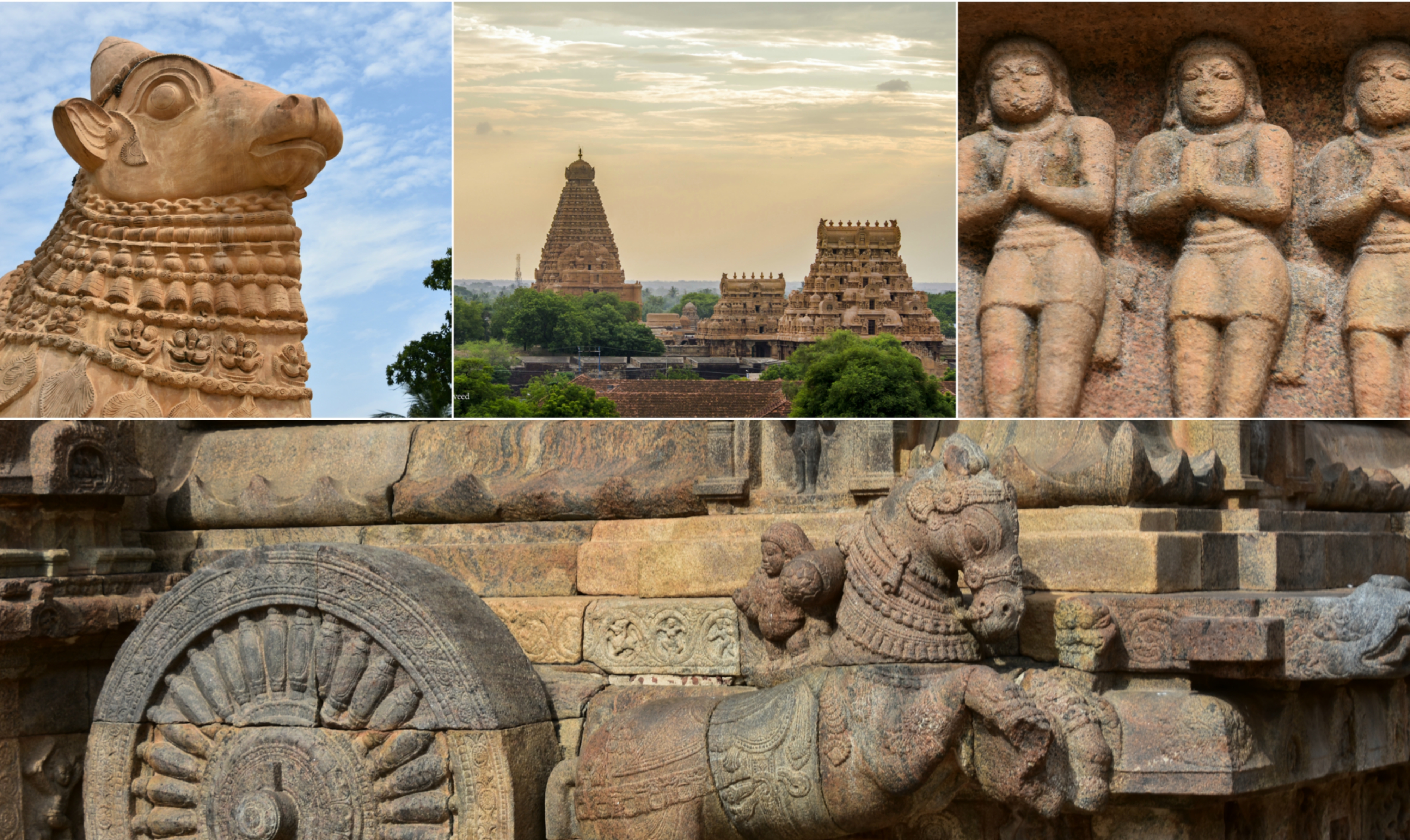
The Arunachaleswarar Temple exemplifies the quintessential Dravidian architectural style, characterized by its towering gopurams, intricate sculptural details, and expansive courtyards. The temple complex covers over 25 acres, enclosed by massive granite walls. It features four main gateway towers, the tallest being the _Rajagopuram_, which rises to approximately 66 meters. Each gopuram is adorned with thousands of stucco figures depicting various deities, mythological scenes, and celestial beings. Inside, numerous _mandapams_ (halls), including the thousand-pillared hall and the Aayiram Kaal Mandapam, showcase exceptional craftsmanship with intricately carved columns and ceilings. The temple's layout follows a concentric prakaram design, typical of South Indian temples.
Towering Gopurams
The temple is famed for its four majestic gopurams, with the eastern _Rajagopuram_ being the tallest. These multi-tiered pyramidal structures are covered with vibrant sculptures, serving as iconic symbols of the temple's grandeur.
Dravidian Architectural Style
The entire complex reflects the classical Dravidian style, featuring massive granite construction, intricate carvings, and a focus on axial symmetry. The use of natural stone and detailed artwork is prominent throughout.
Intricate Carvings and Halls
Beyond the gopurams, the temple houses several elaborate halls like the thousand-pillared hall, known for its finely sculpted columns, and the Kili Gopuram, adorned with parrot sculptures, demonstrating exquisite artistic mastery.
Arunachaleswarar: The Embodiment of Fire and Divine Legends
At the heart of the Arunachaleswarar Temple's spiritual essence lies the profound mythology surrounding Lord Shiva's manifestation as an infinite column of fire, known as the Lingodbhava legend. This narrative describes how Brahma and Vishnu, locked in a dispute over supremacy, were challenged by Shiva to find the ends of a colossal pillar of light. Brahma, as a swan, flew upwards, and Vishnu, as a boar, delved downwards, both failing to find its limits. Shiva then revealed himself from the column, establishing his ultimate supremacy. This divine event is believed to have occurred at Arunachala, making the hill and the temple a sacred representation of Shiva as the Agni Lingam, the eternal flame.
The Lingodbhava Legend
This central myth recounts Shiva's appearance as an endless fiery pillar to resolve the cosmic dispute between Brahma and Vishnu, symbolizing his supreme, all-encompassing nature.
Shiva as Agni Lingam
The deity Arunachaleswarar is worshipped as the Agni Lingam, embodying the element of fire. This form represents Shiva's boundless energy, knowledge, and the light that dispels darkness.
Spiritual Narratives
The temple's mythology emphasizes the significance of Arunachala as a place where Shiva's divine presence is palpable, making circumambulation (Girivalam) of the hill a highly revered spiritual practice.
Journey to Tiruvannamalai: Essential Guide for Pilgrims and Tourists
Reaching the Arunachaleswarar Temple in Tiruvannamalai is convenient via various transport modes. The nearest major airport is Chennai International Airport (MAA), approximately 170 km away, offering connections to Indian and international cities. For train travel, Tiruvannamalai Railway Station (TNM) is 2-3 km from the temple, though it has limited services; better connections are available from Villupuram Junction (VM) and Katpadi Junction (KPD). Buses are a popular option, with regular services from major Tamil Nadu cities like Chennai, Bengaluru, and Puducherry to Tiruvannamalai Central Bus Stand, just 1 km from the temple. Visitors can also drive via NH 38 and SH 9, with paid parking near the temple. The temple is open from 6:00 AM to 12:30 PM and 4:00 PM to 9:00 PM, with free entry. The best time to visit is October to March, and traditional attire is preferred.
By Air, Rail, and Road
Chennai International Airport (MAA) is the closest air hub. Tiruvannamalai Railway Station (TNM) offers limited train services, with Villupuram and Katpadi as key connecting junctions. Extensive bus routes connect the city to major urban centers.
Local Commute
Once in Tiruvannamalai, the temple is easily accessible. The Central Bus Stand is just 1 km away, and the railway station is 2-3 km. Auto-rickshaws and local taxis are readily available for transport around the town.
Visitor Information and Tips
The temple operates from 6:00 AM to 12:30 PM and 4:00 PM to 9:00 PM with free entry. The cooler months from October to March are ideal for a visit. Visitors are advised to wear traditional attire and remove footwear before entering the temple premises.
| Deity | Arunachaleswarar |
|---|---|
| Form | Agni Lingam (infinite column of fire) |
| Consort | Unnamulai Amman (Parvati) |
| Sampradaya | Shaivism |
| Significance | A manifestation of Shiva as the Agni Lingam, representing the element of fire. It is one of the Pancha Bhoota Stalam temples, embodying the cosmic element of Agni. |
The Lingam of Fire: Shiva's Fiery Manifestation
A great dispute arose between Brahma and Vishnu over who was supreme. To settle their argument, Lord Shiva appeared as an infinite column of fire, the Agni Lingam, whose top and bottom were beyond perception. Brahma took the form of a swan and flew upwards to find its crown, while Vishnu became a boar and delved downwards to find its base. Both failed in their quest, realizing the boundless nature of Shiva. Humbled, they acknowledged Shiva's ultimate supremacy, and the fiery column is believed to have solidified into the Arunachala hill, where the temple stands.
Where Shiva manifested as an endless column of fire, humbling the gods and revealing his boundless form.
The Arunachala hill itself is revered as Shiva, a sacred beacon of divine energy and spiritual liberation.
Arunachaleswarar Temple: A Beacon of Devotion in Tiruvannamalai
The Arunachaleswarar Temple, nestled at the foot of the Arunachala hill in Tiruvannamalai, Tamil Nadu, stands as a profound symbol of Hindu devotion. Dedicated to Lord Shiva, it is one of the revered Pancha Bhoota Sthalams, representing Agni, the element of fire. This ancient temple is a vital pilgrimage center, attracting devotees seeking spiritual enlightenment and the blessings of its namesake deity, Arunachaleswarar, who is worshipped as the manifestation of an infinite column of light. Its sacred precincts resonate with centuries of spiritual history and architectural grandeur.
Pancha Bhoota Sthalam Significance
As the Agni Sthalam, Arunachaleswarar Temple embodies Shiva as fire, symbolizing light, knowledge, and the destruction of ignorance. This makes it a unique spiritual site among the five elemental temples dedicated to Shiva.
Central Role in Pilgrimage
The temple is a focal point for Hindu pilgrims, especially during Karthigai Deepam, when a massive lamp is lit atop Arunachala hill, drawing millions. Circumambulating the hill (Girivalam) is also a significant spiritual practice.
The Deity Arunachaleswarar
Lord Arunachaleswarar is worshipped in the form of a lingam, believed to be the primordial column of fire. His consort is Goddess Unnamalai Amman, also known as Apitakuchamba.
🗺 How to Reach
Hover a card to animate the journey on the map
Verified routes to Arunachaleswarar Temple Tiruvannamalai: How to Reach: By Air, Rail, Road and Local Transport
Common Questions
Where is Arunachaleswarar Temple: Journey to the Sacred Hill located?
Arunachaleswarar Temple: Journey to the Sacred Hill is documented at Tamil Nadu.
Which deity is associated with Arunachaleswarar Temple: Journey to the Sacred Hill?
Arunachaleswarar Temple: Journey to the Sacred Hill is associated with its namesake.