
A complete pilgrim record drawn from the existing published article data.
Exploring this sacred site means tracing the legacy of a civilization praised by the 15th-century Persian ambassador, Abdur Razzak, as "unmatched on earth." The temple serves as a powerful testament to the architectural genius and profound spiritual depth that defined this magnificent era.
The Royal Commission: History and Legacy
Founding and Imperial Patronage
Ananthasayana Temple Timeline
The Vijayanagara Zenith
Echoes in the Ruins
“The remnants of this once-glorious kingdom, particularly around Hampi, stand as ruins that echo the empire's past splendor and ingenuity.”
Architectural Marvels of the Vijayanagara Era
The physical structure of the Ananthasayana Temple stands as a masterclass in historical Indian temple architecture. It beautifully showcases the fusion of robust local materials with sophisticated structural engineering. Its design not only reflects the grandeur of its builders but also the spiritual aspirations of its era.
Sanctuary and Mandapa Design
The Soaring Vaulted Roof
Engineering and Aesthetics
Presiding Deity and Sacred Narratives
Beyond its physical structure, the Ananthasayana Temple pulsates with the spiritual narratives of its worshippers. The presence of Vishnu in his reclining form is central to the temple's devotional focus, inviting profound contemplation on concepts of cosmic rest and eternal existence.
Lord Vishnu (Anantashayana)
The primary deity revered at the Ananthasayana Temple is Lord Vishnu, depicted in his iconic Anantashayana pose. This posture portrays Vishnu reclining on the cosmic serpent Ananta (Shesha-Naga), floating on the primordial ocean. It symbolizes the divine state of repose between cosmic cycles of creation and dissolution. Devotees honor Vishnu here as the preserver of the universe, the embodiment of eternal peace and cosmic order.
Lord Vishnu in Anantashayana
Mythological Context
The Cosmic Sleep of Vishnu
In Hindu mythology, the universe undergoes cycles of creation, preservation, and dissolution. During the period of dissolution, Lord Vishnu retires into a state of cosmic slumber, known as Yoganidra. He rests upon the coils of the colossal serpent Ananta (Shesha-Naga), who floats upon the primordial ocean of milk. This divine repose is not mere sleep but an active state of meditative consciousness, from which the next cycle of creation eventually emerges. The Ananthasayana Temple encapsulates this profound moment, inviting devotees to witness and contemplate the eternal cycle of existence and the ultimate peace of the divine.
Artistic Expression of Faith
“This temple is not merely a building; it is a sacred document detailing the spiritual and artistic zenith of the Vijayanagara civilization.”
Festivals and Enduring Community Life
Like all major South Indian temples, the Ananthasayana Temple historically served as a central focal point for community life, religious observances, and vibrant festivals. These celebrations form vital threads, connecting the ancient history of the structure to the living traditions of the present day.
Annual Celebrations
Temple as a Cultural Hub
Planning Your Visit: A Traveler's Guide
For those contemplating a pilgrimage or historical exploration to this region, understanding the practicalities ensures a richer, more respectful experience. While the temple itself offers a profound historical insight, the surrounding context of the Hampi ruins provides an unparalleled journey into the grandeur of the past.
Journeying to Ananthasayanagudi
- Nearest Major Hub: Hampi (approximately 4 km away from Ananthasayanagudi).
- Best Time to Visit: The cooler months from October to March offer a more comfortable and contemplative experience, avoiding the intense heat of the Indian summer.
- Cultural Context: Allocate ample time to explore the surrounding Vijayanagara ruins; they provide the essential backdrop to fully comprehend the temple’s significance. Consider visiting nearby temples like Virupaksha Temple for broader context.
On-Site Experience and Exploration
Etymology: The Divine Symbolism
The Meaning of Ananta
Cosmological Implications
🗺 How to Reach
Hover a card to animate the journey on the map
Route to Ananthasayana Temple: Echoes of the Vijayanagara Empire
Common Questions
Where is Ananthasayana Temple: Echoes of the Vijayanagara Empire located?
Ananthasayana Temple: Echoes of the Vijayanagara Empire is documented at Hampi, Karnataka.
Which deity is associated with Ananthasayana Temple: Echoes of the Vijayanagara Empire?
Ananthasayana Temple: Echoes of the Vijayanagara Empire is associated with Vishnu.
Related Temples
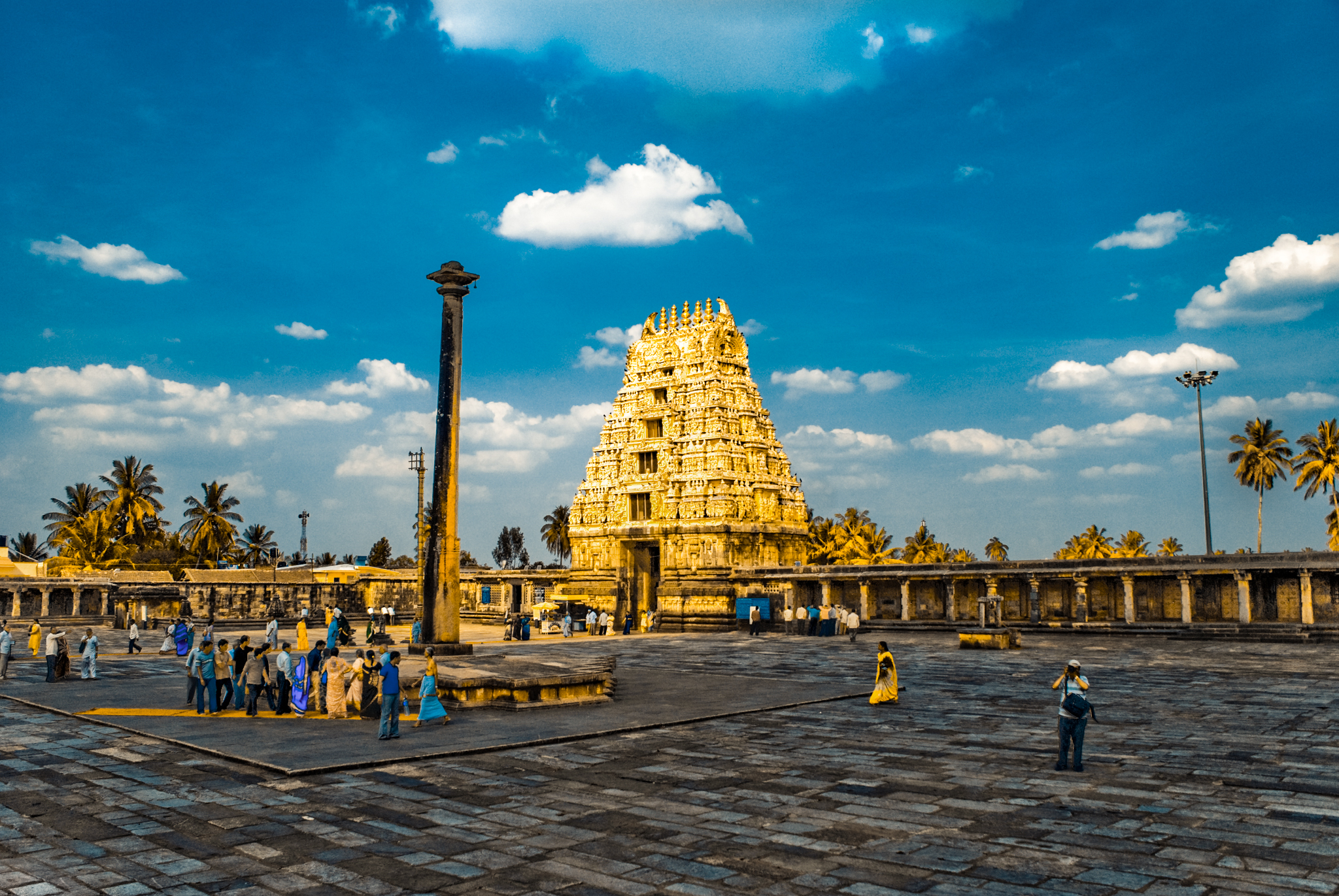


A Living Covenant