



A complete pilgrim record drawn from the existing published article data.
A Chola Masterpiece: The History of Airavatesvara
The Airavatesvara Temple was constructed in the 12th century by the illustrious Chola King Rajaraja Chola II. This architectural gem served as a royal temple, embodying the artistic and religious fervor of the Chola dynasty. Its creation marked a significant period of cultural flourishing, where temple building reached its zenith. The temple’s intricate details and grand scale reflect the power and devotion of the Chola empire. Along with the Brihadeeswarar Temples at Thanjavur and Gangaikonda Cholapuram, Airavatesvara is designated a UNESCO World Heritage site, collectively known as the 'Great Living Chola Temples,' symbolizing the enduring legacy of Chola craftsmanship and spiritual dedication.
Royal Patronage
Built by King Rajaraja Chola II, the temple represents the artistic ambitions of the Chola dynasty.
12th-Century Origin
Its construction dates back to a period of significant architectural and cultural advancements in South India.
Part of UNESCO Heritage
It is recognized globally as one of the 'Great Living Chola Temples', celebrating its historical and architectural importance.
Stone Poetry: The Architecture of Airavatesvara
The architecture of Airavatesvara Temple is a sublime example of Chola artistry, often described as 'stone poetry.' Its most distinctive feature is the maha-mandapa, designed to resemble a colossal chariot with stone wheels and horses, a motif unique to this temple. Every surface is adorned with intricate carvings, depicting mythological stories, celestial beings, and everyday life, all rendered with remarkable precision. The temple also boasts the famous 'musical steps' at the entrance, which produce different melodic sounds when struck. These detailed sculptural narratives and innovative design elements showcase the pinnacle of Chola craftsmanship, making it a masterpiece of Dravidian architecture.
Chariot-like Mandapa
The temple's main hall is uniquely designed to resemble a celestial chariot, complete with carved wheels and horses.
Intricate Sculptural Narratives
Every pillar and wall surface is covered with detailed carvings depicting legends, deities, and Chola life.
Musical Steps
A unique feature at the entrance are steps that emit musical notes when tapped, showcasing ancient acoustic engineering.
Divine Tales: Lord Shiva and the Legend of Airavatesvara
The Airavatesvara Temple is deeply steeped in Hindu mythology, particularly concerning Lord Shiva. Its name, Airavatesvara, is derived from Airavata, the white elephant mount of Lord Indra. According to legend, Airavata was cursed by Sage Durvasa and regained its pristine white color after worshipping Lord Shiva at this very spot. Another significant legend involves Yama, the god of death, who was also cured of a burning sensation by bathing in the temple's sacred tank after worshipping Shiva here. These profound narratives underscore the temple's spiritual significance as a place of healing and redemption, solidifying its sacred status among devotees of Shiva.
Airavata's Penance
Indra's white elephant, Airavata, worshipped Lord Shiva here to be cured of a curse, lending its name to the temple.
Yama's Redemption
The god of death, Yama, also found solace and healing at this temple after worshipping Shiva.
Sacred Tank
The temple's holy tank is believed to possess healing properties, linked to the legends of Airavata and Yama.
Airavatesvara Temple: An Evening Spectacle in Stone
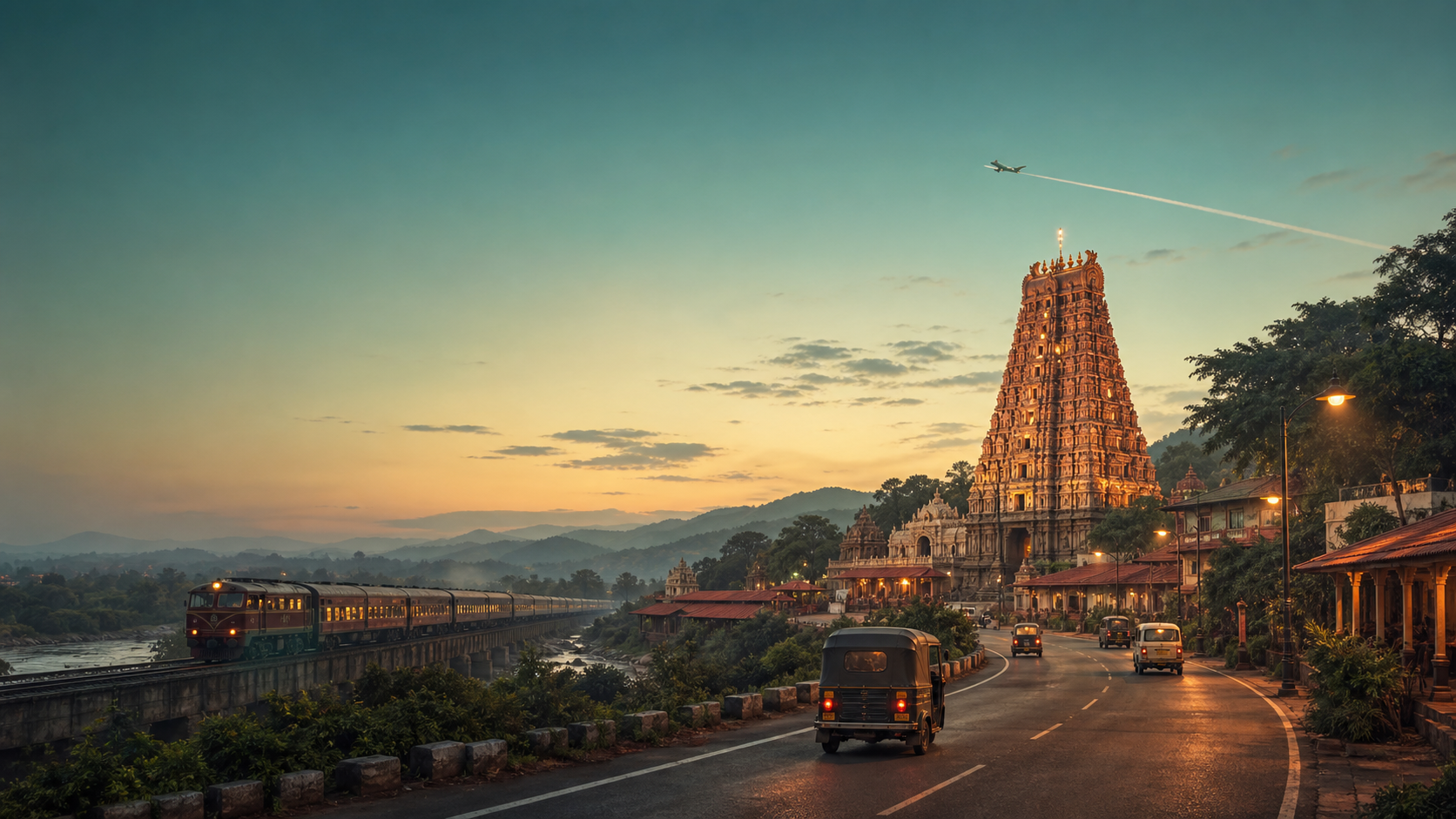
The Airavatesvara Temple, a magnificent testament to Chola architecture, stands as a UNESCO World Heritage site in Darasuram, Tamil Nadu. Dedicated to Lord Shiva, this 12th-century marvel is renowned for its intricate carvings and unique chariot-like structure. While its daytime splendor is undeniable, the temple transforms into a truly mesmerizing spectacle during the evening hours. As the sun sets and artificial lights illuminate its ancient stones, the temple offers a profound spiritual and visual experience. The evening aarti, performed amidst the glow, further enhances the serene and divine atmosphere, drawing devotees and admirers alike into its timeless embrace. It's an experience that deeply connects visitors with India's rich cultural and religious heritage.
UNESCO World Heritage Status
Recognized as part of the Great Living Chola Temples, Airavatesvara holds immense cultural and historical value.
Architectural Grandeur
The temple showcases the pinnacle of Chola artistry, with its detailed sculptures and innovative design.
Evening Transformation
The temple's beauty is amplified at dusk, offering a unique spiritual and aesthetic experience during aarti.
Dusk to Divine: The Evening Aarti and Night View
As dusk descends upon Darasuram, the Airavatesvara Temple undergoes a magical transformation. The soft glow of the setting sun gives way to carefully placed lights that illuminate the intricate carvings and grand structure, highlighting its architectural brilliance against the darkening sky. The spiritual ambiance intensifies during the evening aarti ceremony, a ritual of light and devotion performed for Lord Shiva. The rhythmic chants and the flickering lamps create a serene and deeply moving experience for all present. Witnessing the temple bathed in this ethereal light, with the sounds of devotion echoing through its ancient halls, offers a unique and unforgettable visual and spiritual spectacle.
Illuminated Architecture
The temple's intricate details are beautifully highlighted by evening lighting, creating a stunning visual display.
Evening Aarti Ceremony
The daily ritual of aarti fills the temple with spiritual energy, marked by chants and lamp offerings to Lord Shiva.
Serene Ambiance
The combination of twilight, lights, and devotional practices creates a profoundly peaceful and divine atmosphere.
Visiting Airavatesvara: A Guide to Your Evening Journey
To experience the Airavatesvara Temple's evening splendor and aarti, plan your visit accordingly. The temple is open from 4:00 PM to 9:00 PM in the evenings, with the aarti ceremony typically occurring around sunset or later. Entry fees are INR 40 for Indian citizens and INR 600 for foreign nationals. The best time to visit is from October to March for pleasant weather. The temple is approximately 4 km from Kumbakonam Railway Station and Bus Stand, easily accessible by auto-rickshaw or local bus. For those driving, parking is available near the premises. Remember to dress in traditional attire and remove footwear before entering the sacred areas to enhance your spiritual journey.
Evening Timings and Aarti
The temple is open from 4:00 PM to 9:00 PM, with aarti usually held during the evening hours.
Transportation Access
Easily reachable from Kumbakonam by local transport; parking is available for private vehicles.
Visitor Guidelines
Adhere to the dress code (traditional attire) and remove footwear to respect the temple's sanctity.
| Deity | Shiva |
|---|---|
| Form | Shiva is commonly depicted with a third eye, a crescent moon on his head, and a snake around his neck, often holding a trident and a damaru. He is also worshipped in the aniconic form of a lingam. |
| Consort | Unknown |
| Sampradaya | Hindu |
| Significance | As a principal deity in Hinduism, Shiva is known as the Destroyer within the Trimurti, responsible for cosmic dissolution and regeneration. He is also revered as the patron of yoga, meditation, and arts, embodying asceticism and divine energy. |
No Specific Temple Legend Provided
The provided information does not contain a specific mythological story or legend associated with the Airavatesvara Temple in Darasuram. However, Shiva, the presiding deity, is central to countless Hindu myths and legends.
In Shiva, the cosmic dance of creation and dissolution finds its eternal rhythm.
The sacred space of the temple invites devotees into a timeless communion with the divine.
Related temples: Aakkoor Thanthondreeswarar Temple | Aazhimala Shiva Temple
🗺 How to Reach
Hover a card to animate the journey on the map
Route to Kumbakonam
Common Questions
Where is Airavatesvara Temple Darasuram: Night View & Aarti Experience located?
Airavatesvara Temple Darasuram: Night View & Aarti Experience is documented at Tamil Nadu.
Which deity is associated with Airavatesvara Temple Darasuram: Night View & Aarti Experience?
Airavatesvara Temple Darasuram: Night View & Aarti Experience is associated with Shiva.
Related Temples

A Living Covenant