A complete pilgrim record drawn from the existing published article data.
Sculpted Narratives: The Dravidian Grandeur of Airavatesvara
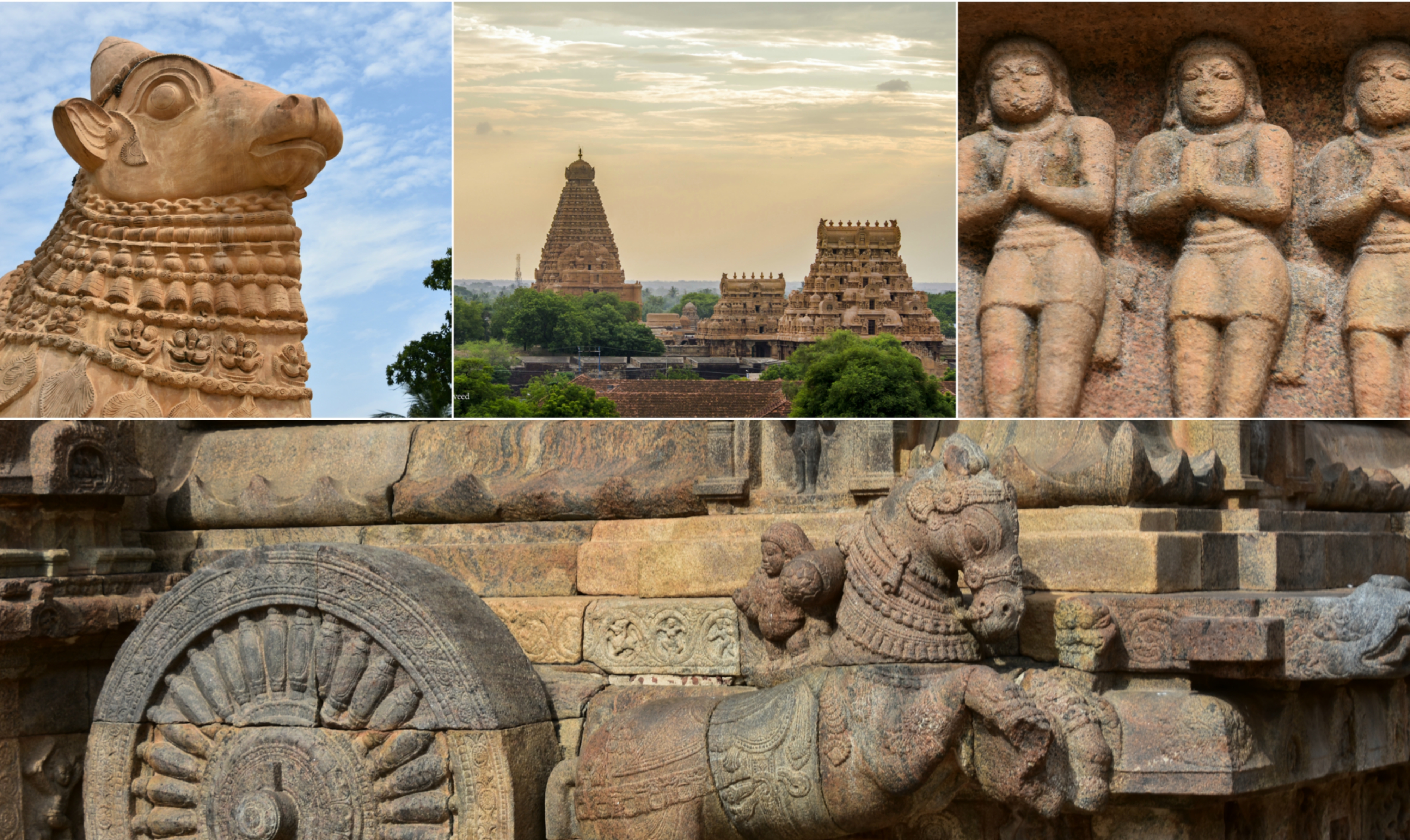
Airavatesvara Temple exemplifies the intricate Dravidian style, featuring a relatively smaller vimana (tower over the sanctum) compared to its predecessors, yet adorned with unparalleled sculptural density. The mandapas, particularly the rajagambhira mandapam, are designed as a chariot with wheels and horses, a signature Chola innovation. Every surface is intricately carved with deities, mythological beasts, and narrative panels depicting Puranic legends and scenes from daily life. The unique musical steps, which produce different notes when struck, add to its architectural marvel and acoustic ingenuity.
Dravidian Architectural Elements
The temple features a compact vimana, multiple mandapas including the maha mandapa and mukha mandapa, and a surrounding cloister, all characteristic of mature Dravidian architecture.
Intricate Sculptures and Carvings
Thousands of sculptures adorn the temple, depicting Hindu deities, apsaras, yakshas, and detailed mythological narratives, showcasing the high level of artistic skill and storytelling.
Musical Steps and Chariot Mandapam
The rajagambhira mandapam is famously designed as a stone chariot. Its steps, known as the musical steps, are engineered to produce distinct musical notes when tapped, a marvel of ancient acoustics.
Divine Tales: Lord Shiva as Airavatesvara and Sacred Legends
The Airavatesvara Temple is primarily dedicated to Lord Shiva, worshipped here as Airavatesvara. The temple's name itself is derived from a significant legend involving Indra's white elephant, Airavata. According to mythology, Airavata, cursed by Sage Durvasa, regained its pristine white color and health after worshipping Lord Shiva at this site. This sacred narrative underscores the temple's spiritual importance and its connection to divine healing and purification. Numerous other Puranic tales and episodes from the lives of the 63 Nayanmars, the Shaivite saints, are also depicted in the temple's extensive sculptural program.
Lord Shiva as Airavatesvara
The presiding deity is Lord Shiva, revered in his form as Airavatesvara, signifying his role in the legend of Airavata, Indra's celestial elephant.
The Legend of Airavata
Mythology recounts that Airavata, afflicted by a curse, bathed in the temple's sacred tank and worshipped Shiva here, thus regaining its original color and strength, giving the temple its name.
Mythological Narratives and Nayanmars
Beyond Airavata's tale, the temple's carvings illustrate various Hindu myths, including stories of the 63 Nayanmars, enriching its spiritual and narrative tapestry.
Planning Your Pilgrimage: A Guide to Airavatesvara Temple
Visiting the Airavatesvara Temple offers a profound journey into South Indian history and spirituality. The temple is open from 6:00 AM to 12:30 PM and 4:00 PM to 9:00 PM, with free entry for all visitors. The best time to visit is between October and March, when the weather is pleasant. While traditional attire is preferred, comfortable clothing is recommended, and footwear must be removed before entering the inner sanctums. Allow 1-2 hours to fully appreciate its architectural grandeur and intricate details, soaking in the serene ambiance.
Visitor Information and Timings
The temple is accessible daily from 6:00 AM to 12:30 PM and 4:00 PM to 9:00 PM. Entry is free, making it accessible for all pilgrims and tourists.
Best Time and Dress Code
The cooler months from October to March are ideal for a visit. Visitors are encouraged to wear modest, traditional attire, and footwear removal is customary inside the temple premises.
Experiencing the Temple's Ambiance
Dedicate 1-2 hours to explore the temple's intricate carvings, musical steps, and serene courtyards, allowing time to absorb its historical and spiritual significance.
| Deity | Shiva (Airavatesvara) |
|---|---|
| Form | Lingam (main shrine), various iconic forms in sculptures |
| Consort | Parvati (Devanayaki) |
| Sampradaya | Shaivism |
| Significance | Lord of Airavata, the white elephant of Indra, who worshipped Shiva here to regain its pure white color after a curse. Yama also worshipped Shiva here. |
The Legend of Airavata's Rebirth
The temple derives its name from Airavata, the white elephant of Lord Indra. According to legend, Airavata was cursed by Sage Durvasa and lost its pristine white color, turning dark. Distraught, Airavata worshipped Lord Shiva at this very spot, bathing in the sacred temple tank. Pleased by its devotion, Shiva restored Airavata to its original pure white form. The main deity of the temple is thus known as Airavatesvara, 'the Lord of Airavata'. Another legend states that Yama, the god of death, also worshipped Shiva here after being cursed by a sage, and the temple tank cured his ailments.
Every stone here tells a story, a testament to the unparalleled artistry of the Chola sculptors and their profound devotion to the divine.
A jewel of Dravidian architecture, this temple stands as a proud emblem of the Great Living Chola Temples, a UNESCO World Heritage site.
Airavatesvara Temple: A Chola Masterpiece in Stone
The Airavatesvara Temple, located in Darasuram, Tamil Nadu, stands as a testament to the architectural brilliance of the Chola dynasty. Consecrated to Lord Shiva, this 12th-century marvel is part of the 'Great Living Chola Temples' UNESCO World Heritage site. It embodies profound cultural and historical significance, showcasing the zenith of Chola art and craftsmanship. Its intricate carvings and unique design elements narrate tales of devotion and royal patronage, making it a pivotal monument in Indian heritage and a global treasure.
UNESCO World Heritage Status
Recognized as one of the 'Great Living Chola Temples', Airavatesvara Temple was inscribed as a UNESCO World Heritage site in 1987, alongside Brihadeeswarar Temple and Gangaikonda Cholapuram.
Chola Architectural Zenith
The temple represents the pinnacle of Chola architecture, characterized by its detailed sculptures, sophisticated design, and innovative engineering, reflecting the artistic prowess of the era.
Cultural and Historical Significance
Beyond its architectural beauty, the temple serves as a vital historical record, preserving the religious, social, and political narratives of the Chola period through its stone art.
Tracing the Legacy: The Chola Dynasty and Airavatesvara
The Airavatesvara Temple was commissioned by the Chola emperor Rajaraja Chola II in the 12th century, specifically between 1146 and 1172 CE. It served as a royal temple, reflecting the emperor's devotion and the Chola empire's prosperity. This construction marked a significant phase in the Dravidian architectural tradition, showcasing an evolution from earlier Chola temples. It integrated innovative features while maintaining the distinct Chola style, contributing immensely to the dynasty's rich legacy of temple building and cultural expression.
Royal Patronage of Rajaraja Chola II
Emperor Rajaraja Chola II initiated the temple's construction, dedicating it to Lord Shiva. His reign fostered a period of artistic and architectural flourishing, with Airavatesvara as a prime example.
12th Century Construction
Built during the mid-12th century, the temple's design and execution demonstrate the advanced engineering and artistic skills prevalent during the Later Chola period.
Evolution of Chola Temple Architecture
Airavatesvara showcases refined architectural elements and sculptural details, marking a stylistic progression within the broader Chola temple-building tradition, influencing subsequent structures.
🗺 How to Reach
Verified routes to Airavatesvara Temple Darasuram: Historical Timeline: Century by Century Evolution
Common Questions
Where is Airavatesvara Darasuram: Chola Architectural Timeline located?
Airavatesvara Darasuram: Chola Architectural Timeline is documented at Tamil Nadu.
Which deity is associated with Airavatesvara Darasuram: Chola Architectural Timeline?
Airavatesvara Darasuram: Chola Architectural Timeline is associated with Lanka.