
A complete pilgrim record drawn from the existing published article data.
Historical Foundation
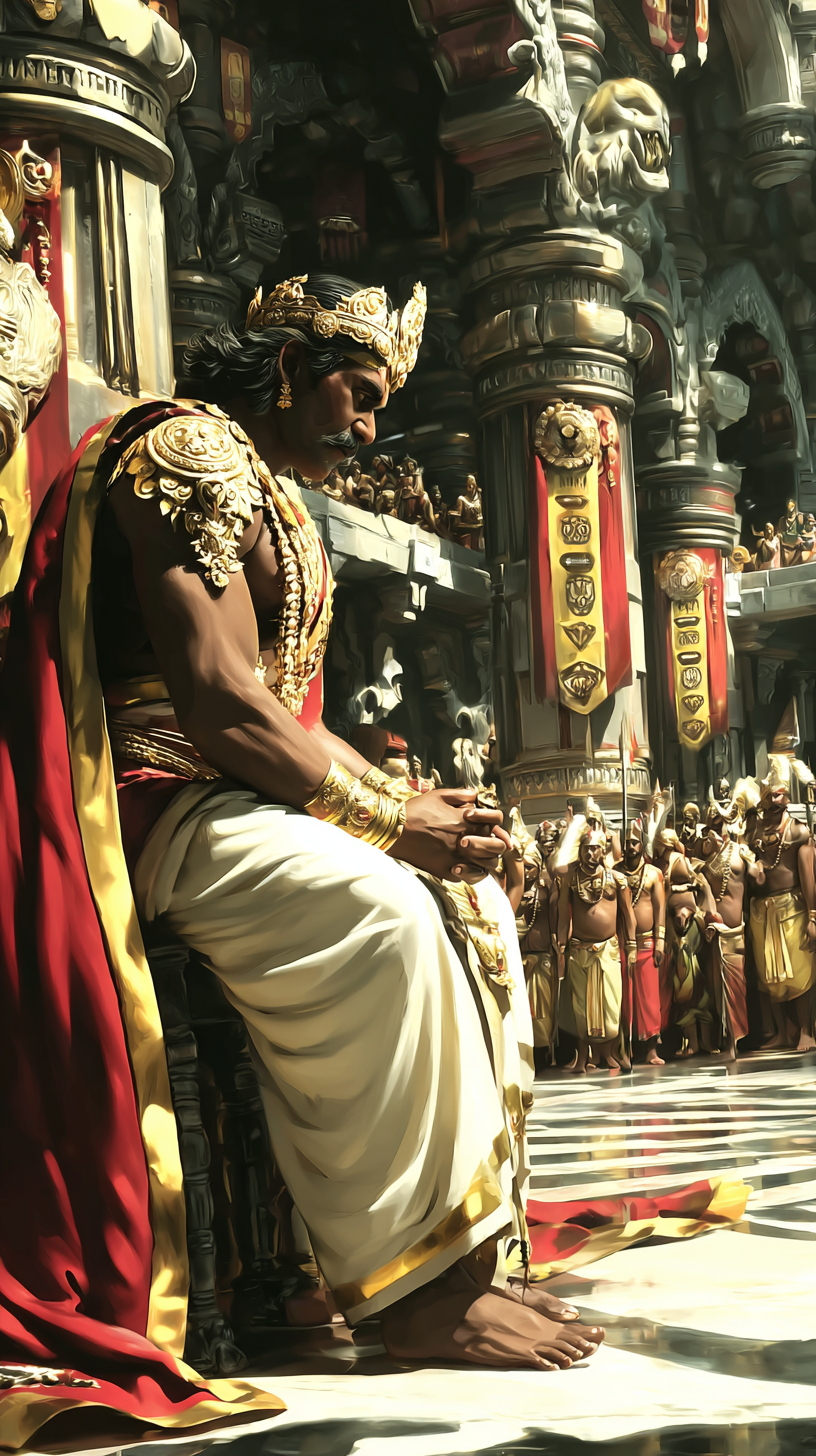
The Airavatesvara Temple, a magnificent example of Chola architecture, boasts a rich historical foundation deeply rooted in the 12th century. Commissioned by the powerful Chola emperor Rajaraja II (1146-1172 CE) in Darasuram, this sacred complex was conceived not merely as a place of worship but as a testament to the dynasty's artistic prowess and spiritual devotion. Its construction marked a significant period in South Indian history, reflecting the zenith of Chola temple building traditions and setting the stage for its enduring legacy.
The Chola Imperative: Rajaraja II and the Second Capital Complex
Inscriptions: Stone Archives of Devotion and Administration
The Airavatesvara Temple is a veritable repository of historical knowledge, its walls and pillars meticulously inscribed with a vast collection of epigraphic records. These invaluable stone archives transcend mere decorative elements, offering profound insights into both the spiritual and secular life of the Chola period. They meticulously document acts of devotion, including royal patronage, land grants, and donations made to the temple by kings, queens, and commoners, revealing the religious fervor of the era. Concurrently, these inscriptions serve as crucial administrative records, detailing land transactions, tax regulations, judicial pronouncements, and the social and economic fabric of the region.
Post-Chola Stewardship and Ruins: Layers of Resilience
Following the zenith of Chola patronage, the Airavatesvara Temple entered a new phase, navigating shifting political landscapes and varying degrees of stewardship. Subsequent dynasties and local chieftains occasionally contributed to its upkeep, yet the temple also endured periods of neglect, natural decay, and even deliberate damage. Despite these challenges, its robust construction and profound spiritual significance ensured its survival, albeit with sections succumbing to the ravages of time and conflict. This section explores the temple's journey through these later eras, examining the forces that shaped its post-Chola existence and its enduring resilience amidst partial ruin.
Architecture & Craftsmanship
The Airavatesvara Temple stands as a magnificent testament to the zenith of Chola architecture and artistic brilliance. Its intricate design showcases a breathtaking array of exquisite sculptures, detailed carvings, and innovative structural elements that define the mature Dravidian style. From its towering vimana to its unique musical steps and countless mythological narratives etched in stone, every surface of the temple reflects an unparalleled dedication to craftsmanship, embodying a rich tapestry of religious devotion and aesthetic mastery.
Karak Koil: The Chariot as Cosmic Vehicle
The Airavatesvara Temple is renowned for its unique architectural feature known as the Karak Koil, or chariot temple. This spectacular design transforms the *mandapa* into a grand stone chariot, complete with exquisitely carved wheels, horses, and elephants, conveying a profound sense of dynamic movement. More than just an aesthetic choice, this representation symbolizes a cosmic vehicle, embodying the journey of the deity through the heavens and reflecting profound philosophical concepts. This section delves into the origins, symbolism, and artistic execution of this magnificent architectural marvel, detailing how it elevates the temple beyond a mere place of worship.
Granite Mastery: From Quarry to Cosmos
The Airavatesvara Temple stands as an extraordinary testament to unparalleled granite mastery, showcasing how raw stone was meticulously transformed into a divine abode. This section explores the incredible journey of granite, from its extraction in ancient quarries to its intricate shaping by skilled artisans. It delves into the innovative techniques employed to carve breathtaking details, bringing to life a cosmic narrative within the very fabric of the temple, reflecting both earthly skill and celestial vision.
Hydraulic Genius: The Cauvery’s Sacred Flow
The Airavatesvara Temple, a UNESCO World Heritage site, stands as a remarkable testament not only to Chola architectural prowess but also to their sophisticated hydraulic engineering. Nestled in the fertile Cauvery delta, the temple complex and its surrounding region were intricately intertwined with the life-giving waters of the sacred Cauvery River. This section delves into how Chola engineers masterfully harnessed the river's flow, not merely for irrigation and sustenance, but also to integrate innovative water features within the temple's design, reflecting a profound understanding of both practical hydraulics and spiritual symbolism.
The Presiding Deity
Airavateshvarar: Shiva as the Restorer of Radiance
The presiding deity is not simply “Shiva” but Airavateshvarar, a unique sthala-nama (place-specific epithet) meaning “Lord of Airavata.” This form crystallises the temple’s core myth: when Indra’s white elephant Airavata was afflicted with a debilitating skin disease, he bathed in the temple tank and emerged with luminous, unblemished white skin. Shiva manifested here to grant this purification—not as a distant judge, but as a compassionate healer intimately involved in cosmic ecology.
The murti (idol) of Airavateshvarar is enshrined in the garbhagriha, facing east. Though the current bronze is a later replacement, the sanctum’s architecture—the concentric bands of kirtimukhas (face-of-glory motifs), the lotus-petal base, and the precisely angled vimana spire—was designed to amplify the deity’s presence. Rituals follow the Agama Shastra traditions, with six daily pujas (though exact timings are managed by HR&CE), emphasising abhishekam (ritual bathing) using water drawn from the historic tank—a direct re-enactment of Airavata’s restoration.
Periya Nayaki Amman: The Sovereign Consort
North of the main temple stands the Periya Nayaki Amman Temple, a detached but architecturally harmonious shrine dedicated to Shiva’s consort. Though physically separate today, inscriptions suggest it was originally connected via a covered corridor, part of the lost outer courts. Her name, Periya Nayaki, translates to “Great Queen” or “Supreme Leader,” signalling her theological parity with Shiva. Her iconography blends Shakta (goddess-centred) and Shaiva (Shiva-centred) traditions: she is depicted both as Parvati, tender and nurturing, and as Durga, fierce and protective. During the Magha festival, special pujas honour her alongside Airavateshvarar, affirming the Chola ideal of divine complementarity.
Iconographic Pantheon: A Universe in Stone
Airavatesvara hosts one of the most comprehensive pan-Indian deity rosters in any single Chola temple. Beyond the Shaiva core, it venerates: Vaishnava deities (Vishnu, Lakshmi (Sri Devi), Kamadeva, Rati); Shakta deities (Durga, Saraswati, Sapthamatrikas (seven mother goddesses), Yama (god of death, with a dedicated shrine in the south-west mandapam)); Vedic deities (Indra, Agni, Varuna, Vayu, Brahma, Surya); and River goddesses (Cauvery, Ganges, Yamuna, Godavari, Narmada), along with Shaiva auxiliaries like Ganesha and Subrahmanya.
This inclusivity is not syncretism; it is hierarchical integration. All deities orbit Shiva as the ultimate reality (Parabrahman), their forms and functions subsumed within his cosmic dance. The placement is deliberate: river goddesses flank the southern entrance, linking the temple to the Cauvery’s life-giving flow; Vedic gods occupy niches in the outer walls, representing cosmic forces governed by Shiva’s will.
Festivals & Living Traditions
The Airavatesvara Temple, though an ancient architectural marvel, remains a vibrant hub for religious and cultural activities, embodying centuries of living traditions. Throughout the year, the temple premises come alive with a rich tapestry of festivals and rituals, each celebrating different deities and aspects of Hindu mythology. These deeply rooted customs and annual celebrations continue to draw devotees and scholars, ensuring the temple's spiritual legacy thrives.
Magha Festival: The Annual Confluence
The Magha Festival, a vibrant annual celebration, holds profound cultural and religious significance at the Airavatesvara Temple in Tamil Nadu. This auspicious event transforms the temple complex into a bustling hub of devotion and communal gathering, drawing pilgrims and visitors from far and wide. It is a time when ancient traditions are meticulously observed, reflecting the deep spiritual heritage of the region and the temple's enduring legacy. This section explores the historical roots, unique rituals, and profound community impact of this revered annual confluence.
Daily Rituals: The Rhythm of Divine Care
At the Airavatesvara Temple, the rhythm of daily life revolves around a meticulously observed schedule of rituals, embodying a profound tradition of divine care for the presiding deity, Lord Shiva. These ancient practices, known as *nitya pujas*, are not merely ceremonial but are considered essential acts of devotion, ensuring the spiritual vibrancy of the temple and the well-being of its devotees. Each day unfolds with a series of sacred offerings and prayers, meticulously performed by the temple priests, upholding centuries-old customs passed down through generations.
Music and Movement: From Singing Steps to Ritual Dance
The Airavatesvara Temple in Darasuram is a masterpiece where art, architecture, and performance converge, its very stones seemingly humming with ancient melodies and dance rhythms. Most famously, the temple incorporates unique "singing steps" that produce musical notes when tapped, a testament to the advanced acoustic knowledge of its builders. Beyond this marvel, the temple's sculptures and inscriptions vividly depict the central role of ritual dance and music in daily worship and grand festivals, bringing divine narratives to life through movement and sound.
Plan Your Visit
To ensure a smooth and enriching experience at the magnificent Airavatesvara Temple, careful planning is highly recommended. This section provides all the essential information you'll need, from understanding the temple's operational hours and entry requirements to navigating transportation options and discovering nearby accommodations. Prepare yourself for a memorable journey into Chola artistry and devotion by reviewing these practical details before your arrival.
Logistics: Getting There and Timing Right
Planning a visit to the magnificent Airavatesvara Temple requires careful consideration of travel logistics and optimal timing to fully appreciate its grandeur. This section provides essential guidance on how to reach this UNESCO World Heritage site, whether by air, rail, or road, ensuring a smooth journey. Additionally, it offers insights into the best times of year and day to visit, helping you avoid crowds and experience the temple's intricate carvings and serene atmosphere under the most favorable conditions. Understanding these practical aspects is key to a memorable and enriching exploration of this architectural marvel.
Temple Etiquette & Pro-Tips
Nearby Temple Circuit: The Chola Trinity
Extend your journey with Tamil Nadu’s Chola Temple Triangle:
- Brihadeeswara Temple, Thanjavur (~40 km): The first great Chola vimana, built by Rajaraja I in 1010 CE—renowned for its 66-metre tower and Nandi statue.
- Gangaikondacholisvaram Temple, Gangaikonda Cholapuram (~30 km): Built by Rajendra I to commemorate his northern conquests—featuring the largest Shiva lingam among Chola temples.
- Chidambaram Nataraja Temple (~90 km): Home of the cosmic dancer, with unparalleled bronze iconography and the Chidambaram Rahasyam (secret of consciousness). Discover more at Chidambaram Nataraja Temple.

The soaring vimana of Airavatesvara Temple, showcasing Chola Dravidian proportion and granite mastery.

Bas-relief frieze depicting the life of Appar, one of the 63 Nayanars, from the temple's base.

The legendary 'singing steps'—seven granite treads emitting musical notes when ascended.

The morning sun dial, positioned as the eastern wheel of the temple's chariot architecture.


Related temples: Aakkoor Thanthondreeswarar Temple | Abimukeswarar Temple
Sacred Stories & Mythology
The Purification of Airavata: Stone Scripture of Grace
Near the garbhagriha entrance, a finely incised panel depicts the defining legend: Airavata, kneeling in supplication, immerses himself in the temple tank while Shiva, seated serenely on a lotus pedestal, gestures blessing. Above, Indra watches from his celestial chariot, his expression shifting from anxiety to awe. This scene is not isolated; it is the theological keystone.
The surrounding walls show Airavata’s prior affliction: his skin rendered in rough-hewn, pitted texture, contrasting sharply with the smooth, polished finish of his restored form. The message is unambiguous: divine grace is accessible, transformative, and physically manifest. Devotees believe that bathing in the same tank—still fed by the Cauvery—can cure ailments and purify sins, echoing Airavata’s restoration. This folk belief, documented for centuries, transforms ritual into lived miracle.
The 63 Nayanars: Hagiography in Relief
Encircling the temple’s base is a continuous frieze of 63 bas-reliefs, each illustrating a pivotal moment in the life of a Nayanar saint. These are not generic depictions; they follow Sekkilar’s Periya Purana with scrupulous fidelity. We see Appar converting from Jainism after his sister’s miraculous healing, Sundarar receiving the golden anklets from Shiva, and Manikkavacakar abandoning royal duty to compose the Tiruvacakam.
Each relief includes identifying inscriptions, confirming the Chola commitment to textual accuracy. This narrative band functions as a devotional textbook, teaching bhakti through visual storytelling—a pedagogical innovation unmatched in contemporary world architecture.
The Chariot Wheels That Tell Time
At the eastern entrance, two massive stone wheels flank the staircase, sculpted with spokes, hubs, and axles so precise they could rotate. However, they do not turn. Instead, they serve as functional sun dials. At dawn, sunlight strikes the morning wheel’s gnomon, casting a shadow that moves across engraved hour-lines. At dusk, the evening wheel performs the same task.
Local lore holds that the wheels were designed so the shadow of the chariot’s axle would fall precisely on the feet of the presiding deity at noon—aligning time, architecture, and divinity. This is not mere folklore; it is archaeoastronomy confirmed by modern surveying. The wheels are cosmic clocks, reminding devotees that time itself is Shiva’s creation and dissolution.
Saints, Poets & Devotees
The Airavatesvara Temple, a UNESCO World Heritage site, has always been more than just an architectural wonder; it is a living testament to centuries of profound spiritual devotion and artistic inspiration. Its hallowed halls and intricate carvings bear witness to the unwavering faith of countless devotees, while its sacred atmosphere has resonated with the hymns of revered saints and the eloquent verses of classical poets. This section delves into the significant contributions of these spiritual leaders, literary figures, and the devout worshippers who shaped the temple's rich religious and cultural narrative, ensuring its enduring legacy in Tamil devotional history.
Sekkilar: Architect of Hagiographic Memory
Sekkilar, the revered Chola poet, stands as a monumental figure in Tamil Shaivism, primarily for his epic hagiography, the *Periya Puranam*. This extensive work meticulously chronicles the lives and divine deeds of the 63 Nayanmars, the ardent devotees of Shiva. At Airavatesvara Temple, Sekkilar's literary narratives transcended text, becoming the very blueprint for the temple's sculptural program. His profound influence ensured that the spiritual legacy and miraculous tales of these saints were not only preserved but vividly brought to life in stone, thus architecting a lasting hagiographic memory for generations.
The 108 Devara Othuvars: Voices Carved in Stone
“The Chola temples are not buildings—they are petrified prayers, frozen in granite, waiting for the devotee’s breath to awaken them.” — George Michell, Architecture and Art of Southern India (2008)
Modern Pilgrims and Cosmic Seekers
“To stand before the Airavatesvara sun dial is to stand at the intersection of time, mathematics, and mercy.” — Carl Sagan, Cosmos (1980)
Records, Marvels & Heritage
The Airavatesvara Temple stands as a profound testament to the Chola dynasty's architectural prowess and cultural legacy, offering a wealth of historical records etched in stone. This section explores the temple's significant inscriptions, which chronicle its construction and patronage, alongside the numerous architectural and engineering marvels that distinguish it. We delve into the unique features that make it a masterpiece of Dravidian art, culminating in its recognition as a UNESCO World Heritage site, underscoring its invaluable contribution to global heritage.
UNESCO Recognition: A Triumvirate of Living Legacy
The Airavatesvara Temple holds a distinguished place within UNESCO's World Heritage Sites, forming a crucial part of the "Great Living Chola Temples" triumvirate. This collective designation, which also includes the Brihadeeswarar Temple at Thanjavur and the Gangaikondacholapuram Temple, celebrates their outstanding universal value. Recognized for their architectural brilliance, intricate sculptural artistry, and enduring cultural significance, these sites continue to be vibrant centers of worship and tradition, embodying a truly living legacy of the Chola dynasty.
Engineering Marvels: Beyond the Obvious
While the Airavatesvara Temple is renowned for its exquisite sculptures and architectural grandeur, its true brilliance extends far beyond the visible aesthetics. This section delves into the less apparent yet equally astonishing engineering marvels embedded within its ancient design. From ingenious acoustic properties and sophisticated hydraulic systems to precise astronomical alignments and innovative structural techniques, the temple stands as a testament to the advanced scientific and engineering knowledge of its creators, revealing a profound understanding of materials and natural forces.
Conservation Under UNESCO: Balancing Past and Present
The Airavatesvara Temple's designation as a UNESCO World Heritage Site underscores its profound historical and architectural significance, demanding comprehensive conservation strategies. This esteemed status brings both recognition and the responsibility to meticulously preserve its ancient Chola artistry and structural integrity. This section delves into the multifaceted conservation efforts undertaken under UNESCO's guidance, exploring how these initiatives navigate the delicate balance between safeguarding the temple's invaluable past and adapting to the demands of the present, including visitor management and environmental protection.
🗺 How to Reach
Hover a card to animate the journey on the map
Route to Dharasuram
Common Questions
Where is Airavatesvara Temple: Chola Masterpiece & UNESCO Gem in Darasuram located?
Airavatesvara Temple: Chola Masterpiece & UNESCO Gem in Darasuram is documented at Tamil Nadu.
Which deity is associated with Airavatesvara Temple: Chola Masterpiece & UNESCO Gem in Darasuram?
Airavatesvara Temple: Chola Masterpiece & UNESCO Gem in Darasuram is associated with Shiva.
Related Temples


A Living Covenant