


A complete pilgrim record drawn from the existing published article data.

History and Significance
Tracing its journey through various epochs, the Adi Annamalaiyar Temple has witnessed the patronage of numerous dynasties, each contributing to its expansion and spiritual prominence. From early Chola inscriptions to later Vijayanagara additions, its history is etched in stone, reflecting a continuous evolution. Beyond its architectural development, the temple holds immense religious significance, revered as a powerful abode of Lord Shiva and a center for spiritual enlightenment. This section explores the key historical milestones and the enduring cultural and devotional importance that defines this sacred space.
Tracing Its Ancient Roots
Key Milestones in Adi Annamalaiyar's History
The Vaippu Sthalam Legacy
Architecture and Deities
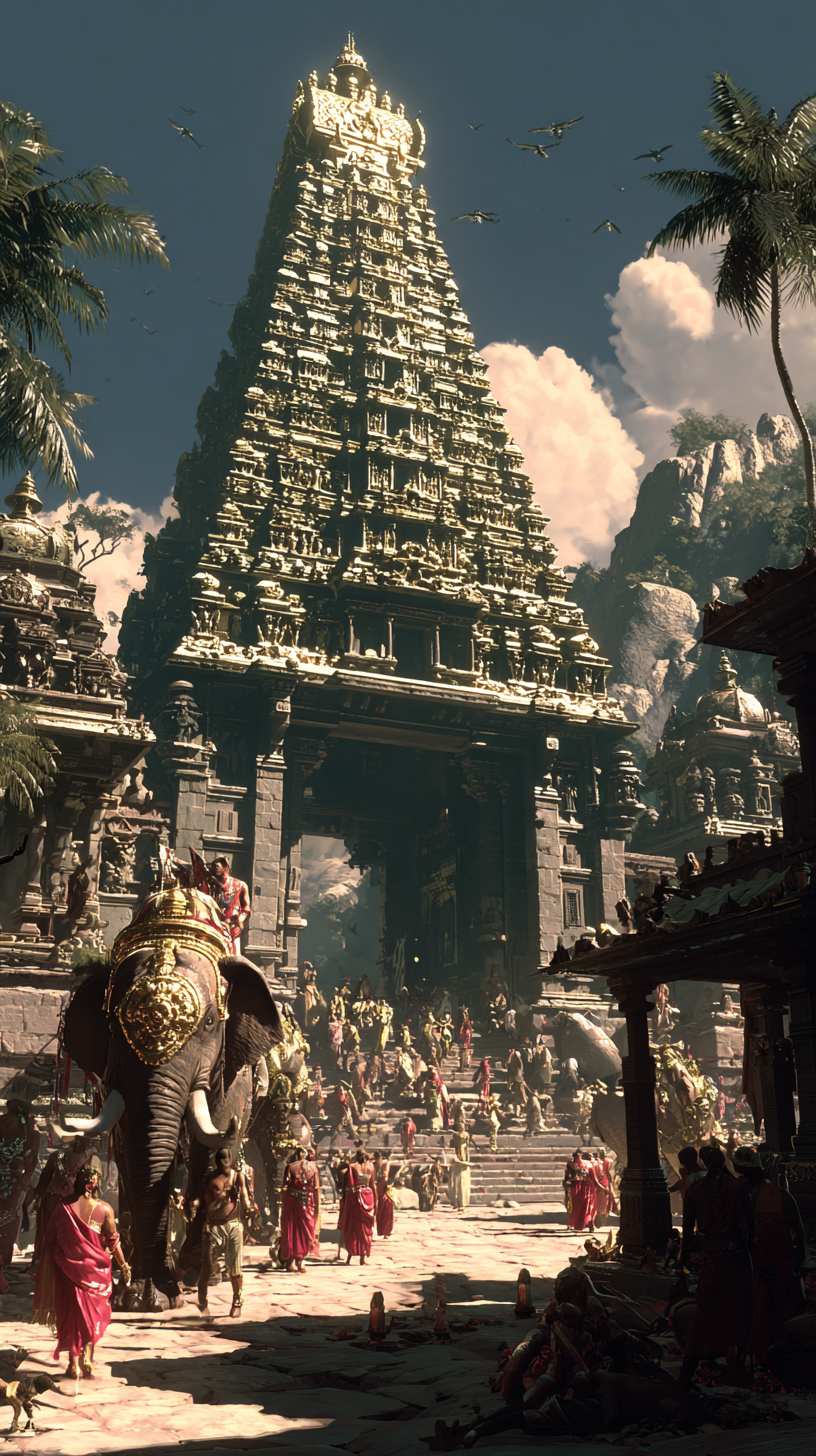
The architectural marvel of Adi Annamalaiyar Temple exemplifies the quintessential Dravidian style, characterized by its towering gopurams, intricate carvings, and expansive courtyards. The central shrine, housing the self-manifested lingam of Lord Annamalaiyar, is complemented by the separate sanctum of Goddess Unnamulai Amman, along with numerous subsidiary shrines dedicated to other deities. Each element, from the pillared mandapams to the detailed sculptures, narrates tales of devotion and craftsmanship. A closer look at these structures and the enshrined deities reveals the artistic and spiritual heart of the temple.
Architectural Design and Layout

The Presiding Pantheon
Beyond the principal deities, the temple precincts likely house shrines for other popular Hindu deities, including Ganesha, Murugan, and various forms of Shakti. These subsidiary shrines enrich the devotional experience, offering devotees opportunities to venerate a broader pantheon within a single sacred complex.
Adi Annamalaiyar / Adi Arunachalesvarar
Lord Shiva, in his primordial form as the Arunachala, embodies the infinite cosmic pillar of light. At this temple, he is uniquely present as a swayambhu lingam, signifying his self-manifested, eternal nature. He represents ultimate reality, the destroyer of ignorance, and the bestower of liberation.
Adi Abithakujalambal
The consort of Lord Shiva, Adi Abithakujalambal is a form of Goddess Parvati. She symbolizes divine power (Shakti), compassion, and the nurturing aspect of the cosmos. Devotees seek her blessings for strength, prosperity, and spiritual fulfillment.
Festivals and Celebrations
Throughout the year, the Adi Annamalaiyar Temple comes alive with a vibrant array of festivals, each steeped in age-old traditions and fervent devotion. These celebrations, ranging from daily pujas to grand annual events, attract thousands of pilgrims and showcase the rich cultural tapestry of the region. Key festivals like Maha Shivaratri and Karthigai Deepam are marked by elaborate rituals, processions, and communal participation, offering unique insights into the temple's spiritual calendar. This section details the major festive occasions that animate this sacred precinct.
Annual Cycles of Devotion
The spiritual life at Adi Annamalaiyar Temple operates on a rhythmic annual cycle, meticulously charting the flow of devotion through various seasons and astronomical alignments. This continuous sequence of daily rituals, weekly observances, and monthly special pujas culminates in the grand annual festivals, ensuring an unbroken chain of worship and spiritual engagement. Understanding these cyclical patterns provides insight into the temple's enduring religious practices and how they shape the lives of its devotees. This section delves into the regular cadence of worship that defines the temple's year-round activities.
Sacred Narratives and Community Spirit
Beyond religious rituals, these celebrations foster a strong sense of community and collective devotion. They provide opportunities for shared meals, cultural performances, and the strengthening of social bonds among devotees, highlighting the temple's role as a central hub for spiritual and communal life.
The Legend of Arunachala: Shiva's Pillar of Light
According to ancient Hindu scriptures, Lord Brahma and Lord Vishnu once debated their supremacy. To resolve this cosmic dispute, Lord Shiva manifested as an immeasurable, infinite pillar of light, a blazing column of fire (Jyotirlingam). He challenged the two deities to find its top and bottom. Brahma, taking the form of a swan, flew upwards, while Vishnu, as a boar, delved into the earth.
Both failed to find the column's limits, ultimately realizing the boundless nature of Shiva. The spot where this divine manifestation occurred is believed to be Arunachala Hill, and the Adi Annamalaiyar Temple, as the primordial shrine, is deeply connected to this foundational myth. This legend underscores Shiva's supreme and all-pervading form, worshipped here as the sacred swayambhu lingam.

Visitor Guide
For those planning a pilgrimage or visit to the Adi Annamalaiyar Temple, practical information is essential to ensure a fulfilling experience. This guide provides details on temple timings, accessibility, accommodation options in the vicinity, and local transportation. Information on darshan procedures, offerings, and facilities available for devotees will assist in navigating the temple complex. Whether seeking spiritual solace or cultural immersion, this section offers comprehensive advice to help visitors make the most of their journey to this ancient and revered site.
The Adi Annamalaiyar Temple is a sanctuary where history, profound spirituality, and vibrant culture converge, offering a glimpse into the timeless essence of divine presence.
For more insights into the spiritual heart of India, consider visiting other revered sites like the majestic Arunachaleshwar Temple and exploring the broader spiritual significance of Tiruvannamalai.


Planning Your Pilgrimage
Since the temple is situated on the 14-kilometer Girivalam path, many pilgrims integrate their visit into the larger circumambulation of Arunachala Hill. Early mornings or late afternoons offer a more comfortable visiting experience, avoiding the midday heat and allowing for peaceful darshan.
Experience and Etiquette
Adhere to standard temple etiquette: remove footwear before entering, dress modestly, and maintain a respectful silence within the precincts. Photography rules may vary, so inquire locally if unsure. Embrace the tranquility and allow the temple's spiritual energy to envelop you during your visit.
Introduction to Adi Annamalaiyar Temple
Nestled in the sacred town of Adi Annamalai, the Adi Annamalaiyar Temple stands as a venerable testament to ancient Dravidian spirituality. Dedicated to Lord Shiva as Annamalaiyar and Goddess Parvati as Unnamulai Amman, this revered shrine is a significant pilgrimage site in Tamil Nadu. Its profound historical roots and architectural grandeur draw devotees and scholars alike, offering a deep dive into centuries of religious tradition and cultural heritage. This section explores the temple's foundational aspects, setting the stage for a detailed understanding of its enduring legacy.
A Glimpse into Antiquity
The Adi Annamalaiyar Temple boasts an exceptionally ancient lineage, believed to predate many prominent structures in the region. Its origins are shrouded in legends and ancient scriptures, pointing to a history that stretches back millennia. Archaeological findings and epigraphical evidence further corroborate its venerable age, suggesting continuous worship and development over various historical periods. Delving into these ancient layers reveals the temple's foundational role in the spiritual landscape of Tamil Nadu, establishing its status as a sacred site of profound antiquity.
The Sacred Swayambhu Lingam
Devotees believe that the presence of a swayambhu lingam amplifies the temple's spiritual energy, making it a powerful site for meditation and worship. This unique feature solidifies Adi Annamalaiyar Temple's position as a place of spontaneous divine presence and profound spiritual significance.
The Adi Annamalaiyar Temple embodies a timeless spirituality, a silent testament to Shiva's enduring presence in the sacred land of Tiruvannamalai.
🗺 How to Reach
Hover a card to animate the journey on the map
Route to Surulipatti
Common Questions
Where is Adi Annamalaiyar Temple: Tiruvannamalai's Ancient Shiva Shrine located?
Adi Annamalaiyar Temple: Tiruvannamalai's Ancient Shiva Shrine is documented at Tiruvannamalai, Tamil Nadu.
Which deity is associated with Adi Annamalaiyar Temple: Tiruvannamalai's Ancient Shiva Shrine?
Adi Annamalaiyar Temple: Tiruvannamalai's Ancient Shiva Shrine is associated with Shiva.
Related Temples


A Living Covenant