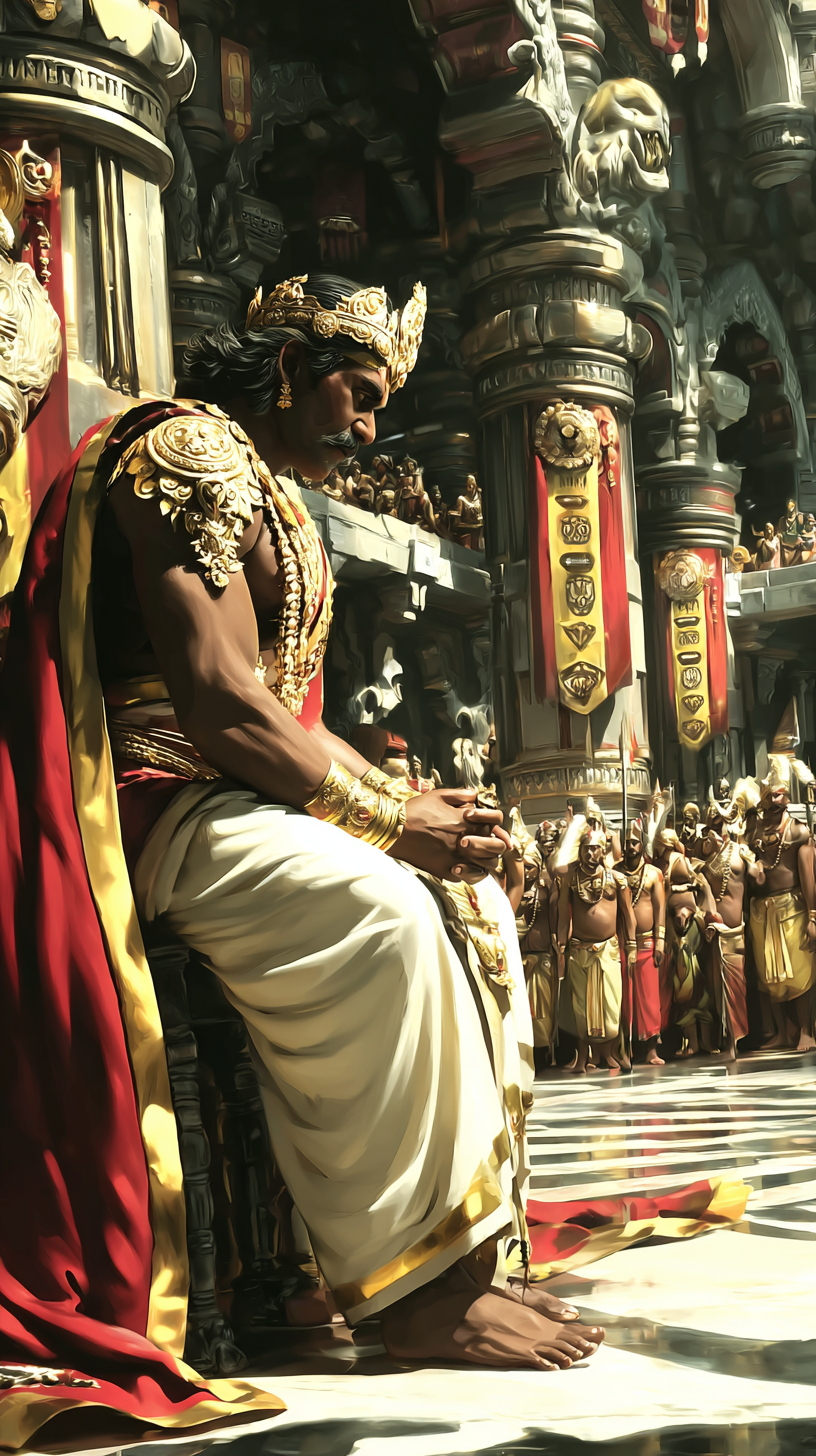
Historical Foundation: Echoes of Antiquity
The Legacy of Paadal Petra Sthalams
This designation imbues the temple with immense spiritual prestige, marking it as a site of profound historical and religious importance. The verses of the Nayanmars serve as eternal guides, drawing devotees to these hallowed grounds.
Key Historical & Mythological Milestones
Divine Worshippers and Their Sacred Offerings
“The Adhi Ratneswarar Temple stands as a beacon of unwavering faith, echoing the hymns of ancient sages and the devotion of countless generations.”
Architectural Grandeur: A Symphony in Stone
The Adhi Ratneswarar Temple exemplifies the timeless beauty and intricate craftsmanship characteristic of Dravidian architecture. Every stone and sculpture narrates a story, making the temple a breathtaking canvas of religious art and engineering.
The Majestic Gopuram and Dravidian Craftsmanship

Mythological Narratives Etched in Art
Presiding Deity & Sacred Narratives
At the core of the Adhi Ratneswarar Temple lies the presiding deity, Lord Shiva, revered in his form as Adhi Ratneswarar. The temple also resonates with captivating legends that highlight divine interventions and transformative spiritual journeys.
Lord Adhi Ratneswarar: Manifestation of Shiva
Lord Shiva as Adhi Ratneswarar
The primary deity enshrined in this temple is Lord Shiva, venerated as Adhi Ratneswarar. 'Adhi' signifies 'first' or 'ancient,' and 'Ratneswarar' refers to 'Lord of Jewels,' suggesting a deity of primordial and precious significance. Shiva, one of the principal deities of Hinduism, represents destruction, transformation, and ultimate reality.
Devotees offer prayers to Adhi Ratneswarar seeking liberation from worldly attachments, spiritual enlightenment, and protection from negative forces. The lingam, the aniconic representation of Shiva, is the central object of worship in the sanctum sanctorum, symbolizing the formless and infinite nature of the divine.
Legends of Transformation and Divine Intervention
The Myth of Vaaruni and the Vilva Forest
The very name of Tiruvadanai carries a profound mythological origin. Legend recounts that Vaaruni, the son of the sea god Varuna, was afflicted with a curse that transformed him into an elephant-headed goat. He performed intense penance in a dense Vilva forest that once covered this region, worshipping Lord Shiva. Through his unwavering devotion, Vaaruni eventually regained his original human form, a powerful testament to Shiva's mercy.
This transformative incident is said to be the genesis of the town's name, signifying a place where one 'regains' their true form. The tale reinforces the belief in the redemptive power of earnest prayer and divine intervention at this sacred site.
Arjuna, the Pandava, and the Pasupatha Missile
Another significant legend connects the temple to the epic Mahabharata. It tells of Arjuna, the formidable archer among the Pandava brothers, who sought to obtain the potent Pasupatha missile from Lord Shiva. To master this divine weapon, Arjuna, under divine guidance, traveled to Tiruvadanai.
Here, he performed rigorous austerities and worshipped Lord Shiva, eventually receiving the powerful weapon and the knowledge to wield it. As a mark of his profound devotion and gratitude, Arjuna is believed to have established a shrine at this very location, further sanctifying the temple's grounds.
Vibrant Festivals: Celebrating Divine Grace
Annual Celebrations: Spectacles of Devotion
Throughout the Year: A Calendar of Rituals
Visitor Information: Embracing the Sacred Journey
Visiting the Adhi Ratneswarar Temple offers a unique opportunity to connect with ancient spirituality and cultural heritage. Thoughtful planning can enhance the experience for all pilgrims and tourists.
“To walk through the Adhi Ratneswarar Temple is to step into a living narrative, where every carving, every chant, and every offering affirms the timeless bond between humanity and the divine.”