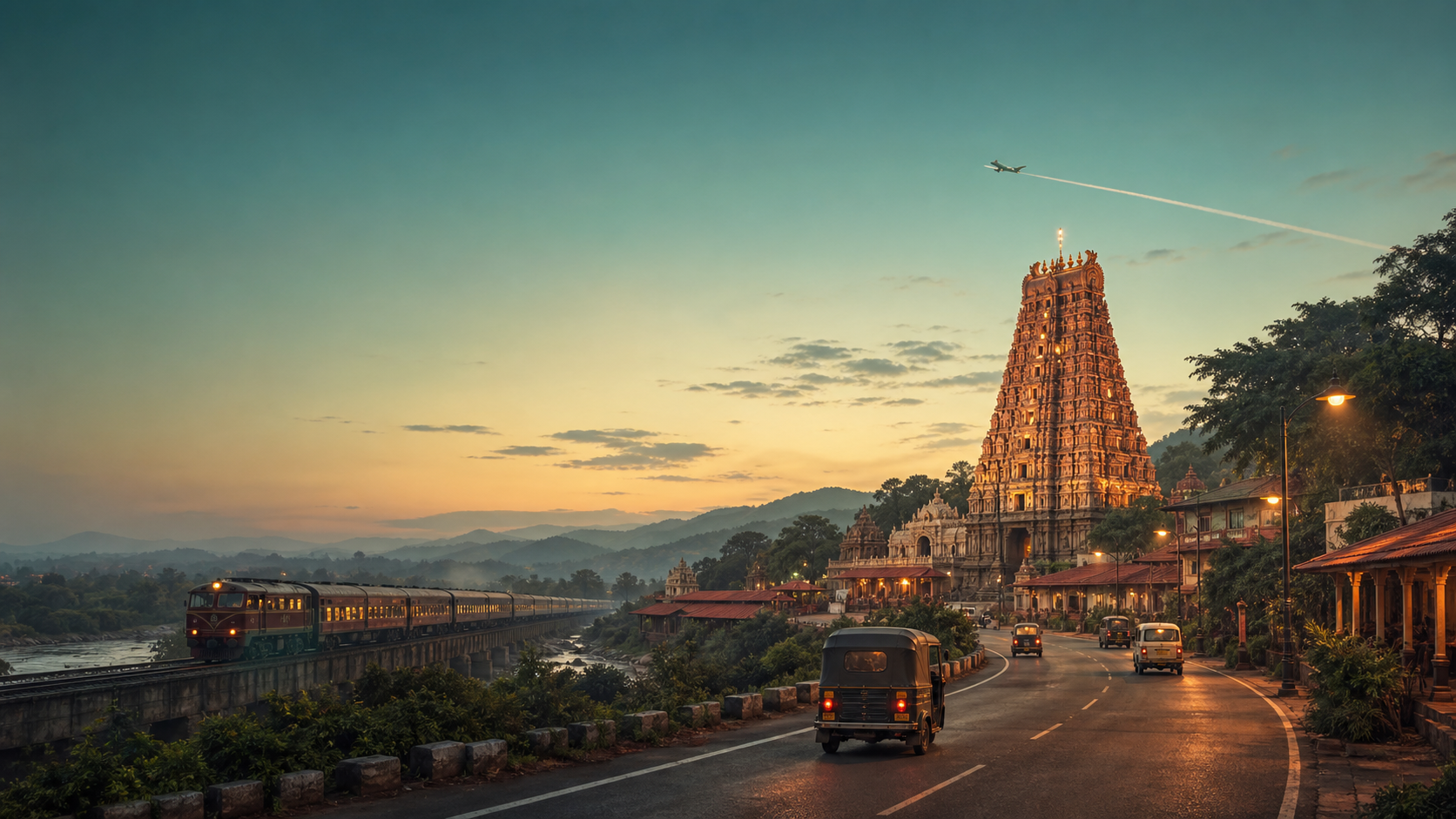
A complete pilgrim record drawn from the existing published article data.
A Millennium of Devotion: The History of Virupaksha Temple
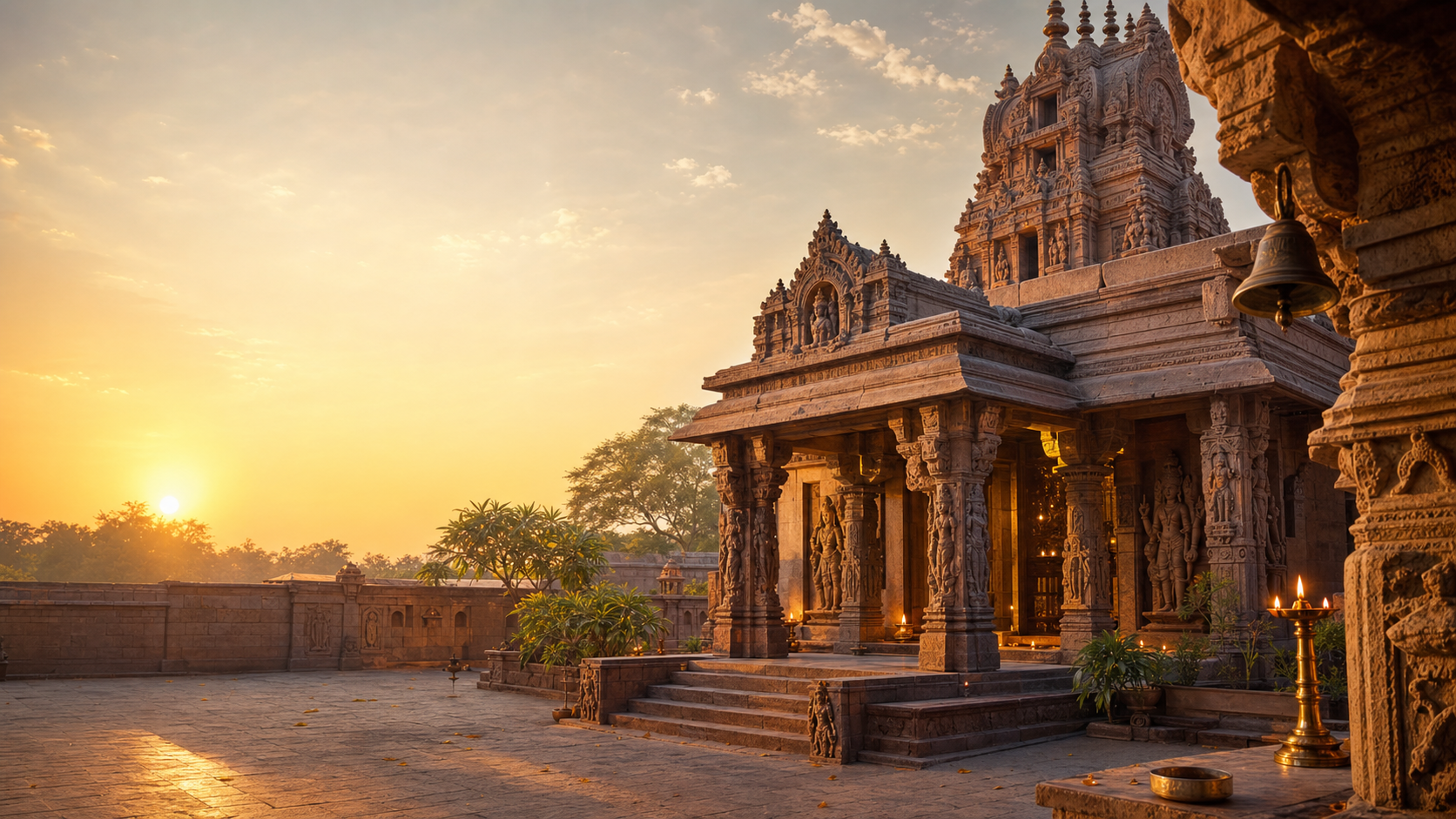
Tracing its origins to the 7th century CE as a Virupaksha-Pampa sanctuary, the Virupaksha Temple has a long and storied history of devotion. It flourished significantly under the patronage of the Vijayanagara Empire, particularly during the 14th to 16th centuries CE, when the bulk of its current magnificent structure was built. Notable contributions include those by Lakkan Dandesha in the 15th century and Krishnadevaraya, who commissioned the eastern gopuram and central pillared hall in 1510 CE, transforming it into the grand complex seen today, a beacon of enduring faith.
Ancient Origins
The temple's roots extend to the 7th century CE, initially serving as a sanctuary dedicated to Virupaksha and Pampa, predating the Vijayanagara Empire.
Vijayanagara Flourishing
The 14th to 16th centuries CE marked a period of extensive construction and expansion, with the Vijayanagara rulers shaping the temple into its current grand form.
Krishnadevaraya's Contributions
Emperor Krishnadevaraya significantly enhanced the temple in 1510 CE, commissioning the impressive eastern gopuram and the central pillared hall.
Dravidian Splendor: The Architecture of Virupaksha Temple
Showcasing classic Vijayanagara architecture, the Virupaksha Temple embodies Dravidian splendor through its towering gopurams, intricate mandapas, and unique structural elements. Constructed primarily from granite and brick, the temple complex features a massive nine-tiered eastern gopuram, standing approximately 50 meters high. Inside, the central pillared hall, or maha-mandapa, exhibits exquisite carvings. A notable architectural marvel is the camera obscura effect in a dark chamber, projecting an inverted shadow of the main gopuram, exemplifying the Vijayanagara artistic and engineering prowess.
Grand Gopurams
The temple is characterized by its monumental gopurams, particularly the eastern tower, which serves as a majestic entrance and a hallmark of Vijayanagara architecture.
Pillared Halls and Carvings
Within the complex, numerous pillared halls (mandapas) feature elaborate carvings depicting mythological scenes, deities, and courtly life, reflecting skilled craftsmanship.
The Inverted Shadow Phenomenon
A unique architectural feature allows for an inverted image of the main gopuram to be projected onto a wall inside a dark chamber, demonstrating ancient optical knowledge.
Virupaksha Temple: Hampi's Enduring Spiritual Heart
The Virupaksha Temple stands as a vibrant testament to Hampi's rich spiritual and historical legacy. Uniquely, it has maintained continuous worship amidst the ancient ruins of the Vijayanagara Empire, serving as a living link to a glorious past. Dedicated to Lord Shiva as Virupaksha, the temple is a dynamic center of faith, drawing pilgrims and visitors, and underscoring Hampi's profound cultural significance.
A Living Legacy
Unlike many structures in Hampi, the Virupaksha Temple has remained an active place of worship since its inception, preserving ancient rituals and traditions.
Spiritual Epicenter
Situated at the heart of the former Vijayanagara capital, the temple serves as the spiritual epicenter for devotees and a major pilgrimage site.
Experiencing Virupaksha Temple: A Visitor's Guide
This guide provides essential information for visitors to Virupaksha Temple, ensuring a meaningful and informed exploration of its spiritual and historical treasures. The best time to visit is from October to February, offering pleasant weather for sightseeing. Visitors should allow 3–4 hours to fully experience the temple complex, including its various shrines, courtyards, and architectural marvels. A modest dress code is expected, particularly for inner courtyards, to respect the sanctity of the active place of worship.
Best Time to Visit
The ideal period to visit Virupaksha Temple is between October and February, when the weather is most favorable for exploring the site.
Dress Code and Duration
Visitors are advised to wear modest attire, avoiding shorts or sleeveless tops for inner courtyards. Allocate 3–4 hours for a comprehensive visit.
Getting There
The temple is accessible via Hospet, which has train and bus connections. Kempegowda International Airport in Bengaluru is the nearest major airport.
| Deity | Virupaksha |
|---|---|
| Form | Virupaksha is primarily worshipped in the aniconic form of a Lingam, a common representation of Lord Shiva. |
| Consort | Pampadevi |
| Sampradaya | Shaiva |
| Significance | Virupaksha is revered as Pampa Pathi, the consort of the local river goddess Pampadevi, who personifies the Tungabhadra River. This sacred union forms the core of the temple's sanctity and the syncretic Virupaksha-Pampa cult. |
The Sacred Union of Pampa and Virupaksha
At the heart of Hampi's spiritual essence lies the enchanting tale of Pampadevi, the local river goddess personifying the mighty Tungabhadra. Driven by profound devotion and an unyielding desire, Pampadevi undertook rigorous penance on the banks of this sacred river to win Lord Shiva as her consort. Her unwavering austerity and love moved Shiva, who manifested as Virupaksha, to accept her as his divine bride. Their celestial marriage, celebrated at this very site, consecrated the land, transforming it into the revered 'Pampa Kshetra'. This timeless union of the divine masculine and feminine forms the foundational myth of Virupaksha Temple, symbolizing eternal love and the profound sanctity of Hampi, a tradition of worship that has flourished uninterrupted since the 7th century.
The sacred union of Virupaksha and Pampadevi consecrated this land, making Hampi a Pampa Kshetra, a place of eternal love and devotion.
Standing since the 7th century, Virupaksha Temple remains the only fully intact and continuously functioning shrine amidst Hampi's ancient ruins.
Related temples: Akkanna Madanna Caves | Balaji Temple, Ketkawla
Lord Virupaksha and Pampa Devi: Mythology and Worship
Dedicated primarily to Lord Shiva, worshipped here as Virupaksha, the temple is central to the local mythology surrounding his sacred marriage to the local river goddess, Pampa Devi. The narrative recounts Pampa Devi's rigorous penance to win Shiva as her consort, culminating in their celestial union at this very site. This profound spiritual narrative forms the foundational myth of the temple, symbolizing eternal love and consecrating Hampi as 'Pampa Kshetra'. The temple continues to celebrate their divine union through annual festivals, embodying a rich Shaiva tradition.
The Principal Deities
The Virupaksha Temple is dedicated to Lord Shiva, revered as Virupaksha, and his consort, the local goddess Pampa Devi, after whom Hampi was once known as Pampa Kshetra.
The Sacred Marriage Narrative
Central to the temple's lore is the story of Pampa Devi's unwavering devotion and penance, which led to her marriage with Lord Shiva, a union celebrated annually.
Festivals of Divine Union
The annual Virupaksha-Pampa Wedding Festival in December and the Chariot Festival in February are key celebrations, reenacting and honoring the divine marriage.
Modern Pilgrimage and Tourism
Despite its ancient origins and the surrounding ruins of a once-grand empire, the Virupaksha Temple remains a vibrant and active center of Hindu pilgrimage in contemporary India. Thousands of devotees, primarily followers of Lord Shiva, visit annually to offer prayers, perform rituals, and seek blessings. The temple continues to host daily pujas, aratis, and special ceremonies, especially during auspicious occasions like Shivaratri and the annual chariot festival, attracting a large congregation from across Karnataka and neighboring states. For many, a visit to Virupaksha is not merely a historical tour but a profound spiritual journey, connecting them to centuries of unbroken faith and tradition. The presence of the temple elephant, Lakshmi, further adds to the spiritual charm, offering blessings to pilgrims and contributing to the temple's living heritage. Beyond its religious significance, the Virupaksha Temple stands as a cornerstone of Hampi's immense appeal as a UNESCO World Heritage Site, drawing a diverse global audience of tourists, historians, and photographers. Its iconic gopuram, intricate carvings, and unique architecture make it a prime attraction, often serving as the starting point for exploring the wider Hampi ruins. The influx of tourists has significantly boosted the local economy, creating opportunities for guides, guesthouse owners, and local artisans. However, this popularity also presents challenges, including the need for careful crowd management, infrastructure development, and balancing conservation efforts with accessibility. The temple thus navigates a dual role, serving both as a sacred space for worship and a globally recognized monument of cultural and historical importance, demanding careful stewardship for future generations.🗺 How to Reach
Hover a card to animate the journey on the map
Route to Hampi
Common Questions
Where is Virupaksha Temple, Hampi: Ancient Shiva Shrine located?
Virupaksha Temple, Hampi: Ancient Shiva Shrine is documented at Hampi, Andhra Pradesh.
Which deity is associated with Virupaksha Temple, Hampi: Ancient Shiva Shrine?
Virupaksha Temple, Hampi: Ancient Shiva Shrine is associated with Shiva.
Related Temples

A Living Covenant