



A complete pilgrim record drawn from the existing published article data.
Architectural Marvels of Simhachalam
The Varaha Lakshmi Narasimha Temple stands as a remarkable example of architectural synthesis, primarily showcasing a Kalinga-Chalukya fusion with notable Dravidian influences. Constructed predominantly from durable granite, its design reflects the artistic prowess of various dynasties. The temple complex features intricate carvings, detailed sculptures, and a towering gopuram, characteristic of South Indian temple architecture. Unique structural elements contribute to its distinct aesthetic, blending regional styles seamlessly. This architectural diversity not only highlights the skill of ancient artisans but also narrates the story of cultural exchanges and evolving artistic traditions through the centuries.
Kalinga-Chalukya Fusion
The temple exhibits a unique blend of Kalinga and Chalukya architectural styles, enriched by Dravidian elements, making it distinct among temples in Andhra Pradesh.
Granite Construction
Built primarily from granite, the temple showcases robust construction and intricate carvings that have withstood the test of time, reflecting ancient craftsmanship.
Elaborate Sculptures
The walls and pillars are adorned with detailed sculptures depicting mythological scenes, deities, and decorative motifs, reflecting the artistic skill and devotional fervor of its builders.
The Sacred Deity and His Annual Unveiling
Lord Varaha Lakshmi Narasimha, the presiding deity of Simhachalam, is a unique manifestation of Vishnu, embodying strength, prosperity, and peace. According to legend, after subduing Hiranyakashipu, Lord Narasimha's fury was calmed by Prahlada and Lakshmi, leading to this tranquil form. A profound tradition dictates that for 364 days of the year, the idol is completely covered in a thick layer of sandalwood paste, symbolizing its cooling and calming effect. This practice maintains the deity's serene aspect. Only once a year, during the Chandana Yatra or Chandanotsavam festival, is the sandalwood paste removed, allowing devotees a rare 'Nijaroopa Darshanam' of the true form of the Lord.
The Unique Form of Vishnu
The deity is a rare combination of Varaha, Lakshmi, and Narasimha, representing a powerful yet benevolent aspect of Lord Vishnu, embodying the story of divine wrath turning to peace.
The Sandalwood Covering
For 364 days annually, the idol is encased in sandalwood paste, a tradition believed to keep the fierce Narasimha form cool and serene, reflecting the legend of his calming.
Chandanotsavam: The Annual Unveiling
The most significant event is the Chandana Yatra, or Chandanotsavam, in April-May, when the sandalwood paste is removed for a single day, offering devotees a rare glimpse of the deity's true form, known as 'Nijaroopa Darshanam'.
Planning Your Pilgrimage: A Visitor's Guide
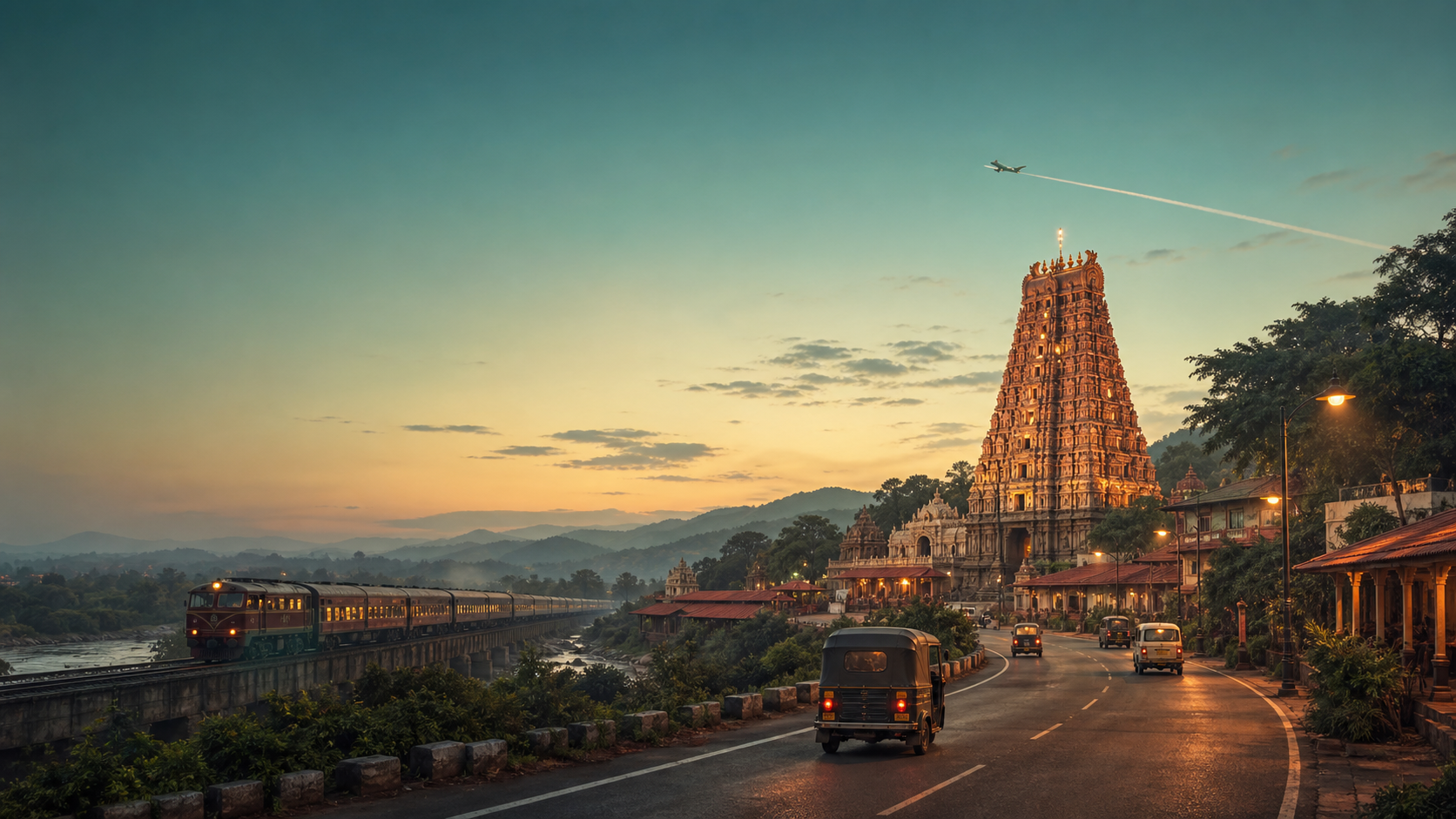
Planning a pilgrimage to the Varaha Lakshmi Narasimha Temple requires attention to practical details for an enriching experience. The temple is easily accessible from Visakhapatnam, approximately 16 km away, via regular bus services, taxi, or private vehicle. Visakhapatnam also boasts a major railway junction and an international airport for long-distance travelers. While the temple office provides specific timings, the period from October to March offers pleasant weather for visiting. Traditional Indian attire is expected, and footwear must be removed before entering the sacred precincts, respecting local customs and enhancing your spiritual journey.
Accessibility and Transport
The temple is well-connected to Visakhapatnam, with bus, train, and flight options available. Visakhapatnam Junction and International Airport are both about 16 km away.
Optimal Visit Times
The months of October to March offer pleasant weather. For the unique 'Nijaroopa Darshanam', plan your visit during the Chandanotsavam festival in April-May.
Dress Code and Etiquette
Devotees are expected to wear traditional Indian attire. Removing footwear is mandatory before entering the temple, and visitors should respect the sanctity of the shrine.
| Deity | Varaha Lakshmi Narasimha |
|---|---|
| Form | An eight-armed composite form combining boar and man-lion aspects. The deity is perpetually covered in sandalwood paste, revealing a Shivalinga-like appearance year-round. |
| Consort | Goddess Lakshmi |
| Sampradaya | Vaishnava |
| Significance | This unique form represents Lord Vishnu's protective grace, where Narasimha's fury was calmed by Prahlada's prayers to Goddess Lakshmi. The deity is believed to have been consecrated by Prahlada himself, marking the site as where wrath transformed into protective grace. |
The Calming of the Lion-Man
After the fearsome Lord Narasimha vanquished the demon Hiranyakashipu, his divine wrath blazed unquenched, shaking the very cosmos. It was the devout Prahlada, with his pure heart, who turned to the benevolent Goddess Lakshmi, seeking solace for the raging deity. Through Prahlada's earnest prayers, the Lord's immense fury began to subside, transforming into a protective, compassionate grace. In this moment of profound tranquility, Vishnu manifested in a unique and awe-inspiring form: Varaha-Lakshmi-Narasimha, embodying strength, prosperity, and peace. It is believed that Prahlada himself consecrated this sacred deity at Simhachalam, a name meaning 'Lion’s Hill', forever marking this hallowed ground as the place where the Lord's wrath found its serene transformation. This sacred narrative is revered in ancient texts like the Skanda Purana and Varaha Purana, which hail Simhachalam as 'the most sacred place on Earth'.
Here, the fearsome wrath of Narasimha transformed into protective grace, eternally embodied in the unique form of Varaha Lakshmi Narasimha.
Simhachalam is hailed as 'the most sacred place on Earth,' where divine fury finds serene transformation and unwavering protection.
Related temples: Akkanna Madanna Caves | Balaji Temple, Ketkawla
A Legacy Etched in Stone: The Temple's Storied Past
The history of the Varaha Lakshmi Narasimha Temple is a testament to enduring royal patronage and spiritual devotion. While its origins are traced to the 9th century CE, the present magnificent structure was predominantly built in the 11th century under the Eastern Ganga Dynasty. Subsequent periods saw significant contributions and embellishments from powerful South Indian empires, including the Chalukyas and Cholas. Later, during the Vijayanagara Empire, rulers like Krishnadevaraya also extended their patronage, undertaking renovations. This continuous support from various dynasties reflects the temple's immense religious and cultural importance throughout history, solidifying its status as a revered pilgrimage site.
Early Foundations
The temple's earliest mentions date back to the 9th century CE, establishing its ancient roots as a sacred site with continuous worship over centuries.
Dynastic Contributions
The Eastern Ganga Dynasty initiated the present temple's construction in the 11th century, with later patronage from the Chalukyas, Cholas, and the Vijayanagara Empire, including Krishnadevaraya.
Rich Inscriptional Records
Over 252 inscriptions found at the temple detail royal grants, donations, and administrative practices, offering invaluable insights into its historical evolution and significance.
The Enigmatic Abode of Varaha Lakshmi Narasimha
The Varaha Lakshmi Narasimha Temple, situated on Simhachalam Hill in Andhra Pradesh, is a revered Vaishnava shrine dedicated to Lord Vishnu in his unique Varaha-Lakshmi-Narasimha form. This ancient temple, an ASI-protected monument, holds profound spiritual significance and is a major pilgrimage center. Its origins trace back to the 9th century CE, with the present structure largely dating from the 11th century. The temple embodies a rich heritage, drawing devotees seeking blessings from the tranquil yet powerful deity. Simhachalam, meaning 'Lion's Hill', is central to the narrative of Lord Narasimha's calming.
Location and Spiritual Importance
The temple is perched on Simhachalam Hill, offering panoramic views. It is considered one of the most sacred places, particularly for Vaishnavites, and is a significant pilgrimage destination in Andhra Pradesh.
The Presiding Deity
Lord Varaha Lakshmi Narasimha is a rare manifestation of Vishnu, combining elements of Varaha (boar), Lakshmi (goddess of prosperity), and Narasimha (lion-man), symbolizing strength, protection, and peace.
Ancient Origins
Though the current structure is from the 11th century CE, the temple's history extends to the 9th century CE, reflecting centuries of continuous worship and spiritual importance.
Cultural Impact
The Varaha Lakshmi Narasimha Temple at Simhachalam has profoundly influenced the cultural landscape of Andhra Pradesh, serving as a wellspring of inspiration for various art forms over centuries. Its unique deity, a blend of Varaha and Narasimha, and its rich mythological narratives have been immortalized in Telugu literature, particularly in devotional poetry and historical chronicles. Poets and scholars have lauded its architectural grandeur and spiritual significance, weaving its stories into the fabric of regional folklore and classical compositions. The temple's annual festivals, especially Chandanotsavam, attract not only devotees but also artists who find muse in the vibrant rituals, traditional music, and intricate decorations, contributing to the preservation and evolution of local artistic traditions.
Beyond its religious importance, Simhachalam's Varaha Lakshmi Narasimha Temple plays a crucial role in shaping the regional identity of Andhra Pradesh, particularly in the northern coastal districts. It stands as a symbol of historical continuity and spiritual heritage, fostering a strong sense of community among its devotees. The temple's endowments and charitable activities throughout history have also contributed to social welfare, supporting education and local livelihoods. Its festivals are not merely religious observances but significant cultural events that bring people together, transcending caste and creed, and reinforcing shared cultural values. The temple's enduring presence continues to influence local customs, culinary practices, and even the nomenclature of surrounding areas, cementing its status as a cornerstone of Andhra's cultural ethos.
🗺 How to Reach
Hover a card to animate the journey on the map
Route to Temple
Common Questions
Where is Varaha Lakshmi Narasimha Temple: Kalingan Architectural Gem located?
Varaha Lakshmi Narasimha Temple: Kalingan Architectural Gem is documented at Simhachalam, Andhra Pradesh.
Which deity is associated with Varaha Lakshmi Narasimha Temple: Kalingan Architectural Gem?
Varaha Lakshmi Narasimha Temple: Kalingan Architectural Gem is associated with Vishnu.
Related Temples
A Living Covenant