



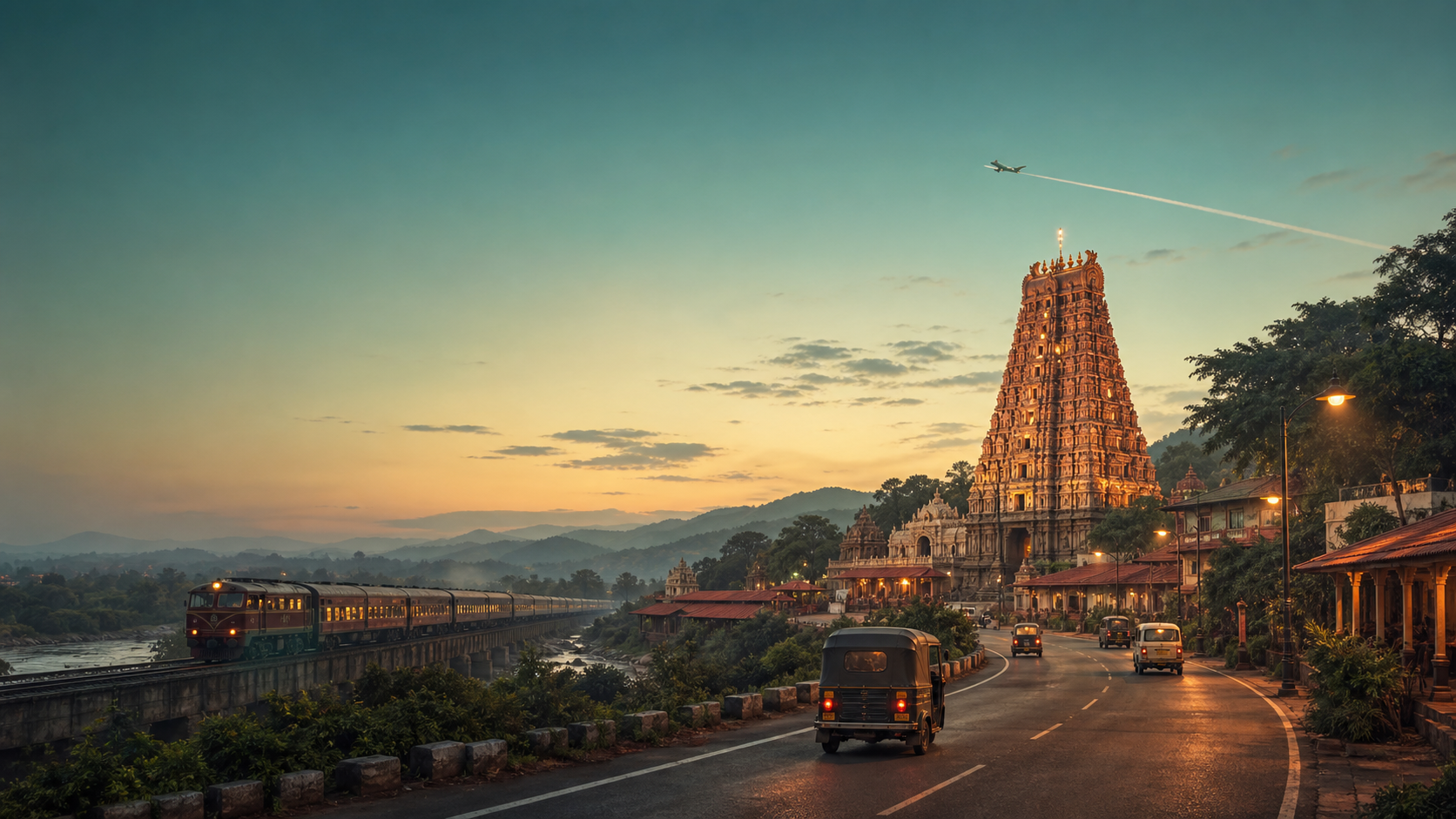
A complete pilgrim record drawn from the existing published article data.
From Satavahana Grandeur to Vijayanagara Splendor
The architectural landscape of Andhra Pradesh was profoundly shaped by powerful dynasties. The Satavahanas, active from the 2nd century BCE, are renowned for their contributions to early Buddhist architecture, particularly the Amaravati Stupa, which showcased exquisite sculptural art. Their influence laid the groundwork for subsequent developments. Centuries later, the mighty Vijayanagara Empire (14th–17th century CE) ushered in an era of unparalleled temple building. Their style, often termed Vijayanagara Dravidian, is characterized by elaborate gopurams, pillared halls, and intricate carvings, exemplified by the masterful Lepakshi Veerabhadra Temple and significant expansions at Tirumala. These periods represent pinnacles of artistic and engineering prowess.
Satavahana Period: Buddhist Art and Rock-cut Caves
The Satavahana dynasty initiated significant architectural projects, particularly Buddhist stupas like the one at Amaravati. This period also saw the development of early rock-cut structures, demonstrating sophisticated engineering and artistic skill in shaping natural rock into sacred spaces.
Vijayanagara Empire: Dravidian Grandeur
The Vijayanagara period transformed the region's temple architecture. Builders utilized granite and sandstone to create towering gopurams, expansive mandapas, and detailed sculptures. The Lepakshi Temple, with its monolithic Nandi and mural paintings, stands as a prime example of their distinctive Dravidian style.
The Divine Presence: Venkateswara and Other Revered Deities
At the heart of Andhra Pradesh's temples lies a deep devotion to its deities, embodying rich mythological narratives and spiritual traditions. Lord Venkateswara, the presiding deity of the Tirumala temple, is central to Vaishnava worship, attracting millions as a Divya Desam. The narrative of The Divine Sojourn of Srinivasa underscores his significance. Alongside Vishnu's manifestations, Lord Shiva is revered at sites like Srisailam, a Pancha Bhoota Sthala associated with the earth element, and a revered Jyotirlinga. The region's historical Buddhist sites, including Amaravati and Nagarjunakonda, also attest to a profound spiritual heritage, honoring Lord Buddha and his teachings.
Lord Venkateswara: The Kali Yuga Deity
Lord Venkateswara at Tirumala is the most revered deity in Andhra Pradesh. His presence on Venkatadri hill is believed to cleanse sins and grant wishes, especially during the challenging Kali Yuga, as recounted in the story of Srinivasa's divine sojourn.
Shaiva and Buddhist Reverence
Beyond Vaishnavism, the region holds deep reverence for Lord Shiva, particularly at Srisailam, a significant pilgrimage site. Additionally, ancient Buddhist centers like Amaravati and Nagarjunakonda preserve the legacy of Lord Buddha, showcasing a diverse spiritual landscape.
Planning Your Pilgrimage: A Visitor's Guide to Sacred Sites
Visitors to Andhra Pradesh can embark on a spiritual and historical journey, exploring a wealth of sacred sites. The state offers UNESCO Tentative List sites like the Lepakshi group of monuments, alongside ASI-protected treasures such as the Amaravati Stupa and Undavalli Caves. To ensure a fulfilling visit, the best time to travel is from October to February, when the weather is most pleasant. A modest dress code is enforced at many temples, with head coverings sometimes required. Practical details like transport to Tirupati via train, flight, or bus, and information on festivals like Brahmotsavam, are crucial for planning.
Key Heritage Sites and Best Visiting Times
Explore the ancient Amaravati Stupa, the rock-cut Undavalli Caves, and the intricate Lepakshi Temple. The period from October to February offers ideal weather for sightseeing and temple visits, avoiding the intense summer heat.
Travel and Etiquette Essentials
Tirupati is well-connected by train, flight, and bus, serving as a gateway to many temples. Visitors should observe the modest dress code at shrines, often requiring head coverings for men in Vaishnava temples, to show respect for local customs.
| Deity | Venkateswara |
|---|---|
| Form | Appears as Ranganatha/reclining Vishnu in Undavalli Caves and as Dhyana Buddha in Amaravati. The Dhyana Buddha statue at Amaravati and composite forms in Amaravati reliefs show early Mahayana iconography. |
| Consort | Padmavati (at Tiruchanur, near Tirupati) |
| Sampradaya | Vaishnava, Shaiva, Buddhist |
| Significance | Lord Venkateswara is believed to have appeared as Srinivasa to marry Padmavati and resides on the Venkatadri hill to bless devotees in Kali Yuga, after being cursed by goddess Lakshmi. |
The Divine Sojourn of Srinivasa
Lord Vishnu, in an act of divine drama, faced the wrath of Goddess Lakshmi due to a perceived partiality, leading to a curse. He descended to Earth as Srinivasa, embarking on a sacred journey that led him to the beautiful Princess Padmavati, whom he eventually married. To bless humanity in the arduous Kali Yuga, he chose to reside on the revered Venkatadri hill, where the magnificent Tirumala temple now stands. Devotees flock from all corners to seek his blessings, offering their prayers and even their hair as a symbol of sacrifice and devotion. It is believed that the Lord's divine presence here cleanses all sins and grants wishes. Some folk beliefs suggest his eyes open wider during eclipses, witnessing the cosmic dance of time.
Lord Venkateswara chose Venkatadri hill to bless devotees in Kali Yuga, cleansing sins and granting wishes to all who seek his divine grace.
From ancient Buddhist relics to grand Dravidian structures, Andhra Pradesh's temples are a testament to millennia of profound spiritual and artistic devotion.
Related temples: Akkanna Madanna Caves | Bairagimadam Temple
A Journey Through Andhra Pradesh's Temple Heritage
Andhra Pradesh boasts a rich tapestry of temple architecture, reflecting centuries of artistic and spiritual evolution. From the early Satavahana period, witnessing the rise of Buddhist stupas and rock-cut caves, to the grand temples of the Vijayanagara Empire, the region's sacred structures tell a story of diverse influences. Vaishnava, Shaiva, and Buddhist traditions have all left their indelible mark, creating a unique blend of styles. Sites like Tirumala, Srisailam, and Amaravati stand as testaments to this enduring legacy, drawing pilgrims and art enthusiasts alike.
Ancient Roots and Dynastic Flourishing
The architectural journey began with the Satavahanas in the 2nd century BCE, laying foundations for impressive structures. Later, the Eastern Chalukyas and Kakatiyas contributed significantly, but it was the Vijayanagara Empire (14th–17th century CE) that brought forth a golden age of temple construction, characterized by intricate carvings and monumental scale.
Diverse Spiritual Traditions
Andhra Pradesh is a confluence of major Indian religious traditions. Vaishnava temples, epitomized by Tirumala's Venkateswara shrine, coexist with ancient Shaiva sites like Srisailam, one of the twelve Jyotirlingas. Buddhist heritage is prominently displayed at Amaravati and Nagarjunakonda, showcasing the region's historical embrace of various faiths.
Unveiling the Unique Architectural Language of Andhra Temples
Andhra Pradesh's temples showcase a captivating blend of Dravidian and indigenous styles, creating a unique architectural language. This distinctiveness is evident in the intricate carvings that adorn temple walls, depicting mythological narratives and divine forms with remarkable detail. Impressive monolithic sculptures, such as the Nandi at Lepakshi, demonstrate extraordinary craftsmanship. Furthermore, the region is home to magnificent rock-cut caves, like those at Undavalli, which were carved directly into natural rock formations, revealing ancient engineering prowess. These structures, often built from durable granite and brick, stand as enduring testaments to centuries of artistic mastery and spiritual devotion, each element meticulously crafted to tell a story.
Dravidian and Regional Influences
While broadly falling under the Dravidian style, Andhra temples incorporate unique regional characteristics. The Vijayanagara Dravidian style, particularly, evolved with distinct features like elaborate prakaras and mandapas, blending traditional elements with innovative designs.
Rock-cut Architecture and Monolithic Wonders
The region is notable for its ancient rock-cut architecture, with sites like Undavalli Caves providing insight into early temple construction techniques. Monolithic sculptures, carved from single blocks of stone, further highlight the exceptional skill of ancient Andhra artisans.
Restoration and Conservation Efforts
The ancient temples of Andhra Pradesh, while enduring testaments to architectural prowess, face significant challenges from the relentless march of time, adverse weather conditions, and, at times, human encroachment. Erosion, structural instability, water seepage, and the degradation of intricate sculptures are constant threats that necessitate continuous intervention. Recognizing the invaluable cultural and historical significance of these sacred sites, various governmental bodies, most notably the the Archaeological Survey of India (ASI) and the State Department of Archaeology and Museums, along with private trusts and community initiatives, have undertaken extensive restoration and conservation projects. These efforts are crucial not only for preserving the physical structures but also for safeguarding the intangible heritage associated with them, ensuring that the stories, rituals, and artistic traditions embedded within their stones continue to thrive. Conservation methodologies employed in Andhra Pradesh's temples are often highly specialized, balancing modern engineering principles with traditional building techniques and materials. This includes meticulous documentation of existing conditions, chemical cleaning to remove accretions without damaging the stone, structural reinforcement using non-invasive methods, and the careful reconstruction of dilapidated sections with historically accurate materials like lime mortar and traditional stone. A significant focus is placed on preserving the authenticity and original fabric of the temples, ensuring that restoration work is reversible and distinguishable where necessary. These ongoing efforts demand substantial funding, skilled artisans, and dedicated oversight, all aimed at protecting these architectural masterpieces from further decay and ensuring their longevity as vibrant centers of devotion and cultural legacy for generations to come.🗺 How to Reach
Hover a card to animate the journey on the map
Route to Amaravati
Common Questions
Where is Andhra Pradesh Architecture: A Visual Journey Through Time located?
Andhra Pradesh Architecture: A Visual Journey Through Time is documented at Amaravati, Andhra Pradesh.
Which deity is associated with Andhra Pradesh Architecture: A Visual Journey Through Time?
Andhra Pradesh Architecture: A Visual Journey Through Time is associated with Vishnu.
Related Temples
A Living Covenant