



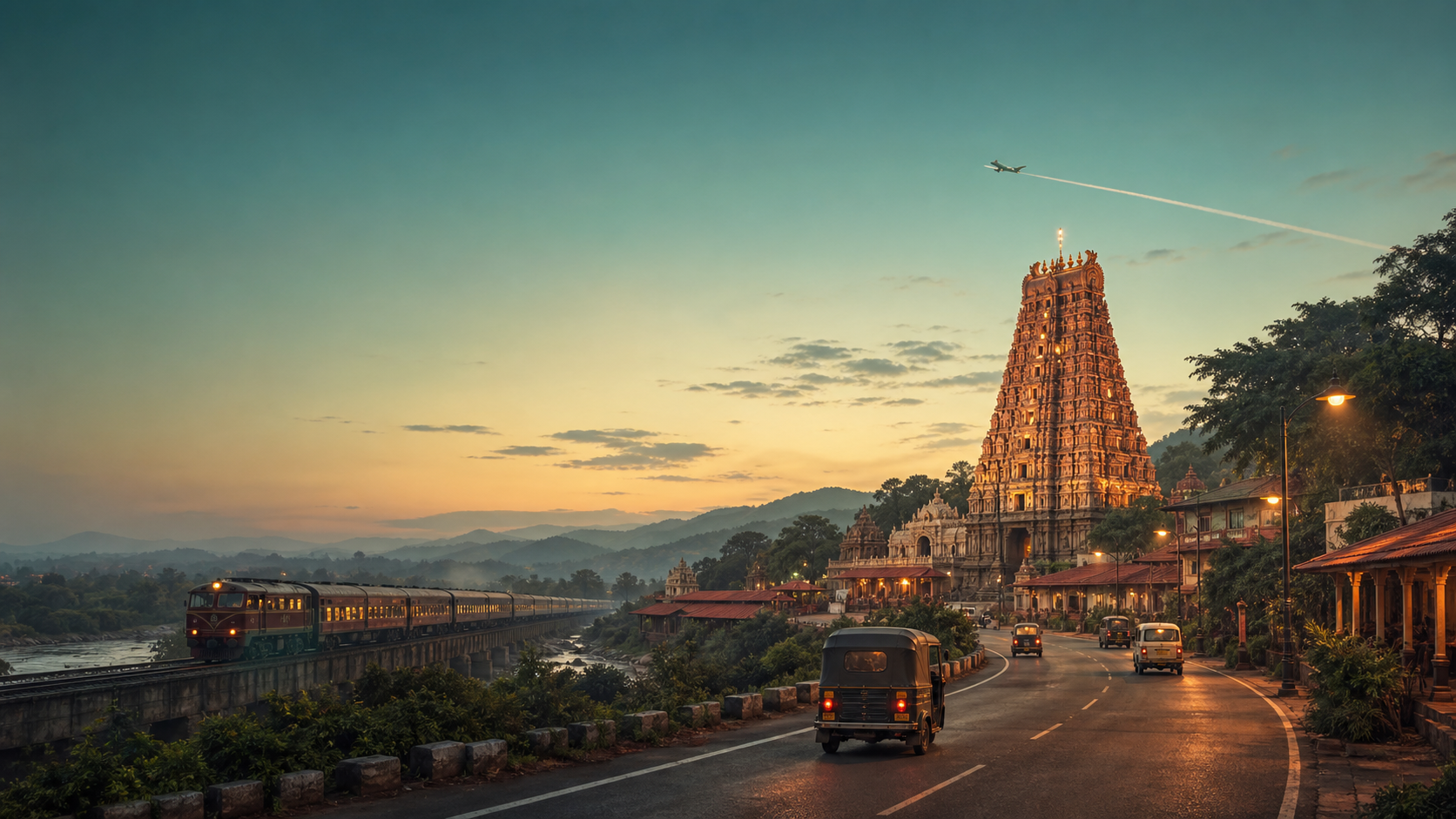
A complete pilgrim record drawn from the existing published article data.
The Enduring Legacy of the Swaminarayan Sampradaya
The Swaminarayan Sampradaya, a prominent Vaishnava tradition, originated in Gujarat with Sahajanand Swami's spiritual succession from Ramanand Swami in 1801. Renowned for his profound wisdom, Sahajanand Swami embarked on a mission to institutionalize devotion to Krishna. Between 1822 and 1828, he meticulously established six foundational mandirs across Gujarat. These became vibrant centers of satsang, fostering ethical reform and guiding devotees towards bhakti-based liberation. The Sampradaya's influence grew steadily, establishing a significant spiritual and cultural legacy throughout the region and beyond.
Foundational Origins
The Sampradaya began in 1801 when Sahajanand Swami received spiritual leadership from his guru, Ramanand Swami, in Gujarat, marking a new chapter in Vaishnava tradition.
Institutional Growth in Gujarat
Between 1822 and 1828, six mandirs were established across Gujarat, serving as key institutions to promote devotion to Krishna and ethical living, deeply embedding the Sampradaya in the region.
From Bhagwan Swaminarayan to a Global Faith
Bhagwan Swaminarayan, born Sahajanand Swami, assumed spiritual leadership in 1801, initiating a transformative era. His mission to institutionalize devotion to Krishna led to the establishment of six mandirs in Gujarat from 1822–1828. During this period, he also provided significant famine relief in Kathiawar (1813–1814), demonstrating his profound compassion. Key scriptures like the Desh Vibhag Lekh and Shikshapatri (1826), and the Vachanamrut (1827–1829) were composed, solidifying the Sampradaya's theological framework. These efforts laid the groundwork for its eventual expansion into a global faith.
Spiritual Succession and Early Mission
Sahajanand Swami's leadership began in 1801, focusing on institutionalizing devotion to Krishna and demonstrating divine compassion through famine relief miracles during 1813–1814.
Scriptural Foundations and Expansion
The composition of central scriptures like the Shikshapatri (1826) and Vachanamrut (1827–1829) provided a robust theological base, guiding the Sampradaya's growth beyond its initial Gujarati roots.
Distinctive Styles of Swaminarayan Mandirs
Swaminarayan mandirs are characterized by their Neo-traditional Gujarati Hindu mandir architecture. These temples are meticulously constructed using traditional materials such as stone, brick, lime mortar, wood, and stucco. Unlike many ancient sites, these mandirs were built anew between 1822 and 1828, specifically designed to embody the Sampradaya's profound theological concepts of Purushottam and Aksharbrahman. This distinctive style emphasizes intricate carvings and traditional craftsmanship, creating vibrant centers of devotion.
Neo-traditional Design Principles
The architecture reflects a Neo-traditional Gujarati Hindu style, blending ancient aesthetics with contemporary construction, distinct from existing ancient temple structures.
Traditional Materials and Craftsmanship
Construction relies on traditional materials including stone, brick, lime mortar, wood, and stucco, showcasing intricate craftsmanship in their design and execution.
Krishna, Swaminarayan, and the Path of Bhakti
Lord Krishna serves as the main deity of worship within the Swaminarayan Sampradaya, a Vaishnava tradition. Bhagwan Swaminarayan institutionalized devotion to Krishna, emphasizing a bhakti-based path to liberation. The theological concepts of Purushottam and Aksharbrahman are central, guiding devotees in their spiritual journey. Festivals like Annakut, where vast food offerings are made to Krishna, highlight the deep devotional practices observed in mandirs such as Vadtal and Ahmedabad, reinforcing the profound connection to the divine.
Primary Deities and Vaishnava Tradition
The Sampradaya is a Vaishnava tradition, with Lord Krishna as the main deity, and Bhagwan Swaminarayan revered for institutionalizing devotion to Him.
Bhakti and Theological Concepts
Devotion to Krishna through bhakti is central, guided by the profound theological concepts of Purushottam and Aksharbrahman, leading to spiritual liberation.
Experiencing the Swaminarayan Sampradaya
Visitors to Swaminarayan temples can experience the vibrant spiritual community, with the period from October to March being the best time to visit. Modest dress is required, and footwear must be removed before entering the temple premises. A typical visit to a major mandir may last 2-3 hours, allowing ample time for darshan and reflection. For specific timings, entry details, and transport information, it is advisable to contact the temple office directly. Engaging with festivals like Swaminarayan Jayanti or Annakut offers a deeper cultural immersion.
Visitor Etiquette
Visitors are requested to observe a modest dress code and remove footwear before entering the temple, respecting the sacred environment.
Planning Your Visit
The best time to visit is from October to March. For up-to-date information on timings, entry, and transport, contacting the temple office is recommended.
| Deity | Krishna |
|---|---|
| Form | Krishna is worshipped in multiple forms, including Nar-Narayan, Radha-Krishna, Ranchhodrai, Radha Madan Mohan, Radha Gopinath, and Harikrishna. The Harikrishna murti specifically represents Swaminarayan in a combined Hari-Krishna form. |
| Consort | Radha |
| Sampradaya | Vaishnava (Swaminarayan Sampradaya) |
| Significance | The Swaminarayan Sampradaya uniquely worships Krishna while simultaneously venerating Swaminarayan as Purushottam. This tradition emphasizes the systematic installation of God paired with an ideal devotee, embodying theological concepts of Purushottam and Aksharbrahman. |
The Dawn of a New Sampradaya
The spiritual journey of the Swaminarayan Sampradaya began in 1801 when Sahajanand Swami received leadership from his guru, Ramanand Swami, in Gujarat. Renowned for his wisdom, he embarked on a mission to institutionalize devotion to Krishna. Between 1822 and 1828, he established six foundational mandirs across Gujarat. These new centers were designed to embody the profound theological concepts of Purushottam and Aksharbrahman. Each temple became a beacon of satsang, fostering ethical reform and guiding devotees towards bhakti-based liberation, marking a new chapter in spiritual history.
Sahajanand Swami established a new spiritual path, building six foundational mandirs to institutionalize devotion and ethical living across Gujarat.
The Swaminarayan Sampradaya uniquely venerates Krishna as Purushottam, alongside Swaminarayan, embodying profound theological concepts for spiritual liberation.
Related temples: A. C. Bhaktivedanta Swami Prabhupada | Abhimanyu Temple, Vayotthidam
Cultural Impact
The Swaminarayan Sampradaya has profoundly shaped the cultural landscape of Gujarat, extending its influence far beyond mere religious observance. Its philosophy, rooted in devotion, morality, and social service, has permeated various aspects of daily life, art, and community structure. The sampradaya's architectural endeavors, particularly its grand mandirs, stand as iconic examples of contemporary Gujarati craftsmanship, blending traditional Hindu temple design with modern engineering and aesthetic sensibilities. These structures not only serve as places of worship but also as cultural hubs, fostering community gatherings, educational initiatives, and artistic performances. Furthermore, the sampradaya's emphasis on ethical conduct, family values, and community welfare has become a significant moral compass for many Gujaratis, both within India and among the global diaspora. Beyond architecture, the cultural imprint of the Swaminarayan Sampradaya is evident in its vibrant festivals, unique musical traditions, and extensive social welfare programs. Celebrations like Swaminarayan Jayanti and Diwali are marked by elaborate decorations, community feasts, and devotional singing (kirtans) that resonate throughout Gujarati communities. The sampradaya's strong advocacy for vegetarianism, abstinence from intoxicants, and a disciplined lifestyle has significantly influenced public health and social norms. Moreover, its numerous educational institutions, hospitals, and disaster relief efforts demonstrate a practical commitment to societal betterment, often setting benchmarks for community service. These initiatives not only provide essential services but also reinforce a distinct cultural identity associated with the sampradaya's values of selfless service and spiritual upliftment.🗺 How to Reach
Hover a card to animate the journey on the map
Route to Ahmedabad
Common Questions
Where is Swaminarayan Sampradaya: A Unique Vaishnava Tradition located?
Swaminarayan Sampradaya: A Unique Vaishnava Tradition is documented at Ahmedabad, Gujarat.
Which deity is associated with Swaminarayan Sampradaya: A Unique Vaishnava Tradition?
Swaminarayan Sampradaya: A Unique Vaishnava Tradition is associated with Krishna.
Related Temples

A Living Covenant