



A complete pilgrim record drawn from the existing published article data.
Tracing the Legacy: History of Taranga Jain Temple
The historical roots of Taranga Jain Temple extend far beyond its most prominent structure. Evidence suggests a site of spiritual significance since the 3rd–4th century BCE, with Buddhist caves dating to the 4th–5th century CE. A pivotal moment occurred in the 2nd century CE with the construction of a temple for goddess Tara by Jain monk Khaputacharya and King Veni Vatsaraja. The tirtha's definitive Jain identity solidified under the Chaulukya (Solanki) dynasty. In 1161 CE, King Kumarapala, guided by Acharya Hemachandra, commissioned the grand Ajitanatha temple. This act marked Taranga as a major Jain pilgrimage center, with continuous worship and expansions, including the reinstallation of the central idol in 1422 CE.
Early Foundations
The site's spiritual journey began with possible fortifications in the BCE era and early Buddhist presence, followed by a temple dedicated to goddess Tara in the 2nd century CE.
Chaulukya Patronage
King Kumarapala of the Chaulukya dynasty, influenced by Acharya Hemachandra, was instrumental in establishing the main Ajitanatha temple in 1161 CE, elevating Taranga's status.
Architectural Grandeur: The Māru-Gurjara Style of Taranga
The Taranga Jain Temple complex is a prime example of the Māru-Gurjara architectural style, flourishing under the Chaulukya dynasty. This distinctive style is characterized by its elaborate ornamentation and intricate carvings, utilizing white sandstone, marble, brick, and wood. The main Ajitanatha temple, built in 1161 CE, showcases finely sculpted pillars, ceilings, and exterior walls depicting various deities and mythological scenes. The complex comprises distinct temple structures catering to both Śvetāmbara and Digambara traditions, each maintaining the stylistic hallmarks while serving their specific ritualistic needs. The detailed craftsmanship reflects a high degree of artistic skill and religious devotion, making it a significant heritage site.
Māru-Gurjara Characteristics
The architecture features ornate domes, multi-tiered shikharas, and exquisitely carved pillars and ceilings, typical of the Chaulukya period.
Material and Craftsmanship
Construction primarily uses white sandstone and marble, allowing for detailed sculptural work, complemented by brick and wood elements in specific sections.
Spiritual Core: Lord Ajitnath and Jain Mythology
Lord Ajitnath, the second Jain Tirthankara, is the principal deity enshrined at Taranga, making it a significant tirtha for devotees. His presence underscores the temple's role as a center for spiritual practice and liberation. According to Jain mythology, Taranga is revered as a Moksha Kshetra, a sacred site where countless souls have attained moksha. Notably, the "Hill of Liberation" narrative recounts that an astounding thirty-five million monastics, including the Ganadharas Varadutta and Sagardutta, achieved ultimate liberation on its peaks. Pilgrims visit to seek blessings and spiritual merit, believing the very footprints of Tirthankaras impart healing and profound spiritual benefits.
Lord Ajitnath's Significance
As the second Tirthankara, Lord Ajitnath symbolizes spiritual victory and is central to the temple's devotional focus and pilgrim aspirations.
The Hill of Liberation
Taranga's peaks—Kotishila, Siddhashila, and Tonk—are sacred sites where millions of monastics, including Ganadharas, are believed to have achieved moksha.
Planning Your Pilgrimage: Visiting Taranga Jain Temple
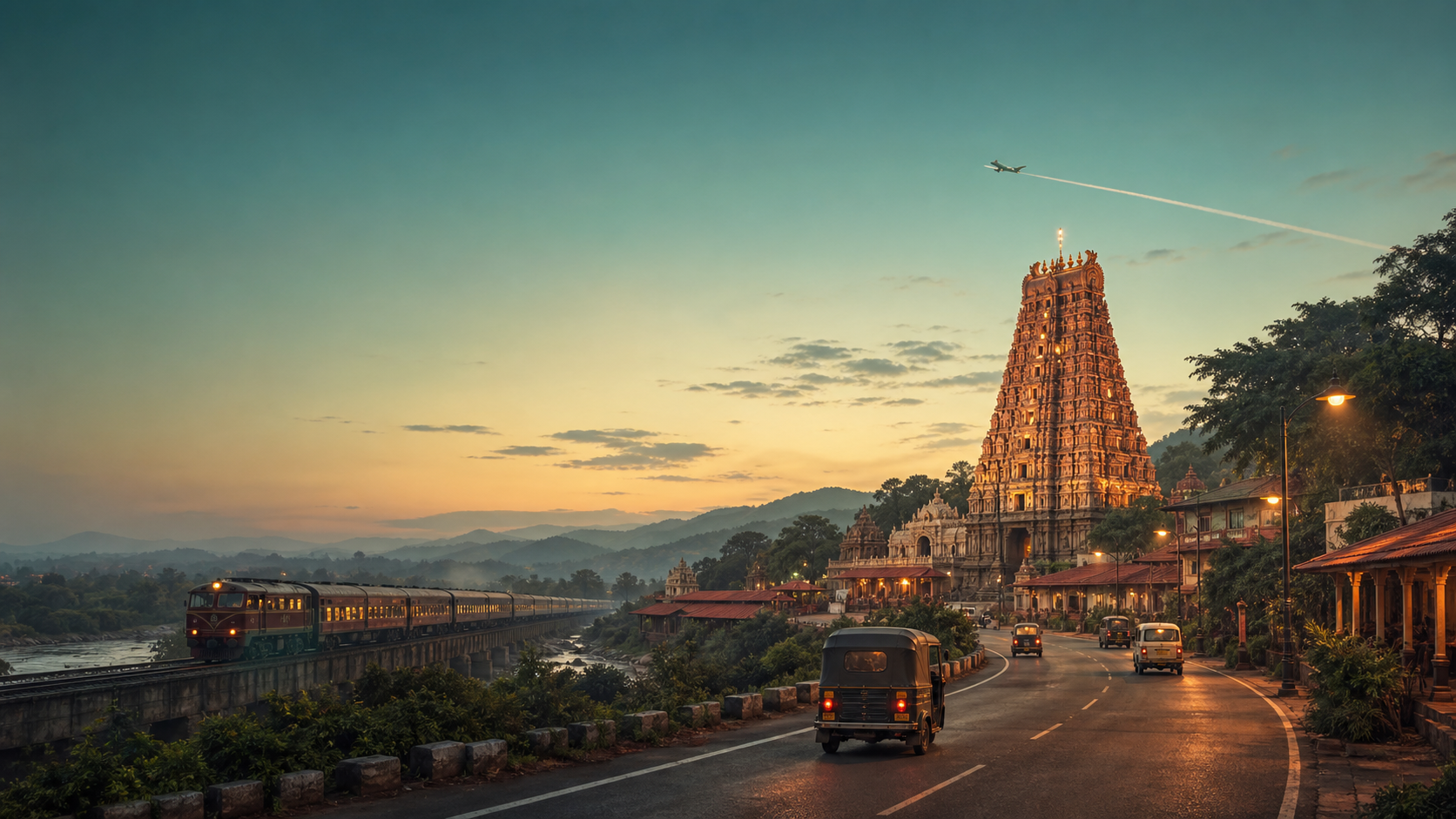
Taranga Jain Temple is accessible via various transport modes, making pilgrimage convenient. Mehsana Junction, approximately 35 km away, offers train connectivity, while Mehsana Bus Stand provides regular bus services. For air travel, Sardar Vallabhbhai Patel International Airport in Ahmedabad is about 85 km distant, followed by road transport. Driving is facilitated by SH212, with parking available. The best time to visit is from October to March, particularly during the Kartika and Chaitra Purnima festivals in November and April, which are peak pilgrimage periods. Visitors should wear modest clothing and remove footwear. A full day is recommended to explore the main complexes, with two days for a comprehensive visit including caves and foothills.
Travel and Accessibility
Taranga is well-connected by road, with Mehsana serving as a key hub for bus and train services, and Ahmedabad providing air access.
Best Time and Etiquette
The cooler months from October to March are ideal, especially during full moon festivals. Modest attire and removal of footwear are essential.
| Deity | Ajitanatha |
|---|---|
| Form | Ajitanatha is depicted as a seated Tirthankara within the garbhagriha of the main temple. He is represented by a large white marble idol, 2.75 meters tall, adorned with inlaid precious stones. |
| Consort | Unknown |
| Sampradaya | Jain (both Śvetāmbara and Digambara) |
| Significance | As the second Tirthankara in Jainism, Ajitanatha is revered as a spiritual guide who achieved liberation. The temple dedicated to him is a significant pilgrimage site where many monastics are believed to have attained moksha. |
The Transformation of Taranga
Long ago, this sacred hill, now known as Taranga, began its spiritual journey not as a Jain sanctuary, but as a thriving Buddhist center. It is said that in the 2nd century CE, King Veni Vatsaraja, alongside the revered Jain monk Khaputacharya, collaboratively established a temple dedicated to the goddess Tara. This act, marking the installation of the Tara shrine, was pivotal, giving the place its original name, Tarapur, and signaling an early, unique blend of traditions. Over centuries, under the profound influence of Acharya Hemachandra, the spiritual advisor who guided King Kumarapala’s conversion, Tarapur blossomed into a pre-eminent Jain tirtha, a testament to its evolving sacred geography and enduring spiritual power.
Taranga's three majestic peaks are revered as profound sites of liberation, where thirty-five million monastics, including Ganadharas Varadutta and Sagardutta, are believed to have attained moksha.
From a thriving Buddhist center to a pre-eminent Jain tirtha, Taranga's spiritual power blossomed under Acharya Hemachandra's influence, marking a unique blend of traditions.
Related temples: Baba Balak Nath | Bahrot Caves
Taranga Jain Temple: A Confluence of Faith and Artistry
The Taranga Jain Temple, located in Gujarat, stands as a significant pilgrimage site dedicated primarily to Lord Ajitnath. Built in 1161 CE by Kumarapala, the main temple exemplifies the distinctive Māru-Gurjara architectural style, characterized by intricate carvings in white sandstone, marble, and wood. This revered tirtha is unique for fostering both Śvetāmbara and Digambara Jain traditions within its sacred precincts, making it a rare confluence of these two major sects. It is also considered a Moksha Kshetra, a site associated with liberation.
Architectural Significance
The temple complex showcases the Māru-Gurjara style, a hallmark of Chaulukya dynasty craftsmanship, evident in its detailed sculptures and structural elements.
Dual Traditions
Taranga is notable for accommodating both the Śvetāmbara and Digambara Jain traditions, offering distinct worship spaces and practices for followers of each sect.
Scholarly Studies and Architectural Analysis
The Taranga Jain temple complex has long been a subject of significant academic interest, drawing scholars and art historians eager to unravel its architectural intricacies and historical narratives. Its prominent position as a prime example of Maru-Gurjara architecture, particularly from the Solanki period, has led to extensive research into its construction techniques, sculptural programs, and overall design philosophy. Studies often focus on the distinctive shikhara (spire) and the elaborate mandapa (hall) structures, comparing them with contemporary temple building traditions across Gujarat and Rajasthan. Early archaeological surveys and epigraphic analyses have been crucial in dating various temple components and identifying the patrons responsible for its construction, providing invaluable insights into the socio-religious landscape of medieval Gujarat. These scholarly efforts help contextualize Taranga within the broader evolution of Jain temple architecture in India.
Beyond architectural analysis, scholarly investigations delve deep into the rich iconography and art historical significance of Taranga. Researchers meticulously study the depictions of the Tirthankaras, particularly Ajitnath, and other celestial beings, interpreting their symbolic meanings and stylistic evolution. Comparative studies often place Taranga alongside other renowned Jain pilgrimage sites like Dilwara and Ranakpur, highlighting regional variations and shared artistic motifs. Academic publications, dissertations, and conferences frequently feature papers dedicated to Taranga, exploring its role in shaping Jain artistic traditions and its influence on subsequent temple construction. These scholarly contributions not only preserve the temple's legacy but also offer new perspectives on its cultural, religious, and artistic importance within the vast tapestry of Indian heritage.
🗺 How to Reach
Hover a card to animate the journey on the map
Route to Temple
Common Questions
Where is Taranga Jain Temple: 12th-Century Maru-Gurjara Masterpiece located?
Taranga Jain Temple: 12th-Century Maru-Gurjara Masterpiece is documented at Unknown.
Which deity is associated with Taranga Jain Temple: 12th-Century Maru-Gurjara Masterpiece?
Taranga Jain Temple: 12th-Century Maru-Gurjara Masterpiece is associated with Ajitanatha.
Related Temples


A Living Covenant