A complete pilgrim record drawn from the existing published article data.
The Ancient Grandeur of Srungara Vallabha Swamy Temple
Revered as 'Tholi Tirupati', the Srungara Vallabha Swamy Temple in Andhra Pradesh stands as a testament to ancient devotion. Built prior to the 12th century, it is a significant Vaishnava heritage site, though not officially listed in the Nalayira Divya Prabandham. The temple's spiritual importance is deeply rooted in the legend of young Dhruva, who received a divine vision here. This sacred ground, predating the renowned Tirumala temple, embodies a unique manifestation of Lord Vishnu, Srungara Vallabha Swamy, known for his adaptability to devotees.
Ancient Origins
The temple's construction dates back prior to the 12th century, with the earliest epigraphic evidence confirming its existence in the 12th century. It was primarily built under the patronage of the Eastern Chalukyas.
Spiritual Significance
Within the Vaishnava tradition, the temple is celebrated for its connection to the story of Dhruva and its unique deity, Sri Srungara Vallabha Swami, earning it the title 'Tholi Tirupati' or the first Tirupati.
Architectural Splendor: A Fusion of Dynastic Influences
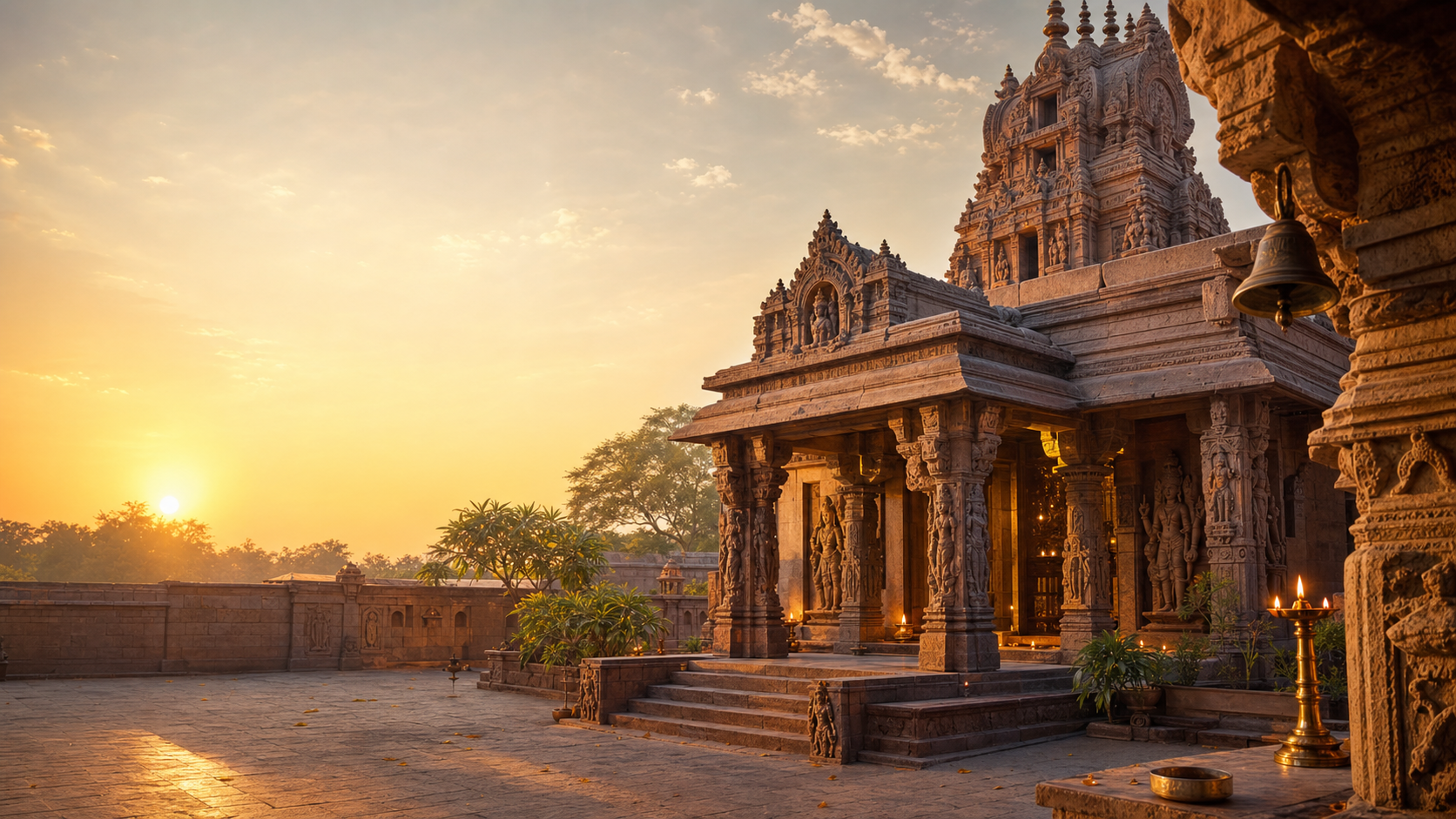
The Srungara Vallabha Swamy Temple showcases the distinct Dravidian architectural style, predominantly constructed from stone. While the Eastern Chalukyas were the primary early patrons, the temple's design reflects centuries of artistic evolution and contributions from various powerful dynasties. Subsequent influences from Reddi rulers, Chalukya-Cholas, Pallavas, Gajapatis, and local zamindars of Peddapuram have enriched its structural and sculptural elements, creating a unique synthesis of regional architectural traditions. The Archaeological Survey of India (ASI) protects this heritage site.
Dravidian Style and Material
The temple is built in the Dravidian architectural style, primarily utilizing stone as its construction material, reflecting ancient South Indian temple building traditions.
Early Chalukyan Influence
The Eastern Chalukyas were the initial patrons, laying the groundwork for the temple's architectural character and establishing its early design principles.
Later Dynastic Contributions
Over centuries, the temple benefited from the patronage of Reddi rulers, Chalukya-Cholas, Pallavas, Gajapatis, and local zamindars, each adding distinct elements to its architectural narrative.
Sri Srungara Vallabha Swami: The Unique Deity and Tholi Tirupati
Sri Srungara Vallabha Swami is the central deity of this Vaishnava temple, renowned for his unique iconography and profound theological importance. The narrative of young Dhruva's penance describes Lord Vishnu manifesting before him, but his cosmic radiance proved overwhelming. In an act of boundless compassion, Vishnu assumed a smaller, more approachable form – the smiling 'Srungara Vallabha Swamy' – which miraculously adapts its size to each devotee. This distinctive manifestation, complete with a reversed Sankha-Chakra, blessed Dhruva with eternal glory. This sacred site earned its name 'Tholi Tirupati,' signifying it as the first Tirupati, predating the renowned Tirumala temple, a testament to divine accessibility.
The Manifestation for Dhruva
Lord Vishnu, moved by young Dhruva's severe penance, manifested in a form that adapts its size, becoming 'Srungara Vallabha Swamy' to allow for easier darshan.
Unique Iconography
The deity is characterized by a distinctive reversed Sankha-Chakra, symbolizing the Lord's unique manifestation and adaptability for his devotees.
The First Tirupati
The temple is historically significant as 'Tholi Tirupati,' meaning the first Tirupati, predating the famous Tirumala temple due to its association with Dhruva's divine vision.
Planning Your Pilgrimage: A Visitor's Guide to Rameswarampeta
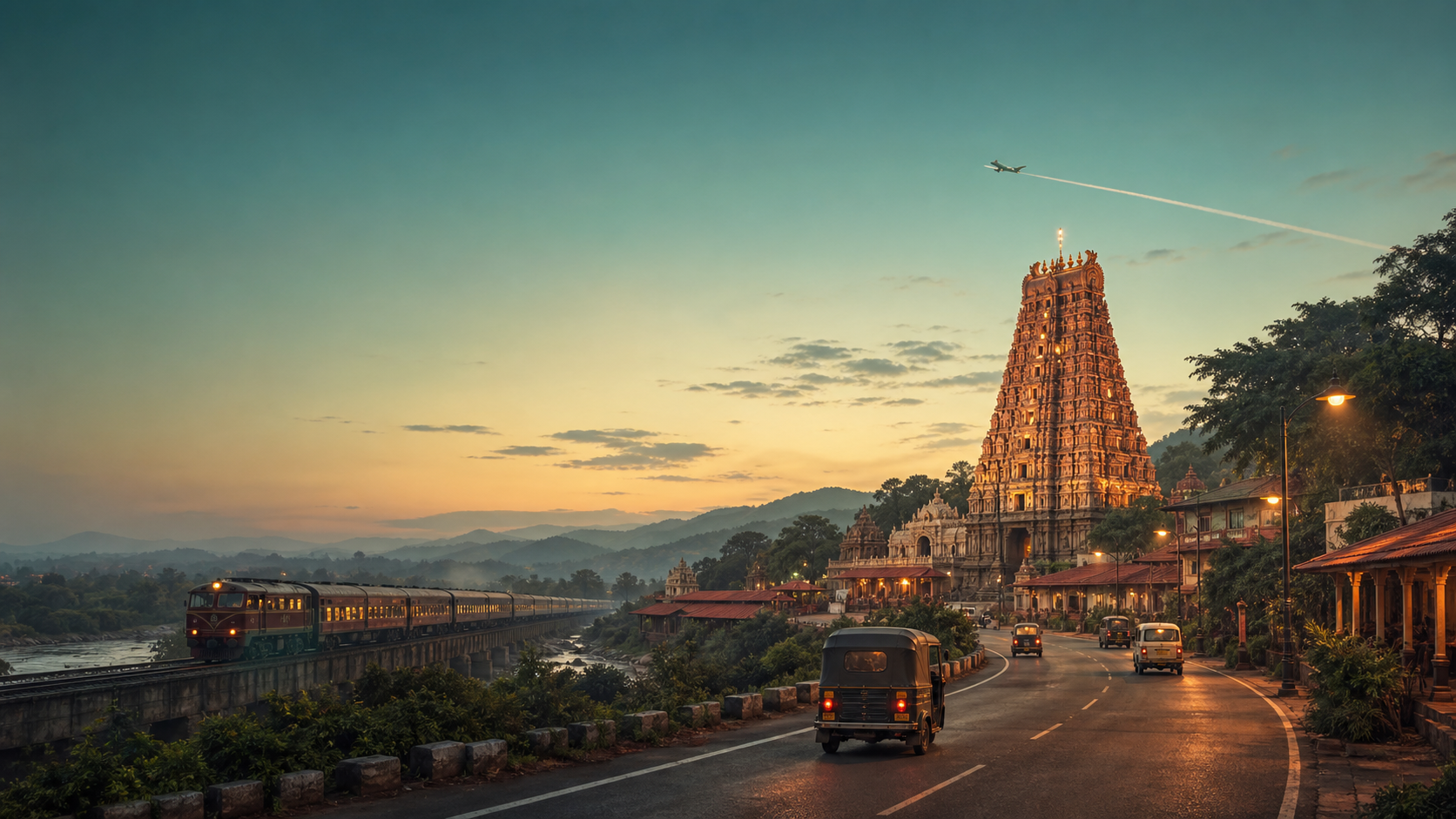
Visiting the Srungara Vallabha Swamy Temple offers a spiritually enriching experience. The temple is accessible via various transport modes: regular buses run from Kakinada Bus Stand (20-25 km), Peddapuram, and Rajahmundry. Samarlakota Railway Station, 15 km away, connects to major cities. Rajahmundry Airport (approximately 70 km) serves air travelers. For those driving, the temple is located near the Kakinada - Rajanagaram (ADB) Road, with on-site parking available. The best time to visit is from October to March, particularly during Dhanurmasa and Chaitra festivals. Entry is free, and traditional attire is preferred.
Getting There
The temple is well-connected by bus from Kakinada, Peddapuram, and Rajahmundry. Samarlakota Railway Station and Rajahmundry Airport provide train and flight access, respectively. Car parking is available.
Visitor Information
Entry to the temple is free. The best time to visit is between October and March, especially during Dhanurmasa and Chaitra festivals. Traditional attire is preferred for devotees.
Essential Details
For precise timings, visitors are advised to contact the temple office. A typical visit duration is 2–3 hours. Footwear must be removed before entering the temple premises.
| Deity | Sri Srungara Vallabha Swami |
|---|---|
| Form | He is depicted in a standing form of Lord Venkateswara (Vishnu) with a distinctive smiling expression. His iconography is unique, featuring reversed placement of Sankha and Chakra, and he is said to appear in a size proportional to the devotee's stature. |
| Consort | Sri Devi and Bhu Devi |
| Sampradaya | Vaishnava |
| Significance | Lord Vishnu appeared here as Srungara Vallabha Swamy to bless the child-sage Dhruva after his intense penance. He granted Dhruva eternal glory by assuming a smaller, approachable form that adapts in size to each devotee. |
The First Tirupati: Dhruva's Divine Vision
Young Dhruva, consumed by an unwavering desire for a higher realm, embarked upon a severe six-month penance at this sacred spot. His devotion was so profound that Lord Vishnu, moved by the child’s austerity, manifested before him. However, the Lord's cosmic radiance proved too overwhelming for Dhruva's mortal eyes. With boundless compassion, Vishnu then assumed a smaller, more approachable form – a smiling, 'Srungara Vallabha Swamy' – one that miraculously adapts its size to each devotee, easing their darshan. It was in this unique, endearing manifestation, with his distinctive reversed Sankha-Chakra, that Vishnu blessed Dhruva with eternal glory. This hallowed ground, predating the renowned Tirumala temple, thus earned its name 'Tholi Tirupati,' the first Tirupati, a testament to Vishnu’s adaptable love and Dhruva’s unwavering faith. Even today, it is believed the deity adjusts its stature for every worshipper, a living miracle of divine accessibility.
Lord Vishnu, moved by Dhruva's austerity, assumed a smaller, approachable form – one that miraculously adapts its size to each devotee, easing their darshan.
This hallowed ground, predating the renowned Tirumala temple, earned its name 'Tholi Tirupati,' the first Tirupati, a testament to Vishnu’s adaptable love.
Related temples: Akkanna Madanna Caves | Balaji Temple, Ketkawla
A Legacy Etched in Stone: The Temple's Enduring History
The Srungara Vallabha Swamy Temple's history is a rich tapestry woven by various dynasties. Its origins trace back to the Eastern Chalukyas, who were the primary early patrons prior to the 12th century. The 12th century marks the earliest epigraphic evidence confirming its existence. Subsequent centuries saw significant contributions, including donations from Pratapavatsava Ayyappa Maharaju and grants from Reddi rulers like Anavota Reddy and Vemareddy in the 15th century. In the modern era, the Godavari Urban Development Authority (GUDA) has undertaken infrastructure development, preserving its legacy.
Chalukyan Foundations
The initial construction of the temple began prior to the 12th century, with the Eastern Chalukyas serving as the primary early patrons, establishing its foundational Dravidian architectural style.
Medieval Patronage
The temple received significant support during the 15th century from figures like Pratapavatsava Ayyappa Maharaju and Reddi rulers, including Anavota Reddy and Vemareddy, who provided grants and patronage.
Modern Preservation
In the modern era, the Godavari Urban Development Authority (GUDA) has contributed to the temple's upkeep and accessibility through infrastructure development.
Modern Pilgrimage and Accessibility
The Srungara Vallabha Swamy Temple continues to be a vibrant center of devotion, attracting pilgrims from across Andhra Pradesh and beyond, particularly during auspicious festivals and weekends. While retaining its ancient charm, the temple has also adapted to modern pilgrimage needs. Improved road connectivity makes the temple easily accessible by bus or private vehicle from major cities like Vijayawada and Guntur. For those traveling from further afield, the nearest railway station and airport facilitate convenient journeys. The temple management has made efforts to enhance the visitor experience, including provisions for clean drinking water, modest accommodation options in the vicinity, and organized queues during peak times, ensuring a smoother and more comfortable darshan for the increasing number of devotees seeking the blessings of Lord Vallabha. Beyond individual worship, the temple plays a crucial role in fostering community spirit and cultural preservation in the region. It frequently hosts religious discourses, bhajan programs, and traditional arts performances, drawing in local residents and encouraging younger generations to connect with their heritage. Special initiatives, such as educational camps for children focusing on Hindu scriptures and values, are periodically organized to ensure the continuity of spiritual traditions. The temple also actively participates in local charitable activities, often serving as a hub for social welfare programs. This blend of spiritual sanctity, cultural promotion, and community engagement solidifies the Srungara Vallabha Swamy Temple's position not just as a place of worship, but as a dynamic cultural and social institution in contemporary Andhra Pradesh.🗺 How to Reach
Hover a card to animate the journey on the map
Route to Rameswarampeta
Common Questions
Where is Srungara Vallabha Swamy Temple: Andhra's Ancient Tholi Tirupati located?
Srungara Vallabha Swamy Temple: Andhra's Ancient Tholi Tirupati is documented at Rameswarampeta, Andhra Pradesh.
Which deity is associated with Srungara Vallabha Swamy Temple: Andhra's Ancient Tholi Tirupati?
Srungara Vallabha Swamy Temple: Andhra's Ancient Tholi Tirupati is associated with Srungara Vallabha Swami.
Related Temples
A Living Covenant