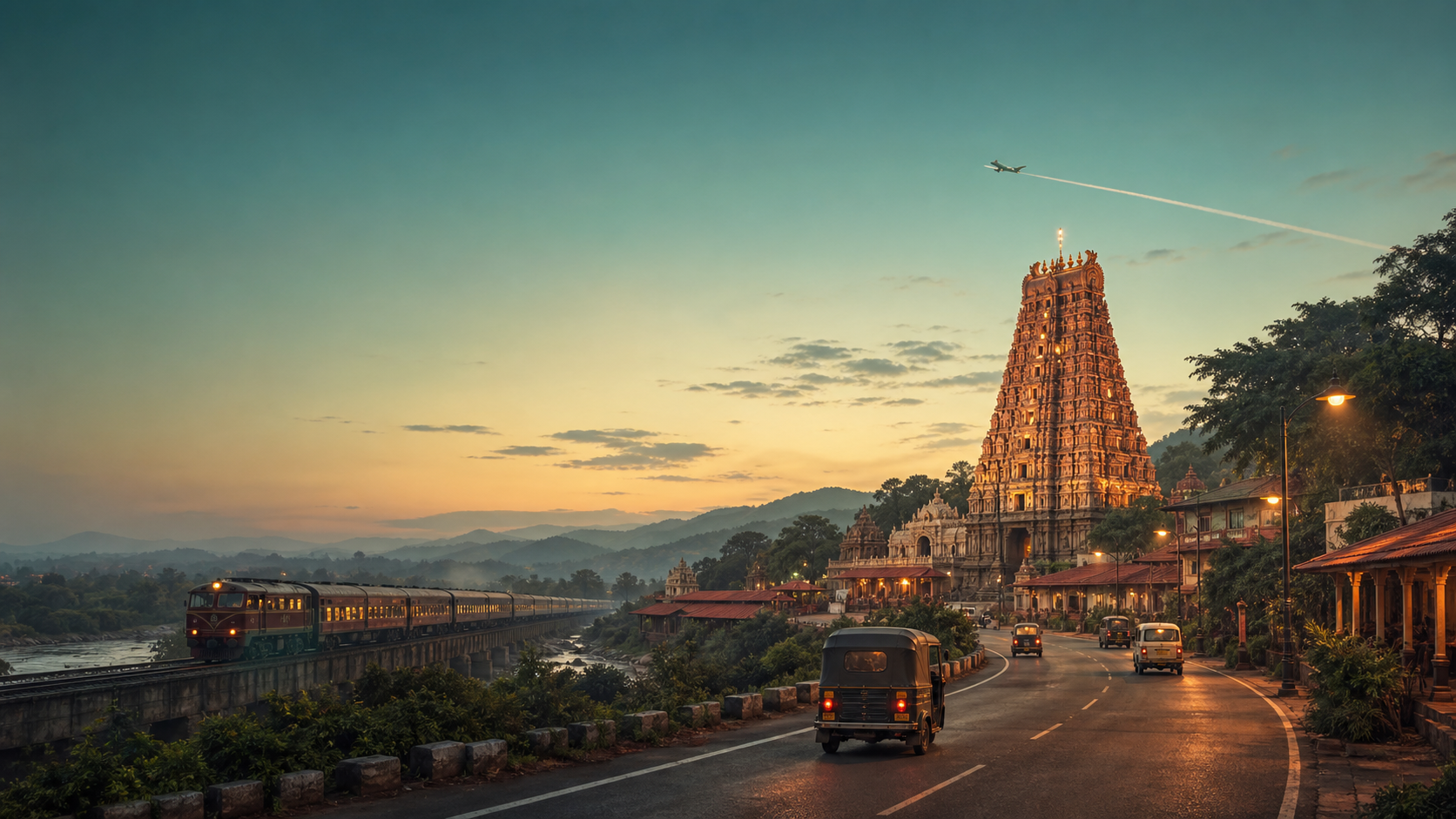
A complete pilgrim record drawn from the existing published article data.
Tracing the Ancient Roots: History of Srikalahasteeswara
The Srikalahasteeswara Temple boasts a rich history, established in the 5th century CE. Its architectural grandeur was significantly shaped by powerful South Indian dynasties, solidifying its place in the region's spiritual heritage. Major construction and renovations occurred throughout the centuries, transforming it into the monumental complex seen today. The temple is also a revered Paadal Petra Sthalam, sanctified by the hymns of the Nayanar saints, further cementing its ancient spiritual lineage.
Chola Dynasty Contributions
The 11th century CE marked a period of extensive development under the Chola Dynasty. Rajendra Chola I contributed to the main structure, while Kulottunga Chola I added gopurams, enhancing the temple's imposing silhouette.
Krishnadevaraya's Legacy
In 1516 CE, the Vijayanagara emperor Krishnadevaraya commissioned the magnificent 120-foot rajagopuram, a towering gateway that remains a prominent feature of the temple complex.
Architectural Grandeur: Engineering Devotion at Srikalahasti
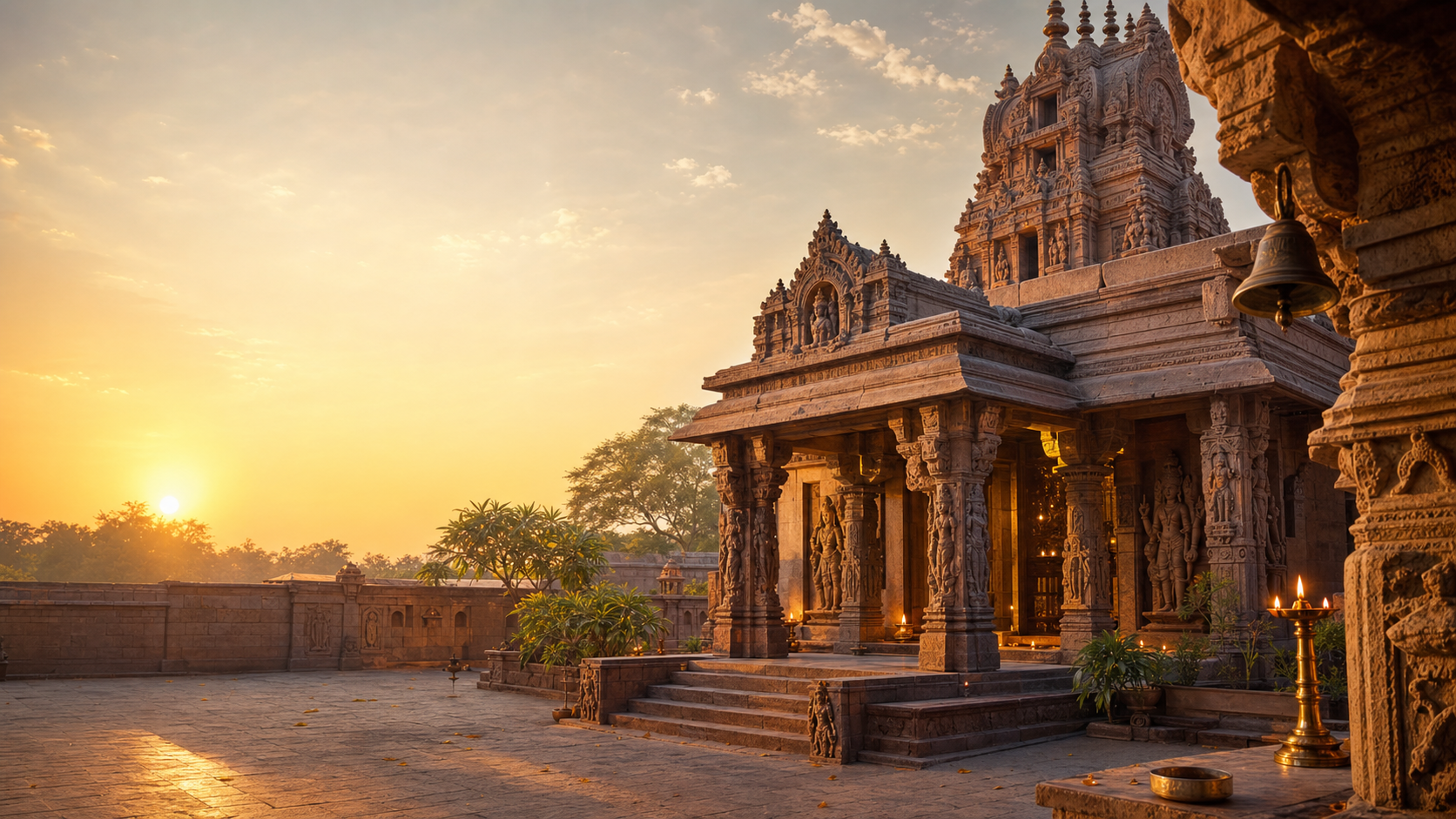
The Srikalahasteeswara Temple is a prime example of Dravidian architecture, showcasing centuries of devotion and sophisticated engineering. Constructed primarily from granite and stone, its design reflects the artistic and religious fervor of various dynasties. The temple's layout and intricate carvings are not merely decorative but serve to enhance the spiritual experience, particularly in its unique design around the Vayu Lingam, where the flame of a lamp flickers without direct air currents, indicating the presence of Vayu.
Dravidian Style
The temple exemplifies the classic Dravidian architectural style, characterized by its towering gopurams, spacious courtyards, and elaborate sculptural details, reflecting the aesthetic sensibilities of its builders.
Monumental Gopurams
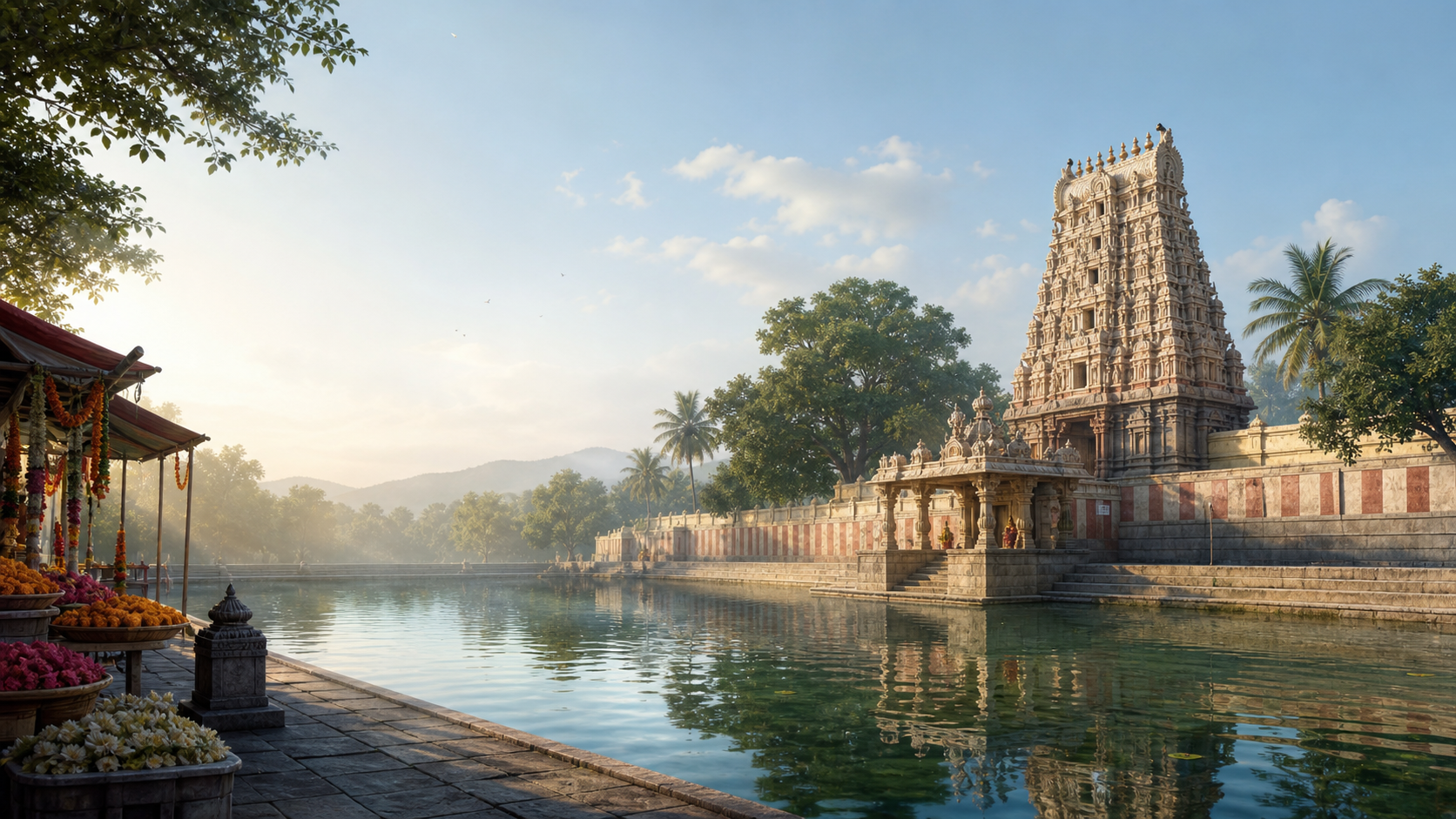
The temple features several gopurams, most notably the 120-foot rajagopuram built by Krishnadevaraya, which serves as a majestic entrance and a testament to the scale of devotion.
Lord Kalahasti: The Vayu Lingam and Eclipse Mysteries
At the heart of Srikalahasteeswara Temple lies the revered Vayu Lingam, embodying the element of wind and central to captivating legends. This unique form of Shiva is one of the Pancha Bhoota Sthalas. According to legend, Lord Vayu performed severe penance, leading Shiva to manifest as the Vayu Lingam, eternally representing His omnipresent breath. The temple is also a significant Rahu-Ketu kshetra, known for unique spiritual practices, especially concerning eclipses. The Rahu-Ketu Pooja is a prominent ritual performed here to mitigate astrological afflictions.
The Vayu Lingam Legend
The 'Vayu Lingam' legend describes Lord Vayu's penance and Shiva's blessing, establishing the camphor lingam as an embodiment of wind. The visible movement of lamps in the sanctum without direct airflow attests to Vayu's eternal presence.
Rahu-Ketu Kshetra
As a prominent Rahu-Ketu kshetra, the temple offers specific rituals, particularly the Rahu-Ketu Pooja, performed to appease these planetary deities and alleviate their perceived negative astrological influences, especially during eclipse periods.
Experiencing Srikalahasti: A Visitor's Guide
A visit to Srikalahasteeswara Temple offers a profound spiritual journey, requiring practical planning to fully experience its sacred rituals and historical grandeur. The temple is easily accessible by various modes of transport, with good connectivity to major cities. Visitors are encouraged to observe the dress code and plan their visit during the winter months for the most comfortable experience. Special darshan tickets are available for those seeking expedited entry, while the temple complex itself offers free entry.
Travel and Accessibility
Srikalahasti is well-connected by bus, train (Sri Kalahasti Railway Station, 3 km), and flight (Tirupati Airport, 18 km). NH 71 provides easy road access, with parking available near the temple.
Visiting Etiquette
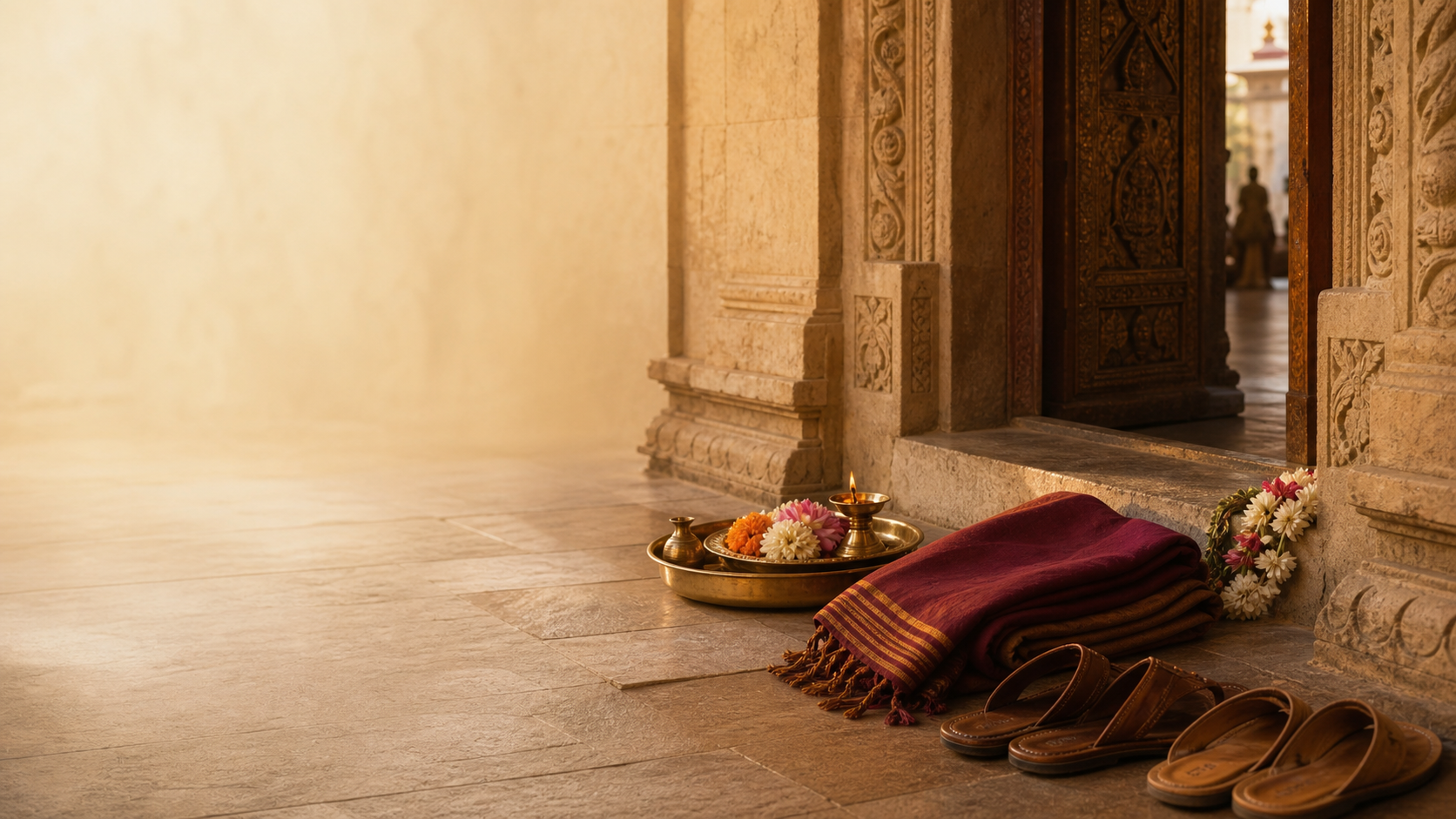
Traditional attire is encouraged, and footwear must be removed before entering. Photography is restricted within the sanctum. The best time to visit is during winter (October–February), with Maha Shivaratri (February–March) being a peak festival period.
| Deity | Shiva |
|---|---|
| Form | Vayu Lingam, a camphor-solidified stone lingam embodying the wind element, with iconography depicting a spider, elephant, and snake. |
| Consort | Gnana Prasunambika Devi |
| Sampradaya | Shaiva |
| Significance | Srikalahasteeswara Temple is unique as the only temple in India housing the Vayu Lingam, representing the wind element among the Pancha Bhoota Sthalas. It's also significant for remaining open during solar and lunar eclipses and for its association with Rahu-Ketu dosha remedies. |
Kannappa's Unyielding Devotion
The humble hunter Kannappa worshipped the Lingam with pure, innocent devotion. When he saw blood flowing from the Lingam's eye, he immediately plucked out his own eye to replace it. As the second eye of the Lingam began to bleed, Kannappa prepared to sacrifice his remaining eye. Moved by this ultimate act of selflessness, Lord Shiva appeared, stopping Kannappa and granting him salvation, forever honoring his profound dedication.
Feel the divine breath of Shiva manifest as the Vayu Lingam, a unique embodiment of the cosmic wind element.
A temple where devotion transcends all, even remaining open when the sun and moon are veiled by eclipse.
Related temples: Akkanna Madanna Caves | Balaji Temple, Ketkawla
Srikalahasteeswara Temple: A Gateway to Vayu's Grace
Srikalahasteeswara Temple stands as a unique spiritual beacon, profoundly connected to the element of Vayu, the wind god. It is revered as one of the Pancha Bhoota Sthalas, representing Vayu Bhoota, the cosmic force of air. This ancient shrine is also known as Dakshina Kailasam and is a significant Rahu-Ketu kshetra, offering solace for planetary afflictions. Its extraordinary role during eclipses, when other temples may close, underscores its unique spiritual power and significance in Hindu tradition.
The Vayu Lingam
The temple's central deity is Lord Shiva, manifested as the Vayu Lingam. This sacred form embodies the wind element, a testament to Lord Vayu's ancient penance and Lord Shiva's blessing.
Eclipse Significance
Srikalahasteeswara Temple remains open during solar and lunar eclipses, a rare practice. Devotees believe performing rituals here during these periods can mitigate the malefic effects of Rahu and Ketu, the shadow planets.
Modern Pilgrimage
The Srikalahasteeswara Temple continues to be a vibrant center of devotion, attracting thousands of pilgrims daily in the modern era. Unlike ancient times, today's devotees benefit from excellent connectivity, with well-maintained road networks, a nearby railway station (Srikalahasti), and proximity to Tirupati Airport making the journey relatively convenient. Upon arrival, pilgrims find a range of amenities, from budget guesthouses to more comfortable hotels, alongside numerous eateries offering traditional South Indian fare. The temple complex itself is equipped with facilities to manage large crowds, yet it retains an undeniable spiritual aura, where ancient rituals like Rahu-Ketu Sarpa Dosha puja are performed with unwavering faith, blending seamlessly with the contemporary hustle and bustle, ensuring a profound spiritual experience for all who visit. However, the surge in modern pilgrimage also presents significant challenges for the temple administration and the surrounding town. Managing the ever-increasing footfall, especially during auspicious days and festivals, requires robust crowd control measures, efficient queue management systems, and enhanced sanitation facilities to maintain hygiene and devotee comfort. In response, the temple authorities have implemented various developmental projects, including improved infrastructure, online booking options for specific pujas, and better security arrangements. This influx of visitors also fuels the local economy, supporting countless small businesses and service providers. Despite these modern pressures and adaptations, Srikalahasteeswara Temple steadfastly upholds its ancient traditions, ensuring its continued relevance as a crucial spiritual landmark for generations to come.🗺 How to Reach
Hover a card to animate the journey on the map
Route to Srikalahasti
Common Questions
Where is Srikalahasteeswara Temple: Abode of Vayu Lingam located?
Srikalahasteeswara Temple: Abode of Vayu Lingam is documented at Srikalahasti, Andhra Pradesh.
Which deity is associated with Srikalahasteeswara Temple: Abode of Vayu Lingam?
Srikalahasteeswara Temple: Abode of Vayu Lingam is associated with Kalahasti.
Related Temples
A Living Covenant