



A complete pilgrim record drawn from the existing published article data.
From Ancient Cave to Modern Marvel: The Temple's Enduring History
The history of Sri Lakshmi Narasimha Swamy Temple at Yadagirigutta spans millennia, rooted in ancient scriptures. References in the Skanda Purana attest to its venerable age, highlighting its mythical origins as the site of sage Yada's penance. The original cave temple, housing the five forms of Narasimha, dates back to antiquity. Even in the pre-independence era, the Nizam of Hyderabad, Mir Osman Ali Khan, recognized its sanctity with a significant grant. More recently, between 2016 and 2022, the temple underwent a monumental reconstruction project initiated by Chief Minister K. Chandrasekhar Rao. This ₹1800 crore endeavor transformed the complex into a state-of-the-art spiritual center, making it one of India's most expensive temple renovations.
Mythical Origins and Ancient Roots
The temple's origins are deeply embedded in the Skanda Purana, detailing the penance of Yada and the divine appearance of Narasimha in five forms within the natural cave.
The Grand Reconstruction Project
A massive renovation from 2016 to 2022, led by Chief Minister K. Chandrasekhar Rao, revitalized the temple complex with traditional techniques and modern amenities, costing an estimated ₹1800 crore.
Crafting Divinity: The Unique Architecture of Yadagirigutta
The architecture of Sri Lakshmi Narasimha Swamy Temple is a splendid example of Dravidian style, meticulously crafted during its recent reconstruction. A distinctive feature is the extensive use of Krishna Sila (black granite), sourced for its durability and aesthetic appeal. Traditional building techniques, including lime mortar, were employed for longevity and authenticity. At its heart lies the ancient natural cave, uniquely housing the five divine forms of Narasimha, serving as the sanctum sanctorum. Intricate sculptural details, depicting deities, mythological scenes, and the 12 Alvars, adorn the pillars and walls, reflecting a rich artistic heritage. The temple is recognized as a state-protected site under the Telangana government, preserving its cultural and architectural significance.
Dravidian Grandeur and Materiality
The temple showcases classic Dravidian architectural elements, primarily constructed using Krishna Sila (black granite) and traditional lime mortar during its extensive renovation.
The Sacred Cave Sanctuary
Central to the temple's design is the ancient natural cave, which serves as the primary shrine for the five unique forms of Lord Narasimha.
Intricate Sculptural Narratives
The complex features detailed carvings and sculptures, depicting mythological tales and Vaishnava saints, integral to its aesthetic and spiritual narrative.
The Divine Protector: Unveiling the Mythology of Lord Narasimha
Lord Narasimha, the fierce lion-man avatar of Vishnu, holds profound spiritual significance as a divine protector. At Yadagirigutta, this is amplified by the unique presence of his five distinct forms—Jvala, Gandabherunda, Yogananda, Ugra, and Lakshmi Narasimha—enshrined within the sacred natural cave. The temple's mythology, narrated in the Skanda Purana, revolves around the penance of sage Yada, whose unwavering devotion led to Narasimha manifesting in these five forms. Yada's wish for the forms to remain eternally on the hill for devotee welfare was granted. This makes Yadagirigutta a revered Pancha Narasimha Kshetram and Rishi Aradhana Kshetram, where the Lord is believed to grant wishes and offer protection to those who seek refuge.
The Legend of Sage Yada
The temple's foundation myth involves sage Yada's rigorous penance on the hill, leading to Lord Narasimha's appearance in five forms.
The Five Sacred Manifestations
Yadagirigutta is unique for housing Jvala, Gandabherunda, Yogananda, Ugra, and Lakshmi Narasimha within its ancient cave, each revered for specific attributes.
Narasimha as Protector
The deity is worshipped as a powerful protector, with devotees believing that sincere prayers at this sacred site are granted and obstacles overcome.
Planning Your Pilgrimage: A Visitor's Guide to Yadagirigutta
Preparing for a pilgrimage to Sri Lakshmi Narasimha Swamy Temple involves understanding practical aspects for a fulfilling spiritual journey. The temple is easily accessible, approximately 60-70 km from Hyderabad, with regular bus services and a railway station at Yadadri 5 km away. The best time to visit is from October to March for pleasant weather. Visitors should adhere to the traditional dress code: dhoti/veshti for men and saree/salwar kameez for women, with footwear removed. While a 3-4 hour visit covers the main darshan, a full day is recommended to explore the expansive complex. Ample parking is available for those traveling by car.
Getting There
Yadagirigutta is well-connected by road from Hyderabad (60-70 km), with buses and a railway station (Yadadri, 5 km) providing convenient access.
Best Time to Visit and Dress Code
The ideal period for a pilgrimage is October to March. A traditional dress code (dhoti/veshti for men, saree/salwar kameez for women) is required, and footwear must be removed.
Duration of Visit
While a basic darshan can be completed in 3-4 hours, allocating a full day is recommended to fully experience the temple complex.
| Deity | Narasimha |
|---|---|
| Form | The main shrine houses Lakshmi Narasimha as a silver icon, alongside Jvala, Gandabherunda, Yogananda, and Ugra Narasimha. These five distinct forms are uniquely enshrined together within a single cave sanctum. |
| Consort | Lakshmi |
| Sampradaya | Vaishnava |
| Significance | According to the Skanda Purana, Narasimha manifested in five fierce and benevolent forms to the sage Yada after his intense penance. The deity's permanent presence on the hill makes it a revered Pancha Narasimha Kshetram. |
The Penance of Yada and the Five Divine Forms
Deep within the sacred pages of the Skanda Purana lies the tale of Yada, the pious son of the great sage Rishyasringa. Driven by an unyielding devotion, Yada undertook rigorous penance upon this very hillock, his heart yearning for a glimpse of Lord Narasimha. So profound was his dedication that the fierce yet benevolent lion-man avatar appeared before him, not in one form, but in five awe-inspiring manifestations. From a horizontal rock fissure emerged the majestic Gandabherunda Narasimha, while Jvala Narasimha revealed himself in a radiant serpent form. Overwhelmed with divine grace, Yada humbly requested that these sacred forms remain eternally on the hill, granting solace and blessings to all who sought them. Thus, all five forms of Narasimha – Jvala, Gandabherunda, Yogananda, Ugra, and Lakshmi Narasimha – became enshrined within the natural cave, making this a unique abode where a sincere devotee’s wish is believed to be fulfilled.
Where devotion manifests in five divine forms, the sacred hill of Yadagirigutta stands as a testament to Lord Narasimha's eternal presence.
Seek solace and blessings where a sage's penance was answered by the unique manifestation of the fierce yet benevolent lion-man avatar.
Related temples: Akkanna Madanna Caves | Balaji Temple, Ketkawla
The Resplendent Abode of Narasimha: Yadagirigutta
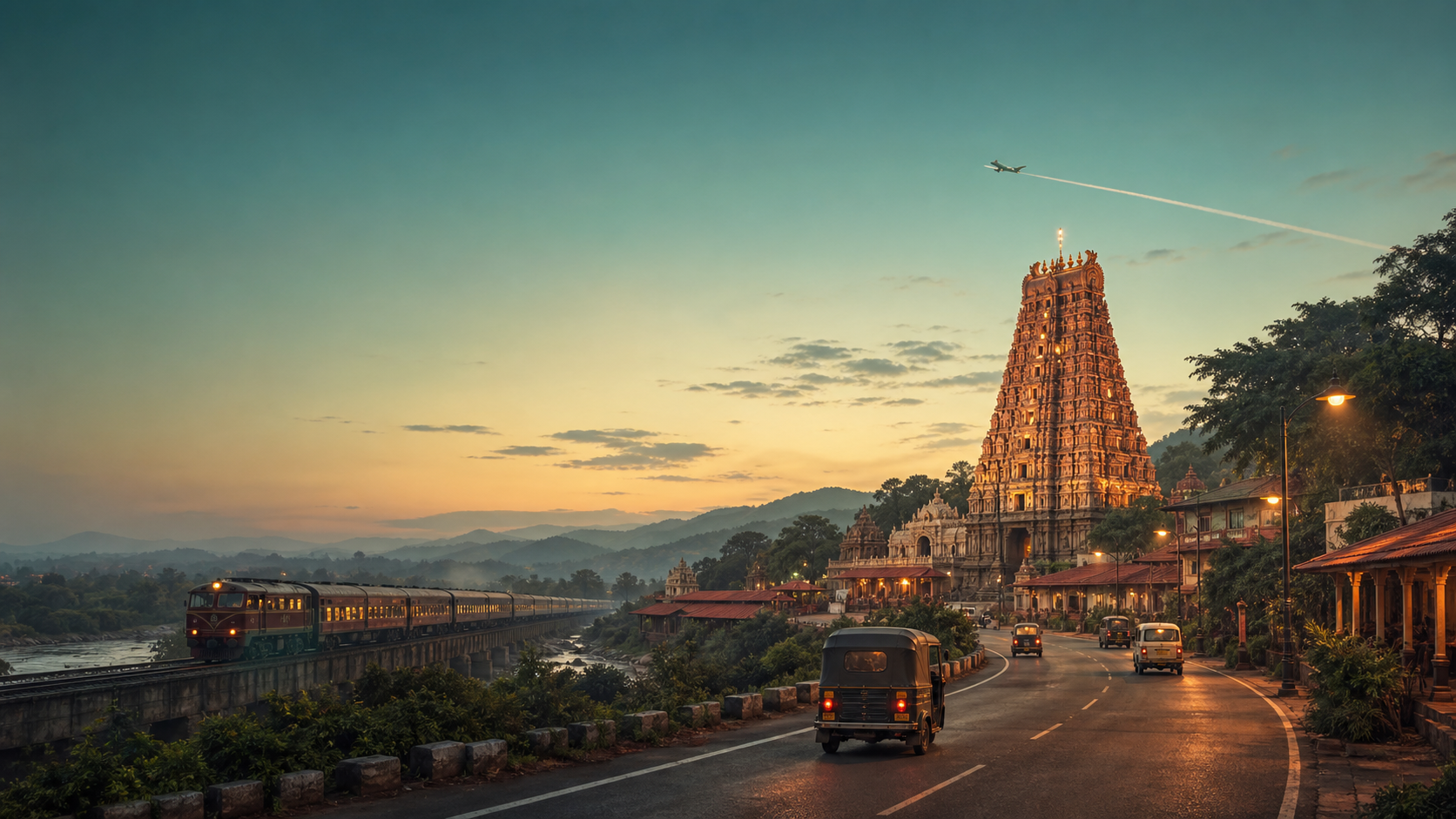
Sri Lakshmi Narasimha Swamy Temple at Yadagirigutta, Telangana, stands as a testament to spiritual grandeur and architectural prowess. This significant pilgrimage site is renowned for housing unique forms of the deity Narasimha within its ancient cave. Following a monumental reconstruction from 2016 to 2022, the temple complex has been transformed, blending traditional Dravidian architecture with modern infrastructure. It serves as a revered center for Vaishnava tradition, attracting devotees seeking the blessings of Lord Narasimha.
A Sacred Pilgrimage Destination
Located in Yadagirigutta, this temple is a prominent destination for devotees of Lord Narasimha, celebrated for its spiritual vibrations and the unique manifestation of the deity.
Architectural Renaissance
The recent major reconstruction, completed in 2022, has revitalized the temple, showcasing intricate Dravidian architecture and expansive facilities while preserving its ancient core.
Modern Pilgrimage
Yadagirigutta, now officially Yadadri, has undergone significant transformation to cater to the burgeoning number of modern pilgrims. The extensive redevelopment project initiated by the Telangana government has drastically improved infrastructure, making the temple complex more accessible and comfortable for visitors from across India and abroad. New, wider roads connect the temple town to major highways, reducing travel time and enhancing convenience for those arriving by car or bus. Furthermore, the establishment of dedicated bus services from Hyderabad and other major cities ensures a smooth journey for devotees. The temple administration has also focused on providing ample parking facilities, modern sanitation blocks, and improved queuing systems, all designed to manage large crowds efficiently, especially during auspicious days and festivals. These enhancements reflect a conscious effort to blend traditional reverence with contemporary logistical needs, ensuring a seamless spiritual experience for every visitor.
Beyond physical infrastructure, the Sri Lakshmi Narasimha Swamy Temple has embraced digital advancements to serve its modern devotees. The temple's official website and associated mobile applications offer a range of online services, including booking for special pujas, arjitha sevas, and even accommodation within the temple's guesthouses. This digital presence allows pilgrims to plan their visit meticulously from afar, avoiding long queues and ensuring a more organized experience. Furthermore, the temple complex now features modern amenities such as dedicated food courts offering hygienic prasad and meals, souvenir shops, and information centers equipped with digital displays. These facilities cater to the diverse needs of contemporary pilgrims, who often seek a blend of spiritual fulfillment and comfortable travel. The integration of technology and modern conveniences ensures that the ancient tradition of pilgrimage remains vibrant and accessible to a new generation of devotees.
🗺 How to Reach
Hover a card to animate the journey on the map
Route to Temple
Common Questions
Where is Sri Lakshmi Narasimha Swamy Temple: Ancient Abode of Narasimha located?
Sri Lakshmi Narasimha Swamy Temple: Ancient Abode of Narasimha is documented at Yadagirigutta, Telangana.
Which deity is associated with Sri Lakshmi Narasimha Swamy Temple: Ancient Abode of Narasimha?
Sri Lakshmi Narasimha Swamy Temple: Ancient Abode of Narasimha is associated with Narasimha.
Related Temples

A Living Covenant