



A complete pilgrim record drawn from the existing published article data.
A Legacy Reborn: The History of Yadadri Temple
The Yadadri temple's history spans from ancient lore to a grand modern revival. Its heritage is rooted in the Skanda Purana, which records the legend of sage Yada and the manifestation of Pancha Narasimha in ancient times. The temple honors the contributions of the 12 Alvars, Vaishnava poet-saints active between the 6th and 9th centuries CE. A significant renovation and expansion project, initiated in 2016 under the leadership of K. Chandrasekhar Rao, the Chief Minister of Telangana, culminated in March 2022, revitalizing its spiritual and architectural grandeur.
Ancient Origins and Lore
The temple's antiquity is established by its mention in the Skanda Purana, detailing the legend of Yada's penance and the five manifestations of Narasimha.
Alvars' Enduring Influence
The temple commemorates the 12 Alvars, whose Vaishnava hymns and philosophies are integral to the temple's spiritual ethos, with pillar sculptures in the main temple.
The Grand Renovation
A major renovation project, spanning from 2016 to 2022, meticulously rebuilt and expanded the temple complex, preserving its traditional essence while enhancing its facilities.
Architectural Marvel: The Craftsmanship of Yadadri
The Sri Lakshmi Narasimha Swamy Temple at Yadadri exemplifies Dravidian Architecture, incorporating the robust traditions of Kakatiya-era black granite craftsmanship. The entire structure is predominantly built using Krishna Sila, a type of black granite, giving it a distinctive and durable aesthetic. The renovation between 2016 and 2022 meticulously employed traditional construction techniques, including the use of lime mortar, to ensure longevity and authenticity. This intricate artistry, overseen by the state government, defines its grand structure.
Dravidian and Kakatiya Influences
The temple's architectural style is a harmonious blend of traditional Dravidian design principles with specific elements and techniques reminiscent of the Kakatiya period.
Krishna Sila Construction
The primary construction material is Krishna Sila, a durable black granite, which contributes significantly to the temple's imposing and intricate sculptural details.
Traditional Building Techniques
The recent renovation emphasized the revival of traditional building methods, including the use of lime mortar, ensuring structural integrity and historical accuracy.
Plan Your Pilgrimage: Visiting Sri Lakshmi Narasimha Swamy Temple
Planning a visit to Sri Lakshmi Narasimha Swamy Temple in Yadadri, Andhra Pradesh, offers a fulfilling spiritual experience. The best time to visit is from October to March, when the weather is cool, with peak pilgrim numbers during Chaitra Navaratri and Narasimha Jayanti. A modest dress code is enforced, with traditional attire preferred, and footwear must be removed. Visitors can expect to spend 4–6 hours, including darshan, a bath in Vishnu Gundam, and exploring the temple complex.
Transportation and Accessibility
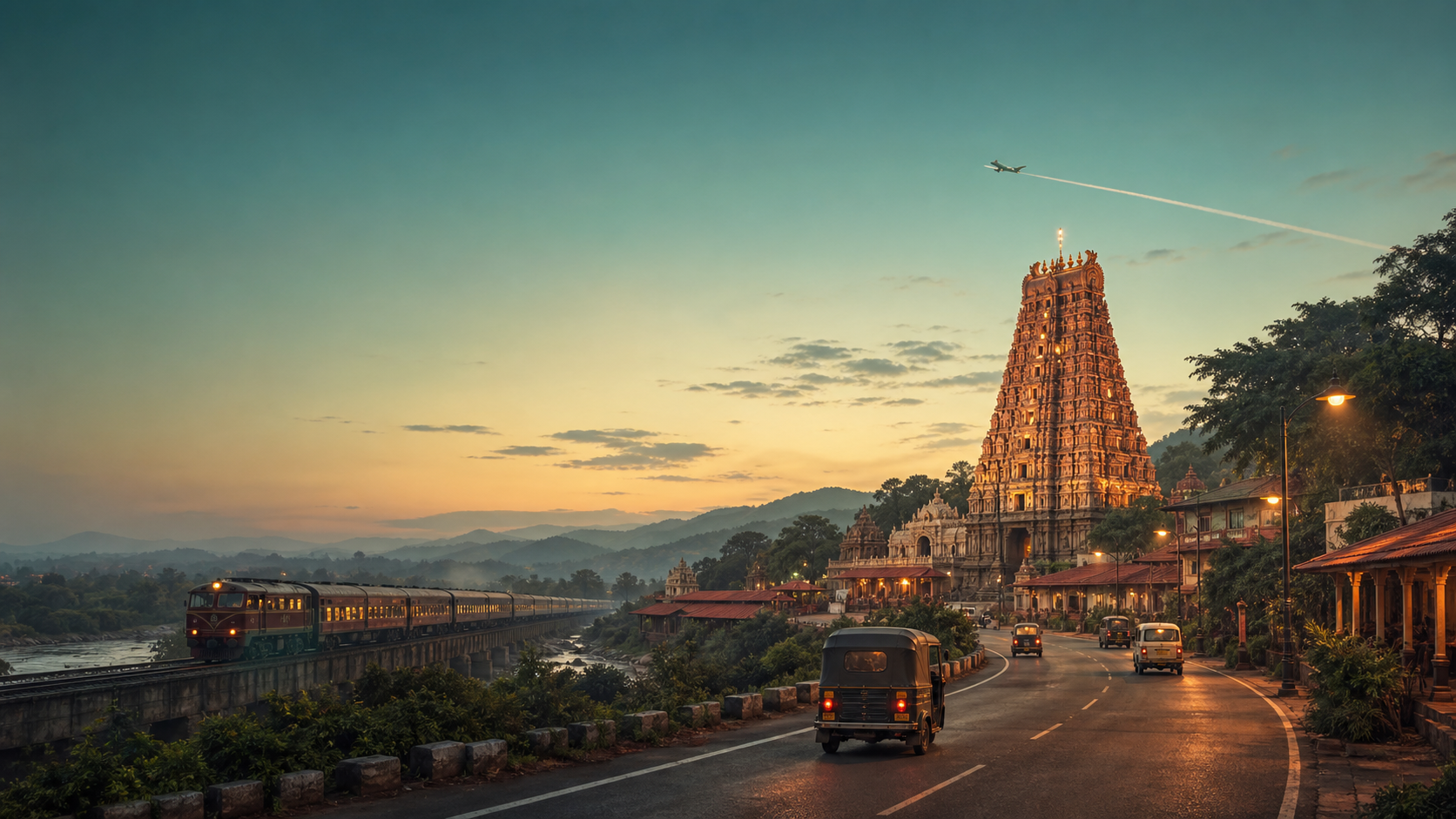
Yadadri is approximately 60 km from Hyderabad, accessible via regular buses, or by train to Yadadri (YADD) railway station (5 km away). Rajiv Gandhi International Airport (HYD) is 65 km away, and the temple is near NH 163 for car travel.
Best Time to Visit and Timings
The period from October to March offers pleasant weather. The temple also experiences high devotional fervor during festivals like Chaitra Navaratri and Narasimha Jayanti. Contact the temple office for current darshan and entry timings.
Visitor Guidelines and Duration
A modest dress code is required, prohibiting shorts and sleeveless tops. Traditional attire is encouraged. Visitors should plan for a 4–6 hour duration to fully experience the temple, including darshan and exploration.
| Deity | Narasimha |
|---|---|
| Form | Narasimha is primarily worshipped as Lakshmi Narasimha, represented by a silver icon in the main shrine. Uniquely, the temple also houses five forms of Narasimha (Pancha Narasimha) in a natural cave, including Jvala Narasimha in serpent form and Yogananda Narasimha in a meditating pose. |
| Consort | Lakshmi |
| Sampradaya | Vaishnava |
| Significance | Narasimha manifested in five forms on this hillock in response to the penance of sage Yada, making it a Pancha Narasimha Kshetram. It is believed that visiting this temple fulfills sincere devotees' wishes. |
The Penance of Yada and the Pancha Narasimha
High upon these sacred hills, the devout sage Yada, son of Rishyasringa, undertook a profound penance, his heart yearning for a vision of Lord Narasimha. So intense was his devotion that the fierce lion-man avatar, pleased by Yada's unwavering resolve, manifested before him not in one, but in five glorious forms: Jvala, Gandabherunda, Yogananda, Ugra, and Lakshmi Narasimha. Among these, the awe-inspiring Gandabherunda Narasimha emerged majestically from a unique horizontal fissure within the rock below the Hanuman shrine. Overwhelmed, Yada implored the Lord to forever reside in these divine forms on the hill, blessing future generations. Thus, within a natural cave, these Pancha Narasimha forms became eternally enshrined, making Yadadri the only temple where all five can be worshipped together, a testament to Yada's devotion and the Lord's boundless grace, as recounted in the Skanda Purana.
Witness the divine manifestation of Lord Narasimha in five glorious forms, a unique spiritual experience found nowhere else.
May the Pancha Narasimha bless all who visit this sacred hill, fulfilling their sincere wishes and granting boundless grace.
Related temples: Akkanna Madanna Caves | Balaji Temple, Ketkawla
Introduction to Sri Lakshmi Narasimha Swamy Temple, Yadadri
The Sri Lakshmi Narasimha Swamy Temple at Yadadri, located in Andhra Pradesh, stands as a testament to profound spiritual devotion and monumental modern architecture. Consecrated between 2016 and March 2022, this Vaishnava tradition temple is dedicated to the god Narasimha. Its design, rooted in Dravidian Architecture, integrates traditional Kakatiya-era black granite techniques, utilizing Krishna Sila. This grand complex, a significant pilgrimage site, embodies both ancient heritage and contemporary craftsmanship.
Spiritual Significance
Dedicated to Lord Narasimha, the temple holds deep spiritual importance within the Vaishnava tradition, drawing devotees seeking blessings from the lion-man avatar.
A Modern Architectural Marvel
The temple's extensive renovation and expansion, completed in March 2022, transformed it into a monumental complex showcasing a blend of traditional Dravidian and Kakatiya architectural styles.
The Divine Protector: Lord Narasimha and Yadadri's Sacred Lore
Yadadri is profoundly sanctified by the unique enshrinement of Lord Narasimha, the presiding deity. According to the Skanda Purana, the devout sage Yada's intense penance led Lord Narasimha to manifest in five distinct forms: Jvala, Gandabherunda, Yogananda, Ugra, and Lakshmi Narasimha. These Pancha Narasimha forms are eternally enshrined within a natural cave on the hill, making Yadadri the sole temple where all five manifestations can be worshipped together, a testament to divine grace and Yada's unwavering devotion.
The Penance of Yada
Sage Yada, son of Rishyasringa, performed rigorous penance on the hills, seeking a vision of Lord Narasimha, which led to the deity's unique five-fold manifestation.
The Pancha Narasimha Manifestations
Lord Narasimha appeared in five forms: Jvala, Gandabherunda, Yogananda, Ugra, and Lakshmi Narasimha, with Gandabherunda emerging from a horizontal fissure, all enshrined within a natural cave.
A Unique Enshrinement
Yadadri is distinguished as the only temple where all five forms of Narasimha are present and worshipped collectively, as recounted in the ancient Skanda Purana.
Restoration & Conservation
The Sri Lakshmi Narasimha Swamy Temple at Yadadri underwent an unprecedented, multi-year renovation and expansion project, transforming it into a magnificent spiritual marvel. Initiated with a vision to restore its ancient glory and accommodate the growing number of devotees, the project meticulously adhered to traditional temple architectural principles, primarily drawing inspiration from Kakatiyan, Chola, and Chalukyan styles. Thousands of skilled sculptors and artisans were engaged, meticulously carving intricate designs from over 2.5 lakh tonnes of Krishna Sila (black granite) brought from various parts of the state. This ambitious undertaking, costing hundreds of crores, aimed to preserve the sanctity of the original cave shrine while constructing a sprawling new complex around it, ensuring that the temple's spiritual essence remained untouched amidst the grand transformation.
The extensive restoration has significantly enhanced the temple's grandeur, capacity, and overall pilgrim experience, solidifying its status as a premier pilgrimage destination. Beyond the aesthetic enhancements, the project included substantial improvements to infrastructure, such as modern queue complexes, expanded darshan areas, improved sanitation facilities, and enhanced security measures. This blend of ancient spiritual tradition with contemporary amenities ensures a comfortable and spiritually enriching visit for millions. The meticulous conservation efforts serve as a testament to the dedication of the authorities and artisans, setting a new benchmark for temple development in India. The revitalized Yadadri temple now stands as a beacon of faith, poised to inspire future generations and continue its legacy as a revered abode of Lord Narasimha.
🗺 How to Reach
Hover a card to animate the journey on the map
Route to Temple
Common Questions
Where is Yadadri Narasimha Temple: Divine Hilltop Abode of Pancha located?
Yadadri Narasimha Temple: Divine Hilltop Abode of Pancha is documented at Yadadri, Telangana.
Which deity is associated with Yadadri Narasimha Temple: Divine Hilltop Abode of Pancha?
Yadadri Narasimha Temple: Divine Hilltop Abode of Pancha is associated with Narasimha.
Related Temples

A Living Covenant