



A complete pilgrim record drawn from the existing published article data.
The Genesis of a Divine Abode: Swaminarayan's Personal Touch
Established by Bhagwan Swaminarayan between 1826 and 1828 CE, the Shri Swaminarayan Mandir in Junagadh holds a unique distinction. It is one of the first five original temples of the Swaminarayan Sampradaya, where the deities were personally installed by the founder himself. This direct involvement began with the divine command for its construction, on land thoughtfully donated by King Hemantsinh of Panchala. The temple's completion and consecration on May 1, 1828, by Swaminarayan Bhagwan solidified its sacred status, marking it as a direct manifestation of his spiritual mission and a profound spiritual center for devotees.
Founding Vision
Bhagwan Swaminarayan envisioned and ordered the construction of this mandir, with the foundation stone laid on May 10, 1826. This initiative was part of his broader mission to establish centers of devotion.
Personal Consecration
On May 1, 1828, Swaminarayan Bhagwan personally performed the Prana Pratishtha, installing the principal deities with his own divine hands, an act that imbued the temple with unparalleled spiritual power.
Early Sampradaya Center
The Junagadh Mandir stands as one of the initial five temples established and consecrated directly by Swaminarayan, making it a foundational and historically significant site for the Swaminarayan Sampradaya.
A Testament in Stone: The Mandir's Architectural Design
The Shri Swaminarayan Mandir in Junagadh is a remarkable testament to traditional Hindu temple architecture, primarily showcasing the Maru-Gurjara style. Its design features a blend of intricate carvings, vibrant frescoes, and a majestic structure that beautifully reflects the devotion and craftsmanship of its era. Constructed from stone, lime mortar, and wood between 1826 and 1828 CE, the temple's robust and aesthetically rich form provides a serene and inspiring backdrop for worship. The detailed artistry throughout the complex tells stories of faith and tradition, inviting admiration from all who visit.
Maru-Gurjara Influence
The temple's architectural style is predominantly Maru-Gurjara, characterized by its elaborate ornamentation, multi-storied structures, and distinct shikhara (spire) designs.
Intricate Craftsmanship
The mandir boasts intricate carvings on its pillars, walls, and ceilings, alongside vibrant frescoes that depict various divine narratives and spiritual motifs, all crafted from stone, lime mortar, and wood.
Structural Grandeur
Its majestic structure, built over two years, stands as a symbol of devotion, featuring multiple domes and a grand entrance, creating an imposing yet welcoming spiritual edifice.
Divine Presences: The Consecrated Deities of Junagadh
At the heart of the Shri Swaminarayan Mandir in Junagadh lie the sacred murtis of various deities, making it a profoundly spiritual site for devotees. The main deities include Radha-Raman Dev, alongside Shri Ranchhodrai and Trikamrai. These divine forms, among others, were all personally consecrated by Bhagwan Swaminarayan himself on May 1, 1828. This direct installation by the founder imbues the idols with immense spiritual power and significance, offering a unique opportunity for devotees to connect with the divine presence that Swaminarayan established, fostering deep reverence and devotion within the temple complex.
Principal Deities
The central shrine houses Radha-Raman Dev, while other altars feature Shri Ranchhodrai and Trikamrai, and deities such as Siddheshwar Mahadev.
Swaminarayan's Consecration
Bhagwan Swaminarayan personally installed these murtis on May 1, 1828, performing the Prana Pratishtha ceremony, which is believed to infuse them with divine life and energy.
Spiritual Significance
The direct consecration by Swaminarayan makes these deities particularly sacred, drawing countless devotees who seek blessings and spiritual solace from their divine presence.
Shri Swaminarayan Mandir, Junagadh: A Spiritual Landmark
The Shri Swaminarayan Mandir in Junagadh is a pivotal spiritual center, renowned for its direct connection to Bhagwan Swaminarayan himself. Its construction, initiated between 1826 and 1828 CE on land donated by King Hemantsinh, marks it as one of the earliest and most significant establishments within the Swaminarayan Sampradaya. Swaminarayan personally consecrated the temple and installed its principal deities on May 1, 1828, imbuing it with profound spiritual power and making it a cornerstone of his spiritual legacy. This mandir serves as a beacon of devotion and a testament to divine will.
Historical Roots
The foundation stone of the mandir was laid on May 10, 1826, following the vision and command of Swaminarayan Bhagwan. Brahmanand Swami supervised its construction on land generously provided by King Hemantsinh of Panchala.
Pivotal Role
As one of the earliest temples directly established and consecrated by Swaminarayan, the Junagadh Mandir holds immense importance within the Swaminarayan Sampradaya, guiding countless devotees.
Spiritual Legacy
The temple embodies Swaminarayan's direct spiritual guidance and presence, evident in his personal installation of the deities, making it a powerful site of worship and pilgrimage.
Visiting the Sacred: A Guide to Shri Swaminarayan Mandir
Visitors to the Shri Swaminarayan Mandir in Junagadh can experience its serene atmosphere, participate in daily rituals, and explore the surrounding spiritual complex. This makes it an essential stop for pilgrims and cultural enthusiasts alike. The temple offers free entry, with timings available upon contacting the temple office. The best time to visit is from October to March for pleasant weather, ideally during festivals like Diwali and Janmashtami. Modest dress is required, and footwear must be removed before entering the sanctum. A visit typically spans 2–3 hours, offering ample time for darshan and reflection.
Visitor Experience
Guests can immerse themselves in the tranquil ambiance, witness daily pujas, and explore the intricate architecture, gaining insight into the Swaminarayan Sampradaya's rich traditions.
Practical Information
Entry is free, and the temple recommends modest attire. Footwear must be removed before entering the inner sanctum. The ideal visiting duration is 2–3 hours.
Accessibility
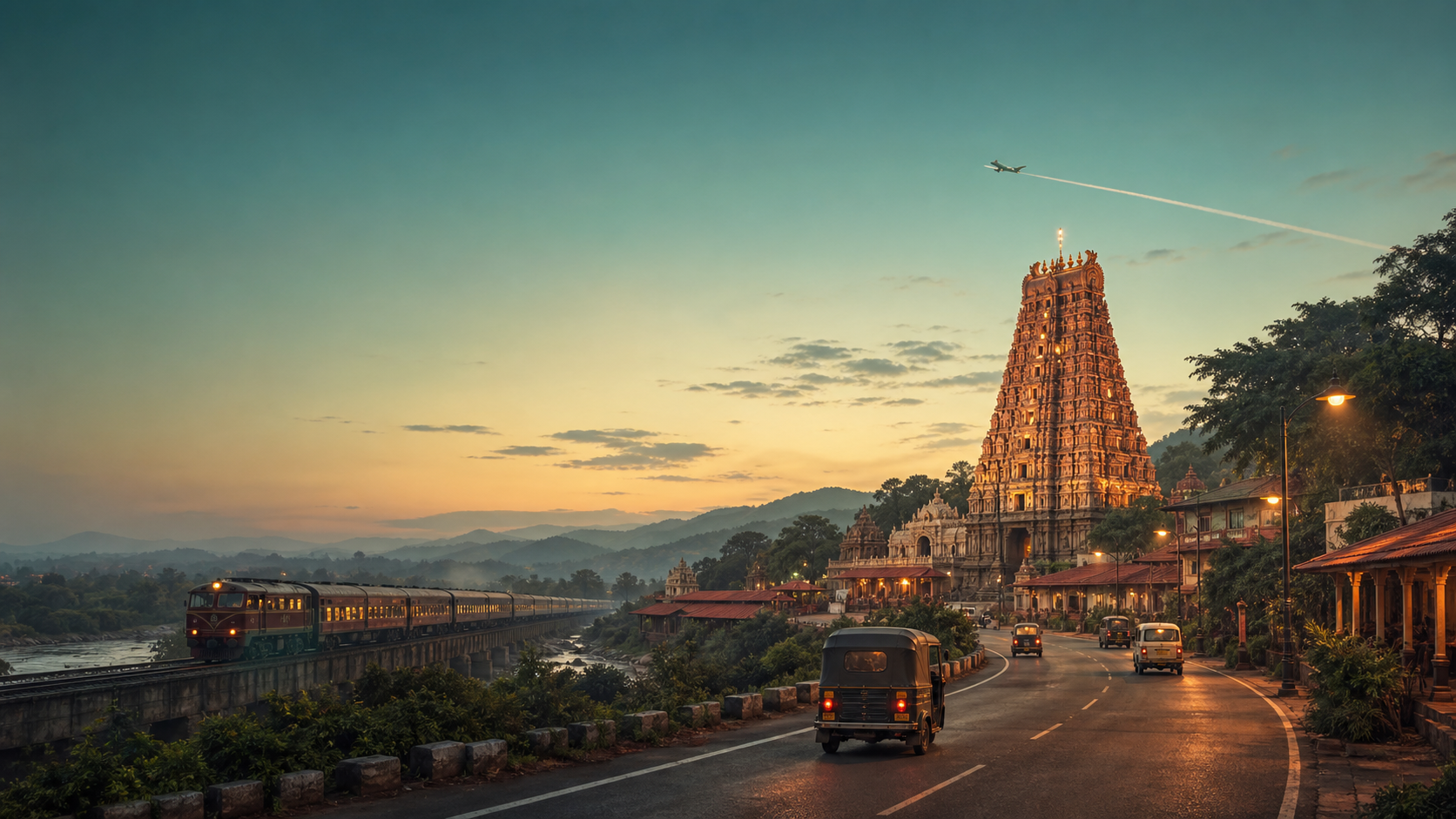
The mandir is easily accessible by local buses and auto-rickshaws from Junagadh Bus Stand and Junagadh Junction Railway Station. Rajkot Airport (100 km) serves air travelers, with taxis available. Parking is offered on-site.
| Deity | Radha Ramana |
|---|---|
| Form | Worshipped as Radharaman, this form represents Radha-Krishna in sringara rasa, embodying divine love and devotion. |
| Consort | Radha |
| Sampradaya | Swaminarayan Sampradaya |
| Significance | The temple is unique for simultaneously enshrining Vaishnava and Shaiva deities, a rare practice within the Swaminarayan tradition. Swaminarayan Bhagwan personally ordered its construction and installed the principal deities, marking it as one of the earliest and most spiritually significant temples established under his direct guidance. |
The Divine Command of Swaminarayan
Nestled at the sacred foothills of Mount Girnar, the Shri Swaminarayan Mandir in Junagadh stands as a testament to divine will. Swaminarayan Bhagwan himself envisioned and ordered its construction, a sacred task that began on land generously donated by King Hemantsinh of Panchala. On a momentous day, May 1, 1828, Swaminarayan Bhagwan personally consecrated the principal deities, installing them with his own divine hands. This act of Prana Pratishtha imbued the temple with unparalleled spiritual power, marking it as one of the earliest and most significant centers established under his direct guidance, a beacon of his profound spiritual legacy.
Here, Swaminarayan Bhagwan himself consecrated the deities, imbuing the temple with unparalleled spiritual power.
A unique sanctuary where Vaishnava and Shaiva deities are enshrined together, a testament to Swaminarayan's inclusive vision.
Related temples: Baba Balak Nath | Bahrot Caves
Cultural Impact
The Shri Swaminarayan Mandir in Junagadh has profoundly shaped the cultural fabric of the city and its surrounding regions, extending its influence far beyond its religious functions. It serves as a vibrant hub for community gatherings, fostering social cohesion through numerous festivals, celebrations, and spiritual discourses held throughout the year. The Mandir's presence has inspired local artisans, influencing traditional crafts, devotional music (bhajans), and even storytelling that often revolves around the life and teachings of Bhagwan Swaminarayan. For the residents of Junagadh, the temple is not merely a place of worship but a cherished landmark, a symbol of their heritage, and a source of immense civic pride, deeply integrating itself into the daily rhythms and collective identity of the community. Its architectural grandeur and spiritual sanctity draw people together, reinforcing shared values and traditions. Beyond its immediate locality, the Shri Swaminarayan Mandir holds significant cultural sway across Gujarat and even nationally, drawing a substantial number of pilgrims and tourists annually. This influx contributes significantly to the region's cultural tourism, boosting local economies and promoting intercultural exchange. The Mandir acts as a vital center for the preservation and propagation of the Swaminarayan Sampradaya's unique philosophical tenets, rituals, and artistic expressions. It often hosts educational programs, spiritual camps, and cultural events that introduce visitors to the rich heritage of the faith. Its distinctive architectural style, combining traditional Indian temple design with intricate carvings, has also served as an inspiration, subtly influencing contemporary religious architecture and showcasing the enduring legacy of craftsmanship in the region.🗺 How to Reach
Hover a card to animate the journey on the map
Route to Junagadh
Common Questions
Where is Shri Swaminarayan Mandir, Junagadh: Gujarat's Divine Abode located?
Shri Swaminarayan Mandir, Junagadh: Gujarat's Divine Abode is documented at Junagadh, Gujarat.
Which deity is associated with Shri Swaminarayan Mandir, Junagadh: Gujarat's Divine Abode?
Shri Swaminarayan Mandir, Junagadh: Gujarat's Divine Abode is associated with Swaminarayan.
Related Temples

A Living Covenant