



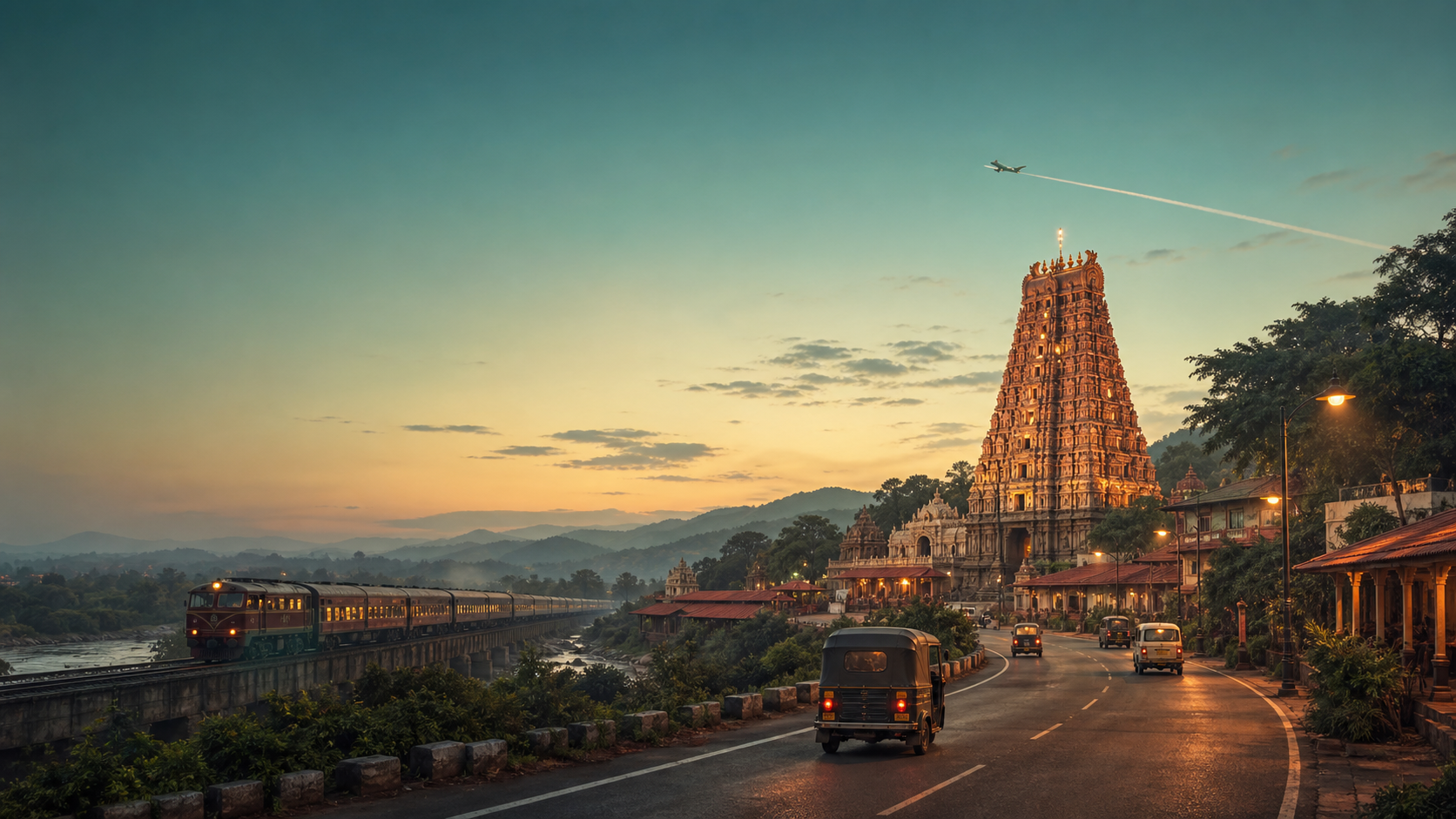
A complete pilgrim record drawn from the existing published article data.
A Glimpse into History
The historical origins of the Rasmancha of Lakshmi Janardanjiu are deeply rooted in the cultural and religious landscape of West Bengal. While precise construction dates often vary or are lost to time, such structures typically emerged during periods of significant devotional movements, particularly those centered around Vaishnavism. These festival platforms were often patronized by local rulers or affluent families, aiming to foster community engagement and celebrate religious traditions. The Rasmancha's existence points to a long-standing tradition of public religious observances in the Kharagpur area, reflecting a rich past of spiritual devotion and communal gatherings.
Period of Establishment
While specific dates are often subject to historical research, Rasmanchas generally trace their origins to medieval or early modern periods in Bengal, reflecting a strong tradition of public religious festivities and royal patronage.
Role in Local Tradition
Historically, the Rasmancha played a crucial role in bringing deities closer to the common populace during festivals, fostering a sense of community and shared religious experience that transcended social strata.
The Unique Architecture of Rasmancha
The architecture of the Rasmancha of Lakshmi Janardanjiu is notably distinct from typical temple structures. Characterized by its multi-arched design and often pyramidal or tiered roof, it is built to accommodate large gatherings for festivals. The central platform, where the deities are placed, is usually surrounded by several smaller towers or ratnas, creating an imposing yet accessible structure. Materials often include brick or laterite, common in Bengali temple architecture, sometimes adorned with terracotta panels depicting mythological scenes or floral motifs. This unique design facilitates open-air ceremonies and public darshan.
Structural Characteristics
The Rasmancha typically features a central chamber or platform, often with multiple arched openings, surmounted by a tiered or pyramidal roof. This design allows for a 360-degree view of the deities during festivals.
Material and Ornamentation
Constructed predominantly from brick, the structure might incorporate terracotta artistry, showcasing intricate carvings of deities, mythological narratives, and geometric patterns, reflecting the rich artistic traditions of Bengal.
The Deity: Lakshmi Janardanjiu
At the heart of the Rasmancha's spiritual significance lies the worship of Lakshmi Janardanjiu. Lakshmi, the consort of Vishnu, embodies prosperity, auspiciousness, and spiritual liberation. Janardanjiu, a form of Vishnu, represents the preserver and sustainer of the universe. Their combined presence at the Rasmancha signifies a powerful synergy of divine energies, attracting devotees seeking both material well-being and spiritual fulfillment. The annual festivals held here are vibrant expressions of devotion, celebrating the divine couple and their blessings upon the community.
Manifestation of Deities
Lakshmi Janardanjiu refers to the divine pair of Goddess Lakshmi, the deity of wealth and prosperity, and Janardanjiu, an epithet for Lord Vishnu, who is the preserver in the Hindu trinity.
Spiritual Significance
Devotees worship Lakshmi Janardanjiu for blessings of prosperity, harmony, and protection. The combined presence symbolizes the complete aspects of divine grace, encompassing both material and spiritual abundance.
Plan Your Spiritual Journey
Planning a visit to the Rasmancha of Lakshmi Janardanjiu offers a unique cultural and spiritual experience. Located in Kharagpur, West Bengal, it is accessible via multiple transport modes. For those traveling by train, Kharagpur Junction (KGP) is approximately 30 km away. Bus services from Kolkata to Kharagpur take about 2 hours, covering roughly 98 km. If flying, Kolkata Airport (CCU) is the closest, about 90 km from Kharagpur, from where one can take a taxi or bus. It is advisable to check local schedules for the specific Rasa festival dates for the most vibrant experience, as the Rasmancha is primarily for ceremonial use.
Transportation Details
Kharagpur Junction (KGP) is the nearest train station, about 30 km away. Kolkata (SDAH) is a major hub for trains. Buses from Kolkata take approximately 2 hours (~98 km). Kolkata Airport (CCU) is about 90 km away.
Best Time to Visit
The most opportune time to visit is during the annual Rasa festival or other specific ceremonial occasions when the deities are brought to the Rasmancha for public viewing and worship. Verify local festival calendars.
Visitor Information
There are no specific timings or entry fees mentioned. Visitors should generally dress modestly out of respect for the religious site. It is advisable to check with local sources for current information regarding access and specific event schedules.
| Deity | Lakshmi |
|---|---|
| Form | Not specified |
| Consort | Vishnu (Janardana) |
| Sampradaya | Vaishnavism |
| Significance | Goddess of wealth, fortune, prosperity, and beauty. She is the divine consort of Lord Vishnu. |
The Emergence of Lakshmi
During the Samudra Manthan, the great churning of the cosmic ocean by devas and asuras, many divine treasures emerged. Among the most radiant was Goddess Lakshmi, seated upon a lotus, holding a lotus bud in her hand. Her appearance brought immense joy and prosperity to the universe. She chose Lord Vishnu as her eternal consort, symbolizing the union of divine power and sustenance. Her presence bestows wealth, auspiciousness, and spiritual fulfillment upon her devotees, making her a revered deity in Hindu traditions.
Where there is dharma, there is victory, and where there is Lakshmi, there is prosperity.
May the Goddess of wealth bless your home with abundance and joy, filling your life with auspiciousness.
Discover the Rasmancha of Lakshmi Janardanjiu
The Rasmancha of Lakshmi Janardanjiu stands as a distinctive architectural marvel located in Kharagpur, West Bengal. Unlike traditional temples, a Rasmancha is primarily designed for the annual Rasa festival, where the deity is brought for public viewing and worship. This particular structure is dedicated to Lakshmi, the Hindu goddess of wealth, fortune, power, beauty, fertility, and prosperity, along with Janardanjiu, a form of Vishnu. It represents a unique cultural and religious focal point in the region, drawing devotees seeking blessings from the divine pair. Its design and purpose offer a fascinating insight into local religious practices and architectural heritage.
Location and Purpose
Situated in Kharagpur, West Bengal, the Rasmancha serves as a special platform for the public display of deities during specific festivals, particularly the Rasa festival. It is not a permanent shrine for daily worship but a ceremonial structure.
Central Deities
The primary deities enshrined and celebrated here are Lakshmi and Janardanjiu. This divine pairing underscores the temple's dedication to prosperity, preservation, and spiritual well-being, reflecting significant Vaishnavite influence.
🗺 How to Reach
Hover a card to animate the journey on the map
Verified routes to Rasmancha of Lakshmi Janardanjiu
Common Questions
Where is Rasmancha of Lakshmi Janardanjiu located?
Rasmancha of Lakshmi Janardanjiu is documented at Kharagpur, West Bengal.
Which deity is associated with Rasmancha of Lakshmi Janardanjiu?
Rasmancha of Lakshmi Janardanjiu is associated with Lakshmi.


