



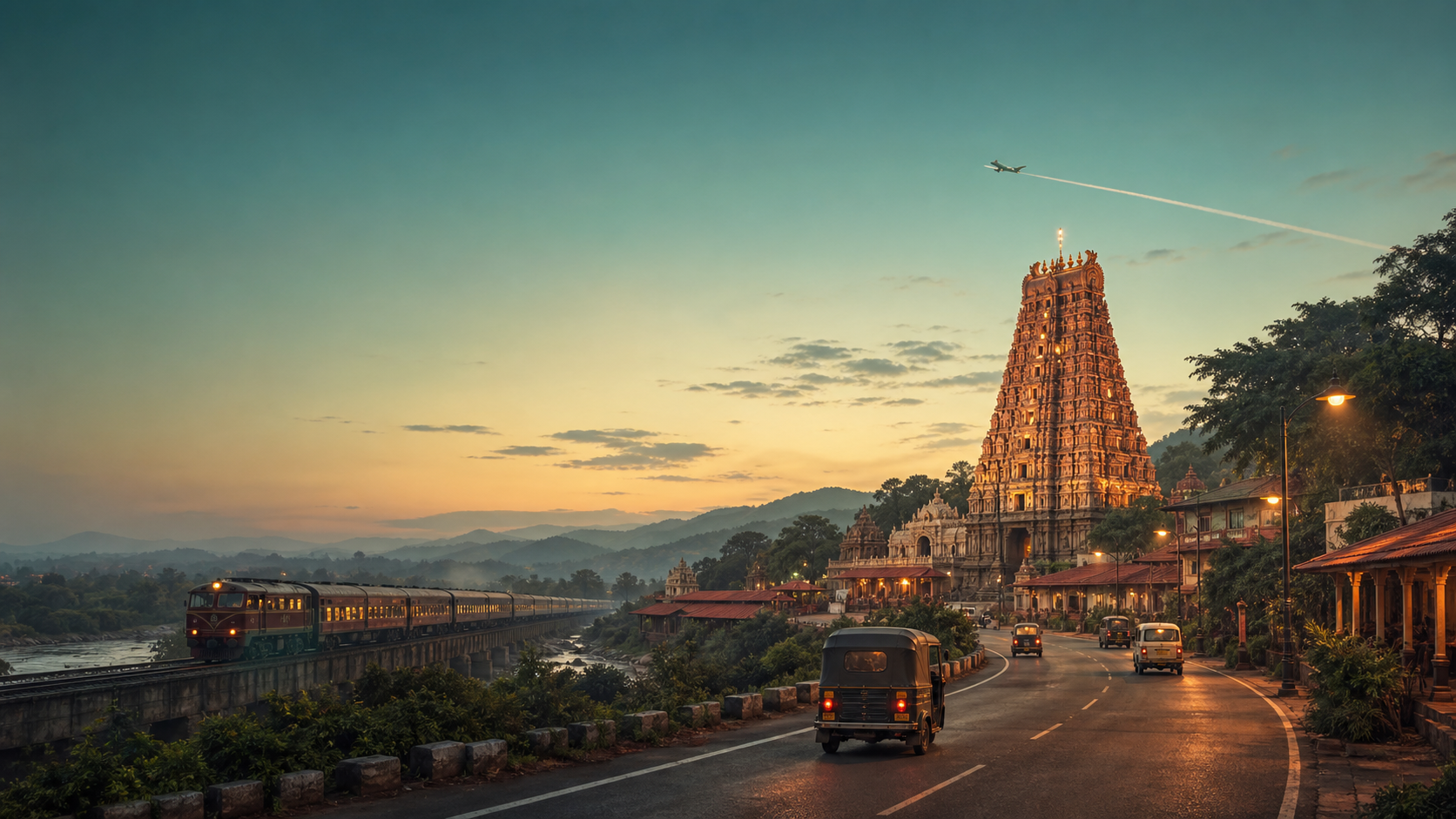
A complete pilgrim record drawn from the existing published article data.
Historical Foundation
Origins of the Koch Kuladevata
What is a Kuladevata?
A Kuladevata is a family deity or a lineage deity, traditionally worshipped by a particular clan, family, or community. The worship of a Kuladevata is often passed down through generations, serving as a spiritual anchor and source of protection for the family line.
Construction and Royal Inauguration
Historical Timeline of Madan Mohan Temple

Architecture & Craftsmanship
Bengal Temple Style with Colonial Influence
Char Chala Architecture
A traditional Bengali architectural style characterized by a four-sloping roof, often curved, resembling a thatched hut. It is a distinctive feature of many temples in Bengal, providing both aesthetic appeal and protection from heavy monsoon rains.
Sculptural Narratives and Unique Iconography
"The intricate carvings and diverse iconography within Madan Mohan Temple tell stories of a vibrant spiritual tradition, bridging Vaishnava devotion with powerful Shakta practices."

The Presiding Deity
Madan Mohan: The Unaccompanied Lord
Madan Mohan (Lord Krishna)
Form: Ashtadhatu murti (alloy of eight metals), painted with gold. Two sizes: Bara Madan Mohan (larger, daily darshan) and Chhoto Madan Mohan (smaller, darshan 3 days/year).
Iconographic Uniqueness: Worshipped alone, without Radha, a rare deviation from standard Radha-Krishna iconography. This reflects the specific Vaishnava tradition adopted by the Koch dynasty, influenced by Sankardev's teachings.
Significance: Kuladevata (family deity) of the Koch dynasty, central to the spiritual life of Cooch Behar.
Associated Epics: Puranas (Krishna's Madan Mohan form as a Tantric-Vaishnava synthesis).
Rituals: Daily worship, bhog offered; central to major festivals like Raas Utsav and Rath Yatra.
The Pantheon of Associated Deities

Festivals & Living Traditions
The Grandeur of Raas Utsav
Raas Mela: Over 212 Years Old!
Inaugurated in 1812, the Raas Mela is one of North Bengal's longest-running and largest public festivals, annually attracting hundreds of thousands of visitors.
Rath Yatra and Shakti Pujas

Plan Your Visit
Visiting the Madan Mohan Temple offers a profound cultural and spiritual experience. To ensure a memorable trip, here's what you need to know.
Reaching the Sacred Site
The temple is conveniently located in the center of Cooch Behar town, West Bengal, making it easily accessible for pilgrims and tourists alike.
- Nearest City: Cooch Behar
- Nearest Airport: Bagdogra Airport (IXB), located approximately 120 km away. From the airport, taxis and private cars are readily available to reach Cooch Behar.
- Nearest Railway: New Cooch Behar Junction (NCB) is just about 3 km from the temple. Auto-rickshaws and cycle-rickshaws provide easy transit to the temple complex.
- Road Network: Cooch Behar is well-connected by state and national highways, making bus and car travel convenient from major cities in West Bengal and neighboring states.
Visitor Guidelines and Best Practices
To ensure a respectful and enriching visit, please observe the following guidelines:
- Best Season to Visit: The months of October to November are highly recommended. This period coincides with the vibrant Durga Puja and the spectacular Raas Mela, offering a chance to witness the temple at its most festive. The weather during these months is also pleasant.
- Suggested Duration: Allocate 2 to 3 hours for a comprehensive exploration of the temple complex, including darshan of the various deities and appreciating the architecture.
- Visit Rules:
- Photography is generally permitted within the temple complex, but it is strictly prohibited in the inner sanctum (garbhagriha) to maintain sanctity.
- A modest dress code is encouraged, reflecting respect for the sacred space.
- Footwear must be removed before entering any of the shrines within the complex.
Pro Tip for Raas Mela
If visiting during the Raas Mela, arrive early to witness the Raas Chakra rotation and the raising of the Raas-Danda without the largest crowds. Be prepared for significant pedestrian traffic and vibrant celebrations!
Key Takeaway
The Madan Mohan Temple offers a unique blend of spiritual heritage, architectural beauty, and vibrant living traditions. Its distinct Radha-less Madan Mohan, syncretic worship, and the grand Raas Mela make it an essential destination for anyone exploring the cultural and religious tapestry of West Bengal.
Madan Mohan temple, Cooch Behar — figure 6 Madan Mohan temple, Cooch Behar — figure 7 Madan Mohan temple, Cooch Behar — figure 8 Madan Mohan temple, Cooch Behar — figure 9 Related temples: A. C. Bhaktivedanta Swami Prabhupada | Abhimanyu Temple, Vayotthidam
Sacred Stories & Mythology
The Royal Kuladevata and Vaishnava Roots
The Legend of Radha-less Madan Mohan
Centuries ago, the great Koch king, Maharaja Nara Narayan, was profoundly moved by the devotional teachings of the saint Sankardev. Sankardev preached a form of Vaishnavism that focused solely on Lord Krishna, often in his 'Madan Mohan' aspect, without explicitly incorporating Radha. Inspired by this spiritual philosophy, the Maharaja decreed that Madan Mohan would be the Kuladevata, the family deity, of the Koch dynasty. He commissioned an idol of Madan Mohan that depicted the Lord in His full glory, but notably, without Radha beside him. This unique act solidified a distinct tradition within Vaishnavism, where the Lord is worshipped in His singular, captivating form, reflecting the specific spiritual journey of the Koch rulers and the regional Vaishnava movement they championed. This tradition continues to define the worship at the Madan Mohan Temple to this day.
Puranic Links and Syncretic Traditions
Saints, Poets & Devotees
Sankardev's Enduring Influence
Royal Patronage and Devotion
Records, Marvels & Heritage
Architectural and Engineering Wonders

"The Madan Mohan Temple is a living embodiment of heritage, where ancient rituals meet architectural ingenuity, and diverse faiths converge in celebration."
Unique Iconography and Heritage Status
Ashtadhatu Murti
An idol or statue crafted from 'Ashtadhatu', an ancient alloy of eight metals, traditionally consisting of gold, silver, copper, zinc, lead, tin, iron, and mercury. These idols are highly revered in Hinduism for their spiritual purity and symbolic significance.
🗺 How to Reach
Hover a card to animate the journey on the map
Route to Dharamshala
Common Questions
Where is Madan Mohan Temple, Cooch Behar: Royal Heritage & Unique Devotion located?
Madan Mohan Temple, Cooch Behar: Royal Heritage & Unique Devotion is documented at Dharamshala, Himachal Pradesh.
Which deity is associated with Madan Mohan Temple, Cooch Behar: Royal Heritage & Unique Devotion?
Madan Mohan Temple, Cooch Behar: Royal Heritage & Unique Devotion is associated with Krishna.
Related Temples

A Living Covenant