



A complete pilgrim record drawn from the existing published article data.
Pramukh Swami Maharaj: A Global Spiritual Leader
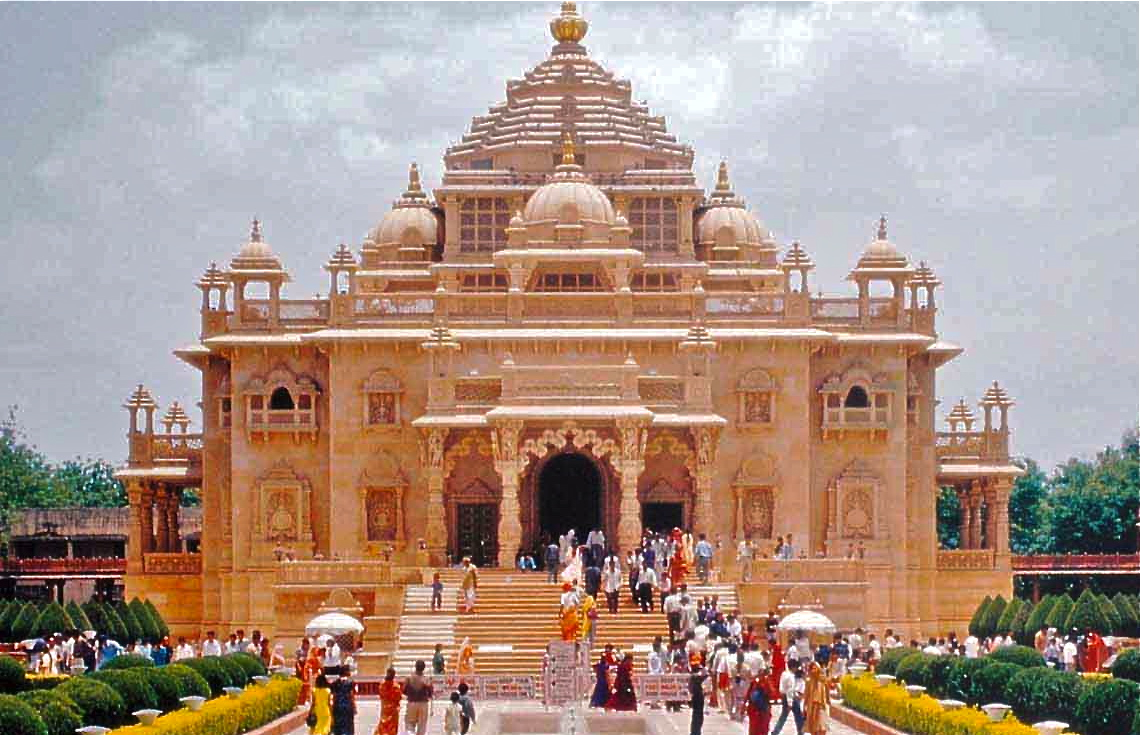
Pramukh Swami Maharaj, the fifth spiritual successor of Bhagwan Swaminarayan, was a beacon of spiritual wisdom and humanitarian service. His profound impact extended globally, inspiring millions towards a life of devotion and moral integrity. He is revered for his unwavering dedication to fostering peace and universal harmony. His vision culminated in the creation of the monumental Swaminarayan Akshardham in New Delhi, a testament to his spiritual leadership and cultural preservation efforts. This architectural marvel stands as a living tribute to his legacy and teachings.
Early Life and Spiritual Ascent
Born Shantilal Patel in 1921, he was blessed by Shastriji Maharaj, setting the course for his spiritual journey. He became the Pramukh (President) of BAPS in 1950.
Inspiration for Akshardham
His vision led to the conceptualization and construction of Swaminarayan Akshardham in New Delhi, a grand cultural and spiritual complex.
Experiencing Akshardham: A Visitor's Guide
Swaminarayan Akshardham offers a profound spiritual and cultural experience for all visitors. While specific timings and entry details should be confirmed directly with the temple office, the best time to visit is typically from October to March, when the weather in Delhi is pleasant. Modest clothing is required, and footwear must be removed before entering mandir areas. Visitors can expect to spend 3-4 hours exploring the main monument, exhibitions, boat ride, and cultural performances, with some choosing to spend a full day. The complex provides facilities for a comfortable and enriching visit.
Best Time to Visit
The period from October to March offers the most pleasant weather for exploring the vast complex. Festivals like Diwali are also ideal times.
Dress Code and Etiquette
Visitors must wear modest clothing covering shoulders and knees. Footwear is not permitted inside the mandir areas.
Key Attractions
Highlights include the main Akshardham Mandir, the Hall of Values (Sahajananand Darshan), the Neelkanth Darshan film, and the Sanskruti Darshan boat ride.
| Deity | Swaminarayan |
|---|---|
| Form | Unknown |
| Consort | Unknown |
| Sampradaya | Swaminarayan Sampradaya |
| Significance | Swaminarayan is revered as the supreme God (Purushottam) within the Swaminarayan Sampradaya, whose teachings form the basis of the Akshar-Purushottam Darshan tradition. Pramukh Swami Maharaj was his fifth spiritual successor. |
The Prophecy of a Divine Leader
The sacred life of Pramukh Swami Maharaj, revered as the fifth spiritual successor of Swaminarayan, began with an extraordinary divine blessing. Born as Shantilal Patel, his arrival was foretold by Shastriji Maharaj, who prophesied that this child would one day guide countless souls to devotion and spiritual liberation. This blessing set the course for a life dedicated to spiritual service. His journey culminated in 1950 when he was appointed as the 'Pramukh' (President) of the BAPS organization. Under his profound leadership, BAPS witnessed unprecedented global expansion, establishing numerous temples and spearheading extensive humanitarian initiatives, embodying the very essence of the prophecy.
This child would one day guide countless souls to devotion and spiritual liberation.
Shastriji Maharaj (prophecy)
Under his profound leadership, BAPS witnessed unprecedented global expansion.
Regarding Pramukh Swami Maharaj
Related temples: Achalpuram Shivalokathyagar Temple | Bade Baba Temple
The Enduring Legacy of Pramukh Swami Maharaj
Pramukh Swami Maharaj's life was a testament to selfless service and spiritual leadership, leaving an indelible mark on humanity. His extensive contributions include the consecration of over 1,100 Hindu temples across six continents, fostering cultural heritage and spiritual solace worldwide. He tirelessly promoted interfaith dialogue and global harmony, exemplified by his address at the UN Millennium World Peace Summit in 2000. His compassionate leadership inspired countless individuals to lead value-based lives, embodying the core principles of the Swaminarayan Sampradaya. His vision continues to guide the BAPS organization and its followers globally.
Temple Building Endeavors
He consecrated more than 1,100 temples globally, including the iconic Swaminarayan Akshardham complexes, preserving Hindu traditions and art.
Promoting Global Harmony
His efforts in interfaith dialogue were recognized internationally, notably his address at the UN Millennium World Peace Summit in 2000, advocating for peace.
Swaminarayan Akshardham: A Tribute to Timeless Art
Swaminarayan Akshardham in New Delhi stands as a breathtaking marvel of traditional Indian architecture and intricate craftsmanship. Inspired by Pramukh Swami Maharaj's vision, this monumental temple complex showcases thousands of exquisitely carved statues, pillars, and domes depicting deities, sages, and historical narratives. Constructed from pink sandstone and Carrara marble, its grandeur reflects centuries of Indian artistic heritage. The central monument, dedicated to Bhagwan Swaminarayan, is surrounded by sprawling gardens, exhibitions, and cultural boat rides, offering a holistic cultural and spiritual experience. It is a profound testament to timeless art and devotion.
Architectural Grandeur
The complex is built using traditional Indian architectural techniques, featuring intricately carved pink sandstone and Carrara marble.
Intricate Craftsmanship
Thousands of meticulously carved figures, including deities, dancers, and musicians, adorn the temple, showcasing ancient artistic traditions.
Understanding the Swaminarayan Faith and Its Core Principles
The Swaminarayan Sampradaya is a distinct Hindu tradition founded by Bhagwan Swaminarayan in the late 18th century. Its core principles revolve around devotion to God, moral living, and selfless service. Followers believe in five eternal entities: Jiva (the soul), Ishwar (demigods), Maya (prakriti), Brahman (Aksharbrahma), and Parabrahman (Purushottam, God). The faith emphasizes absolute celibacy for ascetics, strict vegetarianism, and the importance of a living spiritual master (Satpurush) to guide devotees. Bhagwan Swaminarayan's teachings, enshrined in texts like the Vachanamrut, advocate for righteous conduct and spiritual enlightenment.
The Founder: Bhagwan Swaminarayan
Bhagwan Swaminarayan established the faith in the late 18th century, emphasizing devotion, dharma, and selfless service.
Core Philosophical Tenets
The faith's philosophy centers on five eternal realities: Jiva, Ishwar, Maya, Brahman, and Parabrahman, guiding devotees towards spiritual liberation.
Cultural Impact
The creation of Akshardham in Delhi, under the spiritual guidance of Pramukh Swami Maharaj, has had a profound cultural impact, establishing itself as a monumental testament to India's rich heritage. More than just a temple, it functions as a sprawling cultural complex designed to showcase millennia of Indian art, architecture, and spiritual wisdom. Its intricate carvings, depicting deities, sages, and historical events, serve as a living museum, educating visitors on ancient epics and philosophical tenets. The sheer scale and meticulous craftsmanship involved in its construction have set new benchmarks in contemporary temple architecture, drawing admiration from across the globe and solidifying its place as a premier destination for cultural immersion and appreciation of traditional Indian artistry. Beyond its architectural grandeur, Akshardham's cultural impact extends to its role in fostering spiritual understanding and promoting universal values. The exhibitions within the complex, such as the Sahajananand Darshan and the Sanskruti Darshan boat ride, are meticulously crafted to convey messages of peace, harmony, and selfless service, principles central to Pramukh Swami Maharaj's teachings. It has become a significant hub for interfaith dialogue and a symbol of India's pluralistic ethos, attracting millions of visitors from diverse backgrounds annually. This cultural beacon not only preserves and presents India's past but also actively shapes its future by inspiring a deeper connection to its spiritual roots and fostering a sense of national pride and cultural identity.🗺 How to Reach
Hover a card to animate the journey on the map
Route to New Delhi
Related Temples

A Living Covenant