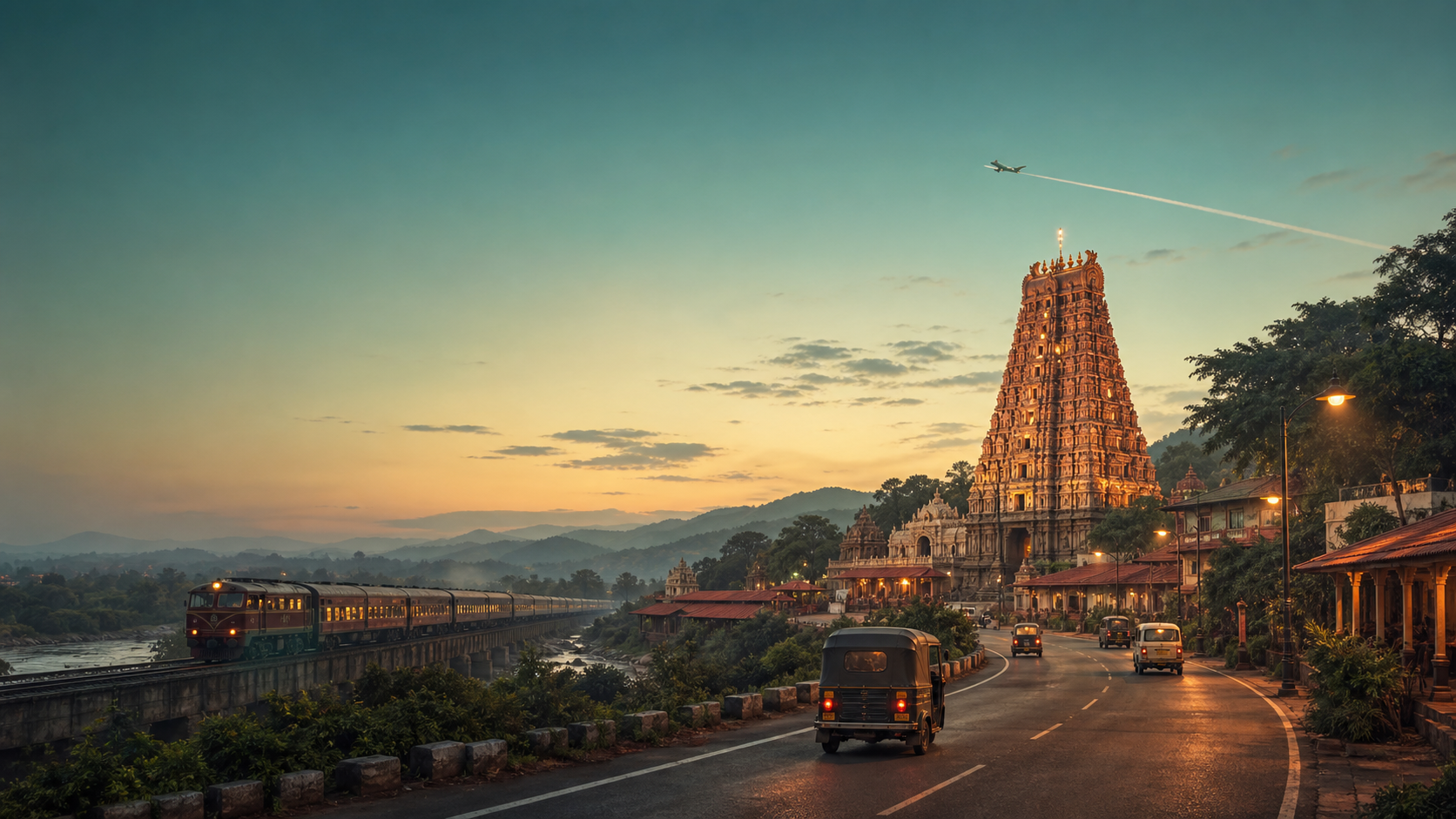
A complete pilgrim record drawn from the existing published article data.
Tracing the Ancient History of Pazhamudhircholai
The history of Pazhamudhircholai Temple is deeply rooted in ancient Tamil lore and royal patronage, dating back to the Sangam era. Its earliest mention appears in the Tirumurukaatruppadai by Nakkeerar, highlighting its antiquity. The foundation of the temple is attributed to the Chera ruler Cheaman Perumal in the 7th century CE, marking an early phase of its development. Significant transformations occurred in the 17th century CE under the Madurai Nayak dynasty, particularly during the reign of Thirumalai Nayak, who was responsible for extensive renovations and additions like the Navaranga Mandapam, shaping much of the current temple structure. This blend of Chera and Nayak influences defines its historical and architectural narrative.
Sangam Era Mentions
The temple site, referred to as Solaimalai, finds its earliest literary reference in the Sangam-era poem Tirumurukaatruppadai, composed by Nakkeerar, indicating its revered status even in ancient times.
Chera Dynasty Patronage
The initial foundation of the temple in the 7th century CE is credited to the Chera ruler Cheaman Perumal, showcasing the early royal support for this sacred abode of Murugan.
Madurai Nayak Dynasty Contributions
The 17th century witnessed substantial expansion and architectural enhancements, notably the construction of the Navaranga Mandapam, under the patronage of Thirumalai Nayak of the Madurai Nayak dynasty, which greatly contributed to the temple's present form.
Architectural Grandeur of Pazhamudhircholai Temple
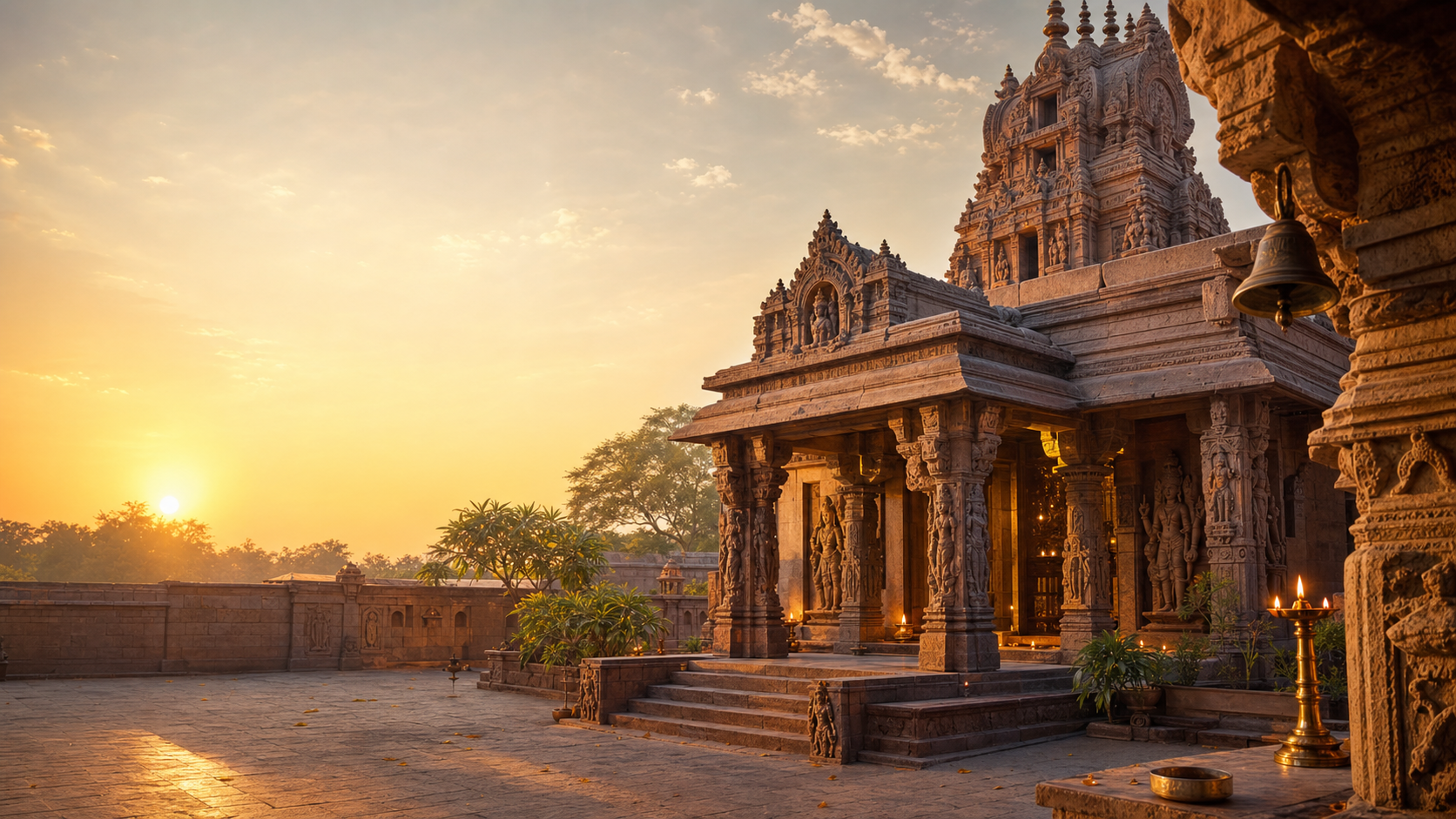
The Pazhamudhircholai Temple exemplifies the rich Dravidian architectural style, showcasing a blend of Pandya and Nayak substyles that evolved over centuries. Its structures are characterized by intricate stone carvings, vibrant sculptures, and towering gopurams that reflect the artistic devotion of the dynasties that patronized it. The temple's design seamlessly integrates with its natural surroundings on the Solaimalai hill, allowing the lush forest to serve as a serene backdrop. The materials predominantly used are stone, ensuring durability and intricate detailing, which are hallmarks of traditional South Indian temple architecture. This artistic synthesis creates a visually stunning and spiritually uplifting environment.
Dravidian Architectural Style
The temple showcases the classic Dravidian style, evident in its multi-tiered gopurams, pillared halls, and intricate sculptures, reflecting the architectural traditions of South India.
Nayak Dynasty Influence
The 17th-century renovations under the Madurai Nayak dynasty introduced distinct elements, including elaborately carved pillars and mandapams, contributing to the temple's grandeur.
Integration with Nature
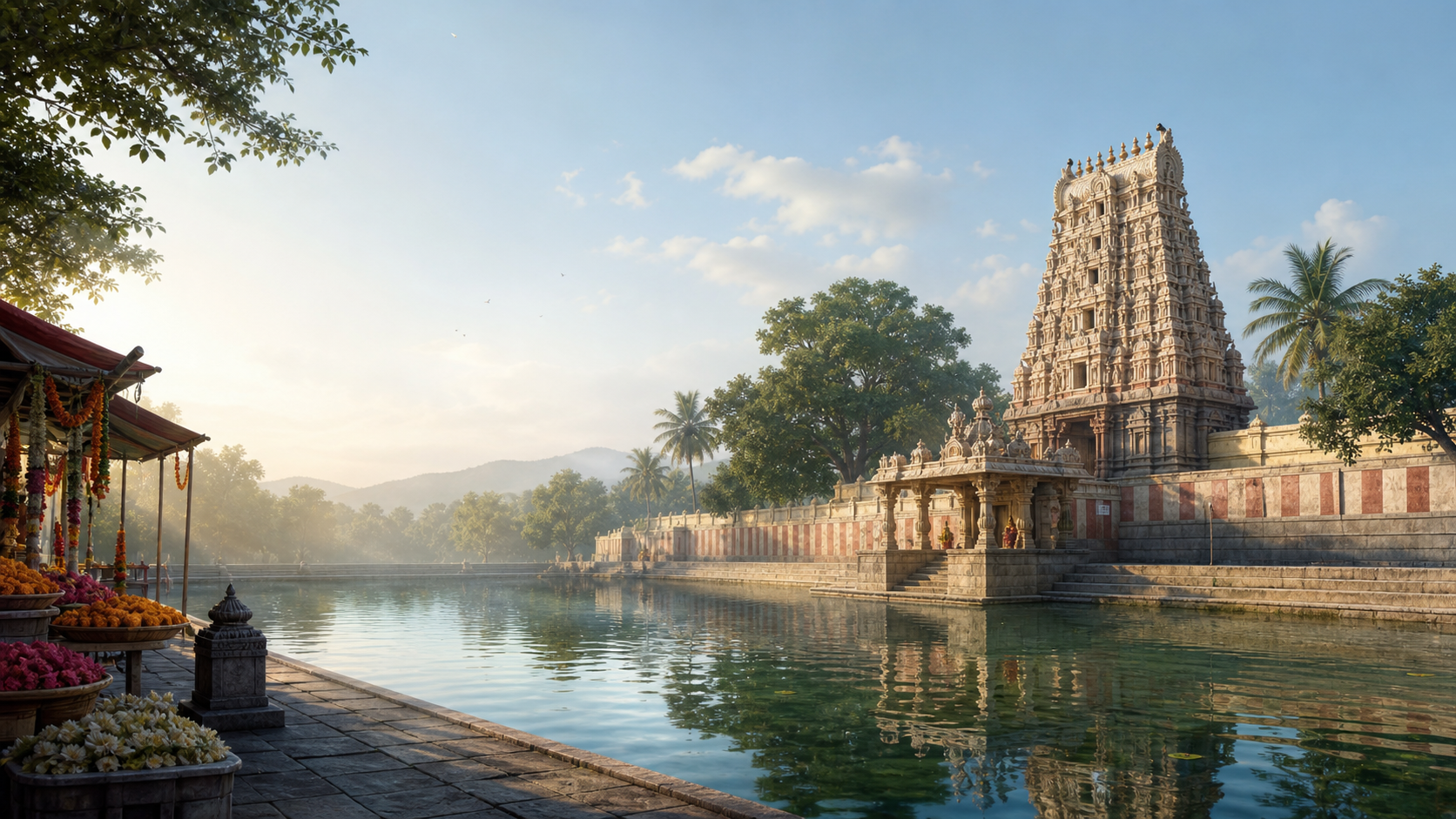
Perched on the Solaimalai hill, the temple's architecture harmoniously blends with its natural forest surroundings, creating a tranquil and picturesque setting that enhances the pilgrimage experience.
The Divine Presence: Lord Murugan, His Consorts, and Sacred Lore
Pazhamudhircholai is primarily dedicated to Lord Murugan, the son of Shiva, and is celebrated as the only Arupadaiveedu where he is worshipped alongside both his consorts, Valli and Deivanai. This unique representation symbolizes the completeness of divine love and grace. The temple is famously associated with the legend of the poetess Avvaiyar, where Lord Murugan, disguised as a young boy, playfully taught her a lesson in humility, forever sanctifying the naaval tree. Another significant aspect is the presence of the Noopura Ganga, a miraculous spring believed to have originated from Lord Vishnu's anklet, offering healing and spiritual purity to pilgrims. This rich tapestry of divine presence and lore imbues the temple with profound spiritual significance.
Lord Murugan with Consorts
The central deity, Lord Murugan, is uniquely worshipped here with both his divine consorts, Valli and Deivanai, symbolizing his marital bliss and the completeness of his divine family.
The Avvaiyar Legend
A prominent sthala purana (temple legend) recounts Lord Murugan's playful encounter with the revered poetess Avvaiyar, where he, in the guise of a shepherd boy, taught her a lesson in humility, making the naaval tree sacred.
Noopura Ganga
Within the temple premises flows the sacred Noopura Ganga, a spring believed to have sprung from Lord Vishnu's anklet. Its waters are considered highly potent, offering healing and purification to devotees.
Planning Your Pilgrimage to Pazhamudhircholai
For pilgrims and tourists planning a visit to Pazhamudhircholai Temple, essential information ensures a fulfilling spiritual experience. The temple is easily accessible from Madurai, a major transportation hub in Tamil Nadu. Regular bus services connect Madurai to Alagarkovil, from where Pazhamudhircholai is a short distance. While entry is free, visitors are advised to contact the temple office for specific timings, as they may vary. The best time to visit is from October to March, particularly during the vibrant festivals of Skanda Sashti and Thai Poosam. A modest dress code is required, and footwear must be removed before entering the sanctum. Allocate 3-4 hours to fully explore the temple and its sacred surroundings.
Getting There
Pazhamudhircholai is approximately 20-25 km from Madurai. Buses run frequently from Madurai Mattuthavani Bus Stand to Alagarkovil, the base for the temple. Madurai Junction Railway Station and Madurai International Airport (IXM) offer excellent connectivity.
Best Time to Visit and Timings
The ideal period for a visit is between October and March, when the weather is pleasant. This coincides with major festivals like Skanda Sashti (Oct–Nov) and Thai Poosam (Jan–Feb). Temple timings should be confirmed with the temple office.
Dress Code and Facilities
Devotees are requested to adhere to a modest dress code. Footwear must be removed before entering the main shrine. Parking facilities are available near the temple premises, and basic amenities are present for pilgrims.
| Deity | Murugan |
|---|---|
| Form | Lord Murugan is depicted in a standing form, holding his divine spear, the Vel. He is flanked by his two consorts, Valli and Devayani. |
| Consort | Goddess Valli and Goddess Devayani |
| Sampradaya | Shaiva (Murugan as son of Shiva; Siddhar tradition), with strong Vaishnava proximity |
| Significance | This is the only one of the Six Abodes (Arupadaiveedugal) where Murugan is enshrined with both consorts. The temple also uniquely features the worship of the Vel (spear) as a svayambhu form, predating the idol. |
The Sage and the Sweet Fruit
The revered poetess Avvaiyar, known for her profound wisdom, once rested under a majestic naaval tree at this sacred spot. There, she encountered a young boy who, with mischievous eyes, offered her fruits from the tree. When she asked him to drop them, he playfully questioned if she wanted 'hot or cold' fruits, referring to the sand they fell into. Avvaiyar, momentarily humbled by the boy's innocent yet profound query, realized she stood before none other than Lord Murugan himself, who had taken this form to teach her a valuable lesson in humility. This divine encounter forever sanctified the naaval tree and the very earth beneath it.
Avvaiyar, humbled by a boy's innocent yet profound query, realized she stood before Lord Murugan. This divine encounter taught her humility, forever sanctifying the naaval tree and its sacred ground.
Pazhamudhircholai is the only one of Murugan's Six Abodes where he is enshrined with both his beloved consorts, Valli and Devayani, a truly unique and blessed sight.
Related temples: Akkanna Madanna Caves | Ayyappan Temple, Perambur
Pazhamudhircholai Temple: A Sacred Abode of Lord Murugan
Pazhamudhircholai Temple holds a significant place among the six revered Arupadaiveedugal, the battle camps of Lord Murugan. This sacred site is uniquely distinguished as the only one among the six where Lord Murugan is enshrined with both his divine consorts, Valli and Deivanai. Its ancient roots trace back to a time when the Vel, Lord Murugan's divine spear, was the primary object of worship, symbolizing raw power and divine justice. The temple's location on the Solaimalai hill, amidst a lush forest, enhances its spiritual ambiance, making it a pivotal pilgrimage destination for devotees seeking blessings and spiritual solace.
The Arupadaiveedugal Significance
Pazhamudhircholai is recognized as one of the six holy abodes of Lord Murugan, each marking a significant event in his divine life. This temple specifically represents a place of spiritual wisdom and divine play, deeply woven into Tamil devotional literature and tradition.
Unique Presence of Consorts
Unlike other Arupadaiveedugal, Pazhamudhircholai offers devotees the rare sight of Lord Murugan gracing the sanctum sanctorum alongside both his beloved consorts, Valli and Deivanai, symbolizing completeness and divine union.
Ancient Vel Worship
Before the anthropomorphic representation of Murugan, this site was a center for the worship of the Vel, his divine spear. This ancient practice underscores the temple's foundational connection to Murugan's power and his victory over evil.
Modern Pilgrimage
Modern pilgrims approaching Pazhamudhircholai Temple often undertake a journey that blends traditional devotion with contemporary convenience. Unlike ancient times, when the ascent might have been arduous, improved road networks now allow for easier access, with many devotees arriving by car, bus, or taxi from nearby cities like Madurai. The temple, nestled amidst the Solaimalai hills, remains a significant stop on the Arupadaiveedu pilgrimage circuit, drawing thousands annually, especially during festivals like Thaipusam and Skanda Sashti. Families frequently visit together, seeking blessings for prosperity, health, and academic success for their children. The spiritual quest is often accompanied by a desire to connect with nature, as the temple's serene forest setting offers a tranquil escape from urban life, enhancing the overall devotional experience.
To accommodate the steady influx of devotees, Pazhamudhircholai Temple and its surrounding areas have developed various facilities, including small eateries offering traditional South Indian fare, souvenir shops selling religious paraphernalia, and basic rest areas. However, managing large crowds during peak seasons remains a significant challenge, requiring careful planning for traffic control, waste management, and maintaining the sanctity of the natural environment. The temple administration, often in conjunction with local government bodies, continually works towards enhancing pilgrim amenities while striving to preserve the ecological balance of the Solaimalai forest. The temple's sustained popularity underscores its enduring spiritual significance and its vital role in the local economy, prompting ongoing efforts to balance tradition with the demands of modern tourism and pilgrimage.
🗺 How to Reach
Hover a card to animate the journey on the map
Route to Alagarkovil
Common Questions
Where is Pazhamudhircholai Temple: Murugan's Divine Abode located?
Pazhamudhircholai Temple: Murugan's Divine Abode is documented at Solaimalai hill, near Azhagar Kovil.
Which deity is associated with Pazhamudhircholai Temple: Murugan's Divine Abode?
Pazhamudhircholai Temple: Murugan's Divine Abode is associated with Lord Murugan.
Related Temples
A Living Covenant