A complete pilgrim record drawn from the existing published article data.

The majestic 9-meter rock-cut Maitreya Buddha, the centerpiece of Mulbekh Monastery, carved into the cliff face.
Historical Foundation
Origins in Antiquity: The Kushan Connection
Buddhist Revival and Monastic Establishment
Royal Patronage, Reform, and Later Renovations

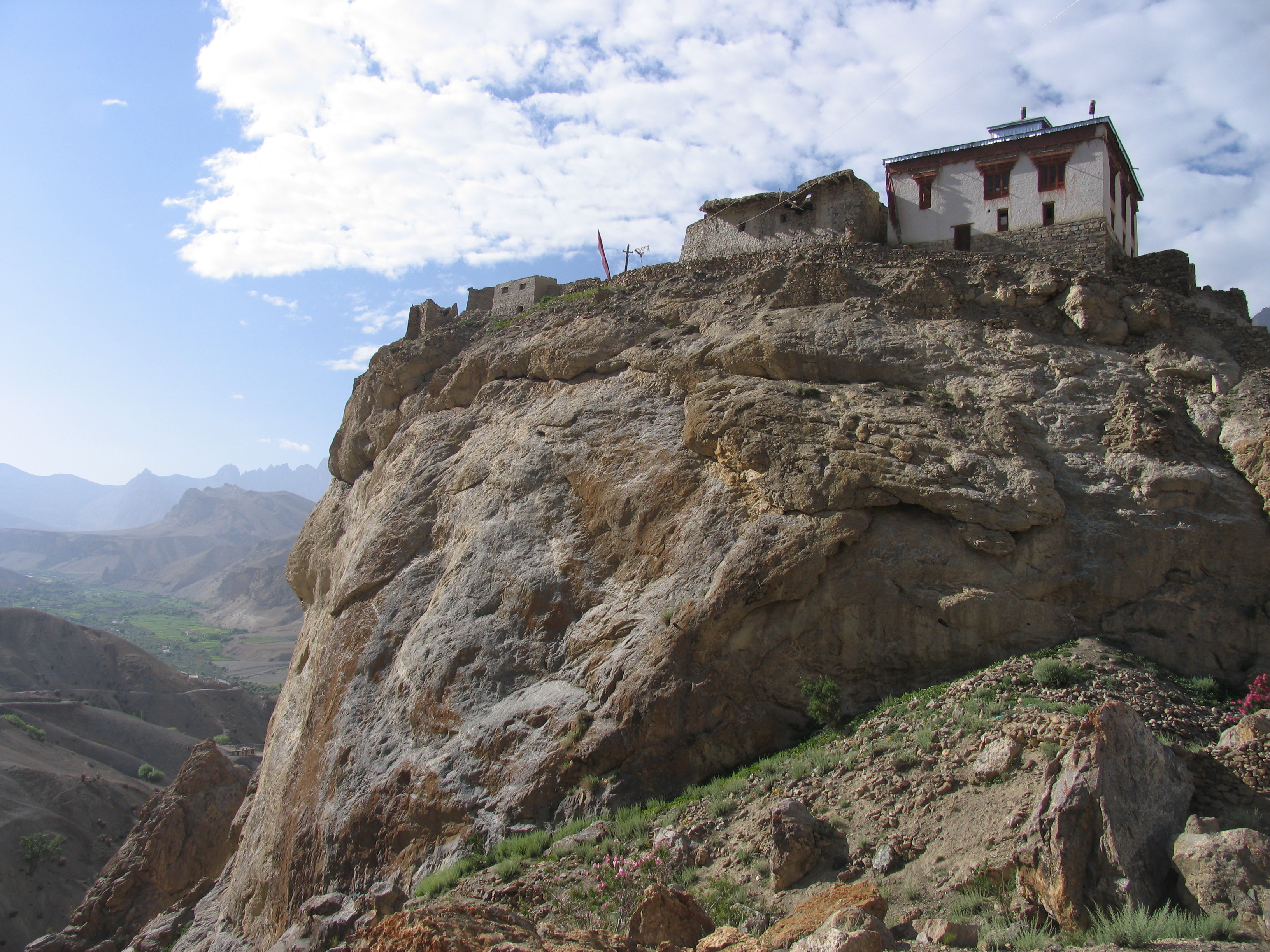
The twin gompas of Mulbekh, Rgaldan-se and Serdung, perched dramatically on the cliff face.
Architecture & Craftsmanship
The Colossal Rock-Cut Relief: Chamba
9 meters (30 ft): Height of the rock-cut Maitreya Buddha.
3,504 meters (11,495 ft): Altitude of the Mulbekh Gompas.
200 meters (656 ft): Height of the Gompas above road level.
High-Altitude Monastic Complex: Gompas and Lhakhangs

Visitors circumambulate large prayer wheels, a daily ritual at Mulbekh Monastery.
Inscriptions and Epigraphic Treasures
Kharosthi Script
An ancient Indo-Iranian abugida (alphasyllabary) used in ancient Gandhara (present-day eastern Afghanistan and northern Pakistan) and extending into Central Asia, from the 3rd century BCE to the 3rd century CE. Its rare appearance in 15th-century Ladakh at Mulbekh adds to the site's unique historical significance.
The Presiding Deity
Lord Maitreya: The Future Buddha (Chamba)
Maitreya Buddha (Chamba)
Role: The Future Buddha, a Bodhisattva destined to achieve full enlightenment and teach the dharma.
Form: Monumental 9-meter (30 ft) rock-cut standing relief sculpture.
Iconography: Typically depicted with a peaceful expression, often adorned with princely ornaments, signifying his Bodhisattva status before full Buddhahood. The Mulbekh Chamba uniquely blends early Indian and later Himalayan stylistic elements.
Significance: Represents hope, compassion, and the future era of dharma. One of the rarest surviving examples of large-scale pre-Tibetan Buddhist sculpture in Ladakh, linking the region to ancient pan-Indian Buddhist traditions.
Sacred Objects and Spiritual Traditions
Festivals & Living Traditions
Annual Celebrations and Sacred Dances
Visiting During Festivals
To experience the spiritual vibrancy of Mulbekh in full, plan your visit around Losar (February/March) or the summer Cham Dance Festival. These periods offer a unique insight into the monastery's living traditions, but expect larger crowds and plan accommodation accordingly.
Daily Rituals and Melodies of Devotion

Monks engage in daily chanting and pujas, maintaining the spiritual vibrancy of Mulbekh Monastery.
Plan Your Visit
Reaching Mulbekh: A Journey Through the Himalayas
Best Time to Visit and Essential Etiquette
Key Takeaway for Visitors
Mulbekh Monastery is a unique blend of ancient rock-cut art and living monastic traditions. Prepare for a steep climb to the gompas, respect local customs, and allocate enough time to appreciate both the monumental Maitreya Buddha and the serene atmosphere of the cliff-side monasteries.
Nearby Exploration and Temple Circuit
Related temples: Bagalamukhi Temple, Bankhandi, HP | Basgo Monastery
Sacred Stories & Mythology
The Ancient Beacon and Trade Route Legends
The King's Edict and the Local Deity's Plea
In the early 15th century, King Bhum Ide (Tsongkapa) of western Ladakh sought to purify Buddhist practice in his realm. Observing the practice of goat sacrifice to local deities, he issued a royal edict, carved in ancient Kharosthi script on the rock face next to the Maitreya Buddha, unequivocally banning the ritual. This was a significant reform aimed at aligning local customs with the core Buddhist principle of non-violence. However, the local populace, deeply rooted in their ancestral beliefs, responded with their own inscription on the very same rock, a poignant counter-argument that queried: "For what would the local deity say, if the goat were withheld from him?" This unique dual inscription at Mulbekh captures a fascinating mythological event: a direct dialogue between royal decree and local spiritual anxiety, a testament to the enduring power of folk beliefs and the complex process of religious conversion and reform in the Himalayas. It highlights the local belief that withholding traditional sacrifices could anger protective spirits, demonstrating the spiritual tensions of the era.
Miracles, Folk Beliefs, and Enduring Reverence
Saints, Poets & Devotees
Echoes of Rinchen Zangpo's Disciples
Founders, Reformers, and Spiritual Patrons
Records, Marvels & Heritage
Uniqueness and Historical Significance
Engineering Marvels and Conservation Challenges
🗺 How to Reach
Hover a card to animate the journey on the map
Route to Mulbekh
Common Questions
Where is Mulbekh Monastery: Ladakh's Ancient Rock-Cut Buddha located?
Mulbekh Monastery: Ladakh's Ancient Rock-Cut Buddha is documented at Mulbekh, Himachal Pradesh.
Which deity is associated with Mulbekh Monastery: Ladakh's Ancient Rock-Cut Buddha?
Mulbekh Monastery: Ladakh's Ancient Rock-Cut Buddha is associated with Maitreya Buddha.
Related Temples


A Living Covenant