



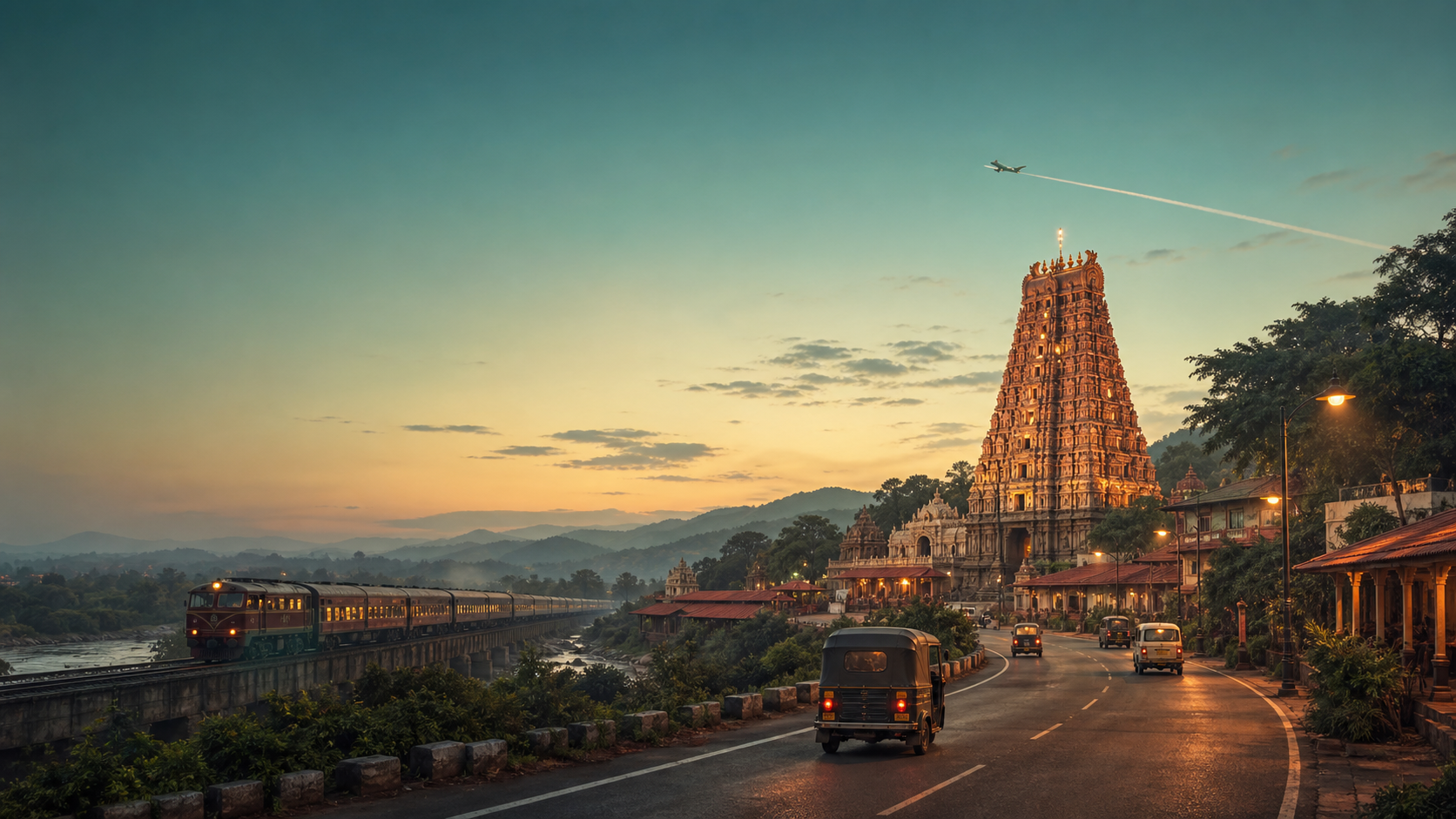
A complete pilgrim record drawn from the existing published article data.
Historical Tapestry of Mahadeshwara Temple
The Mahadeshwara Temple's origins trace back to the 15th century CE, marking a period of intense spiritual activity by Saint Mahadeshwara. Its construction in the Dravidian style solidified its presence, fostering an enduring legacy of devotion. Over centuries, the temple evolved into a significant pilgrimage site, particularly for Jangama saints and followers of the Basavanna tradition. The oral transmission of the 'Male Mahadeshwara' folk epic from the 15th century onwards further cemented its historical and cultural importance, preserving the saint's narrative for generations and enriching its spiritual heritage.
15th Century Foundations
The temple's construction in the 15th century CE established it as a significant spiritual landmark.
Oral Traditions and Epic
The 'Male Mahadeshwara' folk epic has been orally transmitted since the 15th century, preserving the saint's story.
Devotional Legacy
The temple became a key pilgrimage site for Jangama saints and followers of the Basavanna tradition.
Architectural Grandeur and Hilltop Setting
The Mahadeshwara Temple boasts a distinctive Dravidian architectural style, evident in its robust construction using stone and granite. Its grandeur is profoundly integrated with its remarkable natural setting, majestically situated on the Male Mahadeshwara Betta, a cluster of seven primary hills. This unique hilltop location not only provides breathtaking panoramic views but also infuses the entire complex with a profound sense of sanctity, reflecting Saint Mahadeshwara's deep spiritual connection to these sacred mountains. The temple's design harmonizes seamlessly with the rugged landscape, creating a spiritual haven that feels intrinsically part of the earth and its ancient energies.
Dravidian Architecture
The temple is built in the traditional Dravidian style, characterized by its use of stone and granite.
Seven Hills Setting
Perched on Male Mahadeshwara Betta, the temple is uniquely situated across seven sacred hills.
Material and Craftsmanship
Constructed primarily from durable stone and granite, the temple exemplifies enduring ancient craftsmanship.
The Legend of Sri Male Mahadeshwara
The legend of Sri Male Mahadeshwara is central to the temple's identity, chronicling his life and miraculous deeds. He performed intense penance across 77 hills, embodying profound devotion and distilling their essence into a mystical pillow. This revered saint is believed to continue his meditation on Anemale and Jenumale, the Elephant and Bee Hills, ever watching over his devotees. Legends describe him as a majestic, tiger-riding figure, akin to Lord Shiva, guiding and protecting those who seek his blessings. His journey, from Kunturu Math to Valu Male, is immortalized in the 'Male Mahadeshwara' folk epic, a testament to his spiritual resistance and tribal devotion. Pilgrims believe his spiritual energy manifests as an originless, perennial stream, offering healing and protection.
The Penance of 77 Hills
Sri Male Mahadeshwara undertook arduous penance across 77 hills, embodying profound devotion and spiritual power.
The Living Saint and Epic
His life is chronicled in the 'Male Mahadeshwara' oral epic, portraying him as a living presence whose spiritual energy blesses the land.
Divine Manifestations
Legends describe him as a tiger-riding figure, similar to Lord Shiva, offering guidance and protection to his followers.
Planning Your Pilgrimage to Mahadeshwara Temple
Planning a pilgrimage to Mahadeshwara Temple requires attention to travel logistics and cultural etiquette. The best time to visit is from October to March, offering pleasant weather for exploration. Visitors should adhere to a modest dress code and remove footwear before entering the temple premises to show respect. While specific timings and entry details are best confirmed with the temple office, understanding transport options is crucial. The temple is accessible by train via Chamarajanagara, by flight to Mysuru Airport, and by bus or car, with Hosur Road (NH44/AH43) being a key route for road travel.
Optimal Visit Times
The recommended period for visiting is from October to March for comfortable weather conditions.
Travel and Accessibility
The temple is reachable by train, flight, bus, and car from various major hubs like Bengaluru and Mysuru.
Temple Etiquette
Adherence to a modest dress code and removal of footwear are required for all visitors to the temple.
| Deity | Mahadeshwara |
|---|---|
| Form | Mahadeshwara is an incarnation of Shiva, depicted as a tiger-mounted ascetic. |
| Consort | Unknown |
| Sampradaya | Shaiva |
| Significance | He is revered as a 15th-century folk saint and spiritual leader from the Madhiga community. His iconography blends Shaiva asceticism with tribal leadership, making him a unique syncretic figure. |
The Penance of the 77 Hills
Deep within the Western Ghats, the revered saint Mahadeshwara embarked on an arduous spiritual journey, performing intense penance across 77 sacred hills. His devotion was so profound that he is believed to have distilled the essence of these mountains into a mystical pillow, a testament to his spiritual power. Even today, it is said that he continues his silent meditation on Anemale and Jenumale, the Elephant and Bee Hills, ever watching over his devotees. Legends whisper of his manifestation as a majestic, tiger-riding figure, akin to Lord Shiva himself, guiding and protecting those who seek his blessings in this wild, hallowed terrain.
Across 77 hills, Mahadeshwara's penance forged a spiritual legacy, his presence still felt in the sacred mountains.
The 'Male Mahadeshwara' epic is not just a story, but a living testament to a saint who continues to guide and protect from his eternal abode.
Related temples: Akkanna Madanna Caves | Balaji Temple, Ketkawla
Introduction to Mahadeshwara Temple
The Mahadeshwara Temple, nestled in Andhra Pradesh, is a revered pilgrimage center dedicated to the saint Sri Male Mahadeshwara. Situated amidst a breathtaking hilly landscape across seven hills, it offers a unique spiritual experience. Devotees flock here to seek blessings from the saint, who is believed to have performed intense penance in these sacred mountains. The temple stands as a testament to his enduring spiritual power and influence, drawing followers of the Shaiva tradition. It represents a vital hub for spiritual solace and devotion within a serene natural setting.
The Revered Saint
Sri Male Mahadeshwara is the central figure of this pilgrimage, known for his intense penance and spiritual power.
Pilgrimage Amidst Hills
The temple's location across seven hills contributes to its unique spiritual ambiance and draws numerous devotees.
Modern Pilgrimage Experience
The Mahadeshwara Temple, while deeply rooted in ancient tradition, has gracefully adapted to the demands of modern pilgrimage, attracting a continuous stream of devotees from across Andhra Pradesh and beyond. The journey to this sacred site, once a challenging endeavor, has been significantly eased by improved road infrastructure and robust public transportation networks, linking it efficiently to major urban centers like Tirupati, Nellore, and Vijayawada. Pilgrims now commonly arrive via state-run buses, private vehicles, and organized tour groups, especially during auspicious festivals and weekends. To accommodate the growing influx of visitors, the temple complex has undergone substantial infrastructural enhancements, including well-managed parking facilities, efficient queue management systems, and essential amenities such as clean restrooms and readily available drinking water, ensuring a more comfortable and accessible spiritual journey for all. The contemporary pilgrimage to Mahadeshwara Temple is a fascinating blend of time-honored rituals and modern-day conveniences. Devotees diligently participate in traditional practices like abhishekam, arati, and offering heartfelt prayers, often patiently waiting in queues for extended periods during peak times to receive the deity's darshan. Beyond the core religious observances, the temple complex and its immediate vicinity provide a range of services tailored to pilgrims, including stalls selling religious artifacts, prasad, and local handicrafts. Many visitors opt to extend their spiritual retreat by staying overnight in nearby guesthouses or dharamshalas. The temple management actively leverages digital platforms to disseminate information regarding timings, special events, and services, demonstrating a proactive approach to engage with a technologically adept generation while meticulously preserving the profound sanctity and spiritual essence of this revered ancient shrine.🗺 How to Reach
Hover a card to animate the journey on the map
Route to Yadavanahalli
Common Questions
Where is Mahadeshwara Temple: Lord Shiva's Incarnation Pilgrim Center located?
Mahadeshwara Temple: Lord Shiva's Incarnation Pilgrim Center is documented at Male Mahadeshwara Betta (Hill), across seven hills.
Which deity is associated with Mahadeshwara Temple: Lord Shiva's Incarnation Pilgrim Center?
Mahadeshwara Temple: Lord Shiva's Incarnation Pilgrim Center is associated with Mahadeshwara.
Related Temples
A Living Covenant