A complete pilgrim record drawn from the existing published article data.
Echoes of Antiquity: The History of Kotitirtha Tank
Tracing its origins back centuries, Kotitirtha Tank holds a significant place in the historical narrative of Bhubaneswar, reflecting periods of religious fervor and architectural development. While precise founding dates are often debated, the tank is believed to have existed during the early medieval period, coeval with the construction of many prominent temples. It has witnessed various dynasties and their patronage, undergoing renovations and maintenance over time to preserve its sanctity and structure. The tank's history is closely tied to the evolution of Shaivism in Odisha, serving as a vital ritualistic component for generations of worshippers.
Ancient Origins
Historical records and architectural styles suggest the tank's origins date back to the early medieval era, aligning with the flourishing period of temple construction in Bhubaneswar.
Dynastic Patronage
Various ruling dynasties in Odisha likely contributed to the tank's development and upkeep, recognizing its religious importance to the local populace and temple rituals.
Design and Devotion: The Architecture of Kotitirtha Tank
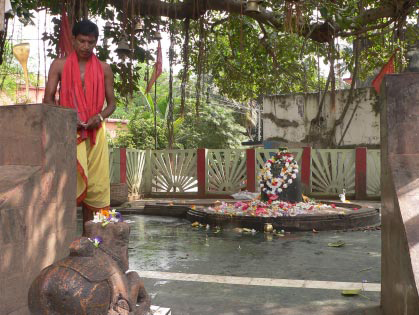
The tank's design, including its steps, surrounding shrines, and water management, showcases traditional Odishan architectural principles and its functional role in temple rituals. Constructed primarily from laterite stone, characteristic of Kalinga architecture, the tank features well-defined steps leading down to the water, facilitating easy access for devotees. While not as elaborate as some other tanks, its functional design is robust. The surrounding area often includes smaller shrines dedicated to various deities, further integrating it into the larger temple complex and enhancing its devotional atmosphere. Efficient water intake and drainage systems were historically crucial for maintaining water purity.
Laterite Stone Construction
The tank is predominantly built using laterite stone, a common material in ancient Odishan architecture, providing durability and a distinct aesthetic.
Functional Steps
Well-constructed steps on all sides allow easy access for pilgrims to descend into the sacred waters for ritualistic bathing, a key aspect of its design.
Divine Waters: Lord Shiva and Kotitirtha's Mythology
Dedicated to Lord Shiva, Kotitirtha Tank is steeped in fascinating legends and mythological tales that explain its sacred name and the spiritual benefits of its waters. The name 'Kotitirtha' itself signifies 'a crore (ten million) holy places' or 'a million pilgrimage sites', suggesting that bathing here is equivalent to visiting countless sacred spots. Local lore often associates its creation or special sanctity with Lord Shiva's divine presence or actions. Devotees believe that a dip in Kotitirtha's waters, especially during auspicious occasions, purifies the soul, washes away sins, and fulfills desires, connecting them directly to the divine energy of Shiva.
Meaning of Kotitirtha
The name 'Kotitirtha' translates to 'a crore (ten million) holy places', implying immense spiritual merit from bathing in its waters.
Shiva's Association
The tank is deeply associated with Lord Shiva, with local myths often linking its origin or sanctity directly to the deity, making it a revered site for Shaivites.
Plan Your Visit: Experiencing Kotitirtha Tank
For pilgrims and tourists alike, visiting Kotitirtha Tank offers a serene experience, providing insights into local customs, religious practices, and the tranquil beauty of this ancient site. The atmosphere is generally peaceful, allowing for quiet contemplation and observation of daily rituals performed by devotees. Visitors are encouraged to respect local traditions, including removing footwear and dressing modestly. The best time to visit is typically during the cooler months from October to March. A visit here, often combined with trips to nearby temples, provides a holistic understanding of Bhubaneswar's spiritual heart and its enduring religious legacy.
Respecting Traditions
Visitors are advised to observe local customs, such as removing footwear and maintaining respectful attire, to honor the sanctity of the site.
Combining with Temple Visits
Kotitirtha Tank is often visited in conjunction with the Lingaraj Temple and other surrounding shrines, enhancing the overall pilgrimage or cultural experience.
| Deity | Shiva |
|---|---|
| Form | Lingam |
| Consort | Parvati |
| Sampradaya | Shaivism |
| Significance | The Destroyer and Transformer within the Trimurti, revered as the supreme being in Shaivism, representing cosmic consciousness and regeneration. |
The Sanctity of Kotitirtha
While specific mythological legends directly linked to the Kotitirtha Tank are not widely documented, its name itself, 'Kotitirtha,' signifies its profound spiritual importance. Devotees believe that bathing in its sacred waters is equivalent to visiting a crore (ten million) holy pilgrimage sites across India. This belief imbues the tank with immense sanctity, drawing pilgrims who seek purification and blessings from Lord Shiva, the presiding deity of the associated temple, through this powerful symbolic act.
In the sacred waters, a million blessings reside, reflecting the divine presence of Shiva, offering purification to all who seek it.
Seek peace by the holy tank, where devotion flows as freely as the sacred stream, connecting pilgrims to countless divine sites.
Kotitirtha Tank: A Sacred Oasis in Bhubaneswar
Kotitirtha Tank stands as a revered water body in Bhubaneswar, Odisha, deeply intertwined with the city's rich spiritual landscape and ancient temple traditions. Located within the historic temple precinct, it serves as a significant site for pilgrims and devotees. The tank is considered one of the many sacred tirthas in the temple city, offering a tranquil space for ritualistic bathing and reflection. Its presence underscores the deep cultural and religious heritage of Bhubaneswar, often referred to as the 'Temple City of India'. Devotees believe bathing here cleanses sins and grants spiritual merit.
Spiritual Significance
The tank holds immense spiritual value, believed to purify devotees who bathe in its waters before visiting nearby temples, particularly the Lingaraj Temple.
Integral to Temple Culture
Kotitirtha is an integral part of the religious practices and traditions observed in the ancient temples of Bhubaneswar, forming part of the pilgrimage circuit.
🗺 How to Reach
Hover a card to animate the journey on the map
Verified routes to Kotitirtha Tank
Common Questions
Where is Kotitirtha Tank: Ancient Ritual Bath of Bhubaneswar located?
Kotitirtha Tank: Ancient Ritual Bath of Bhubaneswar is documented at Bhubaneswar, Odisha, India, Orissa.
Which deity is associated with Kotitirtha Tank: Ancient Ritual Bath of Bhubaneswar?
Kotitirtha Tank: Ancient Ritual Bath of Bhubaneswar is associated with Shiva.