A complete pilgrim record drawn from the existing published article data.
A Journey Through Time: The Temple's Enduring Legacy
The Anantashayana Vishnu Temple boasts a long and storied history, rooted deeply in the religious landscape of Orissa. While specific founding dates may vary across historical accounts, the temple is believed to have ancient origins, evolving through various periods of construction and renovation. It stands as a testament to the continuous patronage of local rulers and communities, who have preserved and enriched this sacred site over centuries, ensuring its legacy as a beacon of devotion endures.
Ancient Origins
The temple's roots trace back to antiquity, suggesting its establishment in a period where devotional worship of Vishnu was flourishing in the region.
Continuous Patronage
Throughout its existence, the temple has received support from various dynasties and local communities, contributing to its sustained development and preservation.
Architectural Evolution
Successive periods have seen additions and modifications to the temple structure, reflecting the changing architectural styles and religious fervor of different eras.
The Artistry of Stone: Unveiling the Temple's Design
The Anantashayana Vishnu Temple exemplifies a distinctive architectural style, characterized by its robust construction and intricate sculptural details. The most striking feature is the colossal rock-cut image of Lord Vishnu, depicted in his cosmic sleep. This monolithic sculpture is carved directly into the natural rock formation, showcasing remarkable craftsmanship. The surrounding temple structures, though perhaps simpler, complement the grandeur of the main deity, creating a harmonious sacred space that reflects traditional Orissan temple artistry.
Monolithic Sculpture
The primary attraction is the immense rock-cut sculpture of Vishnu, carved in situ, demonstrating exceptional ancient engineering and artistic skill.
Architectural Elements
The temple's design incorporates traditional elements, focusing on the sanctity and visual impact of the central reclining deity.
Iconic Representation
The depiction of Vishnu in cosmic sleep is not merely art but a profound spiritual representation, central to the temple's identity.
Anantashayana Vishnu: The Deity and His Divine Narrative
The Anantashayana form of Lord Vishnu embodies a profound cosmological narrative within Hindu tradition. This representation depicts Vishnu reclining on the coils of the cosmic serpent Sheshanaga, floating upon the primordial waters of creation. This posture symbolizes the state of cosmic dissolution (pralaya) before the universe's re-creation, where Vishnu rests in divine slumber, dreaming the universe into existence. It signifies the cyclical nature of time, creation, preservation, and destruction, with Vishnu as the ultimate source and sustainer of all existence.
Symbolism of Cosmic Sleep
Vishnu's Anantashayana posture represents the cosmic sleep, a state of rest between universal cycles of creation and dissolution.
Sheshanaga's Role
The multi-headed serpent Sheshanaga acts as Vishnu's divine couch, symbolizing eternity and the support for the cosmic order.
Cosmic Creation
From Vishnu's navel, a lotus stalk emerges, bearing Brahma, who then creates the universe, highlighting Vishnu's role as the ultimate creator.
Planning Your Pilgrimage: A Visitor's Guide to Anantashayana Vishnu
For those planning a visit to the Anantashayana Vishnu Temple, practical considerations ensure a smooth and enriching experience. The temple is accessible via various transport modes, with Dhenkanal Railway Station and Dhenkanal Bus Stand approximately 60 km away, and Bhubaneswar Airport around 120 km. The temple welcomes visitors from 6:00 AM to 12:30 PM and 4:00 PM to 9:00 PM, with free entry. The months from October to March are considered the best time to visit due to pleasant weather. Visitors are encouraged to wear traditional attire and remove footwear before entering the sanctum.
Getting There
The temple is well-connected by road, with NH53 nearby. Dhenkanal serves as a major hub for bus and train services, while Bhubaneswar offers flight connectivity.
Visitor Timings and Entry
The temple is open during specified morning and evening hours, offering free entry to all devotees. A visit typically lasts 1-2 hours.
Best Time to Visit and Customs
The period from October to March is ideal for visiting. Adherence to traditional dress codes and removing footwear are customary practices.
| Deity | Vishnu |
|---|---|
| Form | Vishnu is depicted in his Anantashayana form, reclining on the cosmic serpent Shesha, symbolizing the cosmic ocean and the state of dissolution before creation. This posture represents his role as the preserver of the universe. |
| Consort | Lakshmi |
| Sampradaya | Hindu |
| Significance | As the preserver god in the Hindu Trimurti, Vishnu maintains cosmic order, dharma, and protects the universe from evil. He is revered for his various avatars who descend to Earth to restore balance and righteousness. |
The Cosmic Slumber of Vishnu
In the vast cosmic ocean, before creation began, Lord Vishnu reclined on the coils of the mighty serpent Shesha, known as Ananta. This state, Anantashayana, is not one of ordinary sleep but a profound yogic slumber, a period of dissolution (pralaya) between cosmic cycles. From his navel, a lotus emerged, bearing Lord Brahma, the creator. This divine sleep symbolizes Vishnu's role as the preserver, holding the universe in potentiality, ready to manifest it anew when the time is right. His serene posture signifies the ultimate control over time and existence, a tranquil repose amidst the eternal flux of creation and destruction.
Whenever righteousness declines, and unrighteousness prevails, I manifest Myself to protect the righteous and destroy the wicked.
Bhagavad Gita (paraphrased)
The preserver of all existence, though appearing in cosmic slumber, is ever vigilant, upholding dharma across all ages.
Discovering the Serene Anantashayana Vishnu Temple
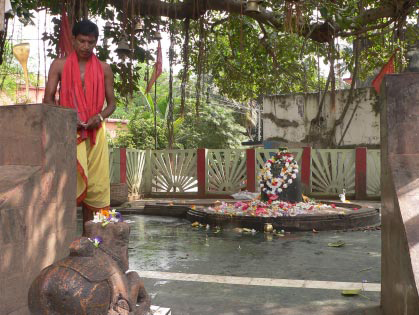
The Anantashayana Vishnu Temple, located in the Indian state of Orissa, stands as a significant Hindu pilgrimage site. Dedicated to Lord Vishnu, the temple is renowned for its colossal reclining deity, a depiction of Vishnu in his cosmic sleep. Situated near the tranquil waters of the Brahmani River, this sacred complex offers a serene spiritual experience, drawing devotees and visitors alike to witness its unique representation of the preserver god.
Location and Significance
Nestled in Orissa, the temple's placement by the Brahmani River enhances its spiritual ambiance, making it a revered spot for devotees.
The Reclining Deity
Central to the temple is the magnificent sculpture of Lord Vishnu in his Anantashayana or cosmic sleep posture, a powerful and iconic representation.
🗺 How to Reach
Hover a card to animate the journey on the map
Verified routes to Anantashayana Vishnu
Common Questions
Where is Anantashayana Vishnu: India's Largest Reclining Rock-Cut Marvel located?
Anantashayana Vishnu: India's Largest Reclining Rock-Cut Marvel is documented at On the left bank of the Brahmani River, Orissa.
Which deity is associated with Anantashayana Vishnu: India's Largest Reclining Rock-Cut Marvel?
Anantashayana Vishnu: India's Largest Reclining Rock-Cut Marvel is associated with Vishnu.