
A complete pilgrim record drawn from the existing published article data.
A Glimpse into Ancient Origins: History of the Chausath Yogini Temple
The Chausath Yogini Temple's origins trace back to the early 10th century CE, specifically between 900–925 CE, making it the oldest temple in the Khajuraho complex. It was commissioned by King Yuvaraja I of the powerful Chandela dynasty, known for their extensive temple-building endeavors. An inscription discovered at the site corroborates the king's patronage. This period marked a flourishing of Tantric practices, with the temple serving as a significant center for such traditions. The Kalika Purana, an ancient text describing the 64 Yoginis, heavily influenced its conceptualization, linking the site to ancient legends of the Goddess vanquishing the demon Durgama.
Chandela Dynasty Patronage
The temple was built by King Yuvaraja I of the Chandela dynasty in the early 10th century CE, a period of significant architectural and religious development.
Tantric Heritage
From ancient times, the site has been recognized as a Yogini Pitha and Tantric Shakti Peetha, attracting practitioners of Nath and Kapalika sects for intense sādhanā.
Legendary Foundations
The temple's iconography is influenced by the Kalika Purana, which recounts the manifestation of the 64 Yoginis by the Goddess to defeat the demon Durgama.
Unraveling the Unique Architecture of the Yogini Shrine
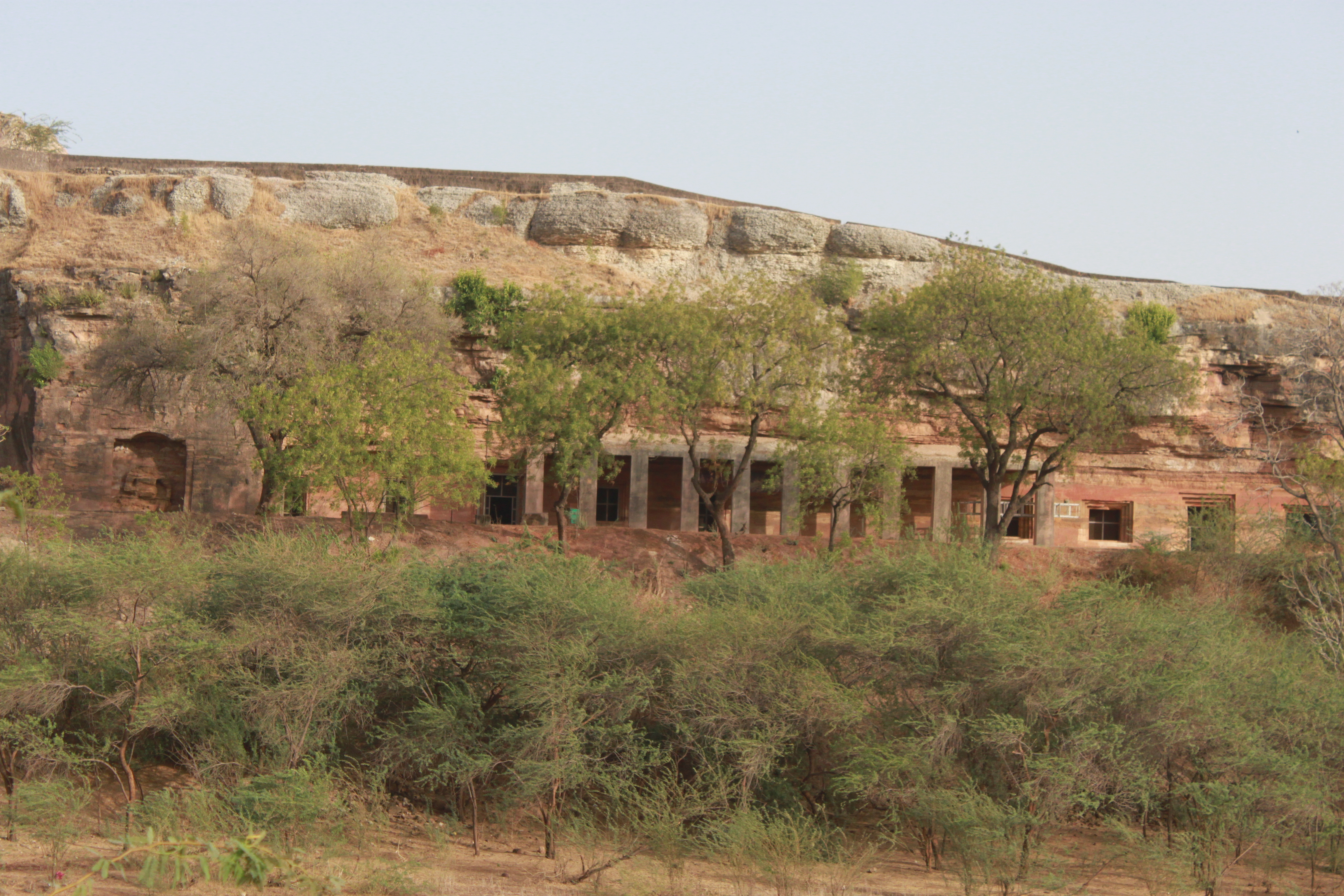
Distinguished by its circular plan, the Chausath Yogini Temple deviates significantly from the typical linear layouts of other Khajuraho temples. Constructed primarily from coarse sandstone, its architectural style is notably austere compared to the richly sculpted temples nearby. The temple originally comprised 64 small cells arranged in a circular courtyard, each housing a Yogini image, with a larger central shrine dedicated to Devi. This unique open-air mandapa design reflects its purpose as a Yogini Pitha, a sacred space for Tantric rituals. While adhering to the broader Nagara style, its unadorned simplicity underscores its early date and functional, ritualistic focus rather than elaborate ornamentation.
Circular Layout
The temple's most striking feature is its circular enclosure, a rare architectural form in Hindu temple construction, symbolizing a cosmic mandala.
Simple Sandstone Construction
Built from local sandstone, the temple exhibits a more rudimentary and less ornate style compared to the later, elaborately carved Khajuraho temples, reflecting its early date.
Sixty-Four Cells
The circular wall is punctuated by 64 small cells, originally designed to house the images of the sixty-four Yoginis, with a larger central shrine for the principal deity, Devi.
Planning Your Visit to the Ancient Yogini Temple
Visiting the Chausath Yogini Temple offers a unique historical and spiritual experience within the Khajuraho Group of Monuments. Located in Madhya Pradesh, the best time to explore this ancient site is between October and March, ideally during the Navaratri festivals for an enhanced spiritual atmosphere. Visitors should allocate 45–60 minutes to appreciate its distinctive architecture and serene ambiance. The temple is easily accessible, approximately 3 km from Khajuraho Airport (HJR) and 5 km from Khajuraho Railway Station. Modest dress is required, and footwear must be removed before entering. As part of a UNESCO World Heritage Site and protected by the ASI, it represents a significant cultural treasure.
Best Time to Visit
The period from October to March is recommended for visiting, with the Navaratri festivals offering a particularly vibrant spiritual experience.
Accessibility and Duration
Located 3 km from Khajuraho Airport and 5 km from Khajuraho Railway Station, the temple is easily reached, with a typical visit lasting 45–60 minutes.
Visitor Guidelines
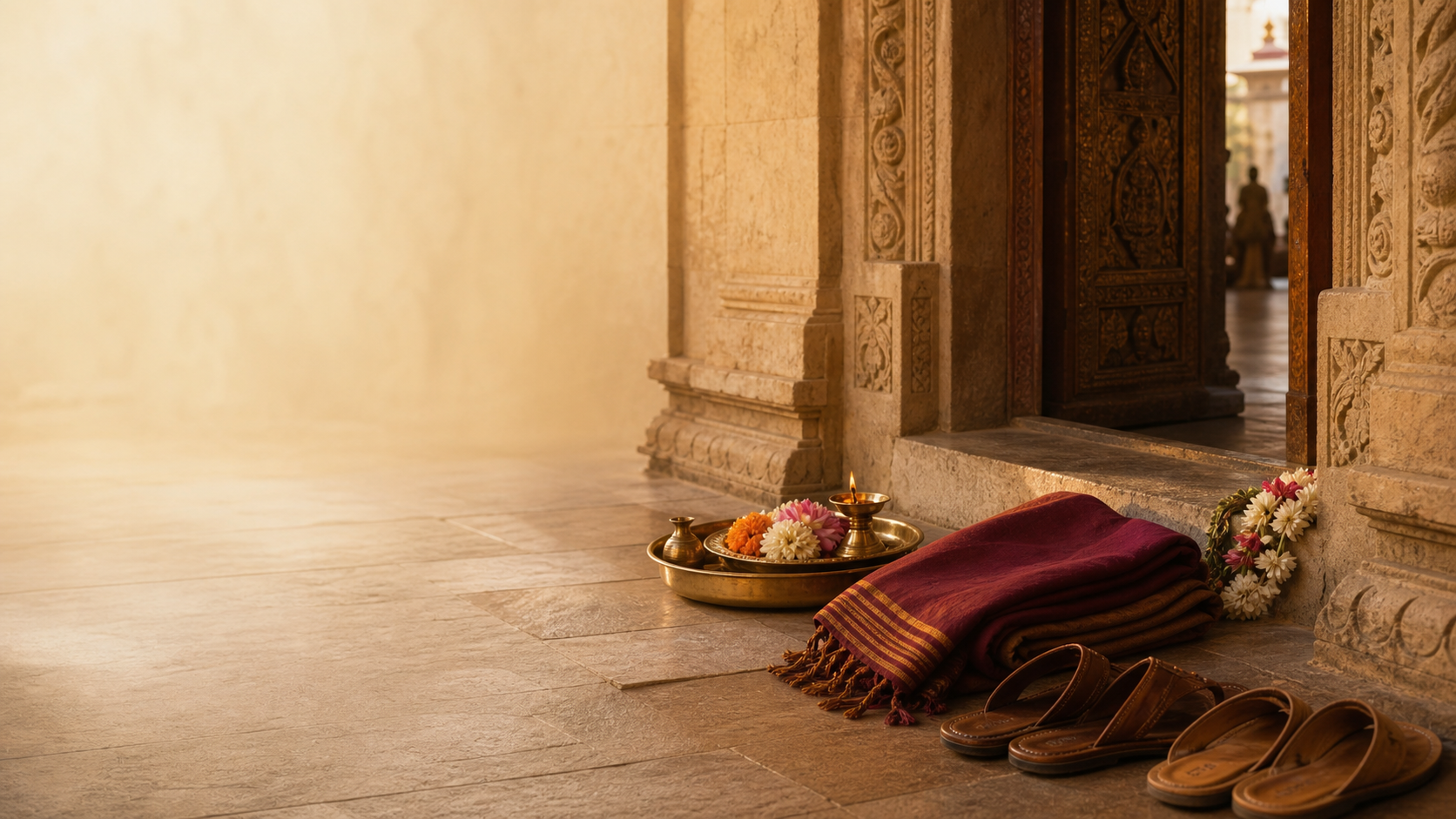
Visitors are advised to wear modest clothing and remove footwear before entering the temple premises, respecting its sacred nature and cultural heritage.
| Deity | Devi |
|---|---|
| Form | The central shrine originally housed a form of the Goddess, likely Bhairavi or Kali, though the current icon is lost or replaced. The temple also features 64 unique Yogini images, each with distinct attributes and forms. |
| Consort | Unknown |
| Sampradaya | Shakta |
| Significance | Devi, in her forms like Bhairavi or Kali, is revered as the supreme Goddess whose 64 aspects manifested to vanquish evil and restore cosmic balance. The temple serves as a sacred mandala for Tantric sādhanā, symbolizing mastery over creation's principles and housing both benign and ferocious forms of the divine feminine. |
The Cosmic Dance of Sixty-Four Goddesses
In ancient times, the cosmos trembled under the tyranny of the formidable demon Durgama. His destructive might threatened to unravel the very fabric of creation, plunging all into chaos. It was then, as described in the sacred Kalika Purana, that the Divine Mother, Mahadevi, arose in her full splendor. To combat this immense evil and restore cosmic balance, she manifested herself not as one, but as sixty-four potent emanations – the revered Yoginis. Each Yogini embodied a unique aspect of divine power, a mastery over the sixty-four kalas (arts) and sixty-four tattvas (principles) of existence. At this very site, the Goddess unleashed her sixty-four forms, engaging Durgama in a fierce battle that ultimately led to his vanquishing. This temple stands as a sacred mandala, commemorating this divine manifestation and serving as a powerful vortex for intense Tantric sādhanā, a tradition upheld by ancient Nath and Kapalika sects who sought profound spiritual mastery here.
The Divine Mother, Mahadevi, arose in her full splendor, manifesting as sixty-four potent emanations to vanquish evil and restore cosmic balance.
This temple stands as a sacred mandala, a powerful vortex for intense Tantric sādhanā, commemorating the divine manifestation of the Yoginis.
Related temples: Aranya Devi Temple, Arrah | Bageshwar Dham Balaji Temple
Introduction to the Chausath Yogini Temple
The Chausath Yogini Temple, an ancient and enigmatic shrine, stands as the oldest surviving structure within the UNESCO World Heritage site of Khajuraho, Madhya Pradesh. Built by the Chandela dynasty in the early 10th century CE, this temple is uniquely circular, setting it apart from other more ornate Khajuraho temples. Dedicated primarily to Devi, also known as Mahadevi or Bhairavi, and her sixty-four Yogini manifestations, it represents a significant example of early Tantric Shakta tradition. Its architectural simplicity belies its profound spiritual importance as a historic Yogini Pitha.
A Unique Circular Shrine
Unlike the typical rectangular or square layouts of most Hindu temples, the Chausath Yogini Temple features a distinctive circular plan, housing 64 cells around an open courtyard.
Oldest Structure in Khajuraho
Dating back to the early 10th century CE, this temple holds the distinction of being the oldest surviving monument within the renowned Khajuraho Group of Monuments.
Dedicated to the Divine Mother
The temple is consecrated to Devi, revered in her forms as Mahadevi or Bhairavi, alongside her powerful sixty-four Yogini emanations, central to Shakta and Tantric traditions.
The Mystical Devotion: Devi and the Chausath Yoginis
At the heart of the Chausath Yogini Temple's spiritual significance lies its dedication to Devi, specifically as Mahadevi or Bhairavi, and her sixty-four powerful manifestations, the Yoginis. This temple is a revered Yogini Pitha and a Tantric Shakti Peetha, deeply rooted in the Shakta tradition. Ancient legends, particularly from the Kalika Purana, recount how the Divine Mother manifested these 64 aspects to defeat the demon Durgama. The site became a crucial center for intense Tantric sādhanā, attracting various ascetic orders like the Nath and Kapalika sects, who sought profound spiritual mastery through the worship of these potent goddesses. It embodies the cosmic dance of divine power.
Principal Deity: Devi
The central shrine was dedicated to Devi, also known as Mahadevi or Bhairavi, signifying her supreme status within the Shakta tradition.
The Sixty-Four Yoginis
The temple's name derives from the 64 Yoginis, powerful emanations of the Divine Mother, each representing a unique aspect of cosmic energy and divine power.
Tantric Shakti Peetha
This site served as a significant Tantric Shakti Peetha, a sacred place for intense spiritual practices and worship of the divine feminine, particularly for Nath and Kapalika sects.
Scholarly Interpretations and Research
The Chausath Yogini Temple at Khajuraho has been a subject of intense scholarly interest, primarily due to the enigmatic nature of the Yogini cult itself and the temple's unique architectural form. Early archaeologists and art historians grappled with the limited textual evidence available to fully understand the esoteric practices associated with these circular, hypaethral shrines. Research has focused on deciphering the precise function of the 64 cells, debating whether they housed specific Yogini deities, served as spaces for tantric practitioners, or represented a cosmic mandala. The unusual absence of elaborate carvings, so characteristic of other Khajuraho temples, further complicates interpretation, leading to ongoing discussions about its dating and its specific place within the broader Chandella artistic and religious tradition. Scholars continue to meticulously analyze its structural remnants for any surviving clues about its original design and spiritual purpose.
Contemporary academic studies delve deeper into the socio-religious context of the Khajuraho Chausath Yogini temple, often employing comparative analyses with other known Yogini temples across India, such as those at Hirapur and Ranipur-Jharial. Researchers explore the evolution of the Yogini cult, its intricate connections to tantric traditions, and its potential role in empowering female deities and practitioners within medieval Indian society. Archaeological surveys have sought to identify remnants of rituals or offerings that might shed light on the temple's functioning, while art historical analyses, even of fragmentary sculptures, aim to reconstruct the iconography and theological underpinnings of the deities once enshrined. The temple remains a vital, albeit challenging, site for understanding the esoteric religious landscape of early medieval India and the complex interplay of local traditions with pan-Indian religious movements.
🗺 How to Reach
Hover a card to animate the journey on the map
Route to Temple
Related Temples


A Living Covenant