A complete pilgrim record drawn from the existing published article data.
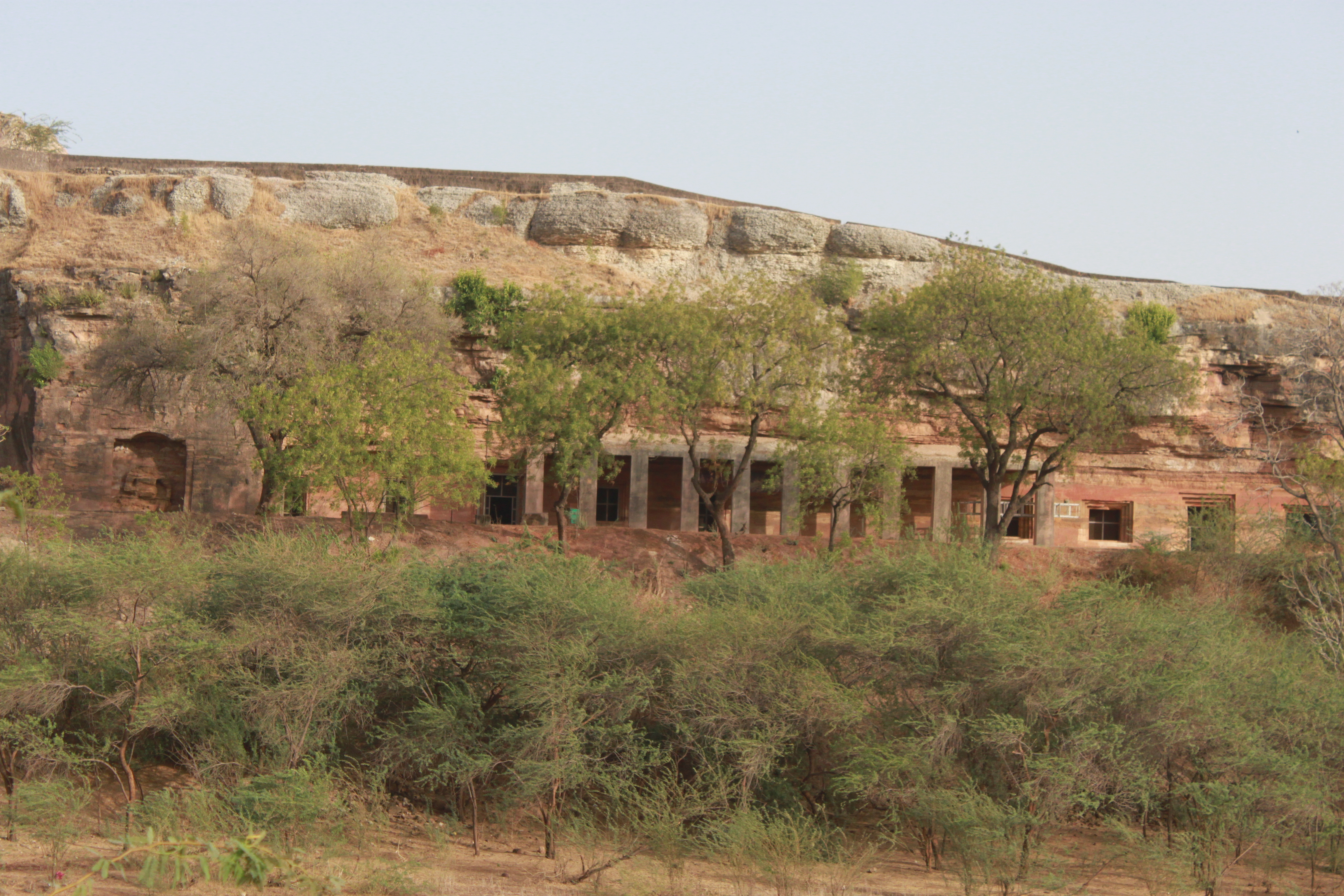
Bagh Cave 1, known as the "Palace of the Monks," stands as a monumental testament to ancient Indian rock-cut architecture and artistic brilliance. Located in Madhya Pradesh, this 5th-6th century CE Buddhist vihara offers a profound glimpse into the spiritual and cultural landscape of the Vakataka period.
It is renowned for its intricate carvings and the surviving fragments of classical Indian mural art, reflecting the flourishing Mahayana Buddhist tradition.
History & Foundation
Origins in the Vakataka Era
The Bagh Caves, including Cave 1, were carved between the 5th and 6th centuries CE. This period aligns with the powerful Vakataka dynasty, whose patronage fostered a golden age of Buddhist art and architecture. While Cave 1 lacks specific dated inscriptions, its stylistic affinity with other Vakataka sites places it within this era.
Inscriptions in nearby Cave 4 mention the Vakataka king Harishena, reinforcing the dynastic connection. The caves served as serene forest retreats for Buddhist monks, facilitating meditation and scholarly pursuits.

Archaeological Discoveries & Conservation
The site has been a focus of archaeological study since the early 20th century. ASI excavations in the 1920s, 1980s, and 2010s unveiled its significance as a major Buddhist monastic center. "Bagh represents the pinnacle of Vakataka rock-cut artistry," notes a prominent scholar.
Ongoing conservation efforts, particularly since the 1980s, address critical issues like water seepage and pigment fading. The Archaeological Survey of India (ASI) actively manages the site, implementing stabilization projects to preserve its fragile murals.
Architecture & Deity
Architectural Grandeur of Cave 1
Bagh Cave 1 is a vihara, a Buddhist monastery, meticulously carved from sandstone. It features a central pillared hall, 12 monastic cells, and an antechamber leading to a shrine. The architectural style is characteristic of the Late Gupta–Vakataka cave tradition, showcasing precision-carved pillars without mortar.
This engineering marvel incorporates natural ventilation and light modulation. The acoustic design allows voice projection without echo, a testament to ancient Indian ingenuity.

The Serene Buddha and Bodhisattvas
The main deity enshrined within Cave 1 is the Buddha, typically depicted in meditation (dhyana mudra) or teaching (dharmachakra mudra). Secondary deities include Bodhisattvas like Avalokiteshvara and Maitreya, and guardian deities (dvarapalas).
Sculptural highlights include the Buddha in abhaya mudra and detailed narrative reliefs illustrating Jataka tales. Iconographically, it features early representations of Avalokiteshvara with a kundika and the 'Buddha as universal monarch' (chakravartin) motif.

Festivals & Traditions
Ancient Monastic Practices
Historically, the caves would have been vibrant during significant Buddhist observances like Buddha Purnima, attracting monks and devotees. The emphasis was on individual spiritual practice and communal monastic living rather than large public festivals.

Modern Significance and Cultural Revival
Today, Bagh Cave 1 contributes significantly to modern Indian art revival movements. Artists like Nandalal Bose studied its murals, influencing contemporary art. It serves as a reference for mural restoration techniques nationwide, highlighting its enduring artistic legacy.
The site's cultural importance is recognized through ongoing conservation efforts by the ASI and INTACH. While not a site for active worship, its historical and artistic value draws visitors interested in India's rich Buddhist heritage and ancient art. Annual Visitors: ~50,000–70,000 to the complex.

Visiting the Temple
Planning Your Trip
Visitors should allocate 2–3 hours for Cave 1 alone, or a full day to explore the entire Bagh Caves complex. Nearby attractions include Rajgarh Fort and Jain temples, and the Bhojpur Shiva Temple, making it part of a rich cultural circuit. Consider exploring other Madhya Pradesh temples.

Visitor Guidelines and Conservation
As an ASI Protected Monument, specific rules ensure the preservation of this delicate site. Photography without flash is permitted, but footwear is not allowed inside the caves. Visitors must refrain from touching murals or sculptures to prevent damage.
The caves face critical conservation challenges due to water seepage and microbial growth. Ongoing stabilization projects by ASI-NRLC aim to protect these critically endangered murals for future generations. "Preserving Bagh is preserving a chapter of global art history."
Pro Tip: Visit early in the morning for better light for viewing murals and to avoid crowds. Carry a flashlight for darker sections.

For more insights into similar rock-cut wonders, explore Ajanta Caves.
Sacred Stories
Jataka Tales and Monastic Life
The walls of Bagh Cave 1, like other caves, are adorned with extant fragments of wall paintings. These murals are among the finest surviving examples of classical Indian art. They depict courtly life, dancers, musicians, and floral patterns, but most significantly, illustrate numerous Jataka tales.
Stories from the Vessantara and Chhadanta Jatakas are prominently featured, narrating the previous lives of the Buddha. These visual narratives served as moral and spiritual instruction for the resident monks and visitors.

Legends and Spiritual Resonance
The Bagh Caves were conceived as serene retreats for Buddhist monks, chosen for their seclusion and natural acoustics. "The caves' acoustics amplify chants into harmonious resonance," a folk tradition suggests, interpreted as celestial approval.
It is believed that monks here composed and recited Prajnaparamita sutras, contributing to Yogacara philosophy. Local belief also holds that the painted lotus motifs bloom anew each monsoon, adding a mystical dimension.
Key Takeaway: Bagh Cave 1's murals are a unique visual encyclopedia of Buddhist ethics and Vakataka courtly life.
Restoration and Conservation
🗺 How to Reach
Hover a card to animate the journey on the map
Route to Kukshi
Common Questions
Where is Bagh Cave 1: Vakataka Buddhist Masterpiece located?
Bagh Cave 1: Vakataka Buddhist Masterpiece is documented at Madhya Pradesh.
Which deity is associated with Bagh Cave 1: Vakataka Buddhist Masterpiece?
Bagh Cave 1: Vakataka Buddhist Masterpiece is associated with Buddha.
Related Temples

A Living Covenant